Darstellung einer Schlitztrommel (Teponaztli)
um 1500 | Dominik Bilimek
This stone sculpture imitates a so-called slit drum. Slit drums are musical instruments unique to Mesoamerica. A slit drum consists of a hollowed-out wooden cylinder with an H-shaped slit with two cut-out tongues on the top. Sticks are used to produce sounds from them. Such instruments were used to accompany ritual dances, and were frequently decorated with magnificent relief carvings. They were much revered and sometimes stored for centuries in the community centre of a Mexican village. This 15th or early 16th century stone copy is also an indication of the reverence accorded to slit drums. The sculpture depicts a lying male figure, its right hand placed on its chin. It wears the feather head-dress of a high-ranking civil-servant. The wooden model for this stone slit drum comes from Tlaxcala and is now in the Anthropological Museum in Mexico City.
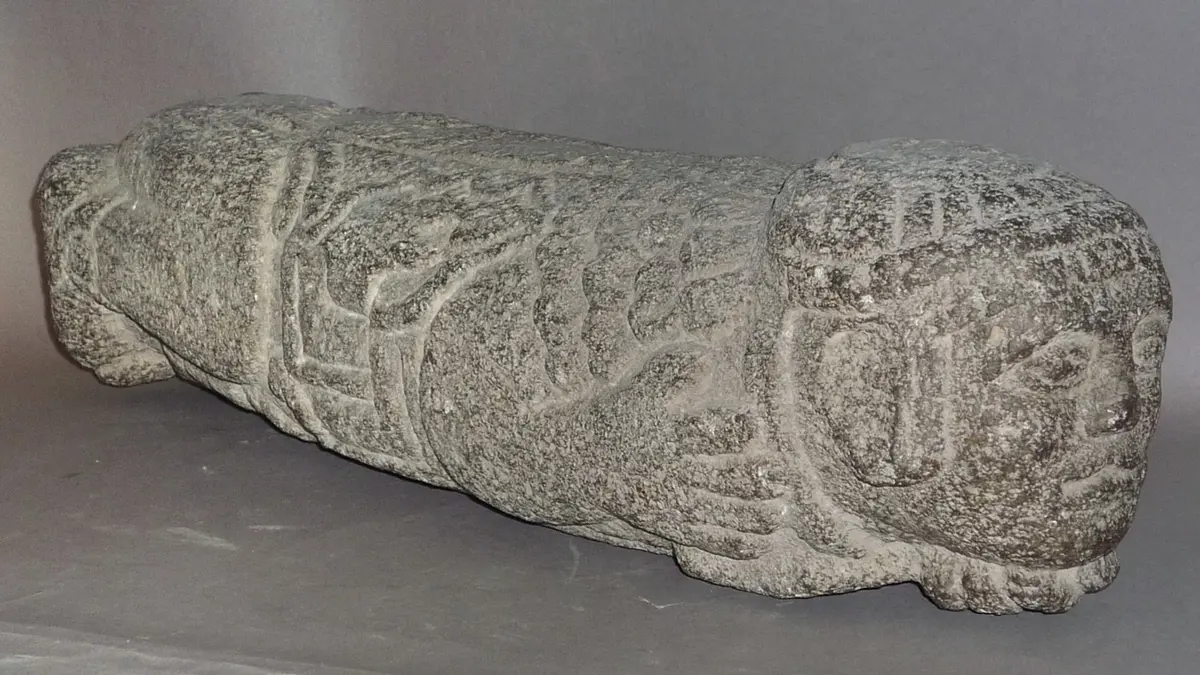
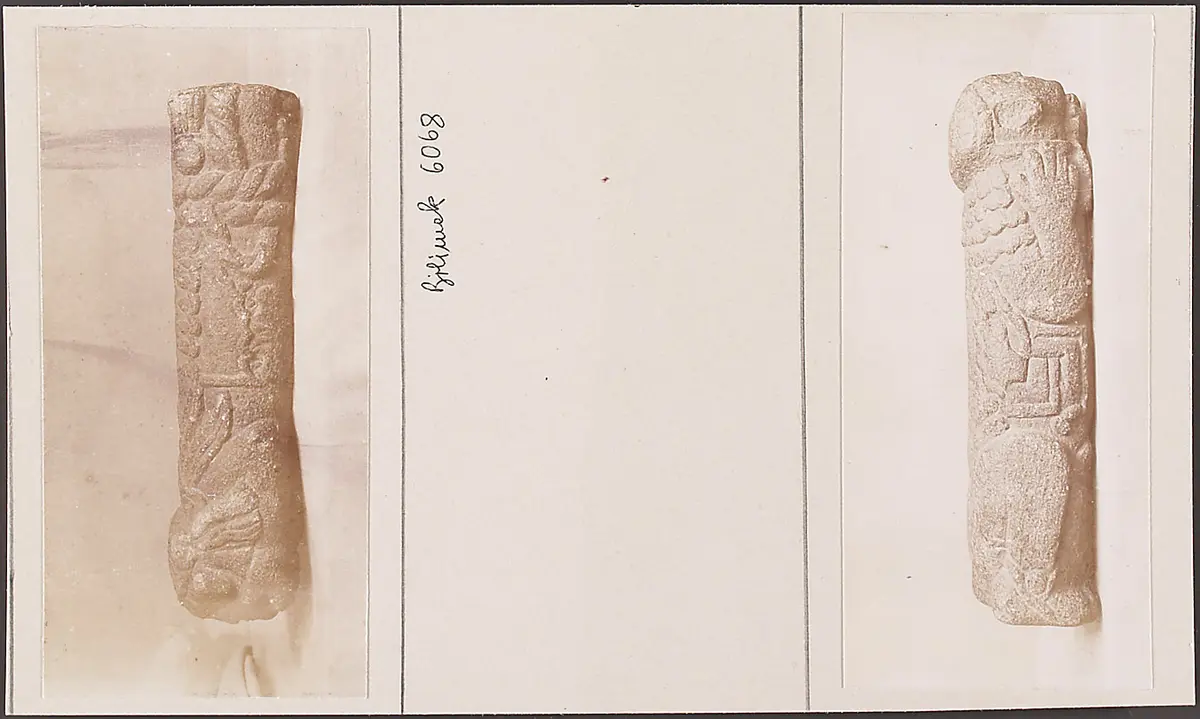
This stone sculpture imitates a so-called slit drum. Slit drums are musical instruments unique to Mesoamerica. A slit drum consists of a hollowed-out wooden cylinder with an H-shaped slit with two cut-out tongues on the top. Sticks are used to produce sounds from them. Such instruments were used to accompany ritual dances, and were frequently decorated with magnificent relief carvings. They were much revered and sometimes stored for centuries in the community centre of a Mexican village. This 15th or early 16th century stone copy is also an indication of the reverence accorded to slit drums. The sculpture depicts a lying male figure, its right hand placed on its chin. It wears the feather head-dress of a high-ranking civil-servant. The wooden model for this stone slit drum comes from Tlaxcala and is now in the Anthropological Museum in Mexico City.
Sammlung:
Dominik Bilimek DNB
Zeit:
um 1500
Zugangsdatum:
1878
Objektbezeichnung
Darstellung einer Schlitztrommel (Teponaztli)
Kultur
Azteken
Material/Technik:
Stein
Bildrecht
Weltmuseum Wien
Sammlungsbereich
Nord- und Mittelamerika
Geographie
Mittelamerika/Mesoamerika/Mexiko
Inv. Nr.
6068