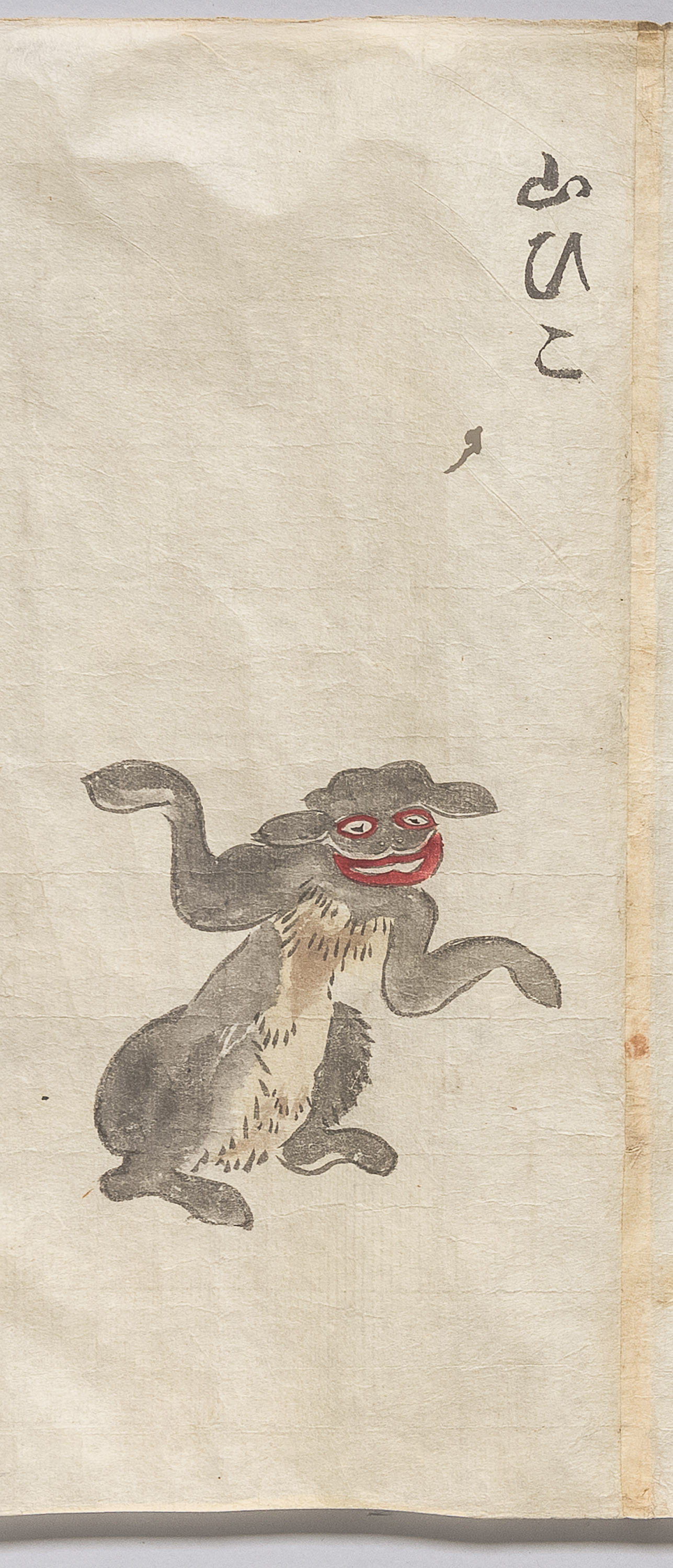
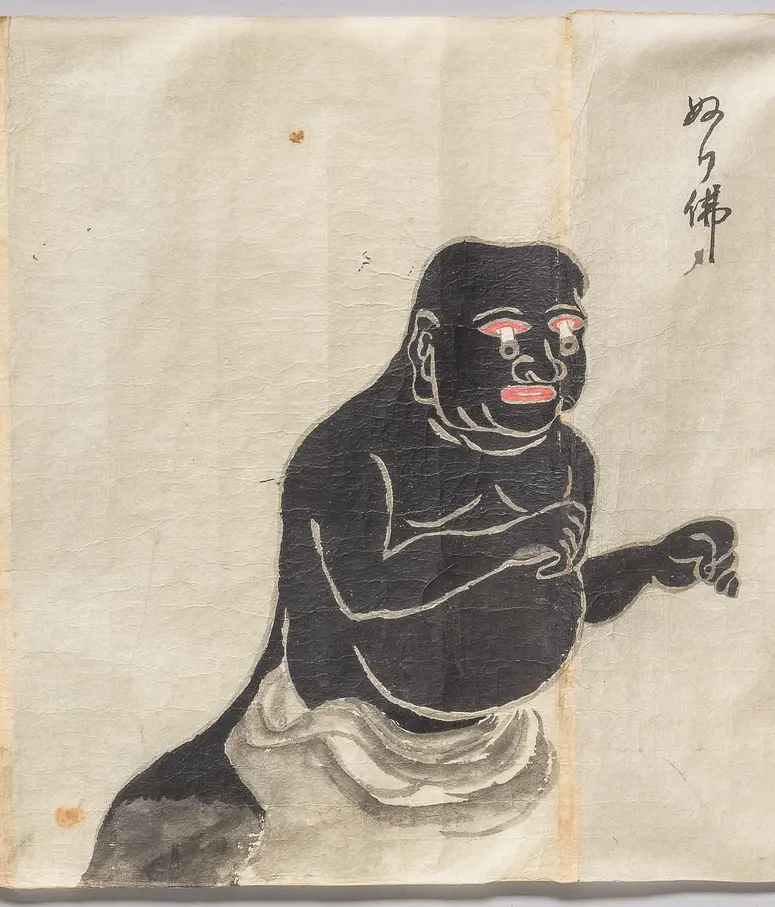
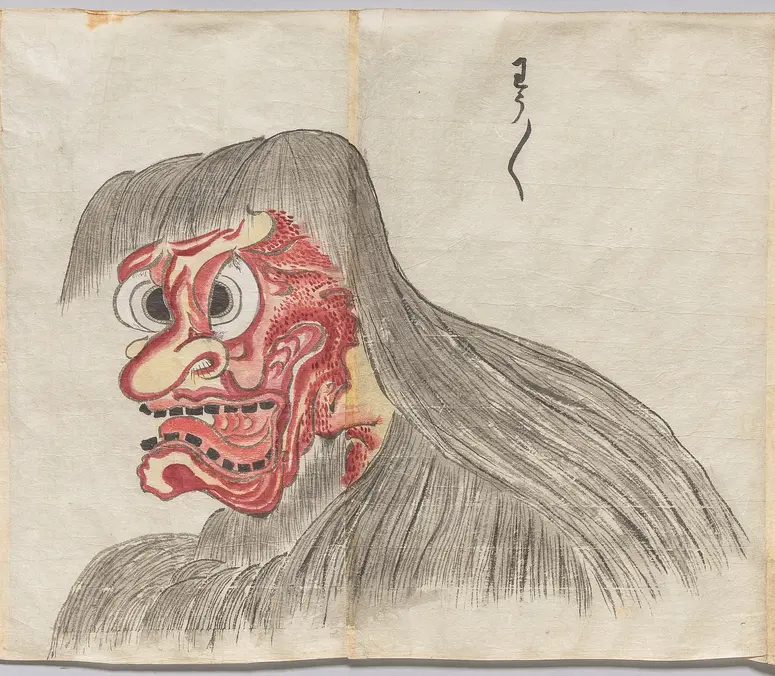
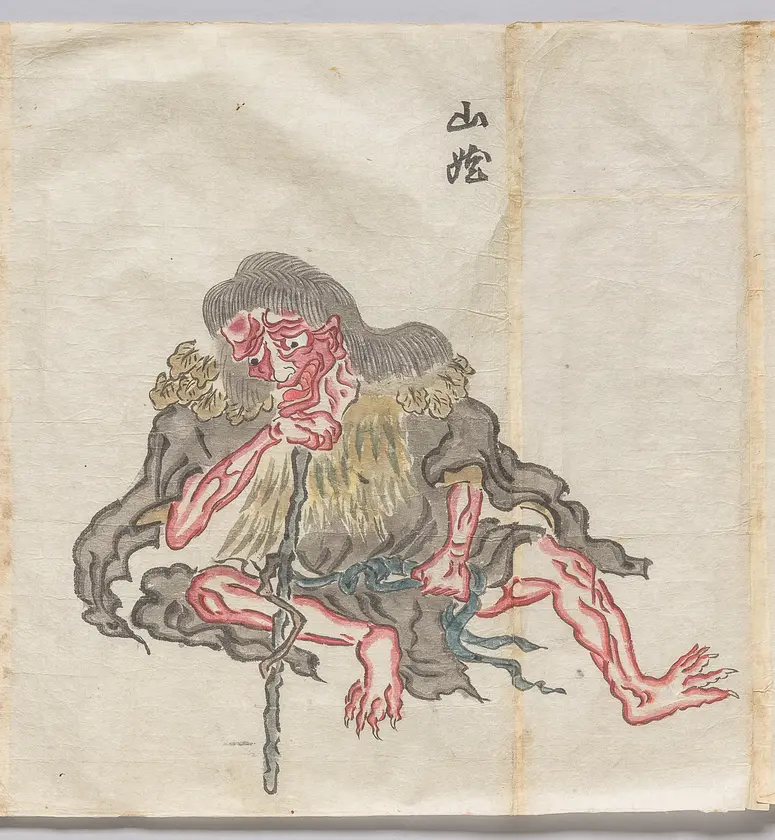
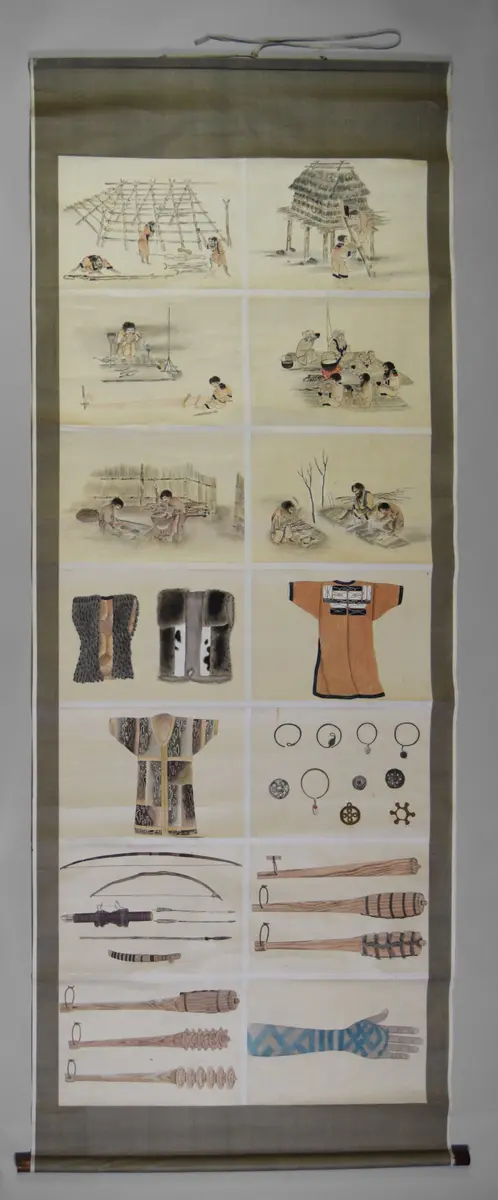
Geräte und Alltagsszenen der Ainu, auf Längsrolle kakemono montiert
kakemono Ainu no kibutsu to setaiga 掛物: アイヌの器物と世態画
Die ausgestellten Objekte der Ainu, einer Bevölkerungsgruppe auf den Inseln Hokkaido, den Kurilen und Sachalin, gehören zum zirkumpolaren Lebens- und Kulturraum. Zu Beginn der Meiji-Periode (1868-1912), um 1876, interessierten sich vermehrt einige westliche Forscher für die Lebensweise, die auf Jagd, Fischfang und Sammeln beruhte. Ihre gesellschaftliche und politische Position in Japan im 21. Jahrhundert ist vergleichbar mit jener der First Nations und „Erstamerikaner“ in Nordamerika.
Zeit:
um 1878
Zugangsdatum:
1997
Objektbezeichnung
Geräte und Alltagsszenen der Ainu, auf Längsrolle kakemono montiert
Material/Technik:
Papier, Holz, Tusche, Farbe
Bildrecht
Weltmuseum Wien
Sammlungsbereich
Ostasien
Geographie
Ostasien/Japan
Periode
Meiji-Periode (1868-1912)
Inv. Nr.
176768
Provenienz
Die beiden Rollen aus dem Besitz Heinrich von Siebold (Die Darstellungen auf den Rollen werden in seiner Publikation verwendet) kamen in die Sammlung des Handelsmuseums ( Inv. Nr. : 16431). Nach Auflösung des Handelsmuseums im Jahr 1907 gelangten Teile der Siebold Sammlung in das Museum für angewandte Kunst (MAK), das Technische Museum und die anthroplogisch-ethnographische Abteilung des k.k. Naturhistorischen Museums..
Die beiden Längsrollen kamen in die Sammlung des MAK ( Incv. Nr. : Or 3240) und im Jahr 2003 durch eine Tauschaktion in den Bestand des Museum für Völkerkunde