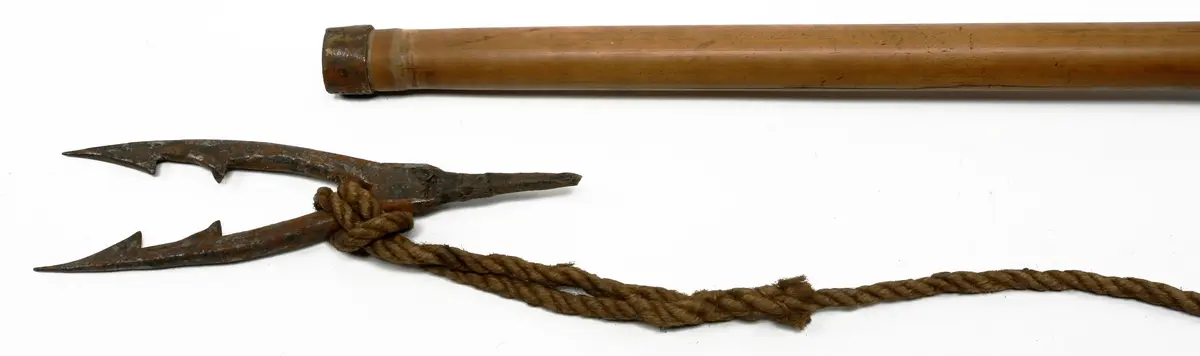
Harpune
Kanjai
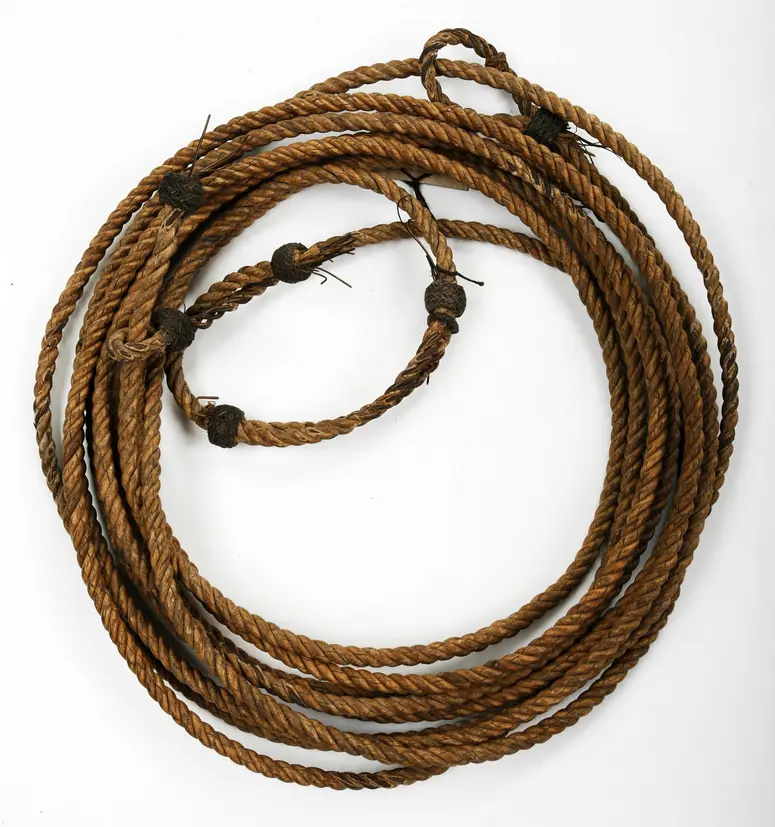
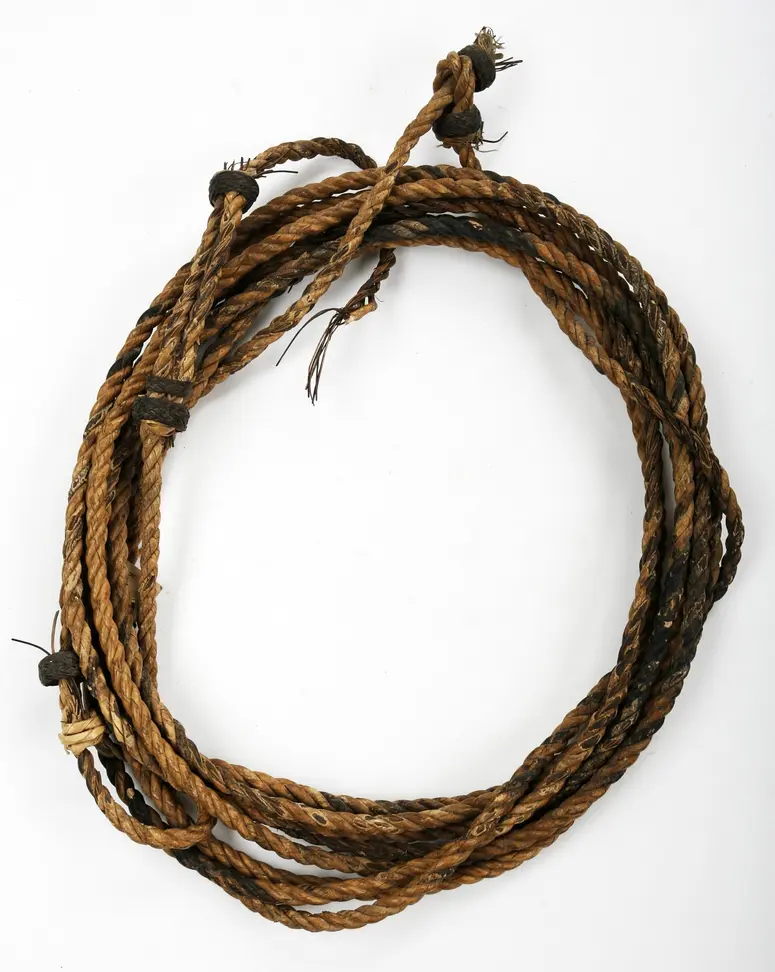
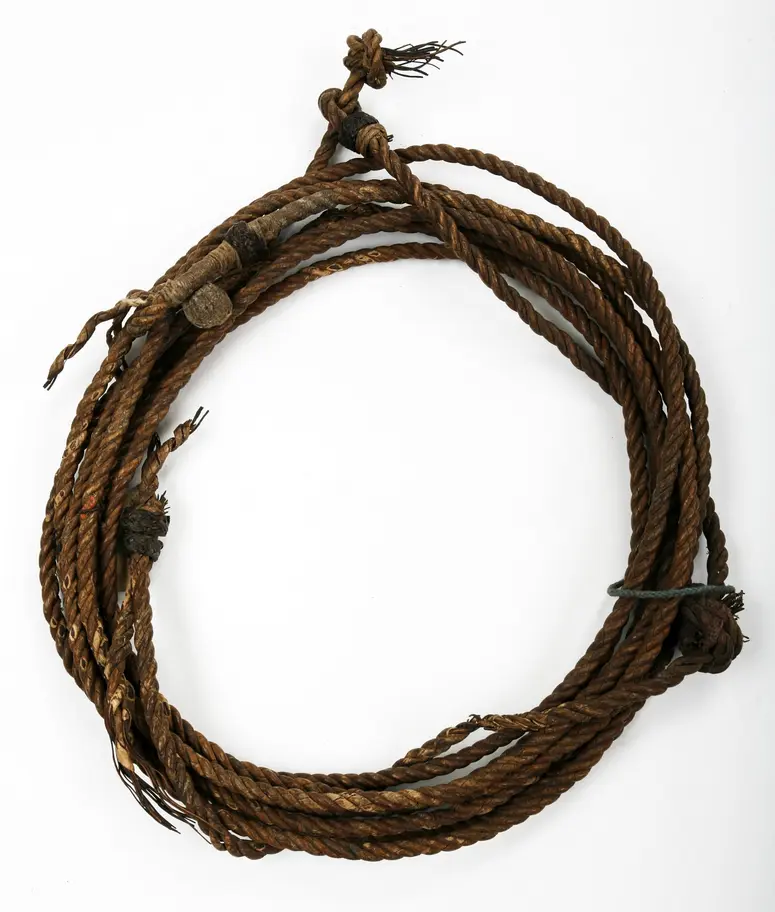
Hinweis: Nachfolgender Text stammt aus einem Sammlungskatalog des 19. Jahrhunderts und spiegelt in Sprache und Perspektive teilweise koloniale Denkmuster wider. Wir präsentieren den Text in seiner Originalfassung, um die Sammlungsgeschichte transparent zu machen und eine kritische Auseinandersetzung mit dem kolonialen Erbe zu fördern. Bestimmte Begriffe und Formulierungen können heute als problematisch empfunden werden. Ein Forschungsprojekt aus dem Jahr 2009 kam zu dem Schluss, dass die meisten Beschreibungen sachlich korrekt und weiterhin verwendbar sind; lediglich wenige Details erwiesen sich als ungenau oder fehlerhaft. Ergebnisse dieses Projektes wurden in folgendem Bestandskatalog publiziert: khm-wmw-tm-library.on.worldcat.org/oclc/1457155265"69. Harpune - "Kanjdjai".Der Schaft dieser Harpune ist von Bambus, die Spitze gabelförmig, mit Widerhaken versehen, sitzt fest auf dem Schafte. An der Spitze ein langes, starkes Tau befestigt, das in derselben Weise vom Fischer beim Werfen gehalten wird, wie jenes der vorigen."Zitiert aus: Czurda, F. A. J. (1883). Catalog mit Erklärungen der Etnografischen Privatsammlung des Dr. F. A. J. Czurda in Postelberg (Böhmen). (S. 15). Wien, Wilhelm Braumüller
Sammler/in:
František A. J. Czurda (1844 Pisek - 1886 Cirebon) DNB
Zugangsdatum:
1883
Objektbezeichnung
Harpune
Kultur
Süd-Sulawesi, Tallo
Material/Technik:
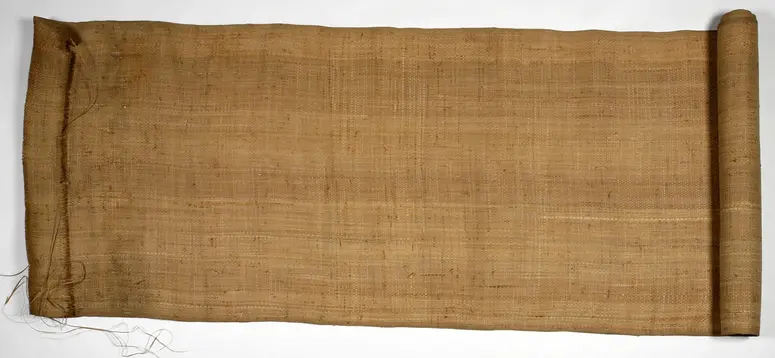
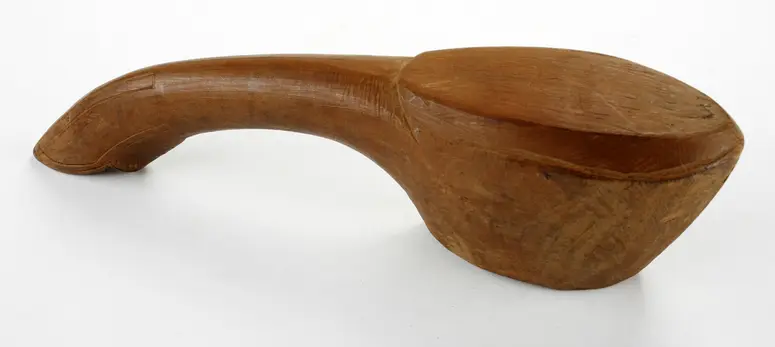
Bambus, Eisen. Tau: Kokosfaser; gedreht
Bildrecht
Weltmuseum Wien
Sammlungsbereich
Insulares Südostasien
Inv. Nr.
17385