Koran
Al Quran
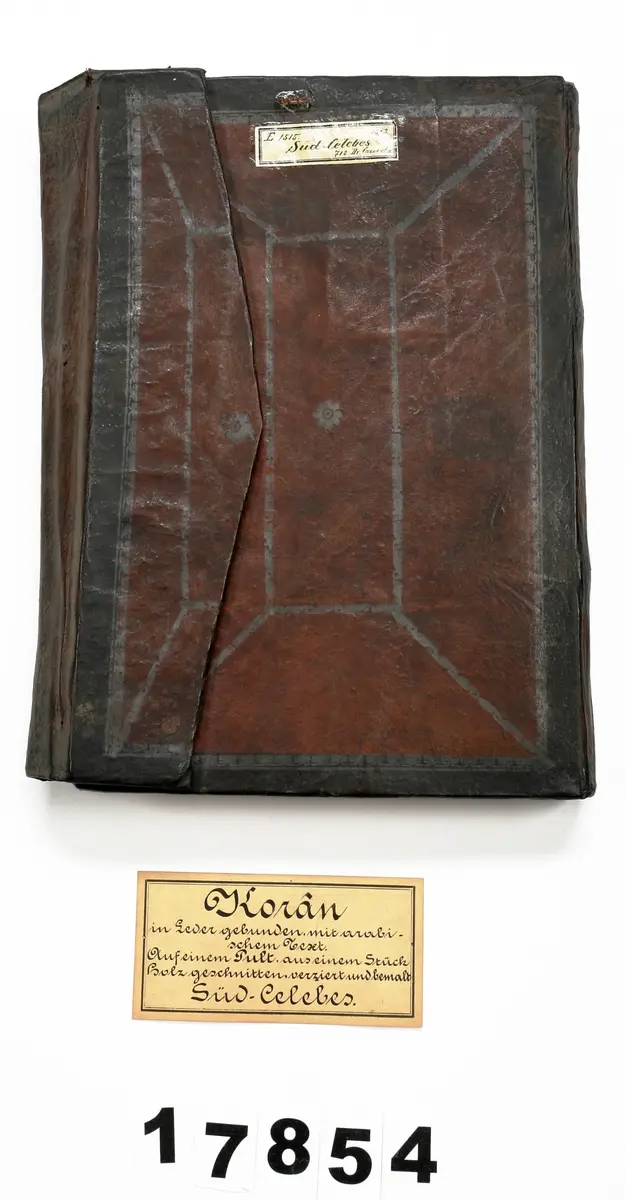
Hinweis: Nachfolgender Text stammt aus einem Sammlungskatalog des 19. Jahrhunderts und spiegelt in Sprache und Perspektive teilweise koloniale Denkmuster wider. Wir präsentieren den Text in seiner Originalfassung, um die Sammlungsgeschichte transparent zu machen und eine kritische Auseinandersetzung mit dem kolonialen Erbe zu fördern. Bestimmte Begriffe und Formulierungen können heute als problematisch empfunden werden. Ein Forschungsprojekt aus dem Jahr 2009 kam zu dem Schluss, dass die meisten Beschreibungen sachlich korrekt und weiterhin verwendbar sind; lediglich wenige Details erwiesen sich als ungenau oder fehlerhaft. Ergebnisse dieses Projektes wurden in folgendem Bestandskatalog publiziert: khm-wmw-tm-library.on.worldcat.org/oclc/1457155265"712. KoranEin Koran, mittelgross, in Leder gebunden, mit arabischem Text, wie ihn die Araber nicht allein auf Süd-Clelehes, sondern auch im ganzen ostindischen Archipel and die Bevölkerung verkaufen. Es gibt nur wenige Eingeborne, selbst wenige mohamedanische Priester, die den Koran verstehen, er liegt meistens ungebraucht, als eine Art Talisman im Hause. In den Moscheen lernen die Priester die Kinder einige Gebete in arabischer Sprache, die ganz mechanisch dem Herrn Lehrer nachgeschrieen werden, gewöhnlich von allen Kindern zugleich. Der Inhalt des Gebetes ist dem Priester in den meisten Fällen ebenso unbekannt, wie dem lernenden Kinde. Schulen nach unseren Begriffen bestehen nicht. Die holländische Regierung ist überall bemüht, wo es ihr möglich ist, Schulen für Eingeborne, nach europäischem Muster, zu errichten, wo die Kinder in ihrer Muttersprache lesen und schreiben lernen, ausserdem ihnen Begriffe von Arithmetik und Geographie, natürlich ihr Land allein betreffend, beigebracht werden. Die Lehrer dieser Schulen sind ebenfalls Eingeborne und werden auf den grossen Plätzen in Lehrer-Bildungsanstalten auf Kosten der Regierung herangebildet. Die Javanen besitzen eine Art Hochschule, eine Art Seminarium, wo in einem mehrjährigen Cursus die mohamedanischen Priester herangebildet werden. Die Zöglinge wohnen in diesem Institute, und das Ganze steht unter der Leitung eines Oberpriesters als Director, während gewöhnliche Priester als Lehrer fungiren. Der Schüler kann in dieses Seminarium eintreten, wann er will, ohne irgend welche Vorbildung, und er kann es auch verlassen, wann er will. An diesen Anstalten wird nur das Interpretiren des Korans gelehrt und dies in der originellsten Weise. Die Schüler liegen in ihren Zellen auf dem Bauche, den Kopf vor einer kleinen Fensteröffnung am Boden dieser Kammer vor sich den Koran. Die Zellen eines Jahrganges führen alle auf einem gedeckten Corridor, in welchem der Lehrer, ebenfalls einen Koran in der Hand haltend, herumspazirt. Er liest den Schülern Theile des Textes vor, sie zugleich übersetzend und alle hier anwesenden Zöglinge müssen das von ihm vorgelesene und vorgesprochene mit starker Stimme nachschreien. Der Herr Lehrer scheint eine eigene Gabe zu besitzen, sofort zu merken, von wem und in welcher Zelle ein Fehler gemacht worden ist. In solchen Instituten sind gewöhnlich einige hunderte von Schülern, die dann zum Schlusse nach Mekka pilgern und als Hadjis in ihre Heimat zu rückkehren."Zitiert aus: Czurda, F. A. J. (1883). Catalog mit Erklärungen der Etnografischen Privatsammlung des Dr. F. A. J. Czurda in Postelberg (Böhmen). (S. 168-169). Wien, Wilhelm Braumüller
Sammler/in:
František A. J. Czurda (1844 Pisek - 1886 Cirebon) DNB
Zugangsdatum:
1883
Objektbezeichnung
Koran
Kultur
Süd-Sulawesi
Material/Technik:
Papier, Leder
Bildrecht
Weltmuseum Wien
Sammlungsbereich
Insulares Südostasien
Inv. Nr.
17854