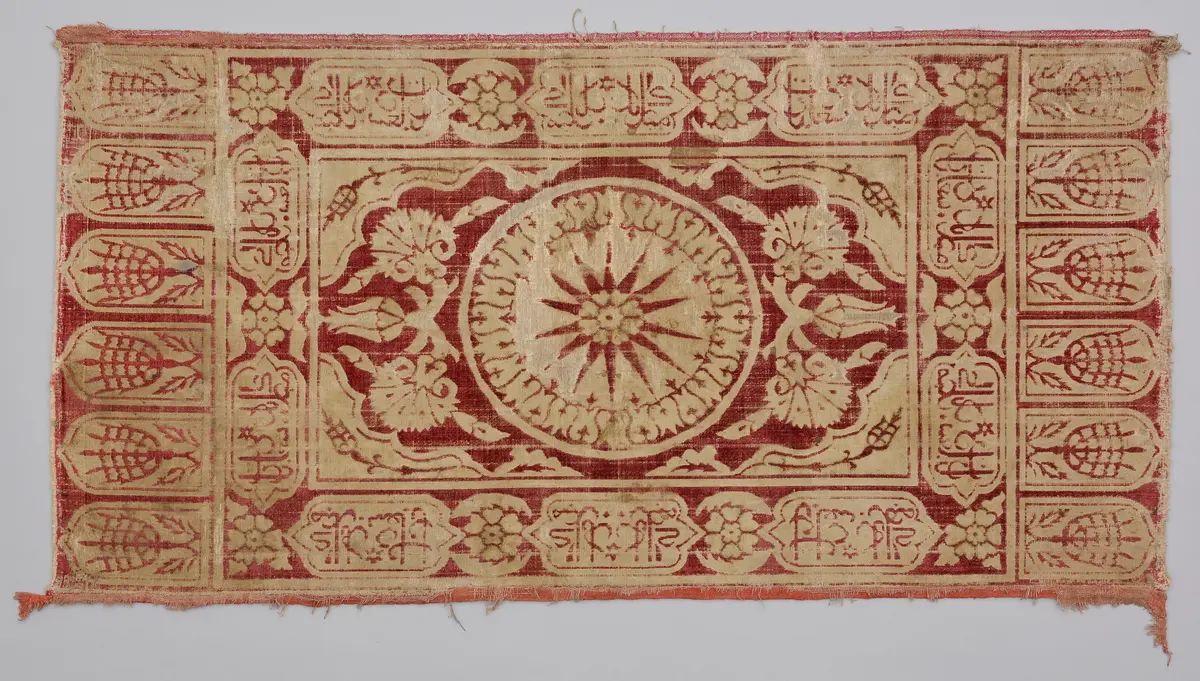
Osmanischer Kissenbezug
yastık
Ende 16./ Anfang 17. Jahrhundert | Österreichisches Handelsmuseum, Wien
Osmanischer Kissenbezug
Kartuschen mit abwechselnd seitenverkehrten persischen Schriftzügen: mobarak bad (Glückwunsch), sa‘adat bad (Wohlstand). Begüterte Osmanen haben eine besondere Vorliebe für Kissenbezüge (yastık) aus Seidenvelours (çatma). Zentrum der Seidensamtweberei ist vom 15. bis ins 17. Jahrhundert das südlich von Istanbul gelegene Bursa. Ihre mit Gold- und Silberfäden broschierten Samtgewebe sind auch in Europa gefragt. Als das Österreichische Handelsmuseum 1891 die erste internationale Ausstellung orientalischer Teppiche veranstaltet, gehören historische Samtbrokate aus Bursa zu den prominentesten Ausstellungsstücken.
Sammlung:
Österreichisches Handelsmuseum, Wien
Sammler/in:
Johann von und zu Liechtenstein (1840 Schloß Eisgrub (Mähren) - 1929 Schloß Feldsberg (Tschechien))
Bezug/Institution:
Wiener Weltausstellung (1873) DNB
Zeit:
Ende 16./ Anfang 17. Jahrhundert
Zugangsdatum:
1925
Objektbezeichnung
Osmanischer Kissenbezug
Kultur
Türkei, verm. Bursa
Material/Technik:
Seide, Baumwolle, Silberfäden
Maße:
B 61,5 cm × H. 122,5 cm
Bildrecht
Weltmuseum Wien
Sammlungsbereich
Nordafrika, Vorder- und Zentralasien, Sibirien
Inv. Nr.
120183
Weiterstöbern Ähnliche Stücke, die Sie interessieren könnten
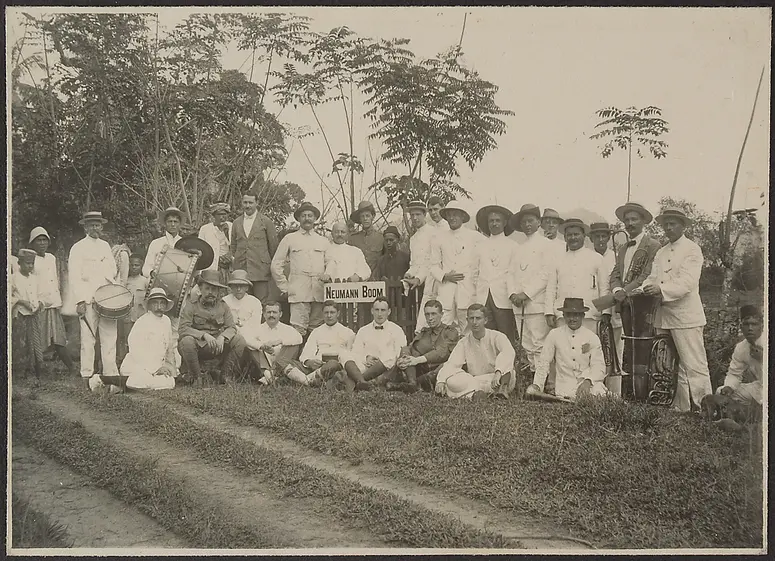
Johann Schild mit seinen Gästen; darunter vermutlich Musiker aus der Gruppe Neumann Boom Johann Schild um 1900