Tsam-Tanzfigur
The Weltmuseum Wien has 12 wooden figures in the Hans Leder Collection, which depict figures from the sacred Tsam dance that originated in Tibet. The figures were commissioned by Leder and are probably not an autochthonous Mongolian artefact. The Tsam dance is a religious ceremony or sacred festival in which lamas or monks dress up in elaborate masks and costumes (at a certain time of year) and perform pantomime dances in front of the temples accompanied by music. They represent various Buddhist patron gods, animals, Garuda or heroes.
"Garuda, the king of birds, appears in the Urga Tsam as one of four masks, which are considered to be the embodiment of the spirits of once living famous shamans. He is equated with the mountain spirit of the sacred mountain Bogd Uul, south of Ulaanbaatar (or Urga) and is regarded as the protective spirit of this area even after its incorporation into the Buddhist belief system.
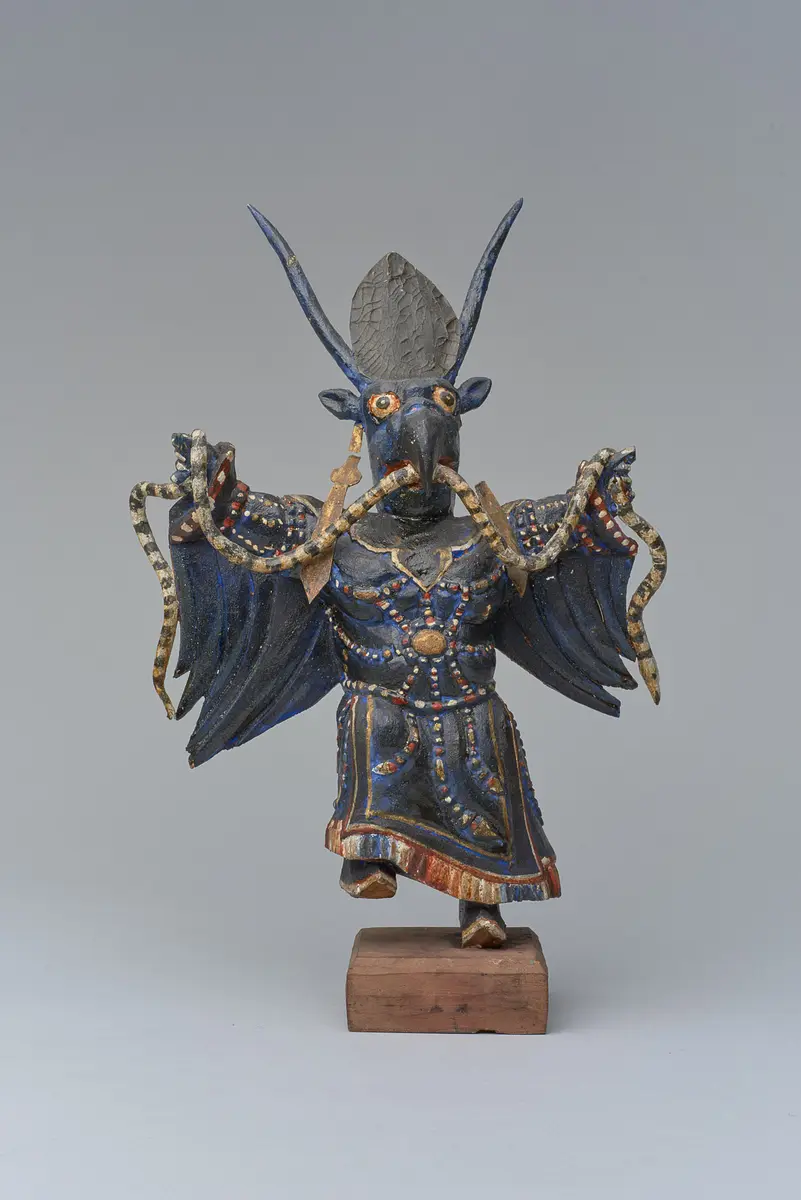
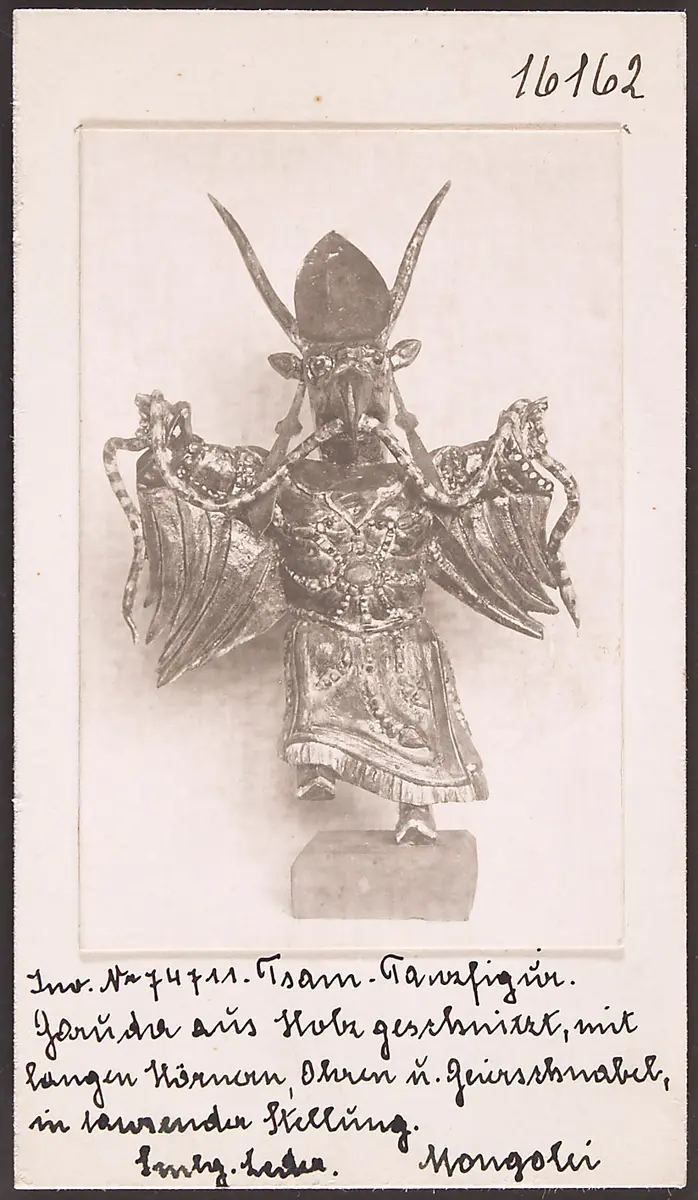
The Weltmuseum Wien has 12 wooden figures in the Hans Leder Collection, which depict figures from the sacred Tsam dance that originated in Tibet. The figures were commissioned by Leder and are probably not an autochthonous Mongolian artefact. The Tsam dance is a religious ceremony or sacred festival in which lamas or monks dress up in elaborate masks and costumes (at a certain time of year) and perform pantomime dances in front of the temples accompanied by music. They represent various Buddhist patron gods, animals, Garuda or heroes.
"Garuda, the king of birds, appears in the Urga Tsam as one of four masks, which are considered to be the embodiment of the spirits of once living famous shamans. He is equated with the mountain spirit of the sacred mountain Bogd Uul, south of Ulaanbaatar (or Urga) and is regarded as the protective spirit of this area even after its incorporation into the Buddhist belief system.
Sammler/in:
Hans Leder DNB
Objektbezeichnung
Tsam-Tanzfigur
Kultur
Mongolei
Material/Technik:
Holz, geschnitzt, bemalt
Bildrecht
Weltmuseum Wien
Sammlungsbereich
Süd-, SO-Asien, Himalaya
Geographie
Zentralasien/Mongolei
Inv. Nr.
74711