Bambuszither
Gesokesong (B); Ganrang Bulo (M)
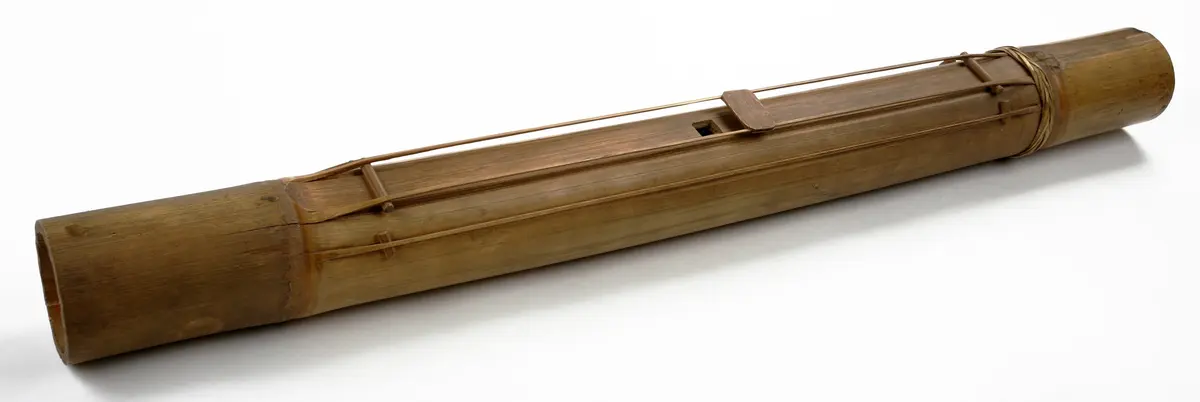
Hinweis: Nachfolgender Text stammt aus einem Sammlungskatalog des 19. Jahrhunderts und spiegelt in Sprache und Perspektive teilweise koloniale Denkmuster wider. Wir präsentieren den Text in seiner Originalfassung, um die Sammlungsgeschichte transparent zu machen und eine kritische Auseinandersetzung mit dem kolonialen Erbe zu fördern. Bestimmte Begriffe und Formulierungen können heute als problematisch empfunden werden. Ein Forschungsprojekt aus dem Jahr 2009 kam zu dem Schluss, dass die meisten Beschreibungen sachlich korrekt und weiterhin verwendbar sind; lediglich wenige Details erwiesen sich als ungenau oder fehlerhaft. Ergebnisse dieses Projektes wurden in folgendem Bestandskatalog publiziert: khm-wmw-tm-library.on.worldcat.org/oclc/1457155265"453. Violine - "Gesokesong"Ein sehr interessantes Instrument, das ich nur im Inneren von Celebes gefunden habe und welches einen Beweis der grossen Erfindungsgabe der Eingebornen liefert. Auf einem etwa halb Meter langen Bambusrohr sind an dessen Oberfläche im Kreise einige Saiten über kleine Brücken gespannt; diese Saiten jedoch sind aus einem Stück gebildet mit dem Bambusrohre selbst. In das grüne Bambusrohr, in dessen oberste Schichte werden derart Längsschnitte gemacht, dass man dünne Stränge abheben kann, die, da das Rohr noch grün ist, elastisch und dehnbar, über die erwähnten Brücken gespannt werden können, d. h. die Brücken werden unter diese ausgeschnittenen, natürlichen Saiten geschoben. Trocknet das ganze mit der Zeit, so resonnirt nicht allein das Bambusrohr, sondern diese originellen Saiten spannen sich und geben beim Streichen oder mit den Fingern gezogen, ziemlich gute Töne, und da ein solches Instrument lange und kurze Saiten hat, so kann man eine ziemlich angenehme, wenigstens für das Ohr des Eingebornen, wohlklingende Musik zu Stande bringen."Zitiert aus: Czurda, F. A. J. (1883). Catalog mit Erklärungen der Etnografischen Privatsammlung des Dr. F. A. J. Czurda in Postelberg (Böhmen). (S. 107-108). Wien, Wilhelm Braumüller
Sammler/in:
František A. J. Czurda (1844 Pisek - 1886 Cirebon) DNB
Zugangsdatum:
1883
Objektbezeichnung
Bambuszither
Kultur
Süd-Sulawesi, Mallasoro
Material/Technik:
Bambus
Bildrecht
Weltmuseum Wien
Sammlungsbereich
Insulares Südostasien
Inv. Nr.
17698