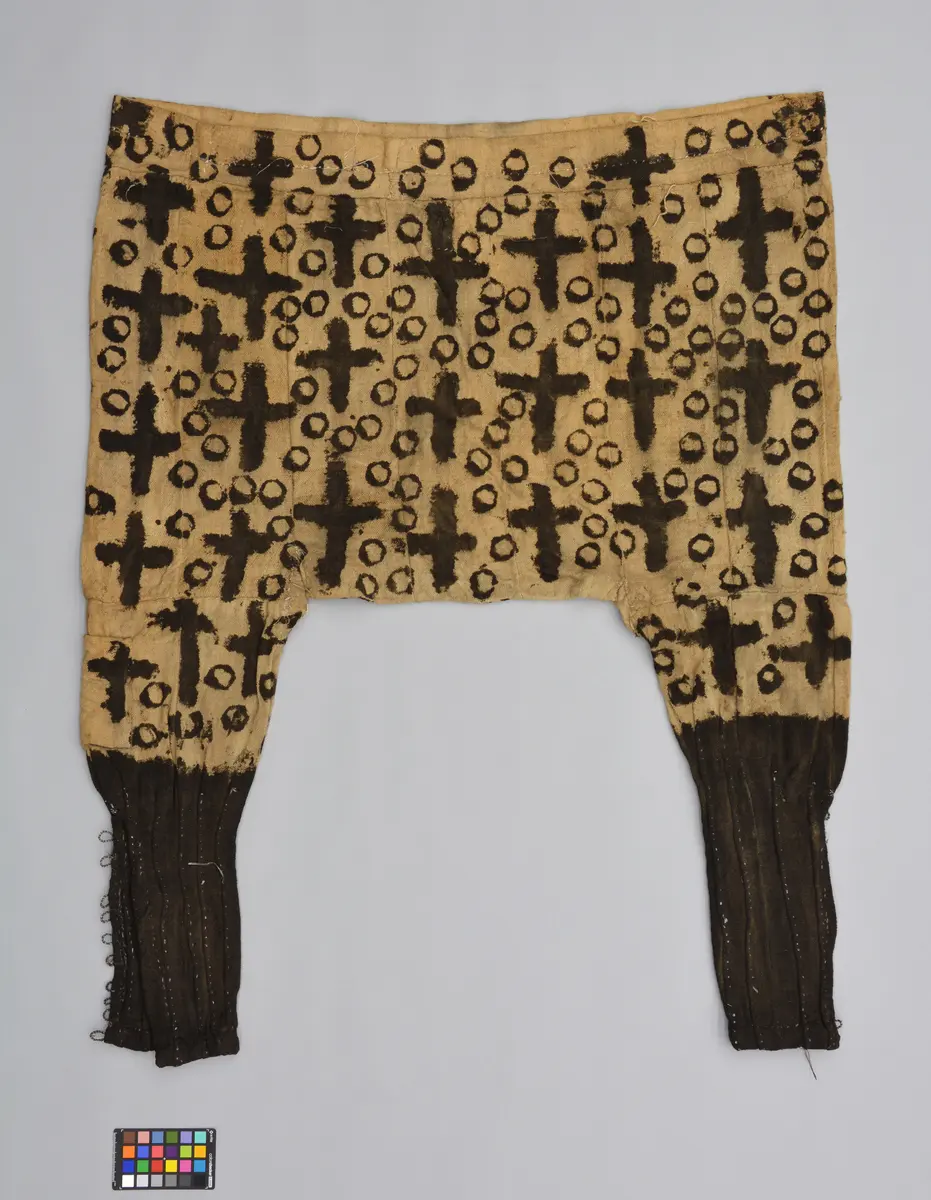
Hose zu Jägergewand
vor April 2001 | Franz Trost
Diese Hose ist Teil eines dreiteiligen Kostüms aus Hemd, Hose und Kappe. Der Grundstoff aus schmalen, handgewobenen Baumwollstreifen, die zu einer Stofffläche zusammengefügt wurden, ist ebenso interessant wie das Nähmaterial: synthetische Fäden, die vermutlich aus Kunstfaser-Verpackungsplanen gewonnen wurden. Die auf dem fertiggenähten Kleidungsstück ausgeführten Motive sollten den Träger nicht nur tarnen, sondern auch vor den Geistern erlegter Tiere schützen. Diese Art von Bemalung stellt eine Variante von „Beiz-Reservetechnik“ dar: Die Motive wurden mit einer vorwiegend pflanzlichen Paste gemalt und gedruckt, der Stoff dann mit mineralhaltigem Schlamm bedeckt. Nur die bemalten Partien färbten sich durch eine chemische Reaktion schwarz, während die unbemalten Partien einen hellen bräunlichen Farbton annahmen.
Sammler/in:
Franz Trost
Zeit:
vor April 2001
Zugangsdatum:
2001
Objektbezeichnung
Hose zu Jägergewand
Material/Technik:
Baumwolle, Leinwandbindung, bemalt/bedruckt; Handnähte und Maschinnähte
Bildrecht
Weltmuseum Wien
Sammlungsbereich
Afrika südlich der Sahara
Inv. Nr.
179275_a