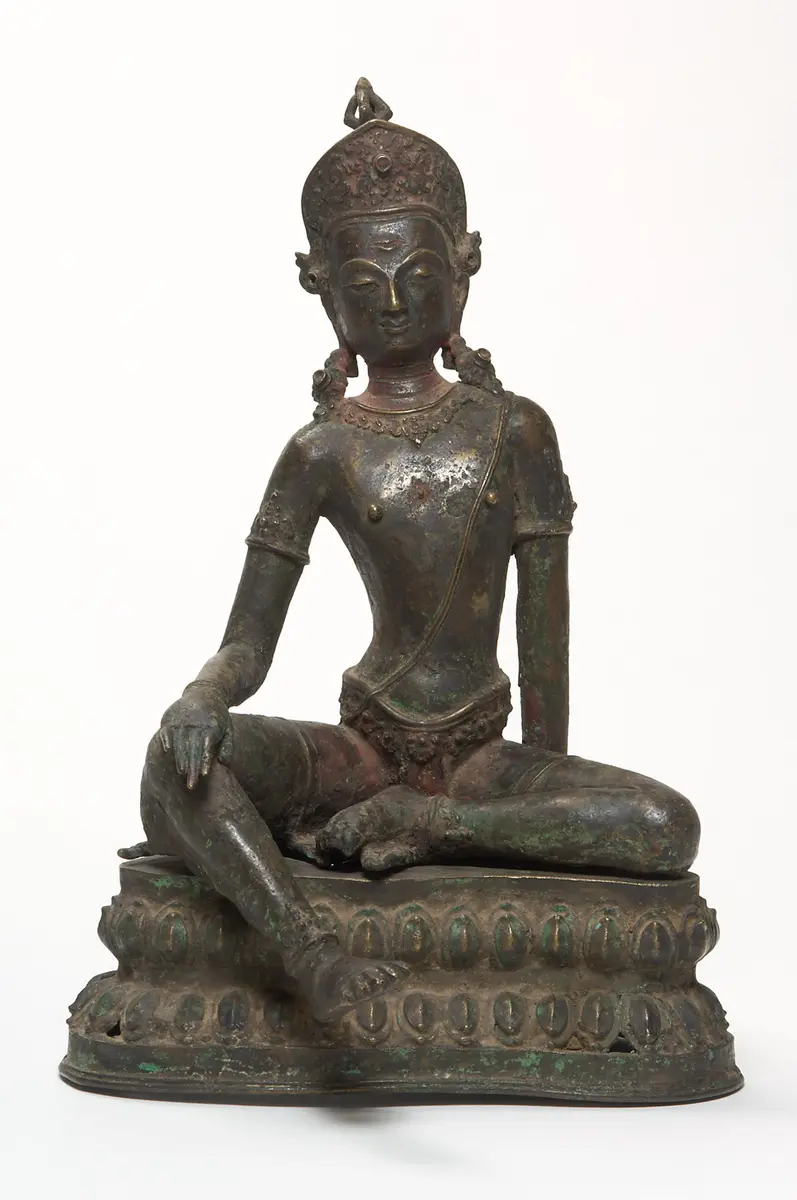
Indra
14./ 15. Jahrhundert | René Nebesky-Wojkowitz
In der frühindischen, vedischen Religion wird Indra als der höchste, kriegerische Gott des Himmels vorgestellt, der Gott des Sturmes und des Regens, „ohne den kein Sieg möglich ist, den man im Kampfe anruft …“ (Rigveda 2,12,9 ) Er ist der Gott der Krieger, des Kshatriya-Standes. Ebenso gilt er als Gott der Fruchtbarkeit, der Schöpfung und des Regens sowie als Götterkönig. Allgemein verkörpert er die produktiven Kräfte der Natur. Indra ist der berühmteste Gott der vedischen Zeit und ist der am meisten angerufene und besungene Gott: rund 250 Hymnen des Rigveda sind allein an ihn gerichtet. Gemäß den vedischen Schriften ist er es, der jeden Widerstand zerschmettert
Sammler/in:
René Nebesky-Wojkowitz (1923 Groß-Hoschütz - 1959 Wien) DNB
Zeit:
14./ 15. Jahrhundert
Objektbezeichnung
Statue
Kultur
Newar / Nepal
Material/Technik:
Bronze
Bildrecht
Weltmuseum Wien
Sammlungsbereich
Süd-, SO-Asien, Himalaya
Geographie
Südasien/Himalaya/Nepal
Inv. Nr.
136889