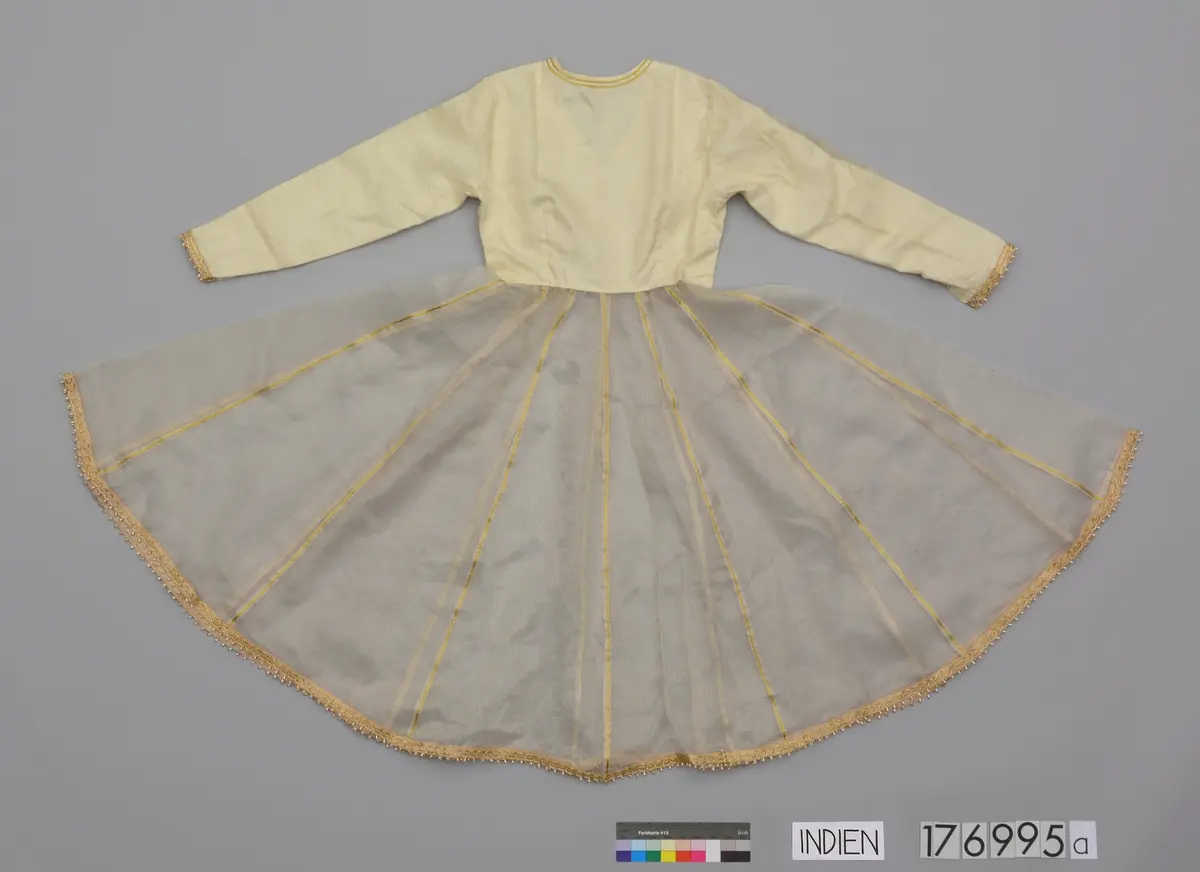
Kostüm des Mohiniattam-Tanzes
20. Jahrhundert | anonym
Die Bezeichnung dieses Tanzes aus Kerala setzt sich aus dem Wort Mohini – „eine Frau, die Zuseher bezaubert“ − und Aatta in der Bedeutung von „sinnlicher Körperbewegung“ zusammen. Mythen berichten, dass Vishnu als himmlische Nymphe die Dämonen mit seinem Tanz so betörte, dass sie den Macht und Unsterblichkeit verleihenden Ambrosia den Göttern überließen. Ein anderes Mal rettete er Shiva in dieser Erscheinung vor dem Dämon Bhasmasura. Im Mohiniaattam-Tanz drücken sich die Hingabe an Gott und die Liebe zu ihm aus.
Sammler/in:
anonym
Zeit:
20. Jahrhundert
Objektbezeichnung
Kostüm des Mohiniattam-Tanzes
Kultur
Indien
Material/Technik:
Baumwolle
Bildrecht
Weltmuseum Wien
Sammlungsbereich
Süd-, SO-Asien, Himalaya
Geographie
Südostasien/Festland/Thailand
Inv. Nr.
176995_a
Weiterstöbern Ähnliche Stücke, die Sie interessieren könnten



Knabe von Aruscha tschini mit feuchter Thierhaut über den Kopf gebunden, Bantu Max Schoeller 1896-1897