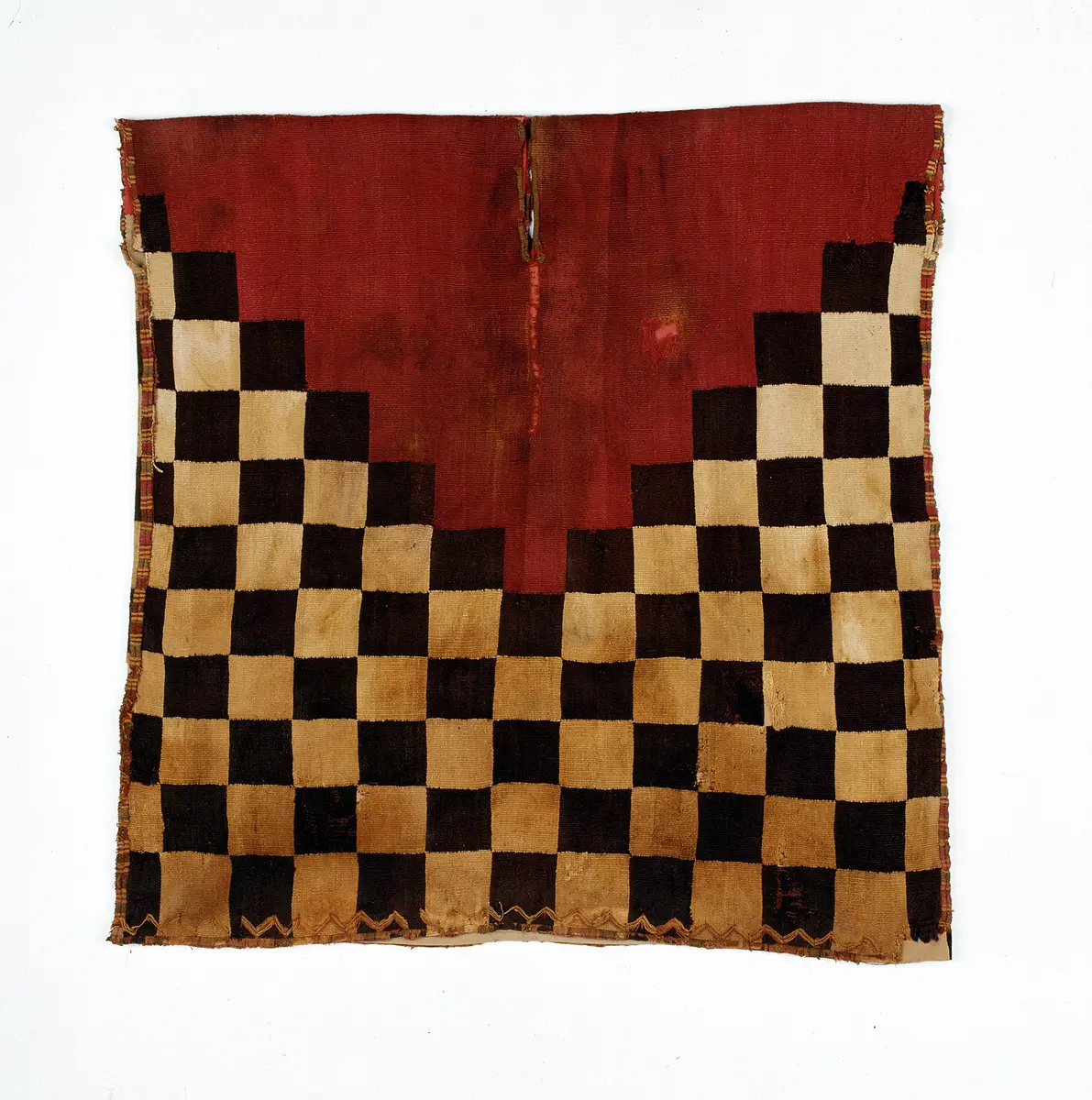
Poncho: Unku
1438 - 1532 | Wilhelm Eckhardt
Textilien waren das Bindegewebe des Inka-Staates. Die Muster waren festgelegte Codes und kennzeichneten soziale Positionen und Funktionen in der Verwaltung des Staates. Kleidung drückte Macht und Status aus. Inka-Herrscher überreichten solche Hemden aus Alpakawolle an Würdenträger. Kleidung wurde als Tribut erhoben und in Lagern aufbewahrt. Als sich die Inka-Armeen vor den anrückenden Spaniern zurückzogen, zündeten sie die Kleiderdepots an. Die kostbaren Kleidungsstücke und Statussymbole aus Alpakawolle sollten nicht in die Hände ihrer Feinde fallen.
1572 wurden die Inkas besiegt, ihr letzter Herrscher, Túpac Amaru, auf Befehl des Spaniers Francisco de Toledo, Vizekönig von Peru, hingerichtet. Der Vizekönig war ein Sammler wertvoller Inka-Gewänder.
Sammler/in:
Wilhelm Eckhardt
Zeit:
1438 - 1532
Objektbezeichnung
Poncho: Unku
Kultur
Inka
Material/Technik:
Alpaka-Wolle; Wirkerei mit abwechselnd um einen Kettfaden verhängten Schussfäden, Ziernähte und Stickerei
Bildrecht
Weltmuseum Wien
Sammlungsbereich
Südamerika
Periode
Präkolumbisch
Inv. Nr.
14997