Shirt
c. 1500 | Wilhelm Eckhardt
Textiles formed the binding fabric of the Incan state. The patterns amounted to codes denoting social status and administrative functions within the state. Clothing expressed power and rank. Incan rulers awarded such alpaca wool shirts to dignitaries. Clothing was a tribute and preserved in storehouses. When the Incan armies were forced to retreat before advancing Spaniards, they set fire to these clothing storehouses. The precious articles of clothing and status symbols fashioned from alpaca wool would not fall into the hands of their adversaries. In 1572, when the Incas were defeated, their last ruler, Túpac Amaru, was executed by order of the Spaniard Francisco de Toledo, Viceroy of Peru. The viceroy was a collector of valuable Inca vestments.
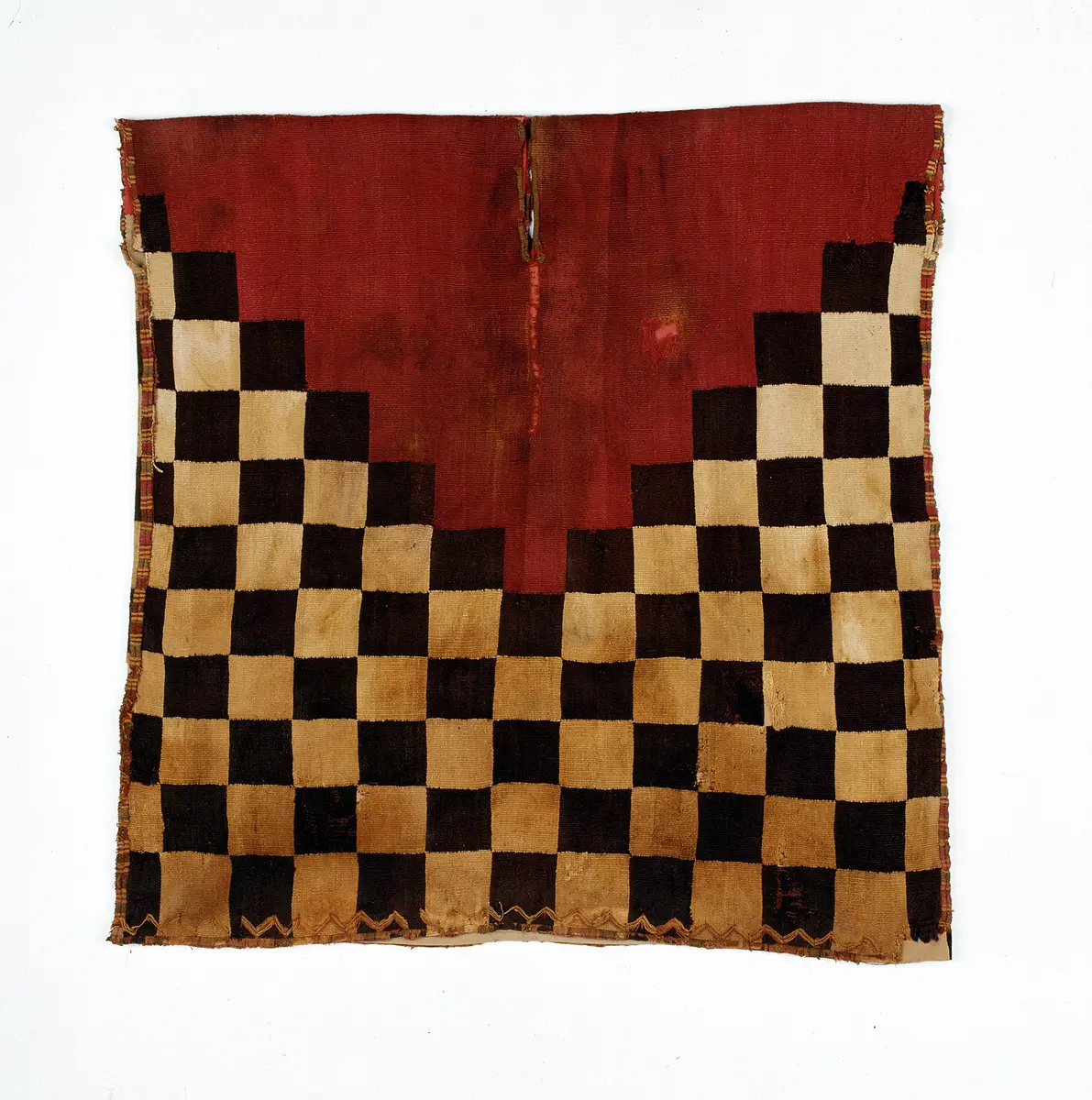
Textiles formed the binding fabric of the Incan state. The patterns amounted to codes denoting social status and administrative functions within the state. Clothing expressed power and rank. Incan rulers awarded such alpaca wool shirts to dignitaries. Clothing was a tribute and preserved in storehouses. When the Incan armies were forced to retreat before advancing Spaniards, they set fire to these clothing storehouses. The precious articles of clothing and status symbols fashioned from alpaca wool would not fall into the hands of their adversaries. In 1572, when the Incas were defeated, their last ruler, Túpac Amaru, was executed by order of the Spaniard Francisco de Toledo, Viceroy of Peru. The viceroy was a collector of valuable Inca vestments.
Collector:
Wilhelm Eckhardt
Time:
c. 1500
Object Name
Shirt
Culture
Inka
Material/technology:
Alpaca wool
Copyright
Weltmuseum Wien
Collection area
South America
Period
Präkolumbisch
Invs.
14997