Jump to navigation Jump to content Jump to contact Jump to search Jump to search Jump to footer
Education & School

Schools & Kindergartens For All School Types and Grade Levels

Would you like to present your current curriculum to your class in a way that is more engaging, sustainable, and vivid than is possible in the classroom? Then you’ve come to the right place. We offer workshops on special exhibitions and individual collections, as well as cross-collection themes from the permanent exhibition. And if you are unable to come to the museum, we are also happy to come to your school!

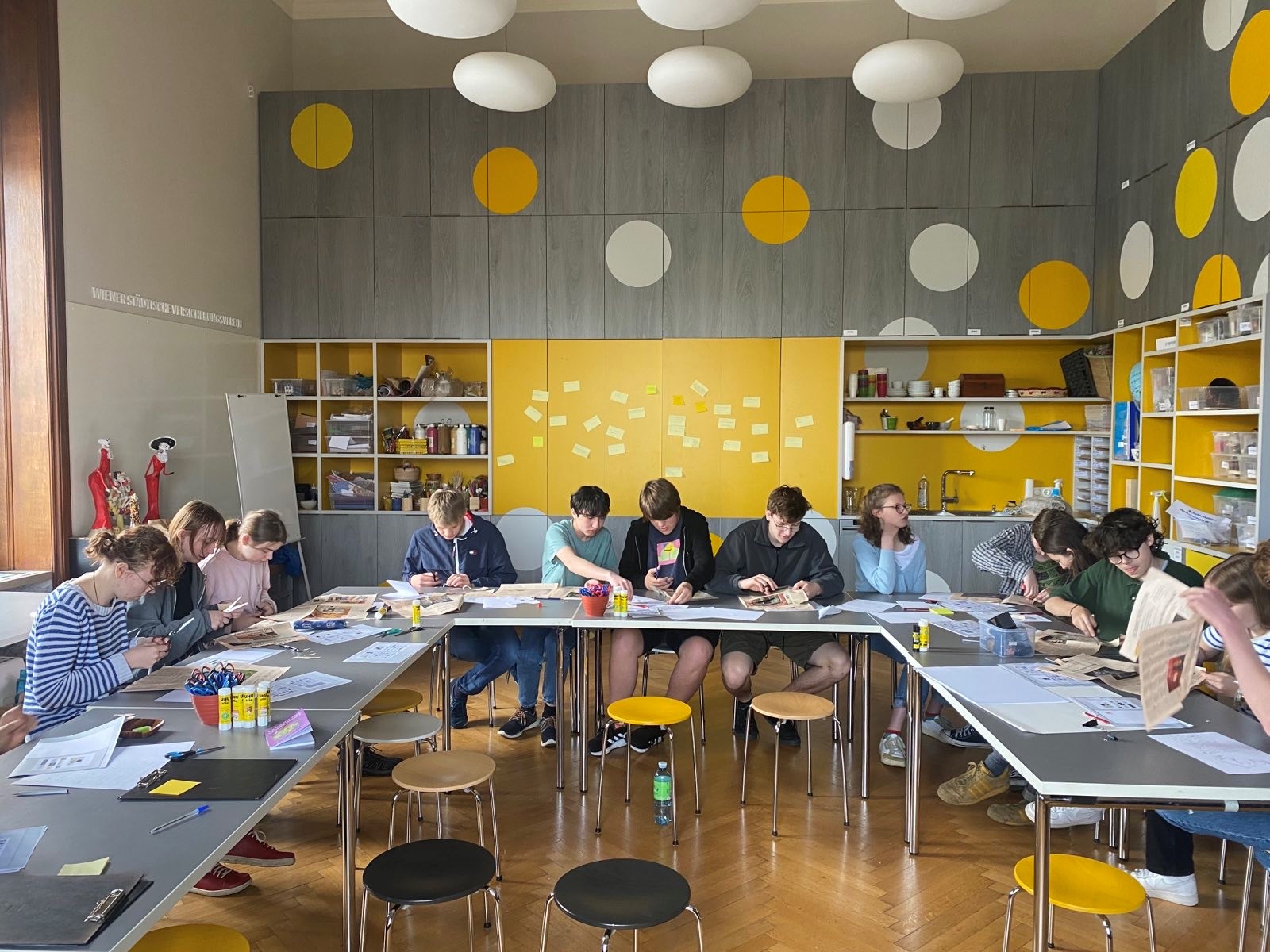
The interactive workshops combine playful knowledge transfer with a creative phase in the Kaleidoscope studio. All workshops can be booked in German or English.

Please book at least two weeks in advance
Time slots: 9:15 a.m. and 11:15 a.m., afternoon appointments available on request.
All workshops can be booked in German and English.

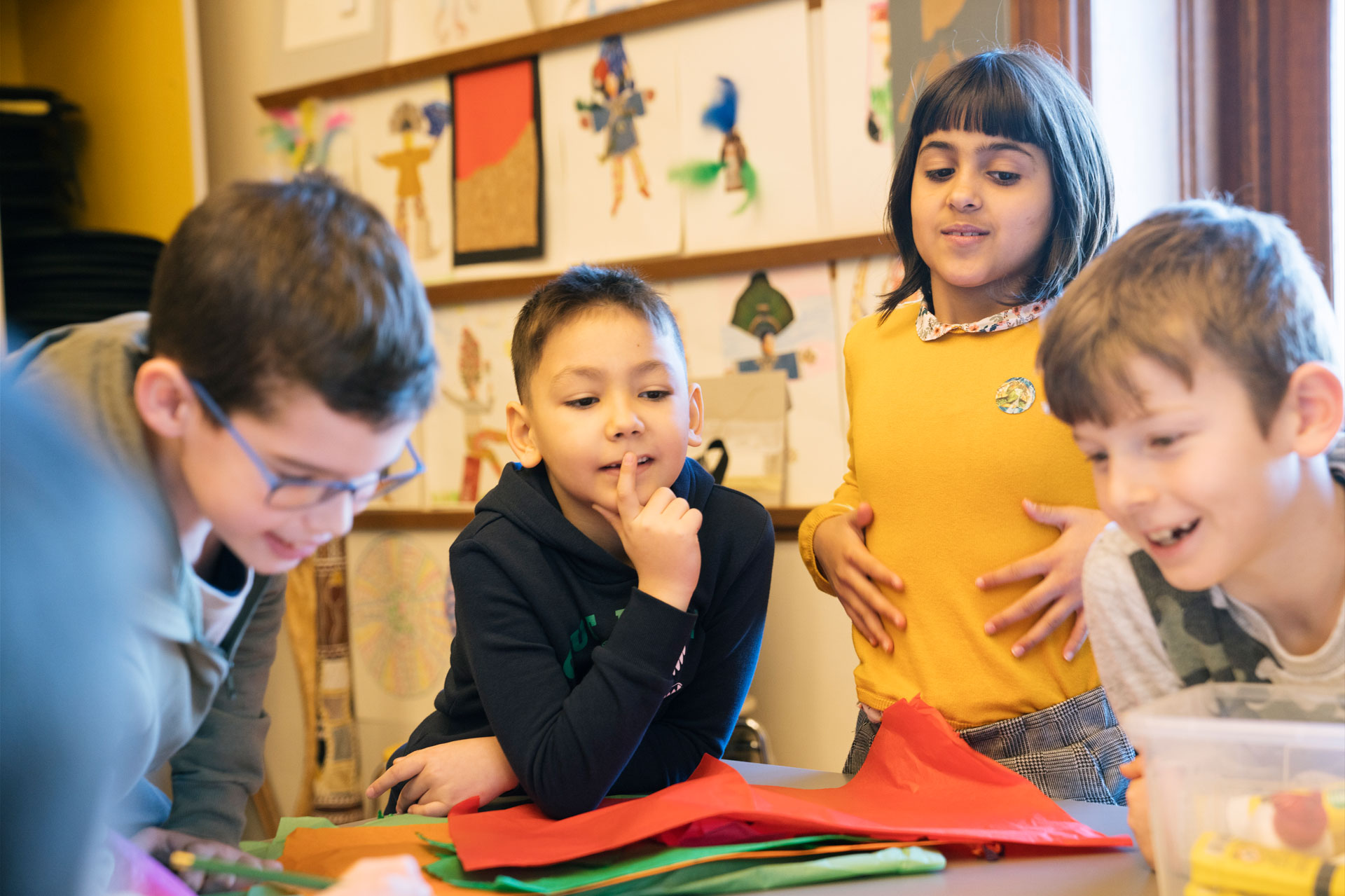
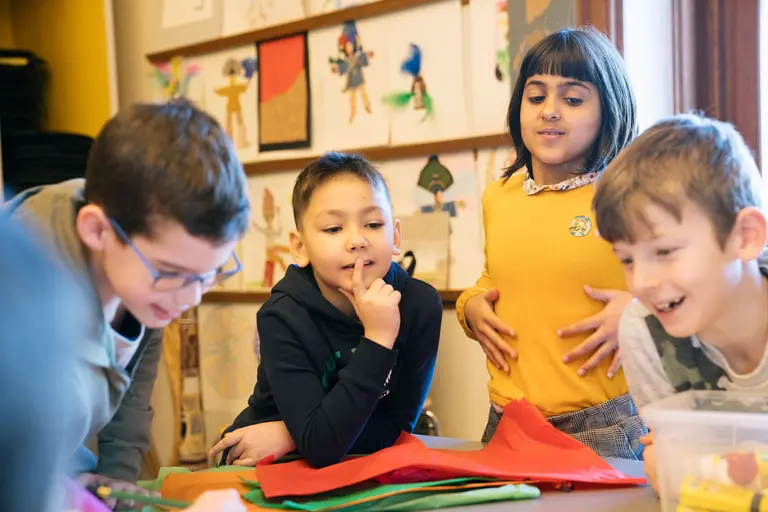
A group of four children are gathered around a table, smiling and engaged in a creative activity. Colorful pieces of paper are spread out in front of them. One child appears to be thoughtfully pondering while others are animatedly discussing their project.
© Lukas Beck/Kultur für Kinder

Programmes for Children & Students Guided Tours & Workshops

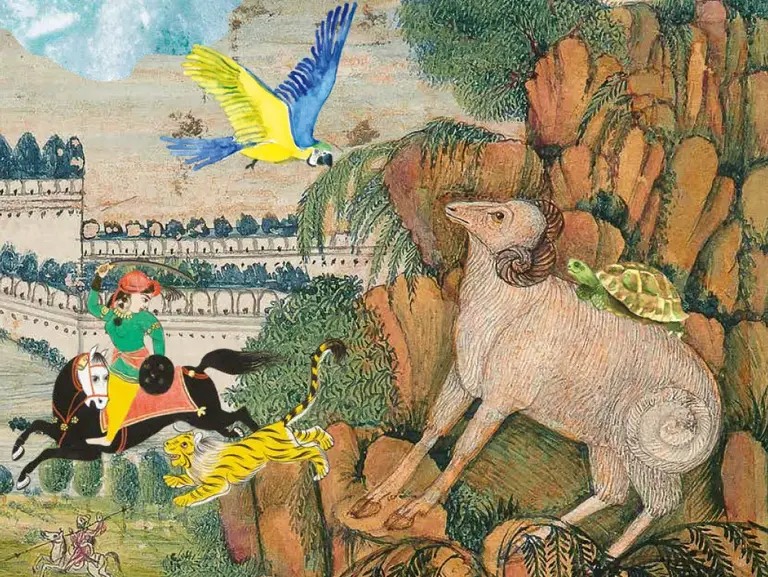
An intricately detailed scene features a rider on horseback, accompanied by vibrant animals, including a tiger and colorful birds. A large, mythical creature resembling a goat with a turtle on its back stands prominently against a backdrop of lush greenery and a distant architectural landscape.

We offer guided tours and workshops related to the temporary exhibitions as well as the permanent exhibition, available in German and English. Guided tours usually last 45 minutes, but can be extended on request. The duration of workshops varies depending on the age group and topic.

Price per workshop
Duration: 90 min.
Price: € 120 for up to 32 participants
Admission: free for students under 19 and for two accompanying teachers per group

Request now

Contact
kulturvermittlung@weltmuseumwien.at
or +43 1 534 30 – 5150 (Mon – Fri, 9 a.m. – 1 p.m.)

Kindergarten and Preschool

60 minutes
Possible in all rooms
Kura Kura, the museum turtle, guides you to her favourite objects

Kura Kura may not be the fastest, but she has travelled a lot! She has visited every corner of the world and met many fascinating animals, people and objects along the way, all of which she loves to tell stories about. She knows the museum very well and especially enjoys showing funny, valuable and curious objects that scientists, travellers or collectors brought to Vienna from faraway places. Discover the Weltmuseum Wien together with Kura Kura and explore many exciting stories.

60 minutes
Mesoamerica and Oceania
Feather, feather in my hand, what is the most valuable thing in all the land?

In this programme, you will hear exciting stories about precious objects and artworks made of feathers, created long ago by people in Mexico, Hawaii or New Zealand. An ancient Mesoamerican feathered serpent bird and the Māori god Māui guide you into the world of birds. Using feathers, you will create your own feathered companions together.

60 minutes
Mesoamerica and North America
Eagles, Snakes and Thunderbirds

Have you ever heard of Tenochtitlan, the capital of the Aztecs in present-day Mexico? Do you know the bird that can send lightning and thunder to Earth? And who actually brings light into the world? You will discover all this and more in exciting stories from Mesoamerica and North America. Afterwards, we will create a special pendant made of beads and feathers that will accompany you for a long time.

60 minutes
South Seas
The Boy and the Spirit of the Orange Tree

This story takes us to the South Seas. You will hear how a boy, with the help of the spirit of the orange tree, receives the longest shell necklace in the world and becomes a leader. Through a trading game with shells, we take a closer look at shark teeth, whale teeth, tree-creeper feathers and other natural materials, and search together for objects made from these rare materials in the gallery. Afterwards, we create a necklace with a Hei Tiki, a good-luck charm of the Māori of New Zealand.

60 minutes
Indonesia
Fairy Tales from Bali

Do you know the exciting fairy tales from Bali? And the magnificent batik fabrics from Java? Join us on an intriguing journey to the Indonesian islands of Bali and Java! Together we decipher secret, forbidden and hidden patterns and symbols in textiles. Unusual characters from Indonesian puppet theatre also have many stories to tell. In our studio, you will then design your own Wayang Kulit shadow puppet.

60 minutes
Possible in all rooms
Around the Fire

People all over the world have always enjoyed sitting around a fire and telling stories. Do you as well? Together we create our own fire pit and listen to moving and instructive stories from different regions of the world. The travel route is different every day. Along the way, children discover new things in a playful manner!

School programs up to 6th grade

90 minutes
Possible in all rooms
Stories from Around the World

On this exciting journey through the Weltmuseum Wien, you will be accompanied by stories from around the world, numerous hands-on objects and surprising artefacts. Perhaps we will encounter Hawaiian deities, see magnificent garments from Ethiopia, admire samurai swords or marvel at the splendid feather headdresses of the Aztecs. The travel route is different every day, and we are happy to take your wishes into account. Your self-designed postcard will remind you of the stories and encounters.

90 minutes
Possible in all rooms
The Emperor’s New Clothes

The story of the emperor who loved beautiful clothes so much that he changed them every hour accompanies us on this lively tour through the museum. We admire exquisite garments made of velvet, silk and lion’s mane worn by Emperor Menelik of Ethiopia, shirts made of buffalo hide, jackets made of seal intestine from North America, colourful symbol-rich blouses woven by women in Mexico, and a samurai suit of armour from Japan. The many different materials, styles and symbols will hopefully inspire you to create your own designs!

90 minutes
Brazil, Mesoamerica, Into a New World, South Seas
The Question of the Origin of the World

How did the world come into being, and how did life on Earth begin? Was it the Big Bang? Was the world created by one or several deities—or by a smoking primordial mother? We listen to stories and myths about the creation of life on Earth as told by the Māori of New Zealand, the Haida of North America or the Tukano of Brazil. Afterwards, you will all work together to create a new universe on a large sheet of paper.

90 minutes
North America, Mesoamerica
Stories from Mesoamerica and North America

Which item of clothing is made from the intestines of marine mammals? Which deity has the body of a snake and feathers like a bird? You will hear old and new stories from Mesoamerica and North America and learn fascinating facts about the people who lived and still live there. Afterwards, you can design a personal power or deity symbol!

90 minutes
Possible in all rooms
Body Culture from Around the World

How do we find ourselves beautiful? Which ideals of beauty do we know, and how do they change over time? What does a ring on a finger or a tattoo on the chin say about a person? On our journey through the museum, you will discover how people in different societies decorate, adorn and transform their bodies—because clothing, beads and body painting reveal a great deal about who we are. At the end, you will have the opportunity to create your own upcycled jewellery from self-rolled paper beads!

90 minutes
Himalaya, China, Japan, Brazil
In the Footsteps of Buddha

Siddhartha Gautama, the historical founder of Buddhism, grew up as a prince in a small kingdom in northern India. After hearing his story, we follow in Buddha’s footsteps to China, Japan and Brazil. Tibetan monks create fascinating sand mandalas in their Buddhist monasteries. Inspired by these works, you will design your own painted mandala in small groups.

2 hours
An Image of Africa – “Made in Europe”

What do you know about the African continent, and where does this knowledge come from? Do the images in our minds reflect reality, and do they do justice to the diversity and richness of Africa’s many countries? In this workshop, we take a closer look at European images of Africa and open up new insights and perspectives.

Funded by:
 Logo Zukunftsfonds der Republik Österreich

90 minutes
Christmas Special: What Does the Laughing Buddha Have in Common with Saint Nicholas?

The legend of the Laughing Buddha is based on the story of a monk who lived in China a thousand years ago. His Chinese name, “Budai,” means cloth sack and refers to the legend that the monk always carried such a sack with him. On our tour, you will learn what the sack is all about, why the chubby Buddha laughed so much, and what he has in common with Saint Nicholas.

School programs for grades 4 to 8

90 minutes
It’s a Global Matter

What do soybeans from Japan, bird feathers from New Zealand and a wooden stool from the Amazon have to do with the disappearance of bees? All of these objects tell stories about how humans interact with animals and plants—an interaction that is unfortunately often shaped by destruction.

In this workshop, we reflect together on how we can treat plants, animals and our entire living environment with respect.

The workshop serves as an introduction to the topics of climate change and nature conservation and encourages further exploration and research.

School programs from 7th grade onward

90 or 120 minutes
Possible in all rooms
Colonialism Then and Now

Colonialism – Provenance – Looted Art – Racism – Ethnology – Restitution Claims

Through historical and contemporary stories from different countries, we explore the topics of colonialism and neo-colonialism. By considering multiple perspectives, we aim to highlight distorted images and forms of racism from the past and reflect on their relevance today. Interactive stations help us approach this complex subject in an accessible way.

90 minutes
Possible in all rooms
People and Objects on the Move

Migration – Globalisation – Exchange – Multilingualism – Object Stories

People and objects have always been on the move. What stories do well-travelled objects bring with them to Vienna? Where do they come from, and how did they arrive here? Countless reasons drive people to leave their homes. Alongside people, objects, inventions, ideas and worldviews also travel. This guided tour explores migration and its impact on contemporary societies.

90 minutes
Possible in all rooms
Diversity in the Mirror: Body Design in Focus

Beauty Ideals – Identity – Ethnicity – Rituals – Craft

Human beings shape and transform their bodies in many different ways— in the pursuit of beauty, for rituals, due to climatic conditions, to express power, or to cope with pain and fear. In the various exhibition rooms, we explore clothing, jewellery and objects related to tattooing and body painting.

90 minutes
Mesoamerica and North America
We Are Still Here

Identity – Racism – Colonialism – Diversity – Representation

The encounter between Europe and the Americas led, for many Indigenous peoples, to the loss of lives, land, resources and ways of living. Yet some traditions endured and helped shape—and continue to shape—the New World. The American continent was systematically explored, dominated, categorised and divided by European colonial powers and their explorers. Today, icons of the Old and New Worlds of the Americas influence one another, creating shared forms of identity. Inspired by this, you will design your own connecting logo in small groups.

90 minutes
Himalaya, China, Japan, Brazil
In the Footsteps of Buddha

Religion – Syncretism – Spirituality – Southeast Asia – Buddhism

What do you know about Buddhism? Where do we encounter Buddhist teachings, and how differently are they practised? Learn about the legend of Buddha’s life and gain deeper insight into Buddhism. What is everyday life like in a Buddhist village in the Himalayas? What roles do wrathful deities and shamans play alongside Buddha in the sacred mountains? Explore with us the diverse living conditions of mountain communities, shaped by yak milk and butter churns. By creating a mandala, you will gain an impression of the meditative art practised by Tibetan monks.

1.5 or 2 hours
Writing Workshop

Language Development – Communication Skills – Creativity

Around 200,000 objects are stored in the depot of the Weltmuseum Wien. Only a small number of them are displayed in the permanent exhibition. Each of these objects has its own story to tell. In this workshop, students are invited to create their own object stories and share them with the group. All languages are very welcome!

Workshops for Language Development

Learning Language Through Play (German as a Foreign / Second Language)

The aim of the language development workshops is to support learners of German and to promote an appreciative approach to multilingualism. Both beginners and advanced learners are very welcome!

The Sprachförderzentrum Wien is a cooperation partner for these two programmes. If you book a museum visit with students from a German support class or a German support course, you will receive a discount of €2 per student.

For the association Weltmuseum Wien Friends language development is a matter close to their hearts. In addition to the Language Café, which takes place at the museum every second Monday, they also support the language development workshops.

For children aged 6 to 10
DaF/DaZ workshop from A1 level of German
Of Feathers, Shells and Dog Teeth

On this exciting journey through the Weltmuseum Wien, you will be accompanied by stories from around the world, numerous hands-on objects and surprising artefacts. Perhaps we will encounter Hawaiian deities, see exquisite garments from Ethiopia, admire samurai swords or marvel at the magnificent feather headdresses of the Aztecs. The travel route is different every day, and we are happy to take your wishes into account. Your self-designed postcard will remind you of the stories and encounters.

For children aged 10 to 15
DaF/DaZ workshop from A1 level of German
Feather Headdresses and Abalone Shells

What does an abalone shell feel like? Who wears a feather headdress? What do orange blossom flowers smell like? We explore these questions while getting to know museum objects and learning new words. Along the way, we create a memory game using the newly learned vocabulary!

For children aged 6 to 12
DaF/DaZ workshop from A2 level of German
and for students who benefit from
a language-sensitive approach
The Emperor’s New Clothes

This workshop can also be booked in an easy-language format.

The Emperor’s New Clothes is a well-known fairy tale by the Danish author Hans Christian Andersen. The story of the emperor who loved beautiful clothes so much that he changed them every hour accompanies us on this lively tour through the Weltmuseum Wien. We listen to the story while admiring exquisite garments made of velvet, silk and lion’s mane from Ethiopia, colourful symbol-rich women’s garments woven by women in Mexico, and a Chinese imperial robe made of silk. The many different materials and styles will hopefully inspire you to create your own designs!

Workshops for Spanish learners

These interactive workshops combine playful learning with a creative phase in the Kaleidoscope Studio. 

Can be booked as a bilingual workshop (German and Spanish combined) or entirely in Spanish.

For young people aged 13 and over
Mesoamerica and special exhibition
De Oro, Plumas y Calaveras – Historias de América Latina

En este taller exploraremos la herencias culturales de Latinoamérica y cómo se han adaptado  a la sociedades de hoy en día. El programa es interactivo y cuenta con  objetos que estarán a disposición de los estudiantes para que los puedan tocar.
Veremos  valiosos objetos de nuestra colección que ilustran las tradiciones del pasado y presente, como plumería, blusas tejidas y calaveras del Día de Muertos.

Más de calacas, catrinas y calaveras: a principios de octubre, noviembre  nos enfocaremos en el Día de Muertos (Es posible tener este mismo enfoque en el programa hispanohablante). Nos sumergiremos profundamente en esta importante fiesta mexicana de raíces coloniales.  Conoceremos diferentes tradiciones y prácticas culturales y al final realizaremos un ejercicio creativo en grupos, donde escribiremos nuestra propia calaverita literaria.
Workshops for Special Exhibitions

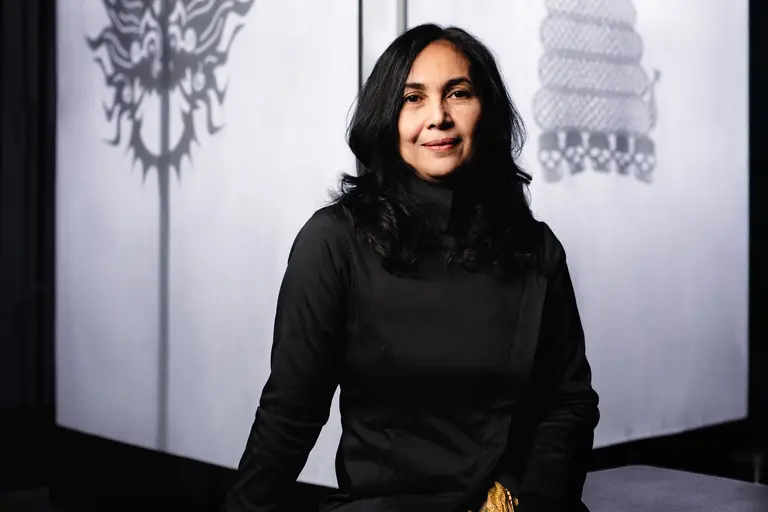
A woman with long dark hair sits confidently, wearing a black outfit. Behind her are softly lit abstract shadows, adding depth to the scene. The focus is on her serene expression and poised demeanor, suggesting strength and contemplation.
Until 25 May 2026
Indah Arsyad The Ultimate Breath

The immersive installation by artist Indah Arsyad explores the interplay between humans, nature and technology in the context of climate change and environmental pollution. Drawings and symbols from traditional Indonesian Wayang Kulit shadow theatre, real-time data on river pollution in Indonesia, and digital microscope images of phytoplankton from contaminated water are woven together into a visual narrative. Sounds of breathing, a metal gong that emits a tone when real-time water quality data exceed a certain threshold, as well as dialogues and chants from shadow theatre, expand the installation acoustically.

Topics for the classroom: Environmental protection with a focus on water and air, climate change, technology, cultural identity and spirituality, global environmental responsibility, sustainability

These programmes can be booked with a station in the exhibition:
Ages 3 to 6
Kura Kura, the museum turtle, guides you to her favourite objects

Ages 7 to 12
Stories from Around the World

Ages 10 to 14
It’s a Global Matter

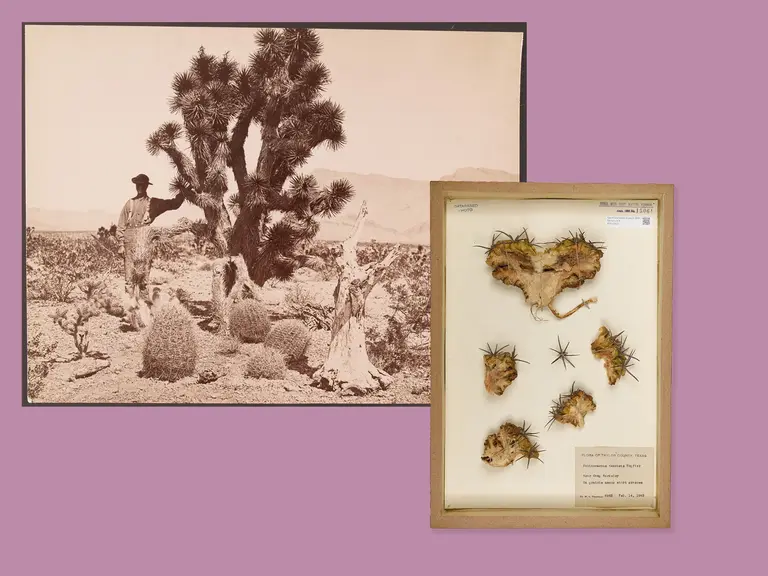
The image features a historic photo of a man standing near a large Joshua tree in a desert landscape. In the foreground, there is a display shadow box containing various preserved plant specimens, showcasing different textures and formations. The background has a muted tone to emphasize the main subjects.
Until 25 May 2026
Colonialism on the Window Sill

Plants on the Move – From the Desert to the Living Room
Workshop for children (ages 3–6)

Join us on an exciting journey into the world of houseplants! Together we look at real plants that come from faraway places—lush rainforests, hot deserts and dry steppes. We discover how people have known and used plants for a very long time—for healing, for food or for special occasions.

We listen to a story about a cactus and love. At the end, we get creative and paint our own little green cactus.

Our Green Friends – Houseplants Tell Stories
Workshop for students (ages 7–12)

In this interactive workshop, we explore how plants from lush rainforests, hot deserts and dry steppes found their way into our living rooms. Where do popular houseplants such as African violets or weeping figs originally come from, and how did they travel around the world? We learn about the knowledge Indigenous communities have preserved about the healing powers and significance of these plants—and why our green companions are much more than just decoration. At the end, we create our own small cactus.

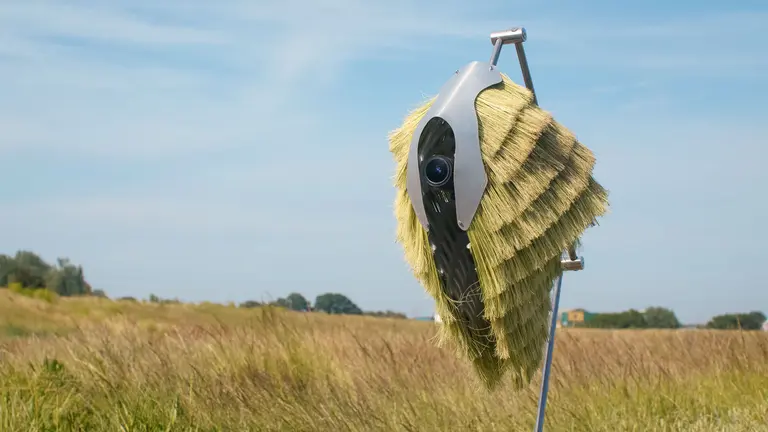
A modern robotic device resembling a bird's head is mounted on a pole in a grassy field. The device features a sleek design combined with natural elements, blending technology with nature. The background includes a clear blue sky and distant trees, emphasizing the rural setting.
3. March to 16. August 2026
SUPERFLUX. The Craftocene

Workshop for children (ages 7–12)
Workshop for children (ages 13 and up)

The Superflux exhibition deals with speculative versions of the future and how we treat the Earth. Do we have to buy and throw away so much, or could we make and repair things ourselves again? The artists have coined the term “Craftocene” for such a future, a time when humans recultivate craftsmanship using sustainable materials. A large table in the exhibition is set for a banquet for humans, animals, and a mushroom. The students slip into the roles of the guests and imagine a future in which humans, animals, and plants interact as equal partners. What kind of world would emerge?

Station in regular workshops:
A station with role-playing in the Superflux exhibition can be booked for all workshops for ages 7 and up upon request.

Collaborative School Projects with the Weltmuseum Wien

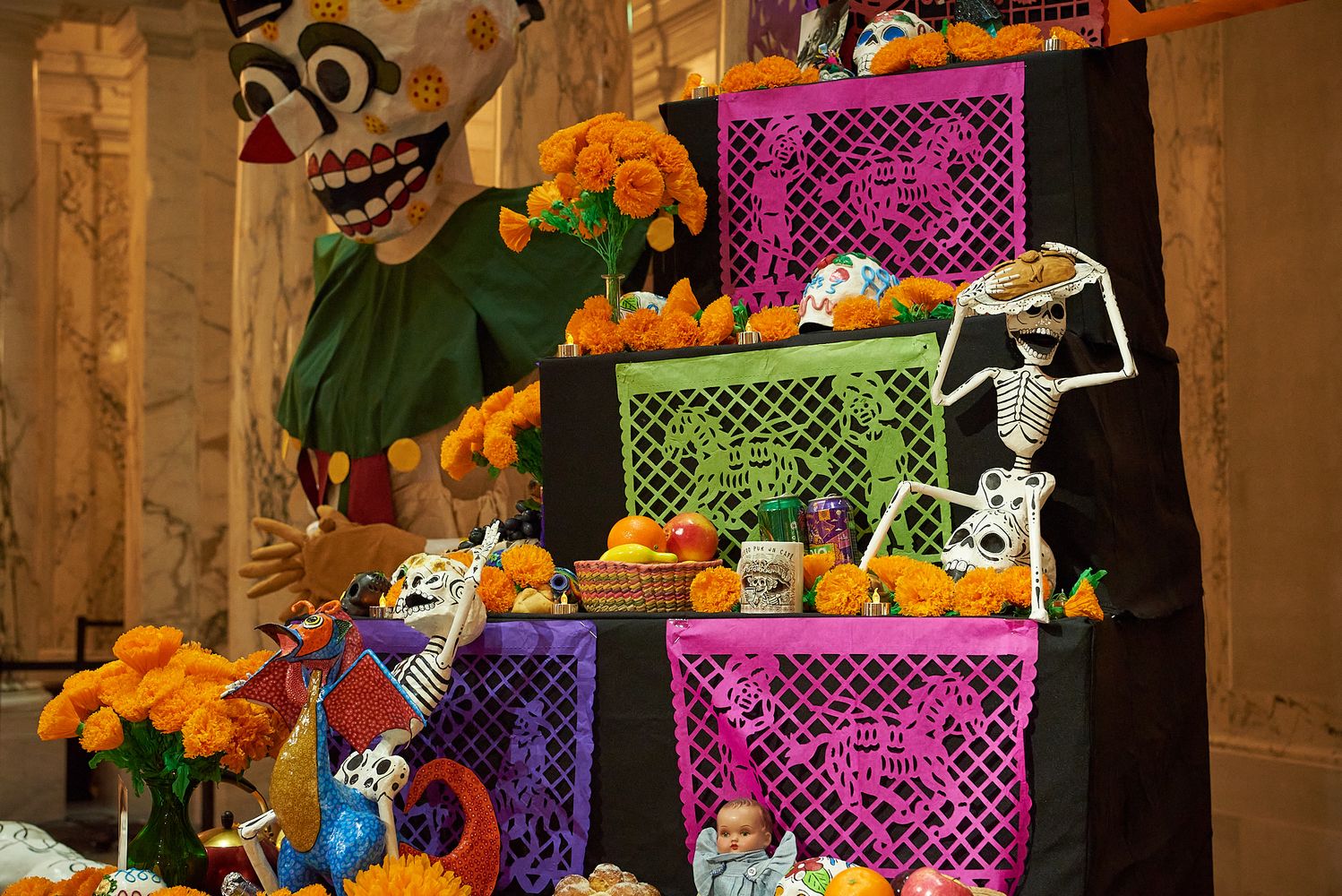
A colorful Día de los Muertos altar displays intricate decorations, including large skeleton figures and traditional skulls. The arrangement features vibrant flowers and food offerings, all set against a backdrop of illuminated columns in a festive atmosphere.

The following school projects were carried out in collaboration with the Weltmuseum Wien.

If you are interested in a similar collaboration, please feel free to contact us at: mela.maresch@weltmuseumwien.at

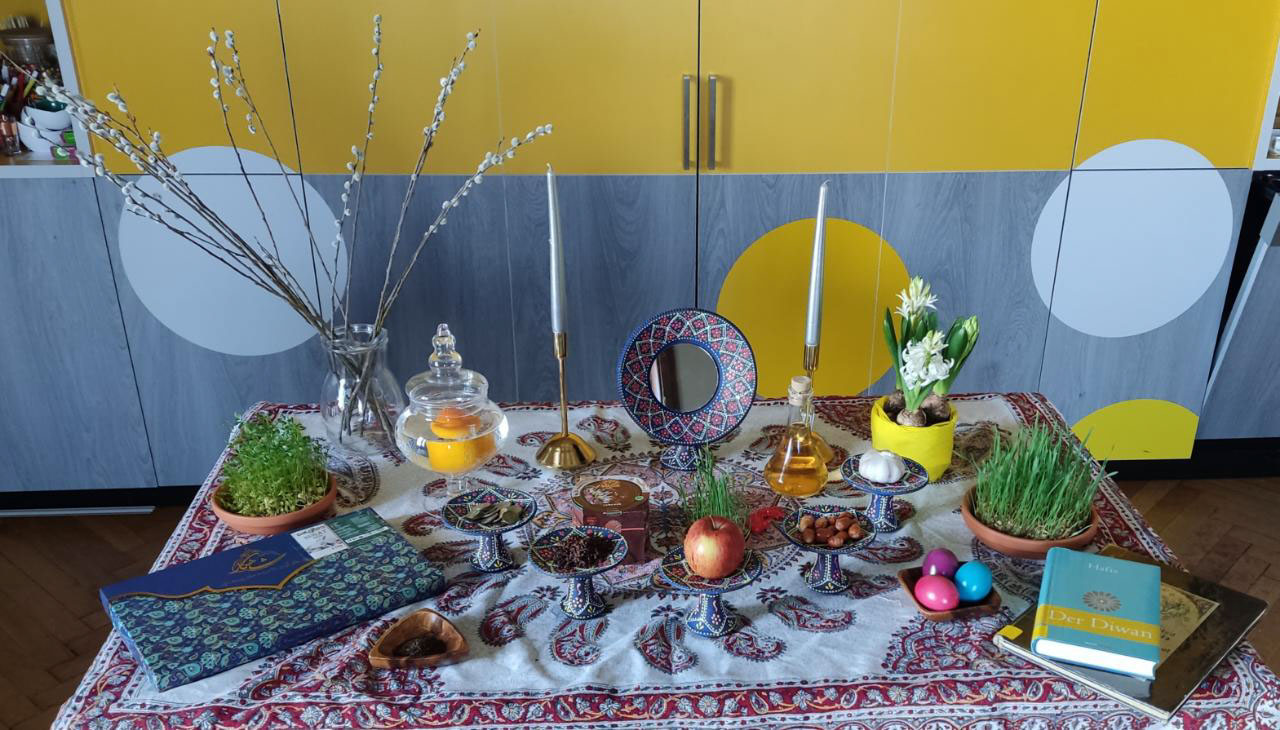
Nowruz means “New Day” in Persian and marks the first day of spring—the renewed awakening of nature. The festival has a long tradition and has been celebrated in Western and Central Asia for over 3,000 years. Today, Nowruz is celebrated not only in Iran, but also in Afghanistan, in the Kurdish regions of Iraq and Turkey, in parts of the Balkans, Central Asia and the Caucasus, as well as within many diaspora communities. Worldwide, more than 300 million people celebrate this day in special ways.

In Vienna, too, many people celebrate Nowruz. This project aimed to acknowledge this reality—through cultural appreciation, the celebration of diversity and as a wonderful opportunity for cultural exchange.

As part of the project, students from MS Schopenhauerstraße were given the opportunity to actively participate and explore similarities and differences in traditions, stories and customs connected to the beginning of spring.

The project began with an initial introduction to the museum and its collection. Students became researchers by closely examining objects from North Africa, Western and Central Asia. During the second meeting, these explorations were continued in other exhibition spaces. Selected objects from the collection and hands-on materials from cultural education invited discussion about different spring traditions. Students were encouraged to share customs they knew from their own families.
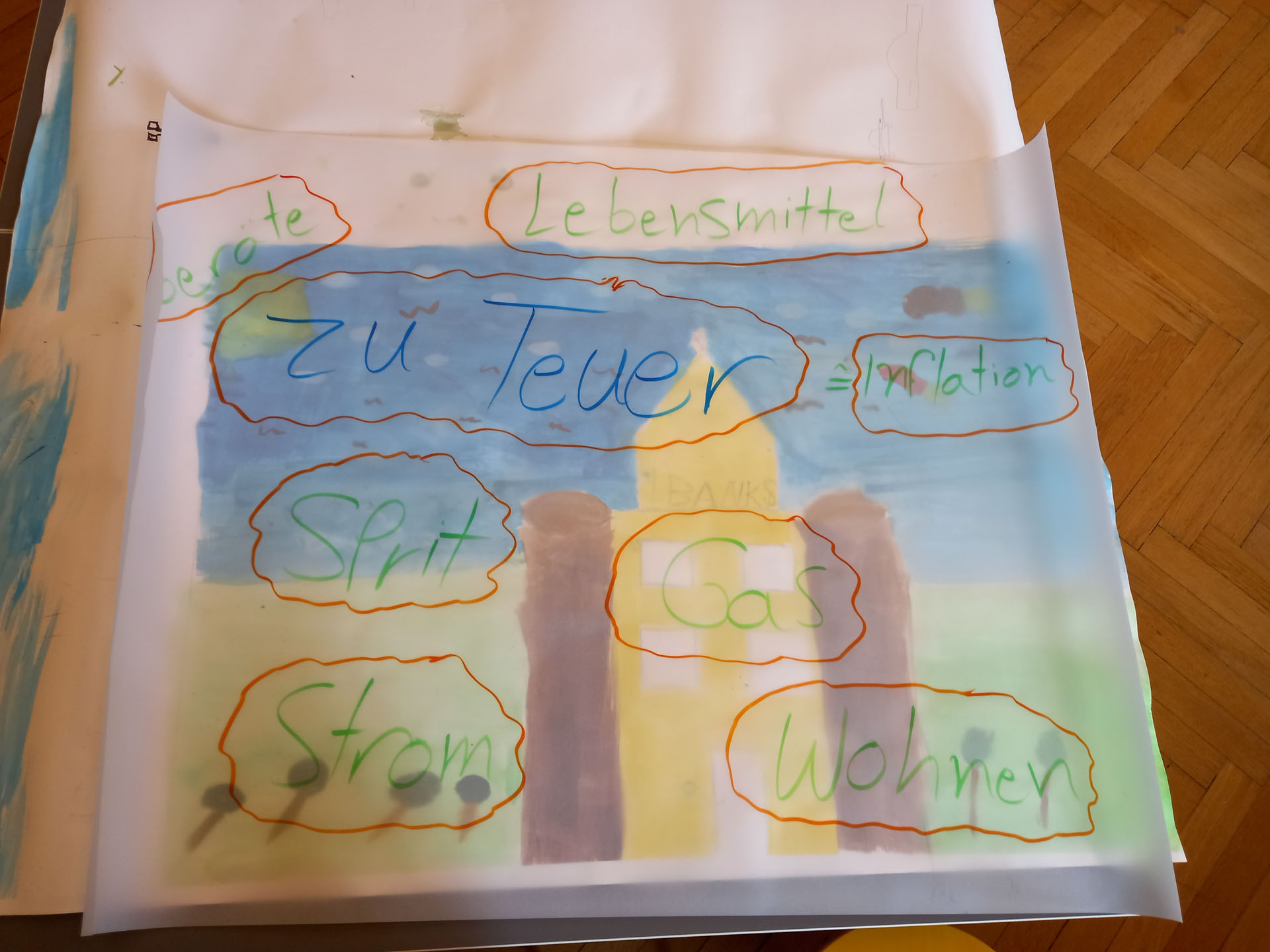
For example, they introduced Čimburijada, a Bosnian festival celebrating scrambled eggs, and Eid al-Fitr, which marks the end of Ramadan and in recent years has also taken place in spring. The Indian spring festival Holi was also mentioned, during which people joyfully throw colourful powders at one another. Nowruz itself was already discussed during this phase of free association, with students sharing different Iranian and Afghan customs.

Subsequently, we explored the historical and mythological origins of Nowruz together. The legend of the blacksmith Kaveh, who defeated the evil King Zahhak and thus ushered in spring, was performed theatrically by the students.

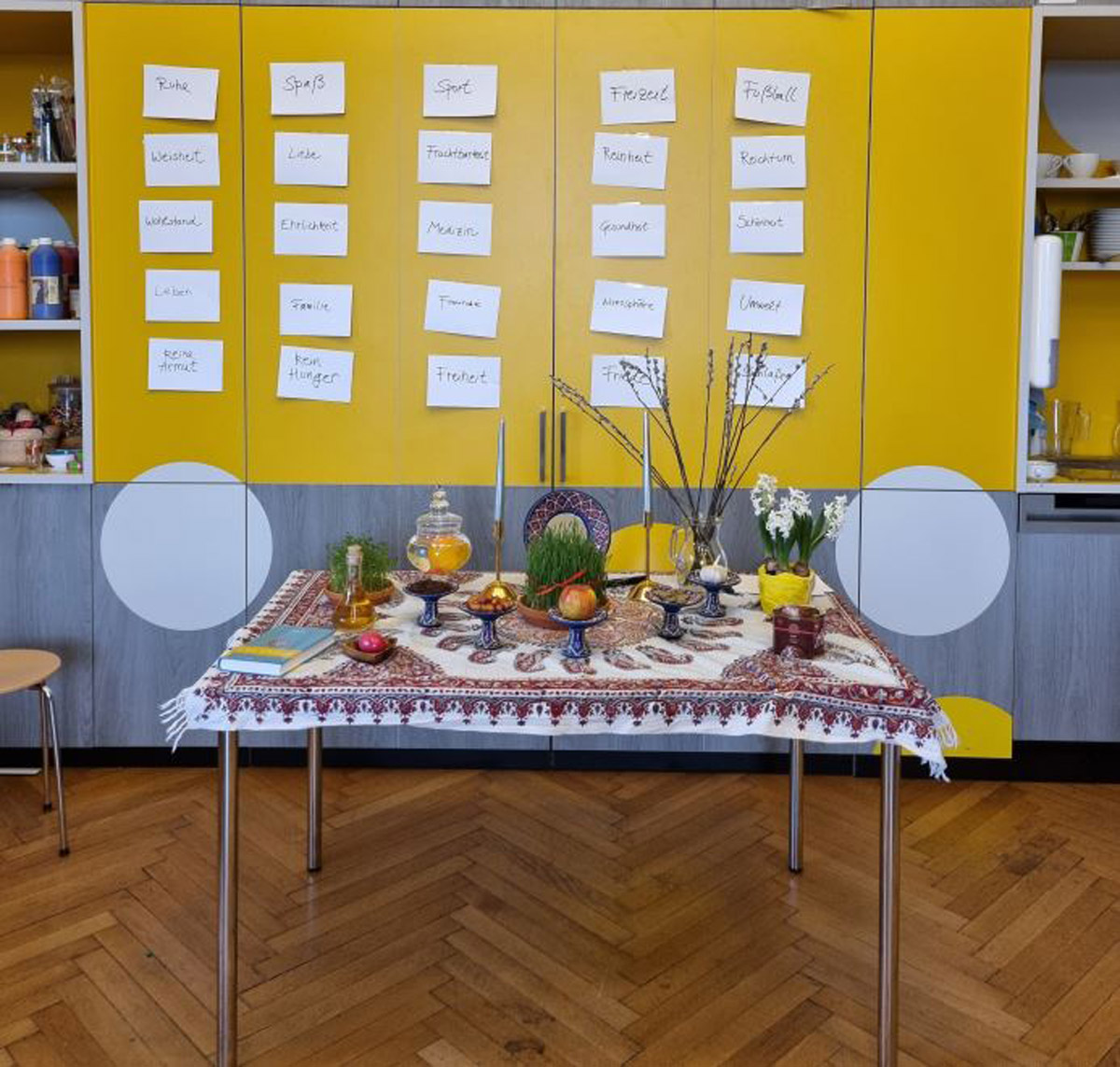
In the final session, we created a Nowruz gift table together, featuring objects symbolising good fortune for the coming year. In creative activities, the students then decorated a brightly painted pot for cress as a symbol of spring’s awakening and created collages in which they developed their own symbols representing personal wishes.

Cristina-Estera Klein and Asiye Yildiz, Cultural Educators Weltmuseum Wien

Logo of the OEAD (Austrian Agency for International Cooperation in Education and Research). It features the letters

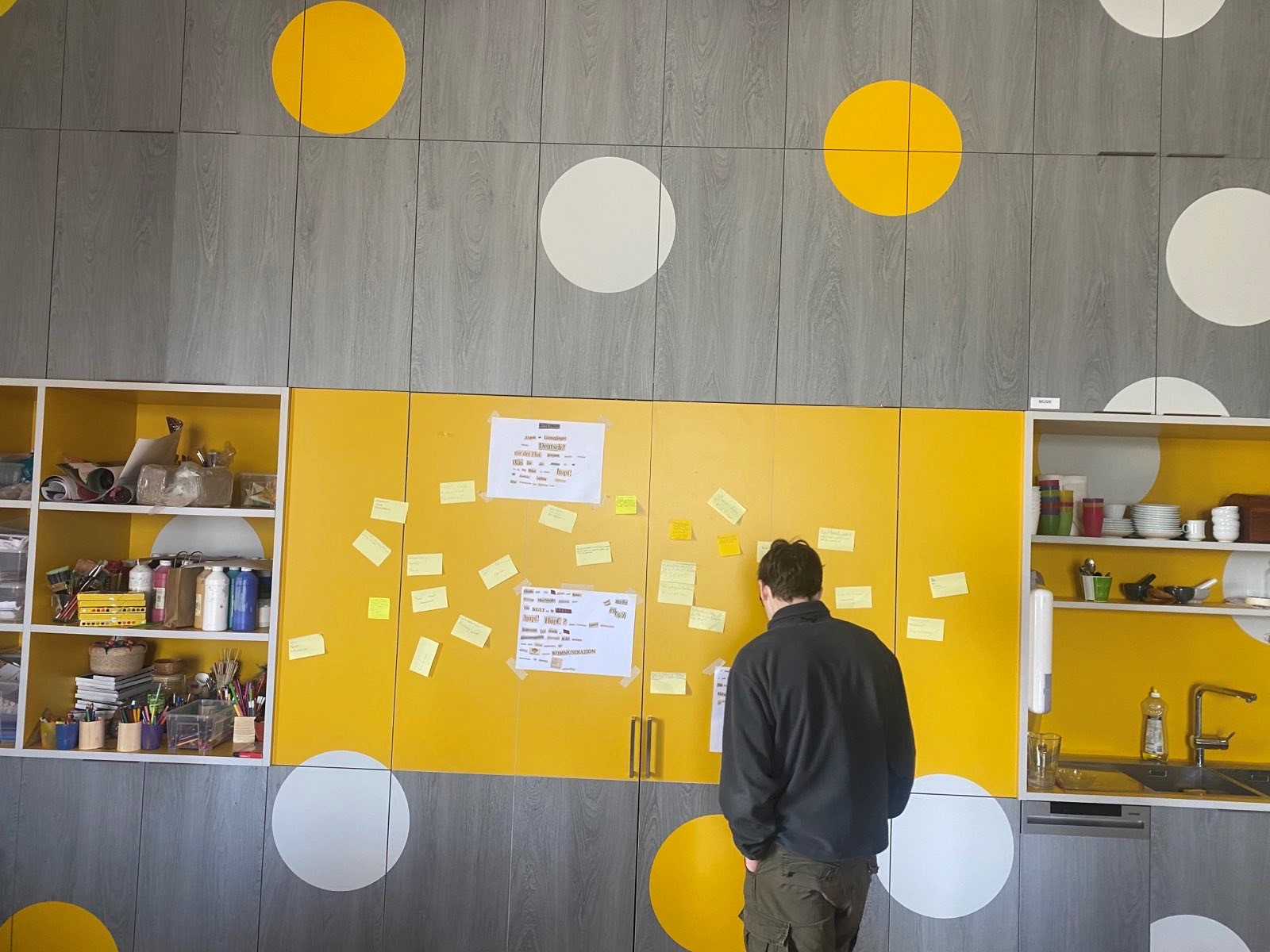
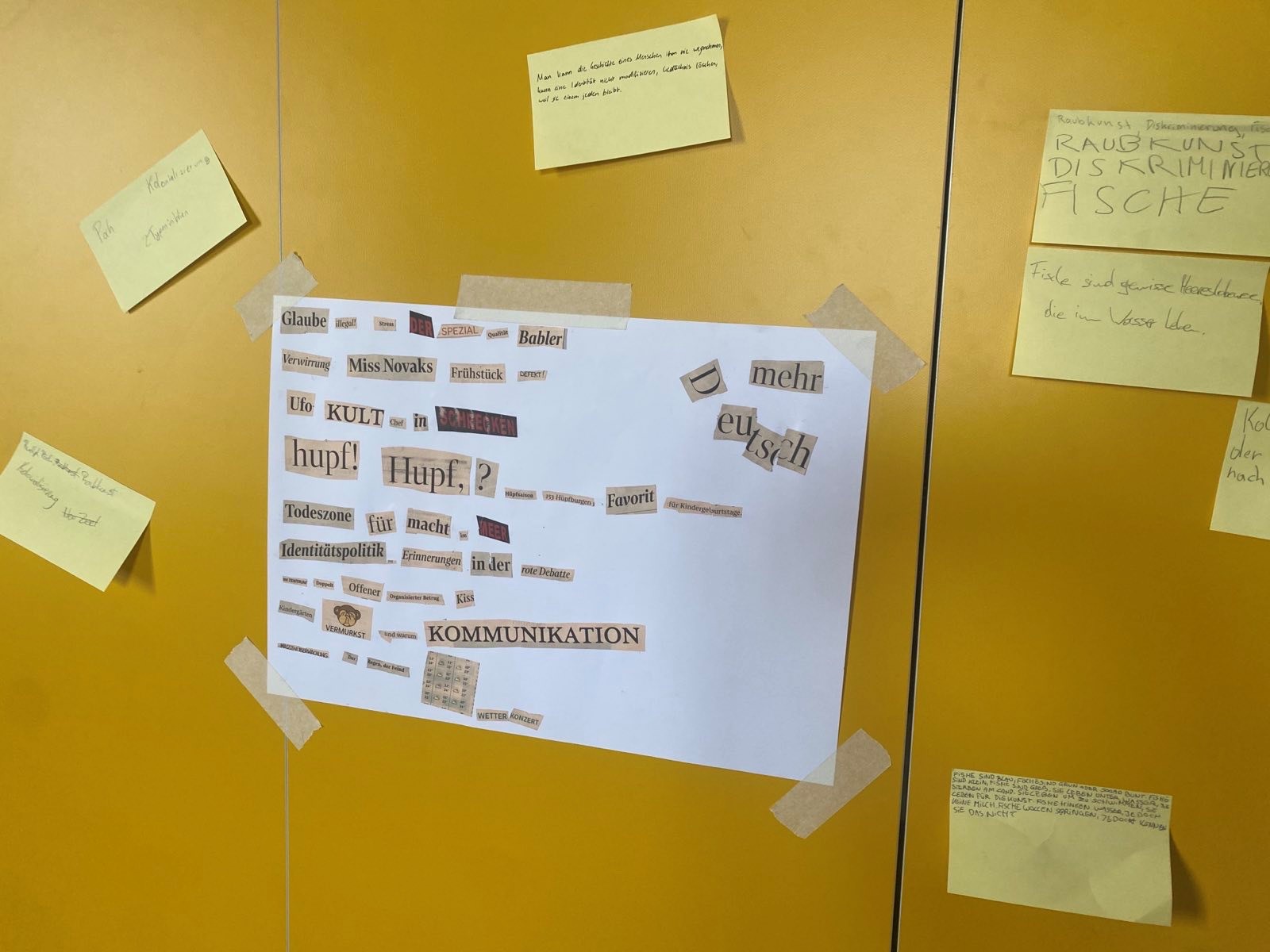
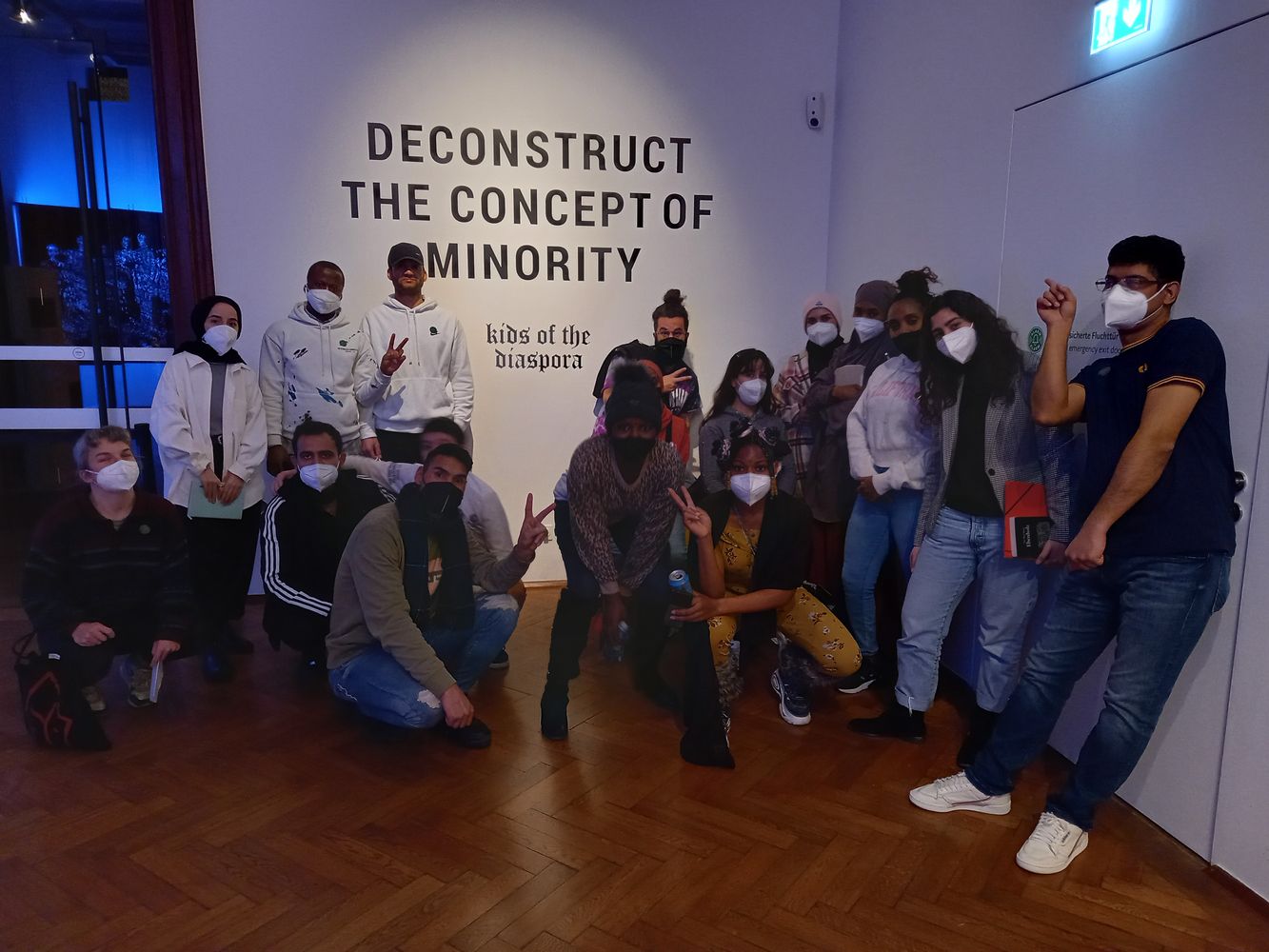
The project took place at the museum on 24 and 25 June and aimed to raise children’s awareness of their position in society while promoting cultural and linguistic diversity. On the first day, students shared the stories behind their names, defined terms such as discrimination and racism, wrote down their thoughts and read excerpts from Alice Hasters’ book What White People Don’t Want to Hear About Racism. Using methods such as the discrimination wheel and the privilege walk, social power structures and forms of discrimination were made visible. A guided tour of the museum focused on colonialism and migration. In the music workshop, students worked with texts by Mona Haydar, Ebow, Eshref and EsRap.

On the second day, a writing workshop took place in which methods used by the Surrealists—such as automatic writing and sentence completion—were applied. Afterwards, the poem My Name Is Foreigner by Semra Ertan was translated and performed in various languages: Arabic, Persian, Hungarian, Russian, English, French, Latin, Turkish and German. This was a highlight of the project, as many children were able to use their first language in a school context for the first time. The translations will soon be published on the Weltmuseum Wien website.

Neslihan Yakut and Asiye Yildiz, Cultural Educators Weltmuseum Wien

Logo of the OEAD (Austrian Agency for International Cooperation in Education and Research). It features the letters

“It is not what we expect from life that matters, but rather what life expects from us.” (Viktor Frankl)

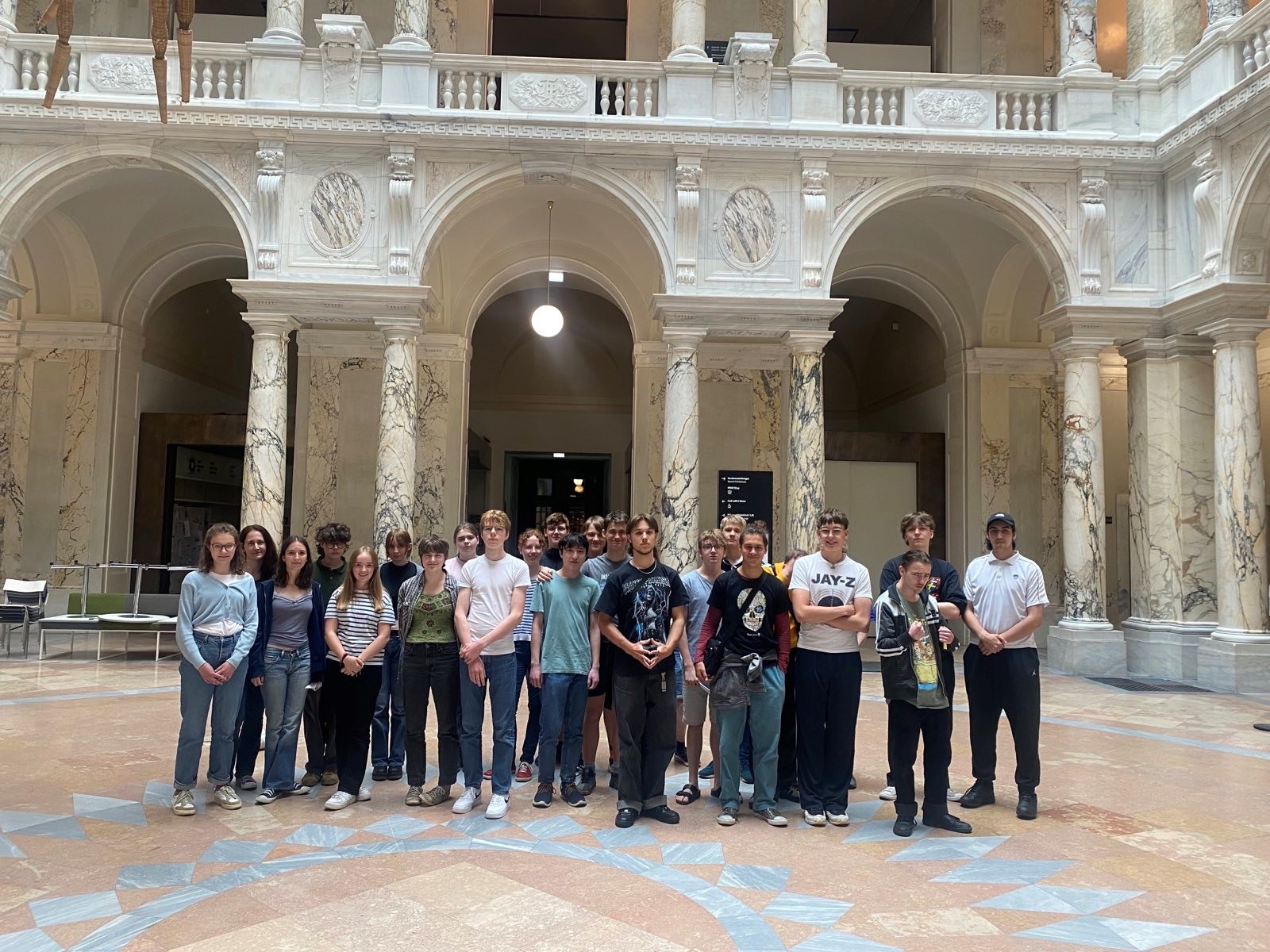
In this spirit, a class from Rahlgasse (upper secondary level, grade 12) explored constructive ways of overcoming racism and moving towards humanity on the occasion of Black History Month in February 2023. Drawing on stories and histories on display at the Weltmuseum Wien from regions of the Americas, Africa and Oceania—and their connections to present-day Europe and Austria—the group discussed models of lived cultural diversity as an expression of humanity.

By consciously breaking through black-and-white patterns of thinking, the project aimed to make a positive contribution towards new intellectual and material spaces for living. Differences could thus be defined as enrichment for better coexistence. The process began with discussions of philosophical concepts and definitions relating to the idea of “the human being” and human dignity. In this way, the young participants were able to take up ideas of being human and humanity and develop them creatively. This took place through writing studios, role plays and discussion rounds.

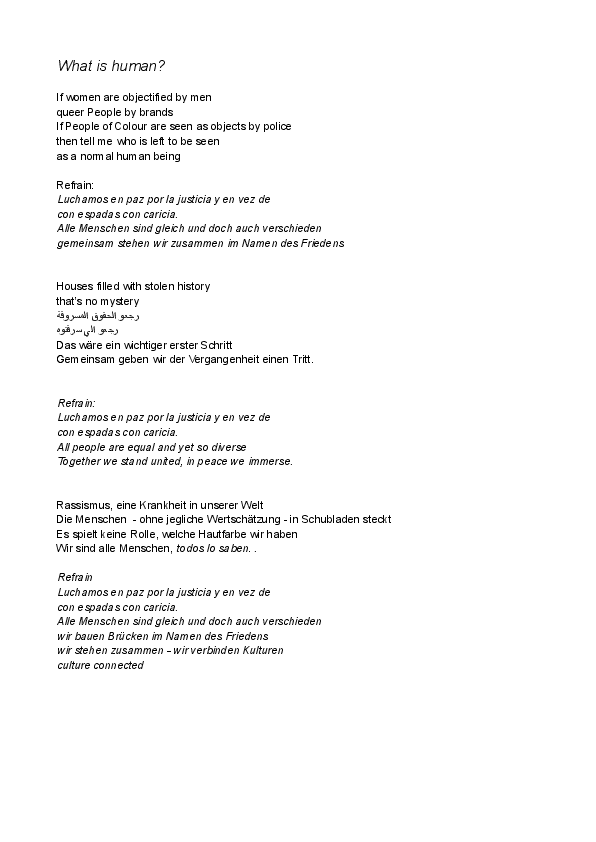
The final outcome is the self-written, multilingual rap “What is Human”, in which the class attempts to transform a “black and white history” into a colourful, hopeful future. The rap was to be performed as a flash mob in the Column Hall of the Weltmuseum Wien after the start of the school year in September 2023. A written version and an audio file will also be published on the Weltmuseum Wien website.

Logo of the OEAD (Austrian Agency for International Cooperation in Education and Research). It features the letters

We received funding from OeAD for a project within the framework of Culture Connected.

https://oead.at/de/schule/kulturvermittlung-mit-schulen/ausschreibungen/culture-connected-kooperation-zwischen-schulen-und-kulturpartnern

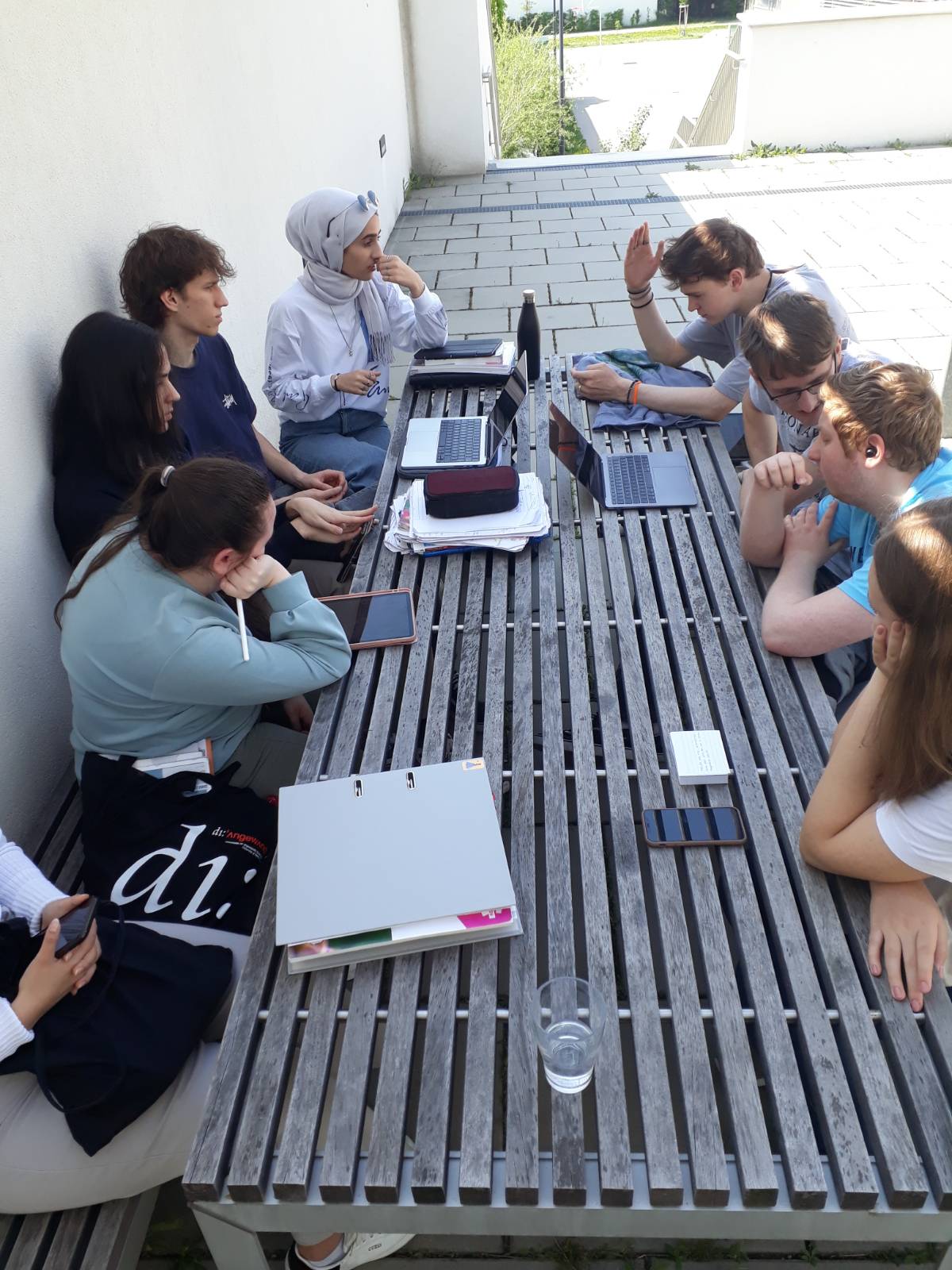
In cooperation with the Evangelisches Realgymnasium Donaustadt and class 7AG, we focused during the summer term of 2022 on the topic “What does this have to do with me? Racism and Colonialism – Then and Now.”

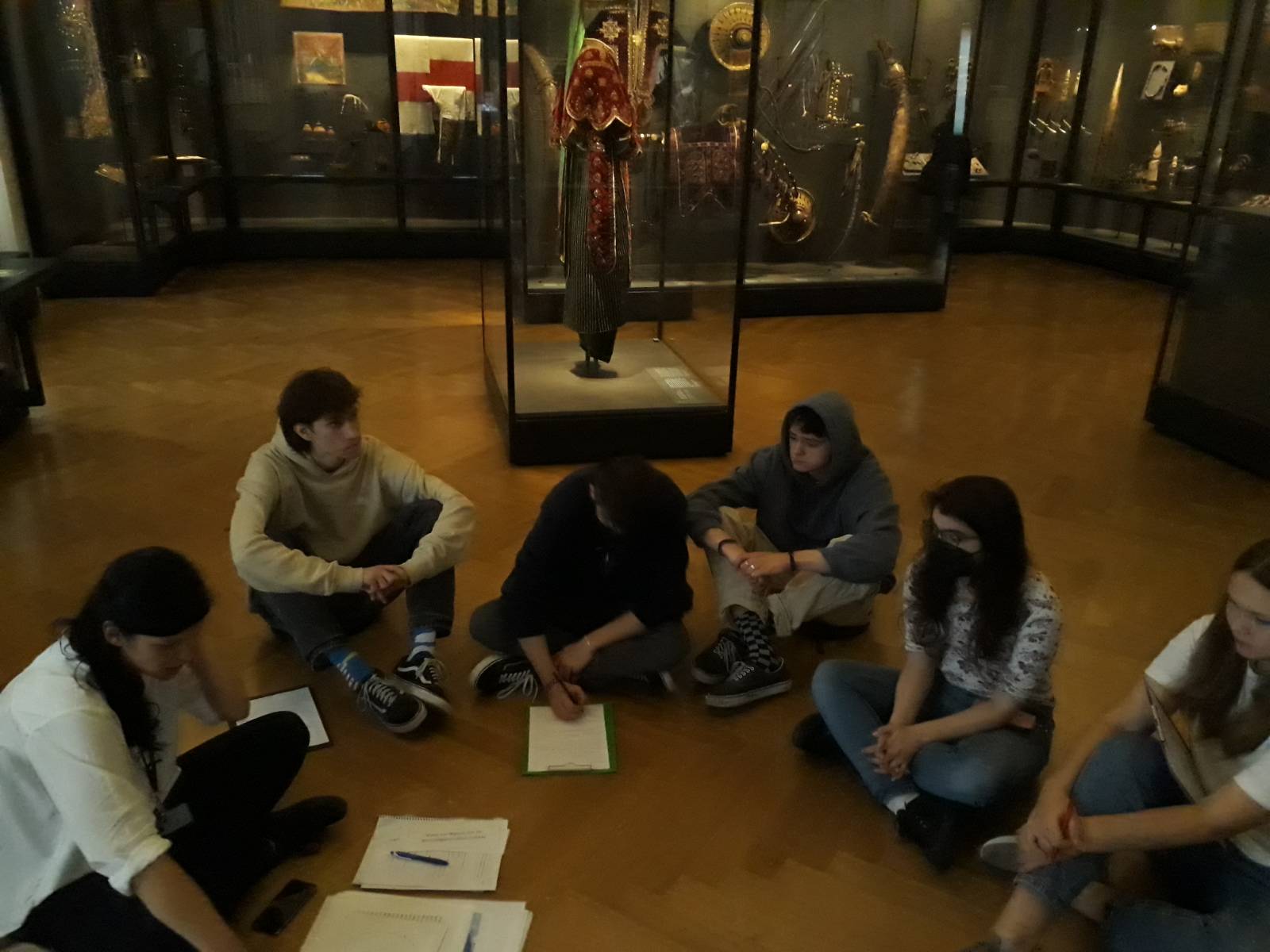
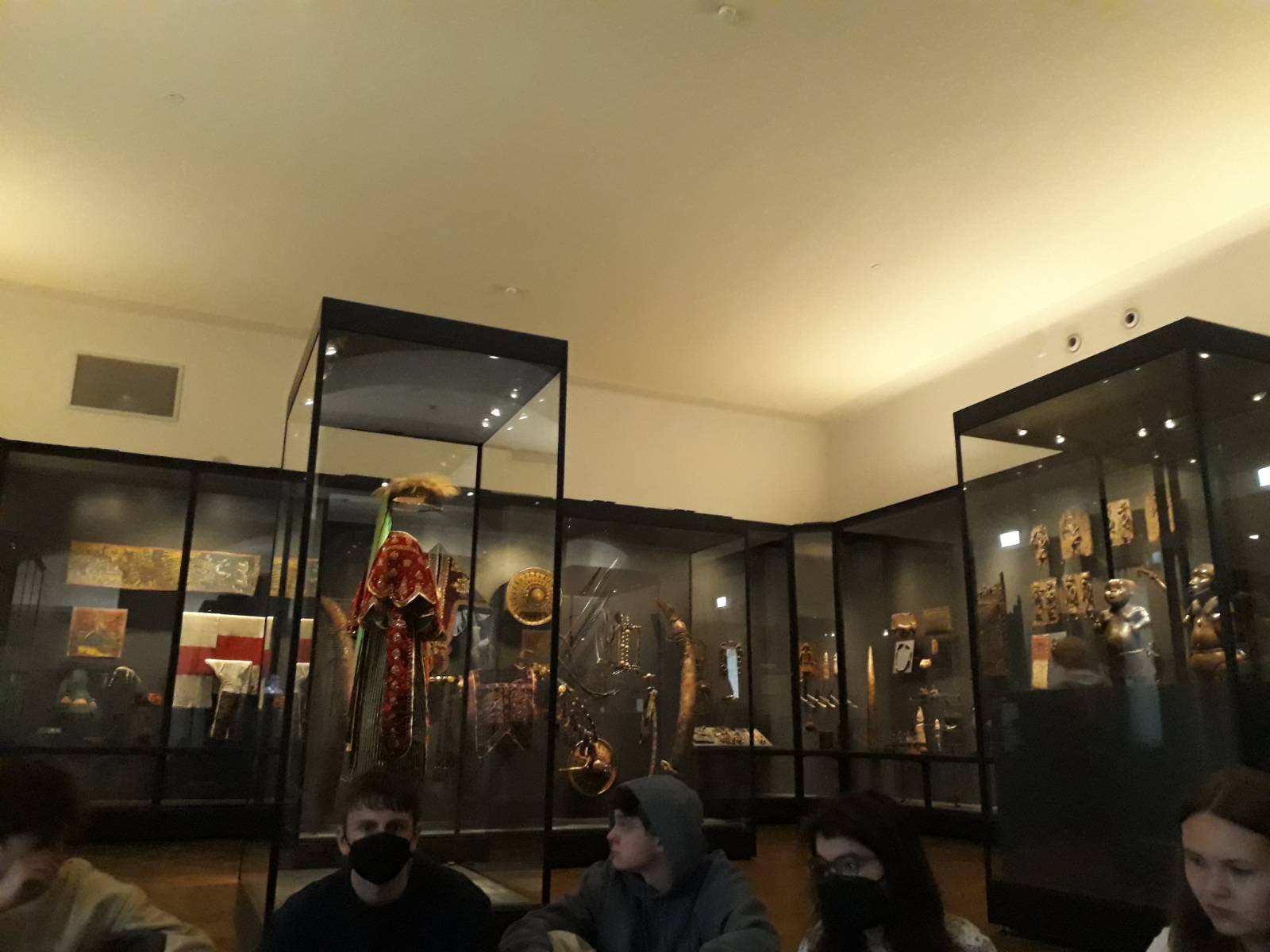
In connection with the museum’s exhibitions and permanent collection—as well as in classroom teaching—students engaged with the topics of racism and (neo-)colonialism.

Starting from the students’ everyday experiences, they were sensitised to these issues. Working with themes and objects in the museum, they explored how racism was historically constructed, how colonialism and racism are connected, and what influence they have on the present and on the students’ daily lives.

The aim was to develop an original workshop at the museum—created by students for students—using creative methods and practices as well as both analogue and digital media.
At school, the subject International Development placed a particular focus on colonialism and racism. Time was used for research and creative work on the content.
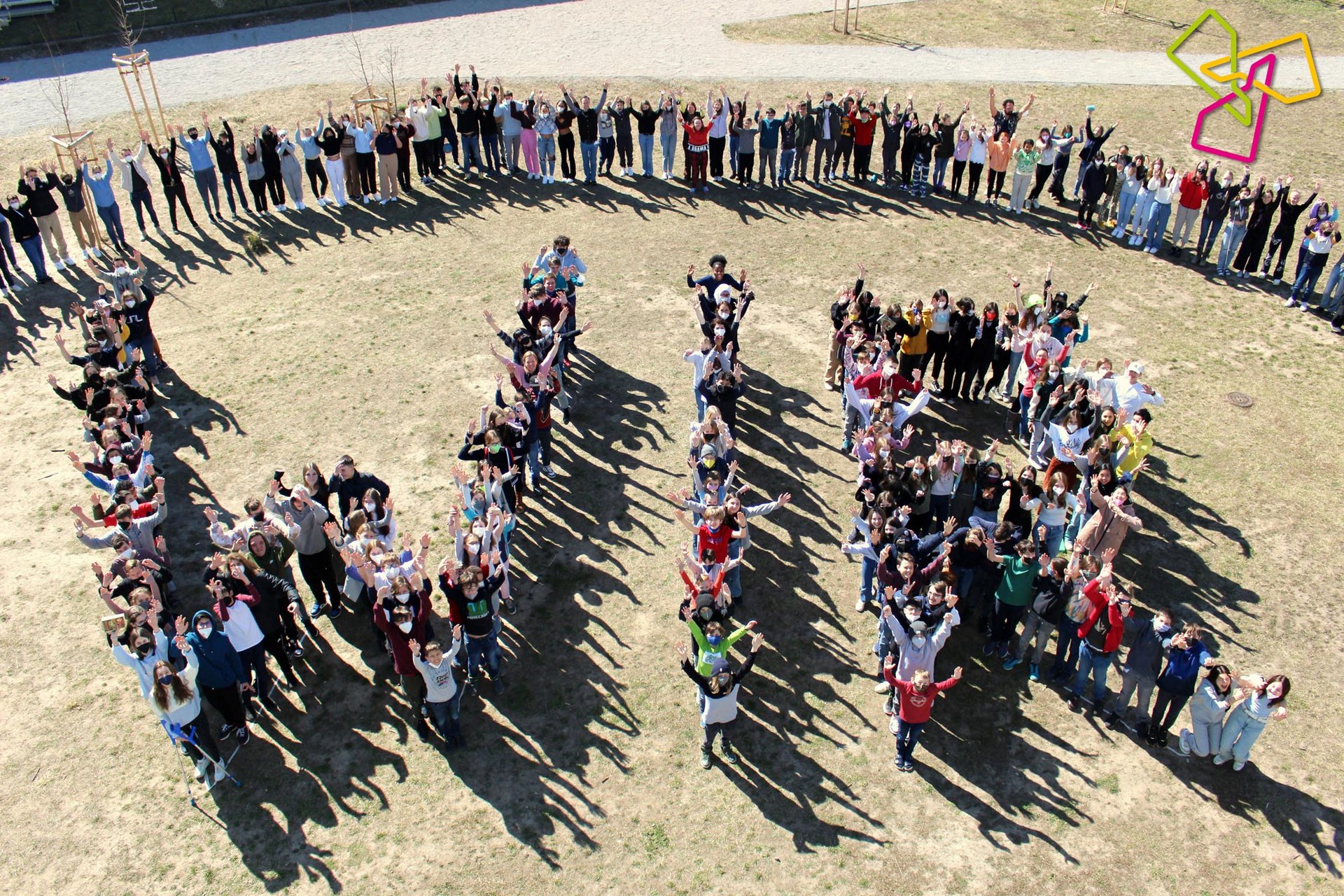
Awareness of the topic was also raised in the students’ surroundings, for example at school—such as on the International Day Against Racism:

On 21 March, the International Day Against Racism, class 7AG organised this photo at school. It was posted on various social media channels.

https://www.facebook.com/WeltMuseumWien/photos/a.489250564474039/5084928038239579/

Photo © Stefanie Liener

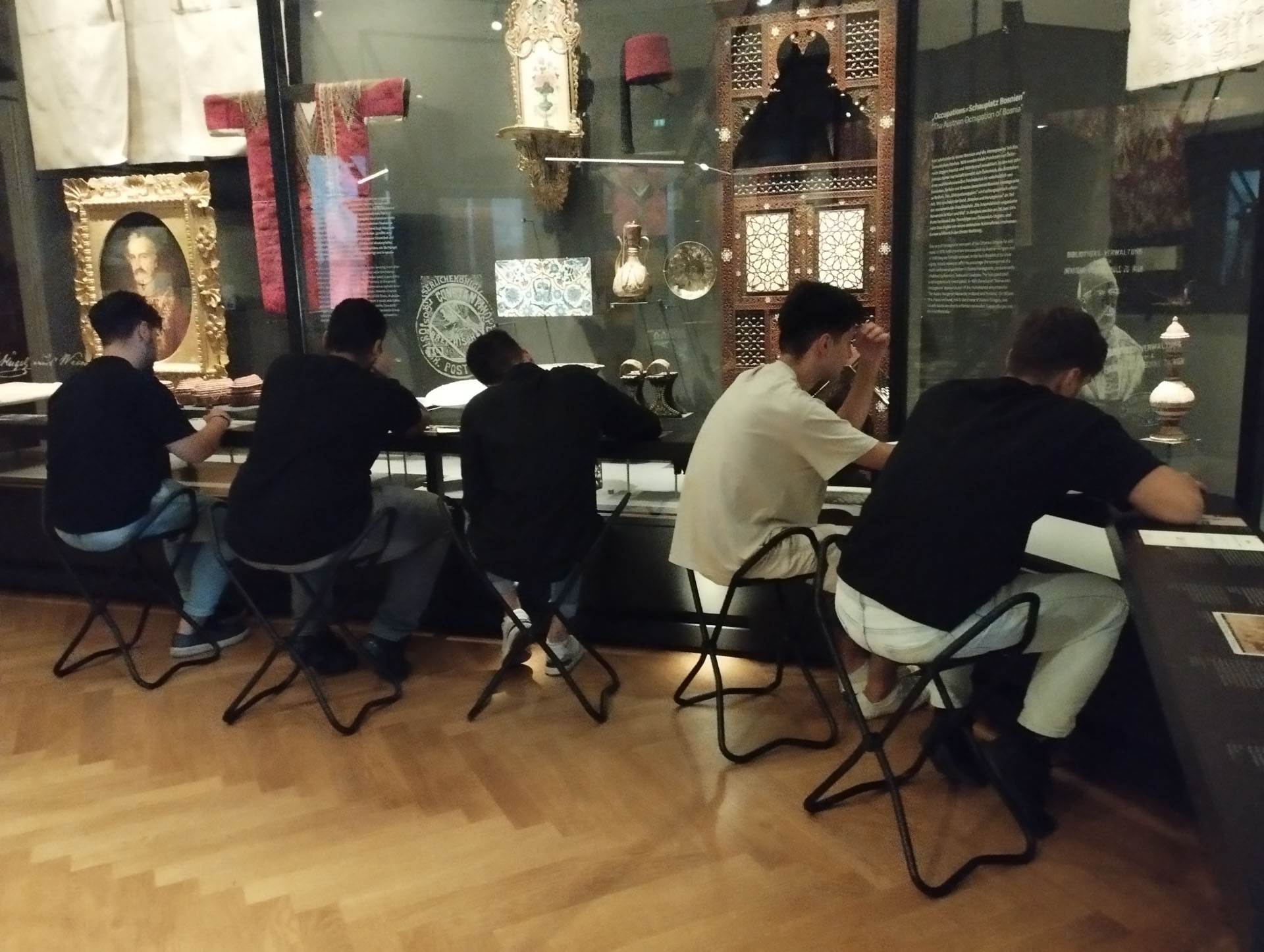
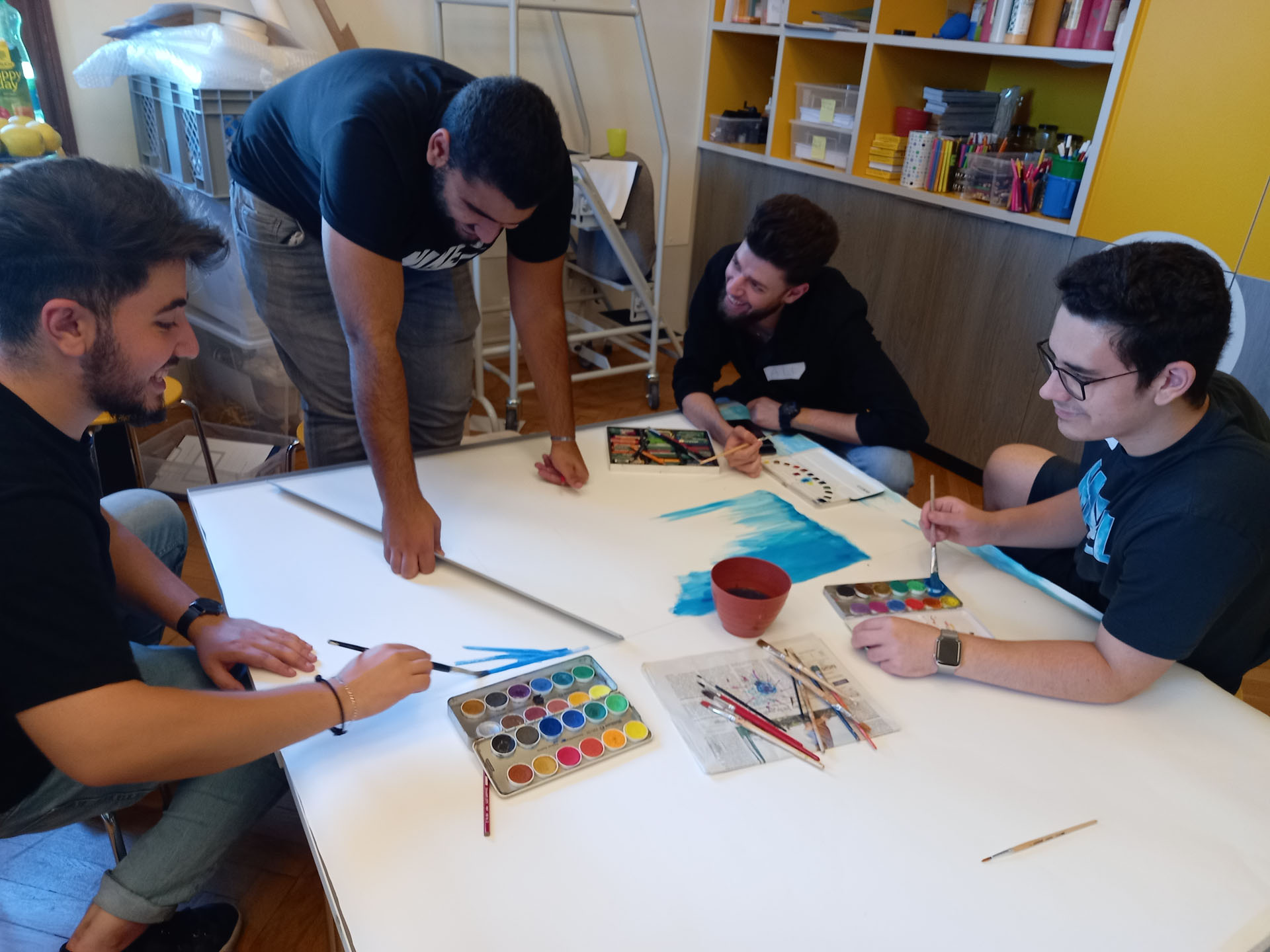
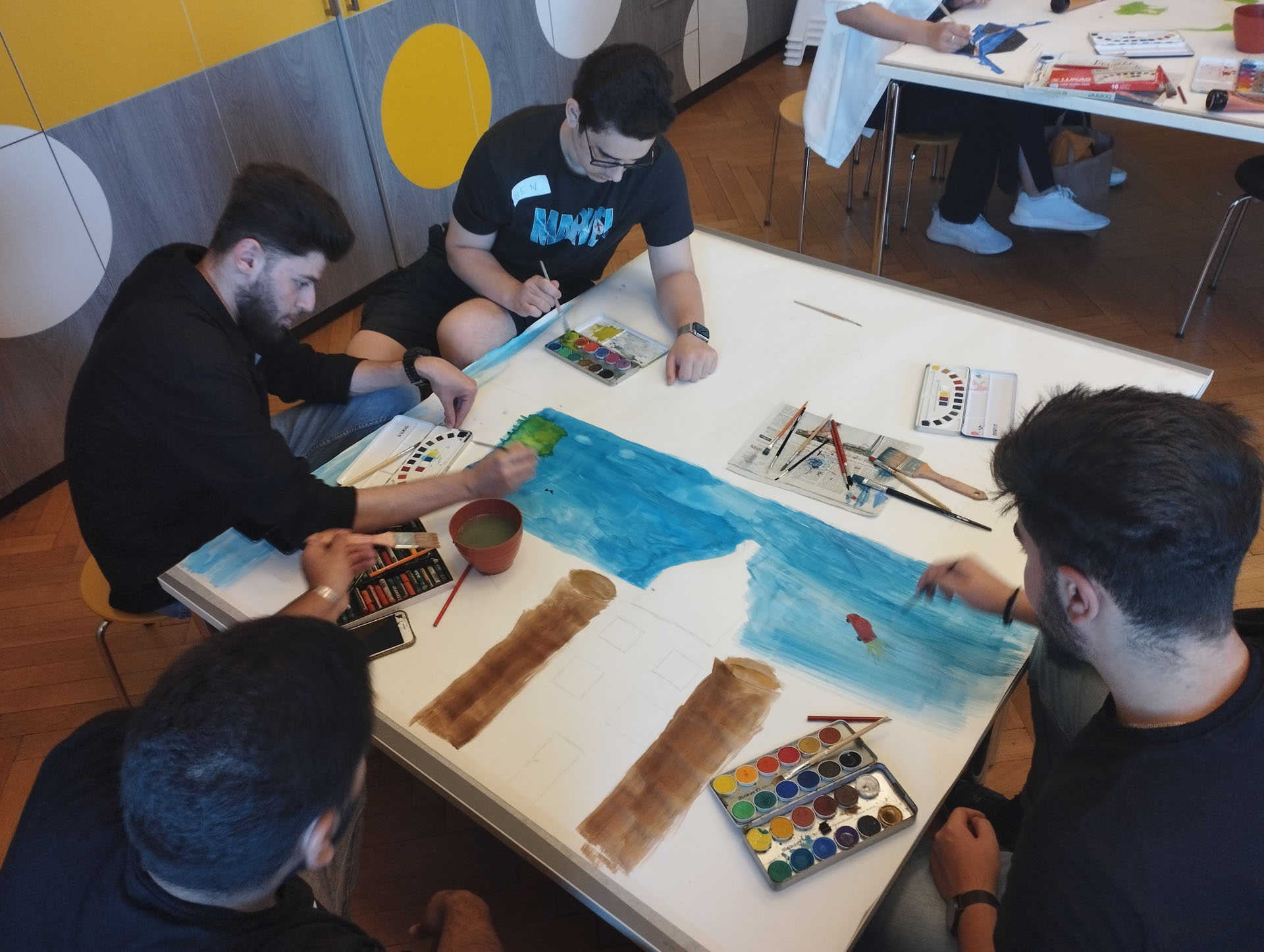
The project took place in August 2022 at the Weltmuseum Wien and was a cooperation with OeAD as the funding partner for cultural mediation and Kapsch Partner Solutions GmbH, which enabled 18 apprentices to participate in the project days at the museum.

Logo of the OEAD (Austrian Agency for International Cooperation in Education and Research). It features the letters
Logo of Kapsch, featuring the word
A simple black silhouette of a house with a chimney and a tree beside it. The house has triangular roof and a rectangular door, symbolizing a home. The tree features a rounded shape, enhancing the homey atmosphere of the scene.

About the Project
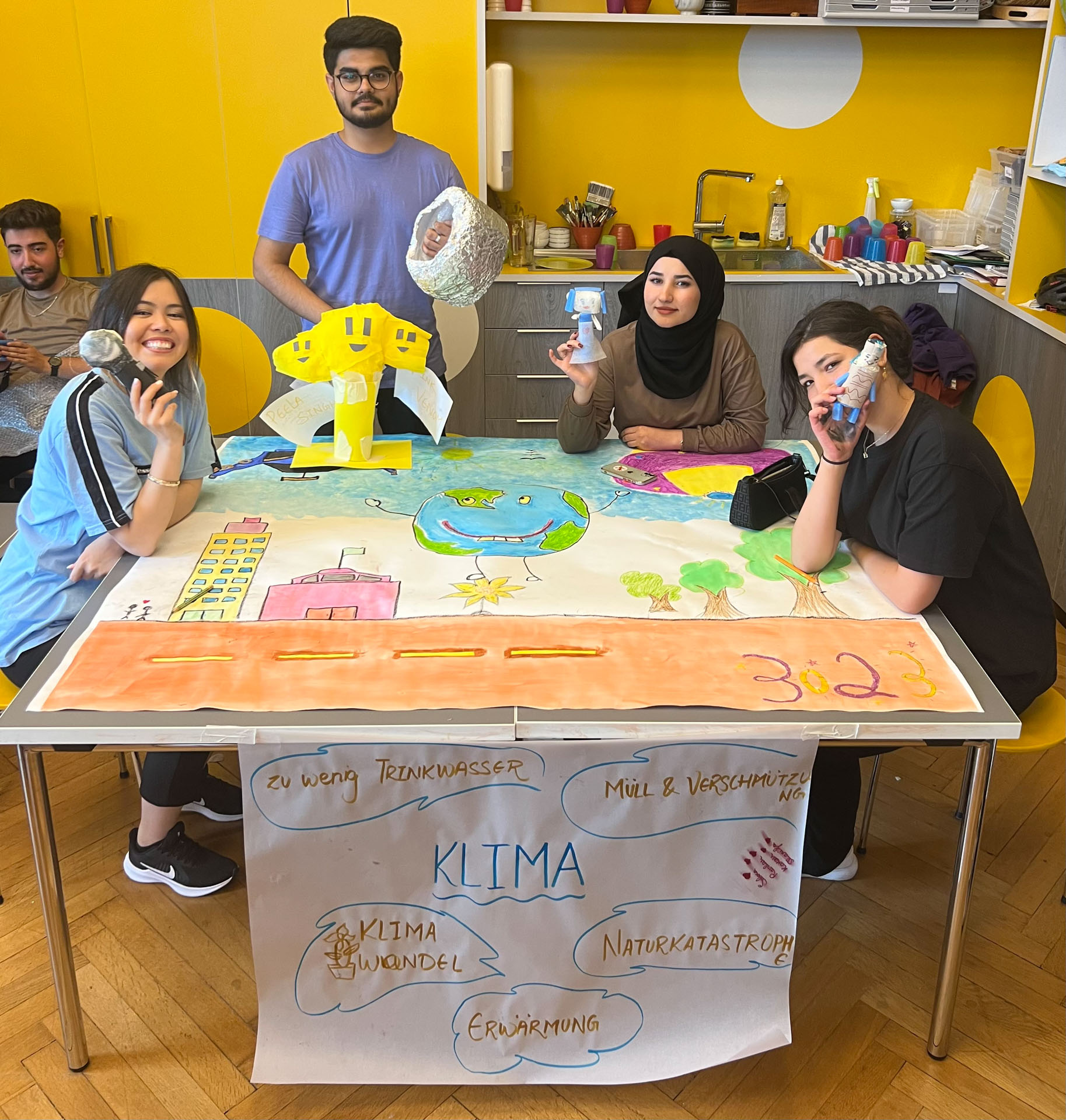
The project was connected to the exhibition “Science_Fictions_and_Global_Futures”, which was planned for spring 2023 at the Weltmuseum Wien. The activities were carried out in the museum’s permanent collection.

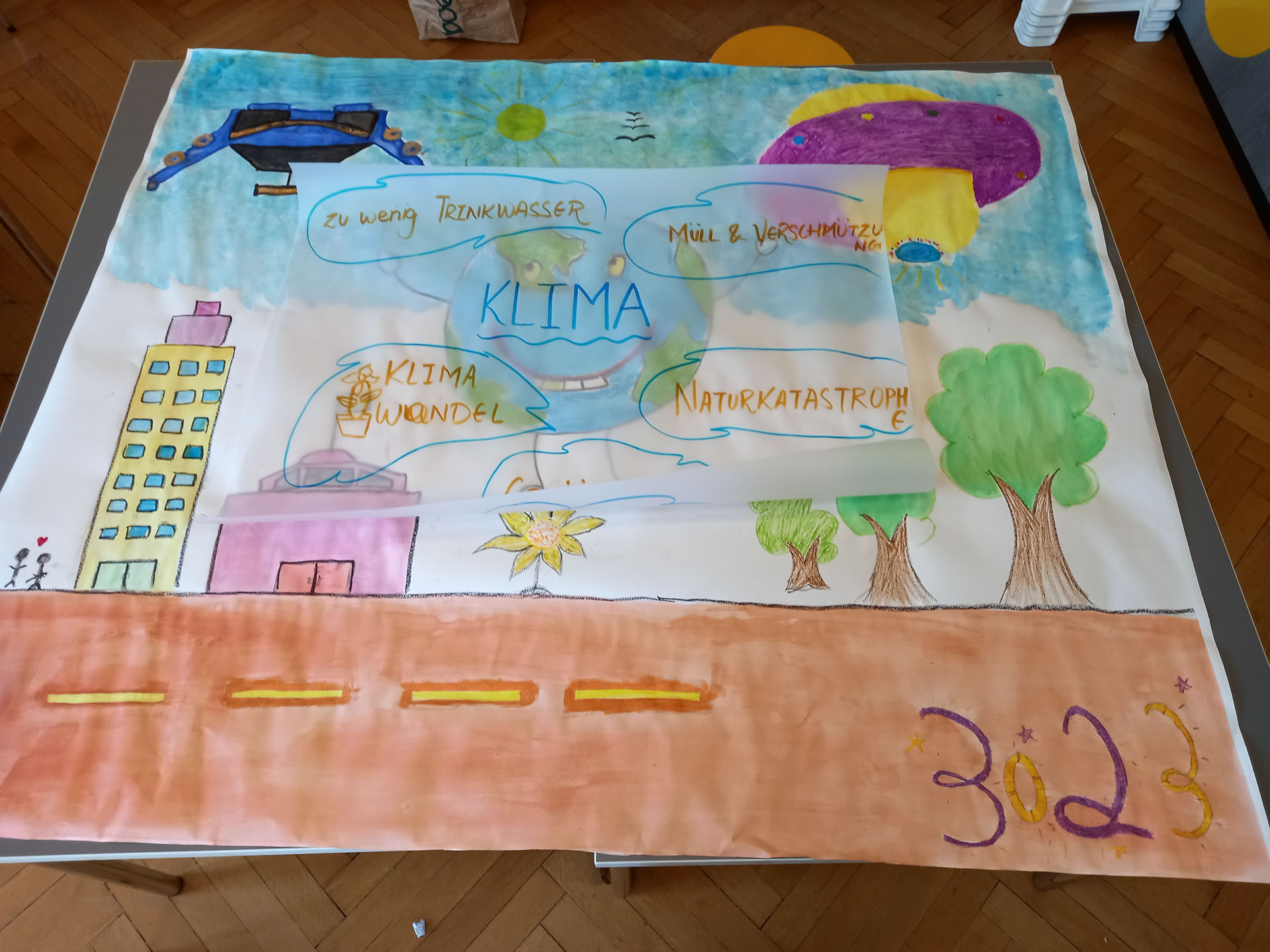
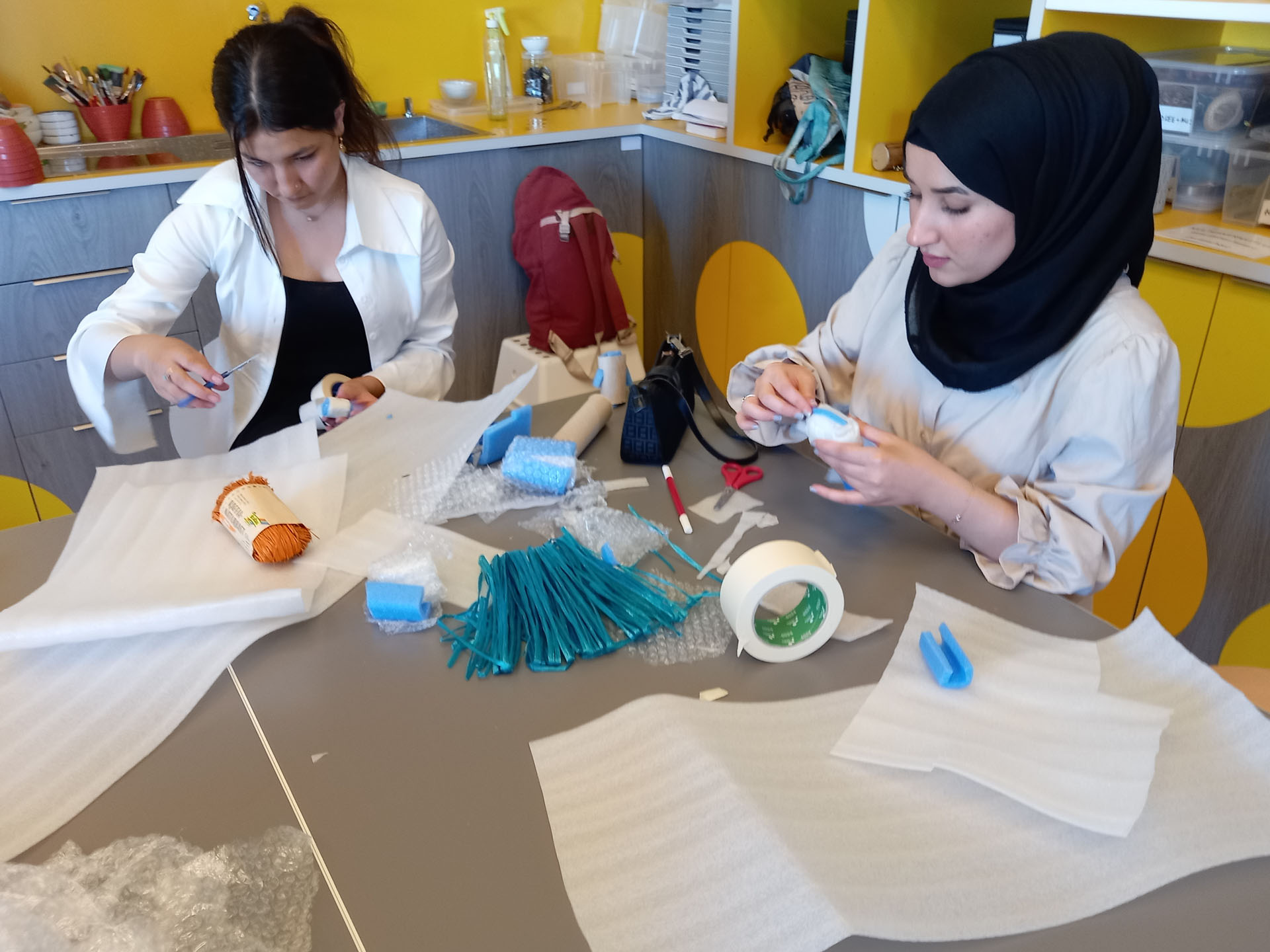
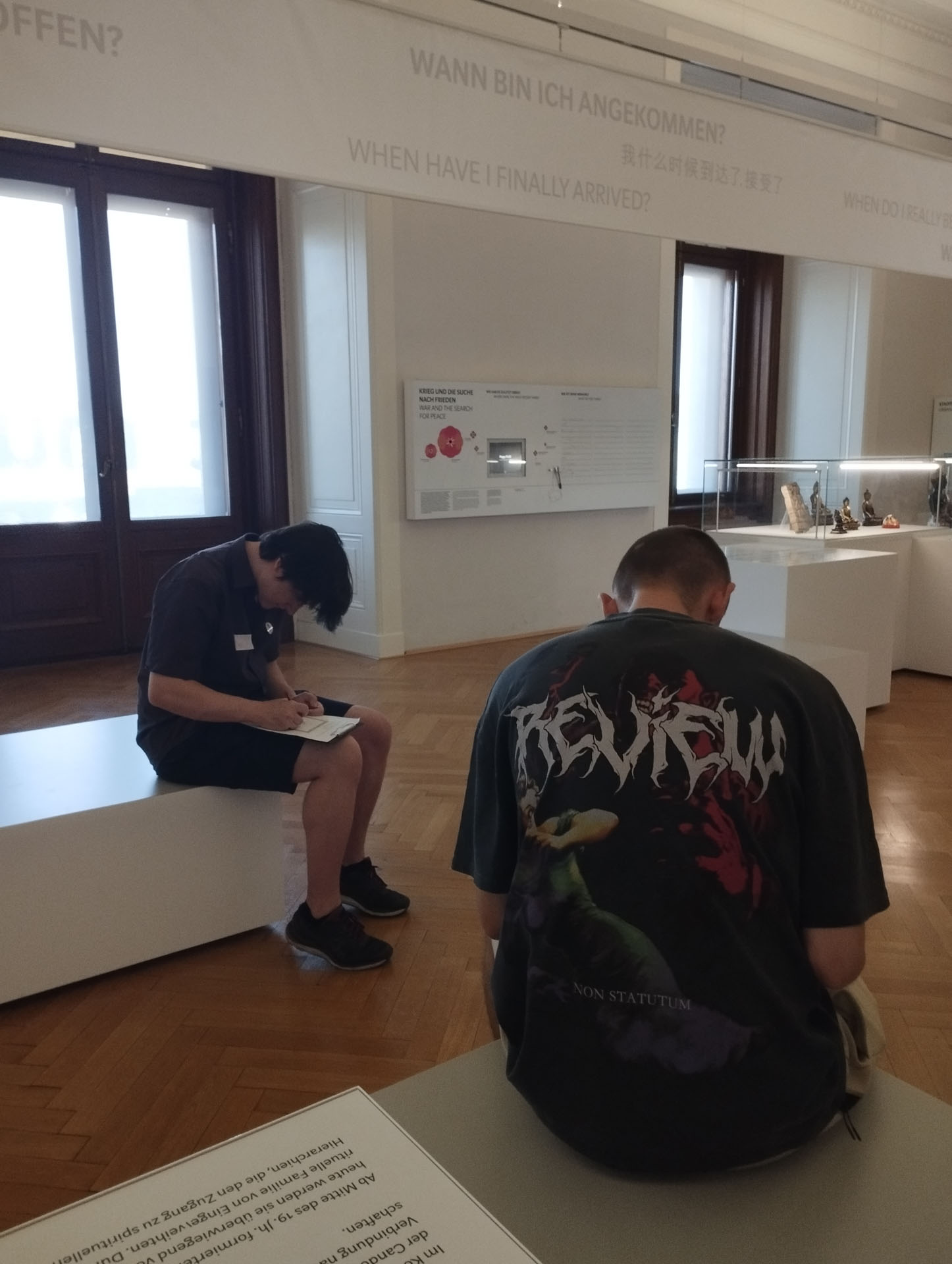
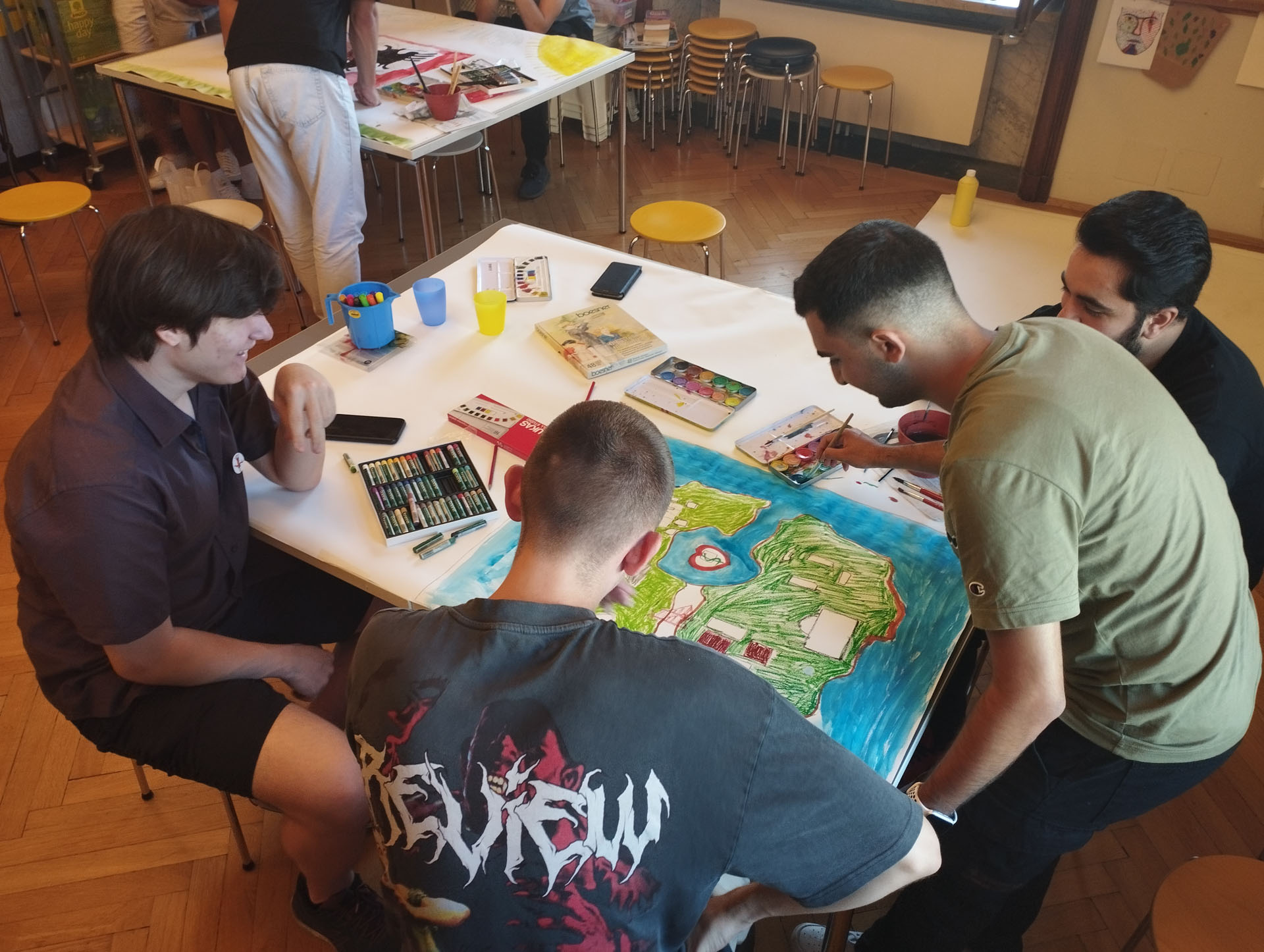
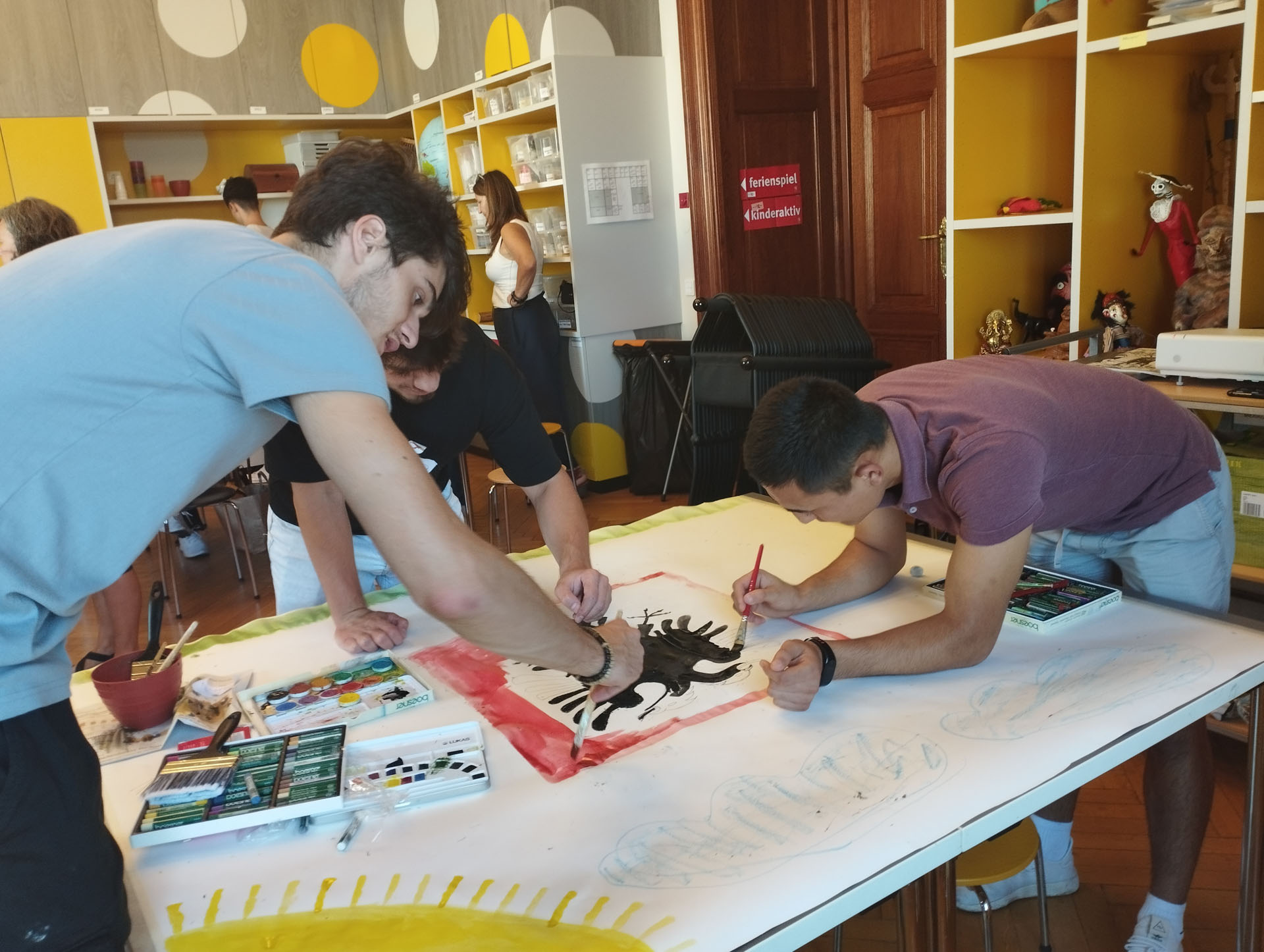
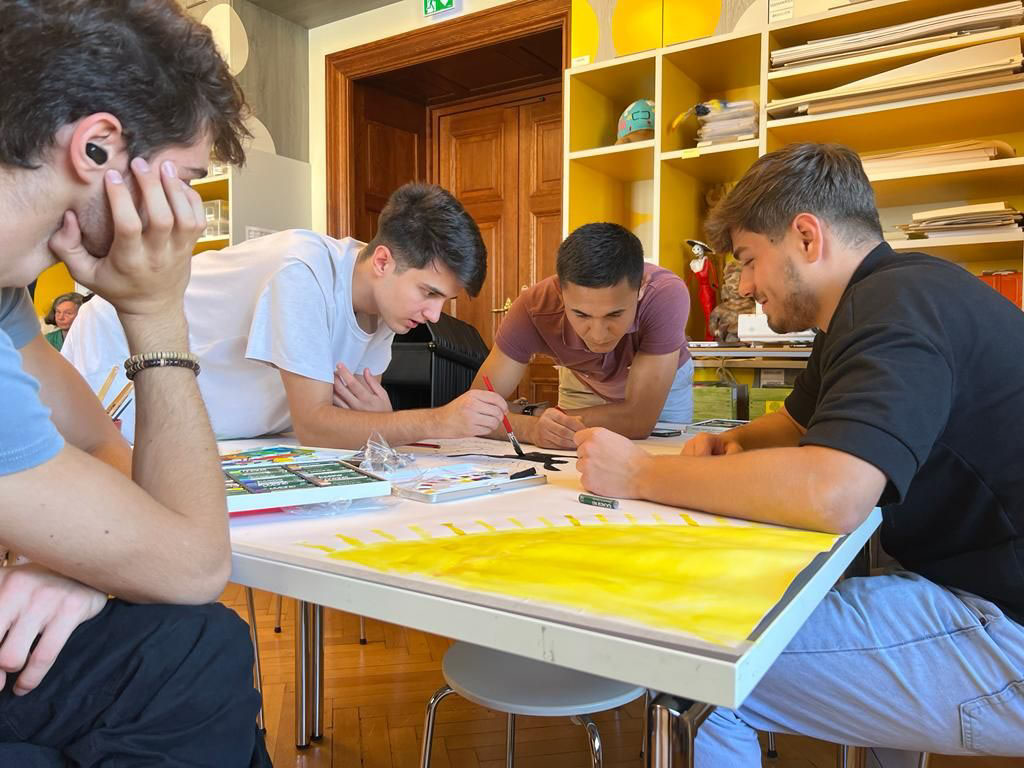
Using a variety of methods and guiding questions, the apprentices were introduced to the topic of science fiction and encouraged to engage creatively with objects from the permanent exhibition.

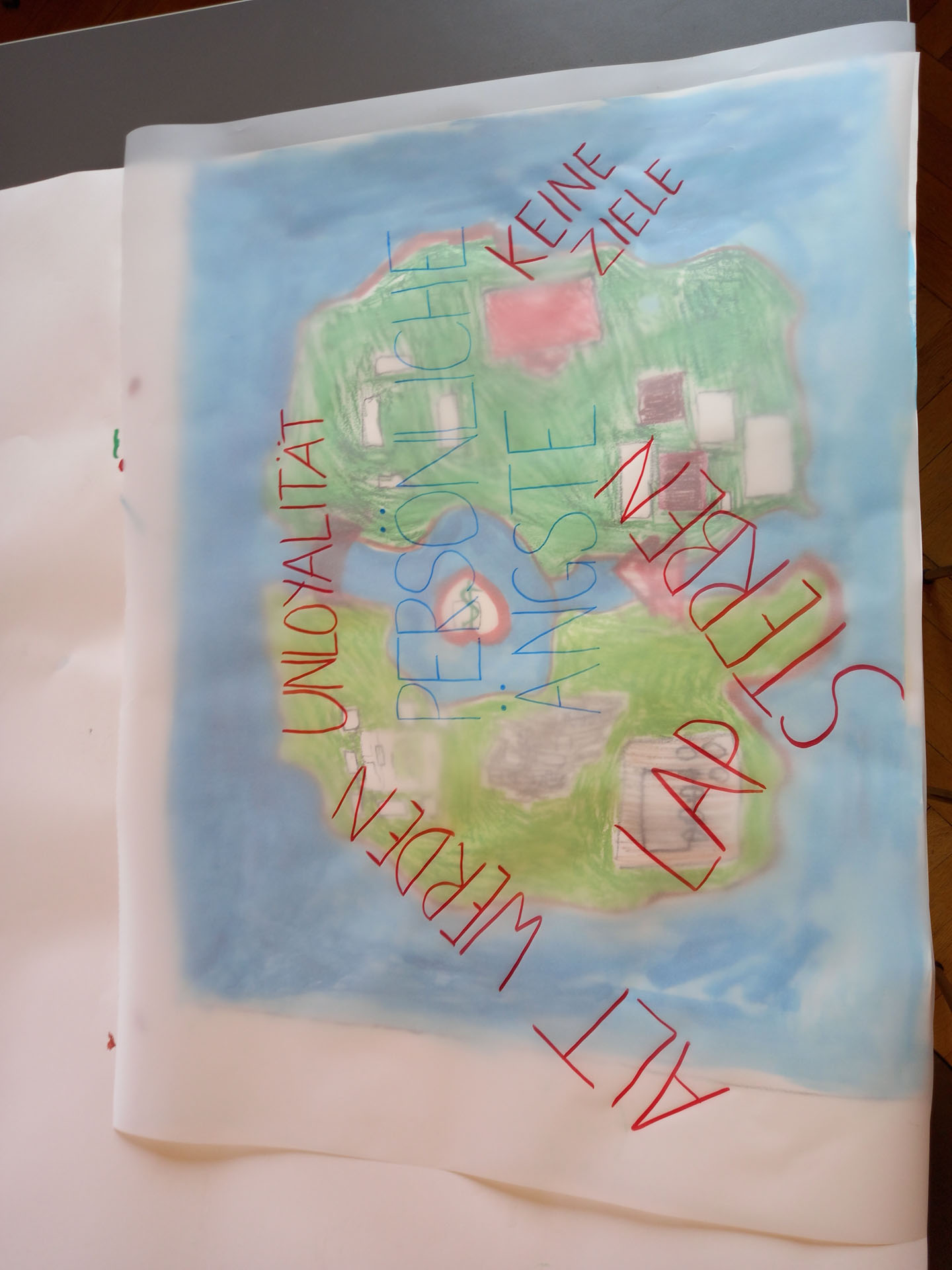
Key questions explored together included: What should your life look like in 20 years? Looking 1,000 years into the future: what exists in this world? What do the heroes and heroines of the future look like, and what abilities do they need? What are your fears and concerns about the future? What possibilities do we have to save the world?

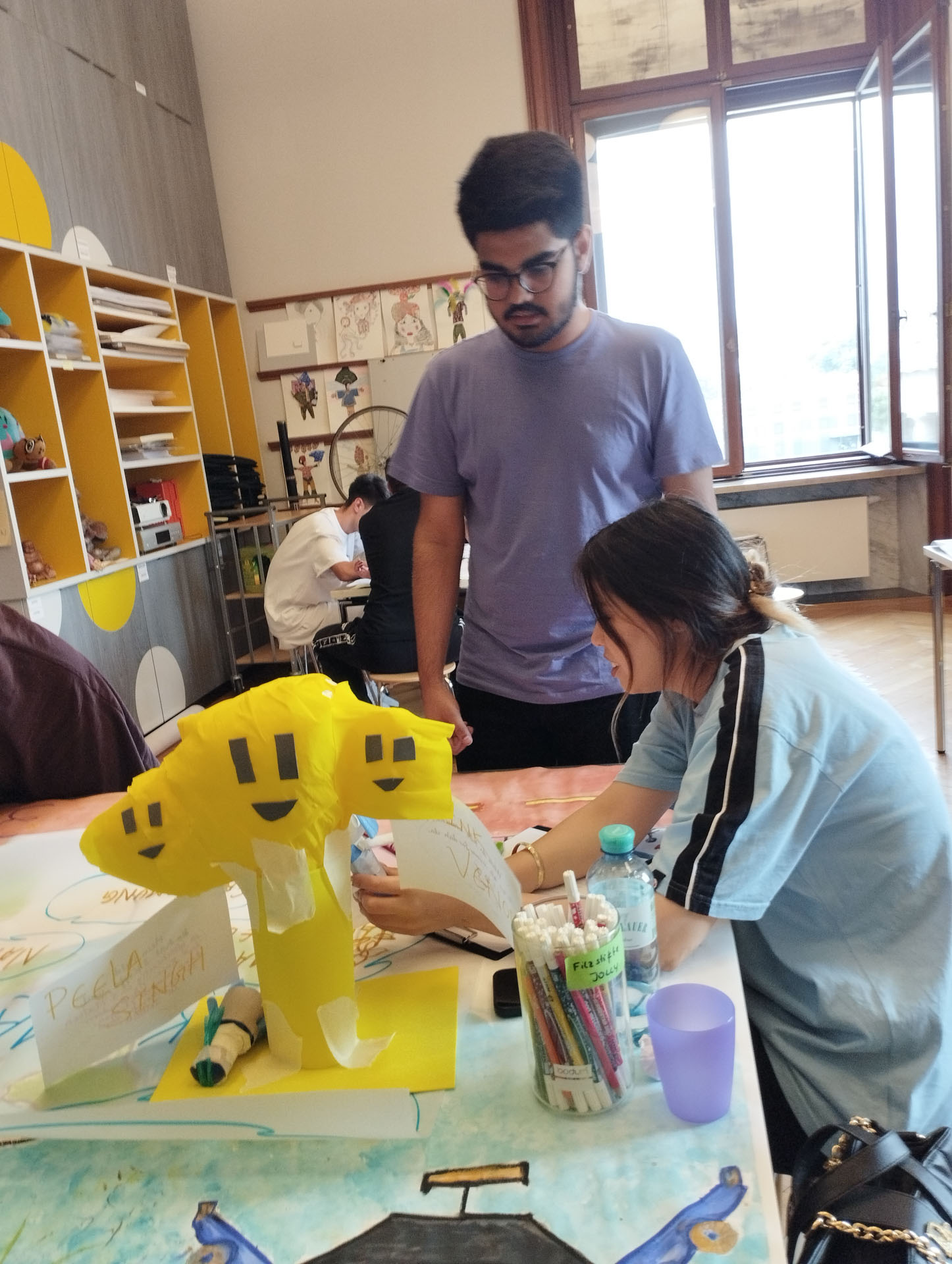
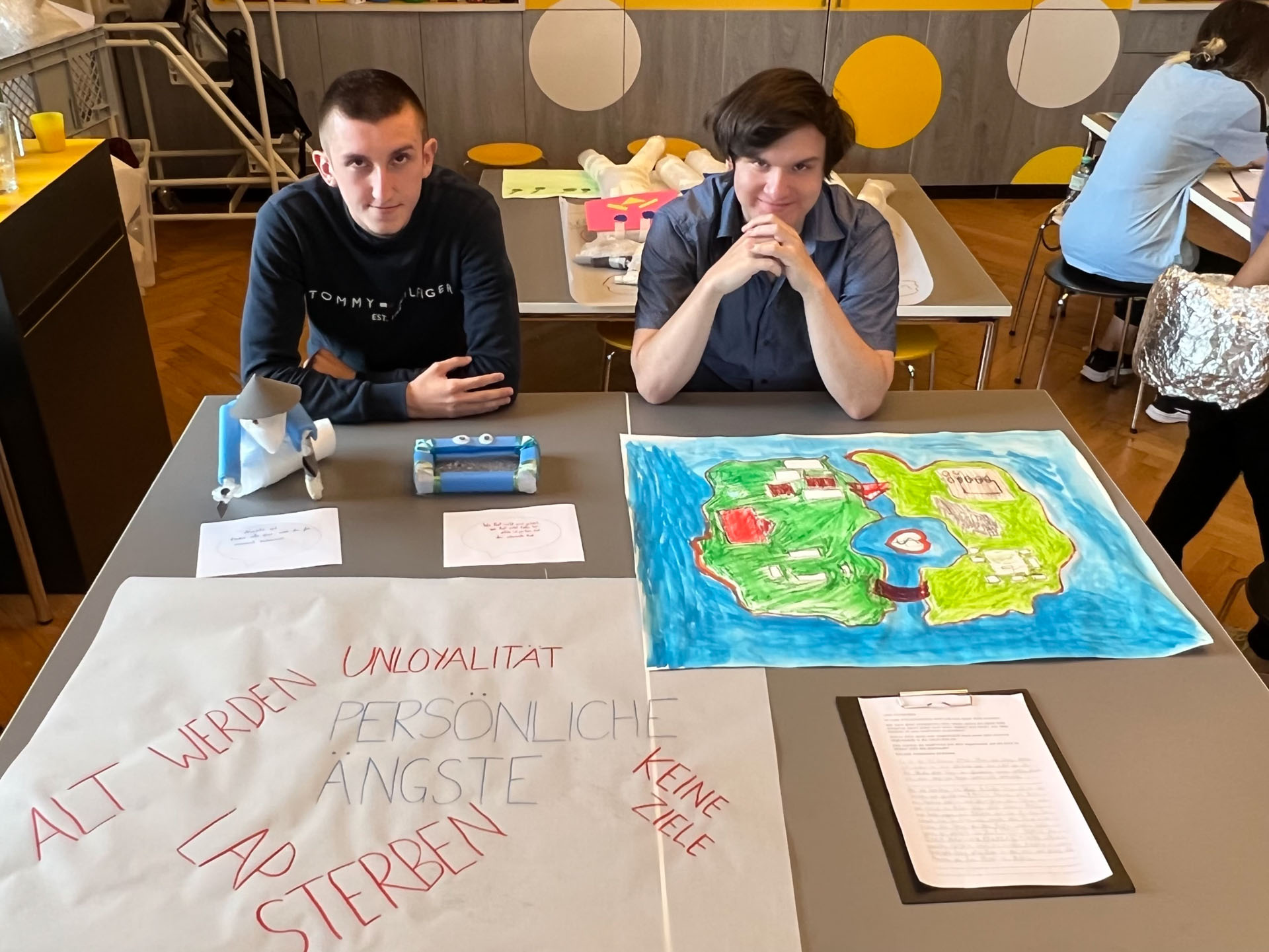
After an intensive creative and hands-on phase, four future-oriented object stories were created in small groups. These stories, together with photographs documenting the creative process, were published. The task for the groups was: Invent a dystopian world and an ideal world. Who can save the dystopian world so that an ideal one can emerge? Choose a hero or heroine—or work with several heroes together. What role does the object you selected from the permanent collection play?

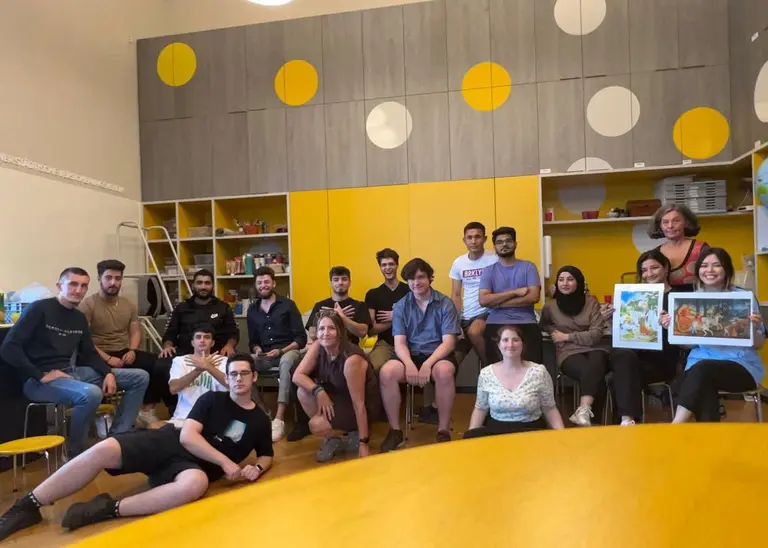
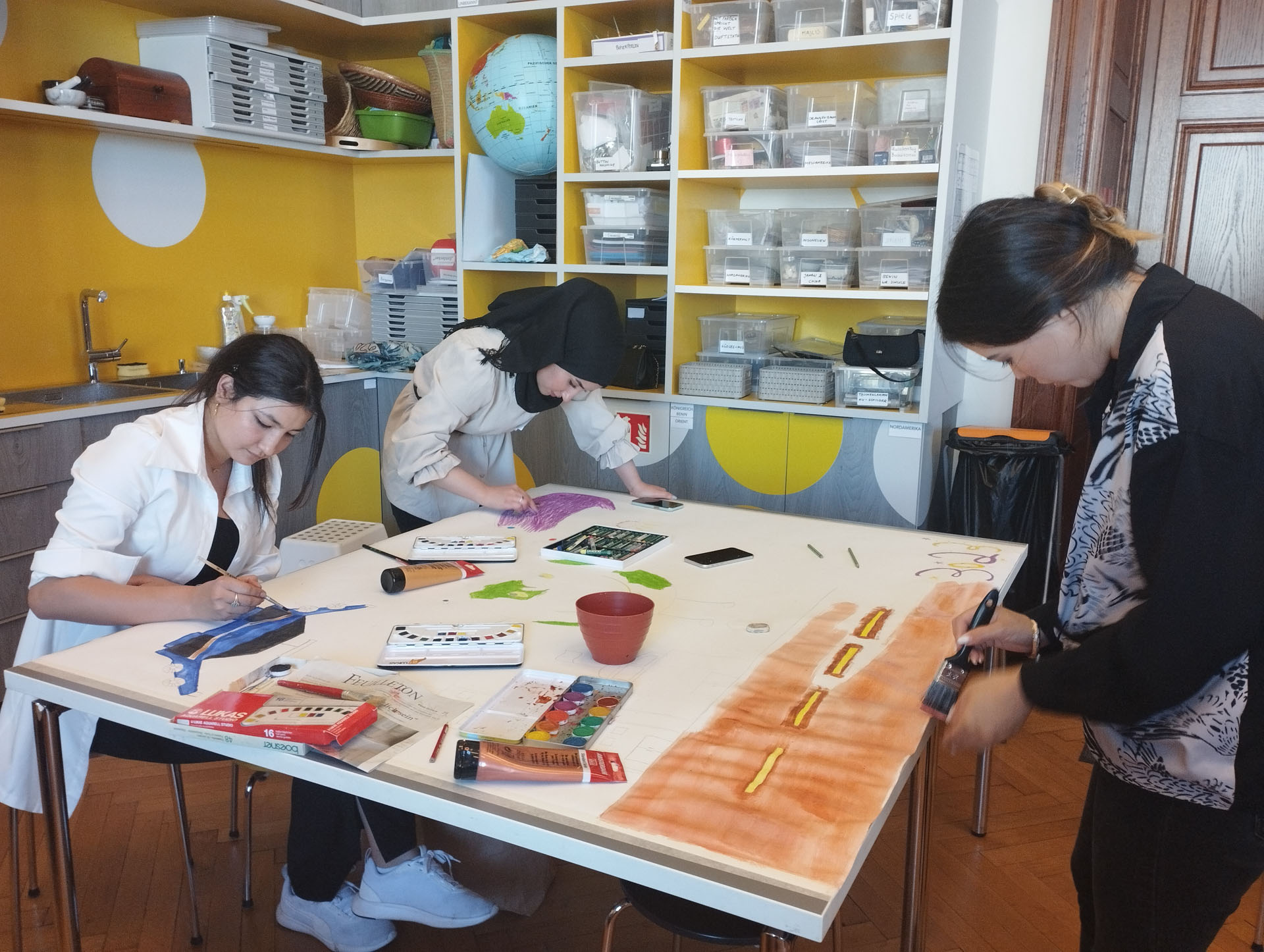
A diverse group of 19 people gathers in a bright, cheerful room with yellow accents. They pose together, some seated and others standing, and appear to be celebrating or sharing an activity. Two individuals hold illustrated posters, showcasing collaborative work.

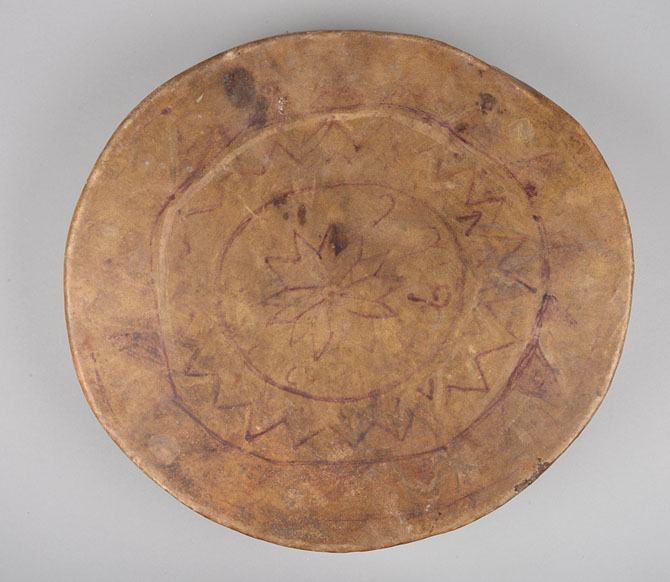
1. Women’s pottery and frame drum
What is the object called?
Women’s pottery and frame drum for women

Which room is it in?
From Afghanistan

Where does the object come from?
From Afghanistan

Why did you choose this object?
Because I know it and I would have loved to play it or beat on it.

Story about the frame drum
This instrument is very well known in Afghanistan. Everyone loves the sound. It is played in some music together with the rubab.

Women’s pottery is also very well known. In the past it was used to fetch water. It was first handmade in Badakhshan in the northeast by the Firezkerhi.

Science-fiction story about the frame drum
We were swimming and became unconscious. When we woke up, we found ourselves in the 3rd millennium and the world was a single catastrophe. We decided to save the world.

Venom is in love with Eila. Paela Singh, Rose and Eila separate from Venom and search for a magical instrument with which they can save the world. Venom searches for water. He finds a false place, a volcano, and dies. Paela, Rose and Eila find the magical instrument and play it. The wind coming from the instrument saves the world. Eila is sad because of Venom, but she is a heroine and cannot give up, so she marries Peela Singh. Happy end!

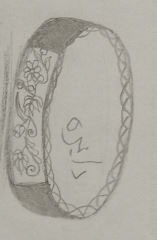
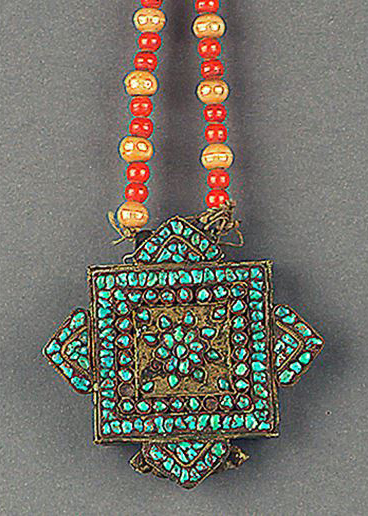
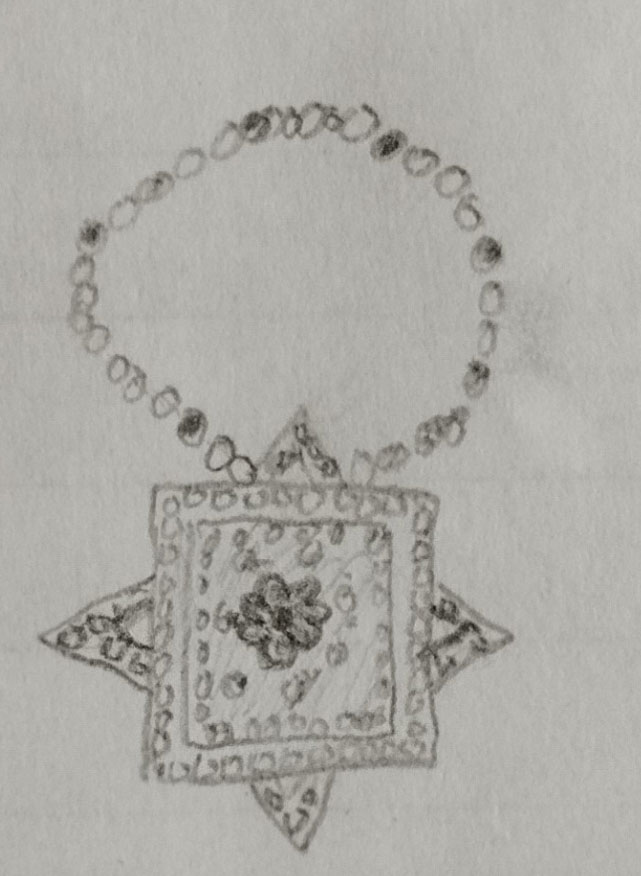
2. Decorative amulet box
What is the object called?
Decorative amulet box

Which room is it in?
Collector’s Obsession

Where does the object come from?
Tibet

Why did you choose this object?
Because it looks very interesting and beautiful. You can see that a lot of work and time went into making this decorative amulet box.

Fantasy story about the decorative amulet box
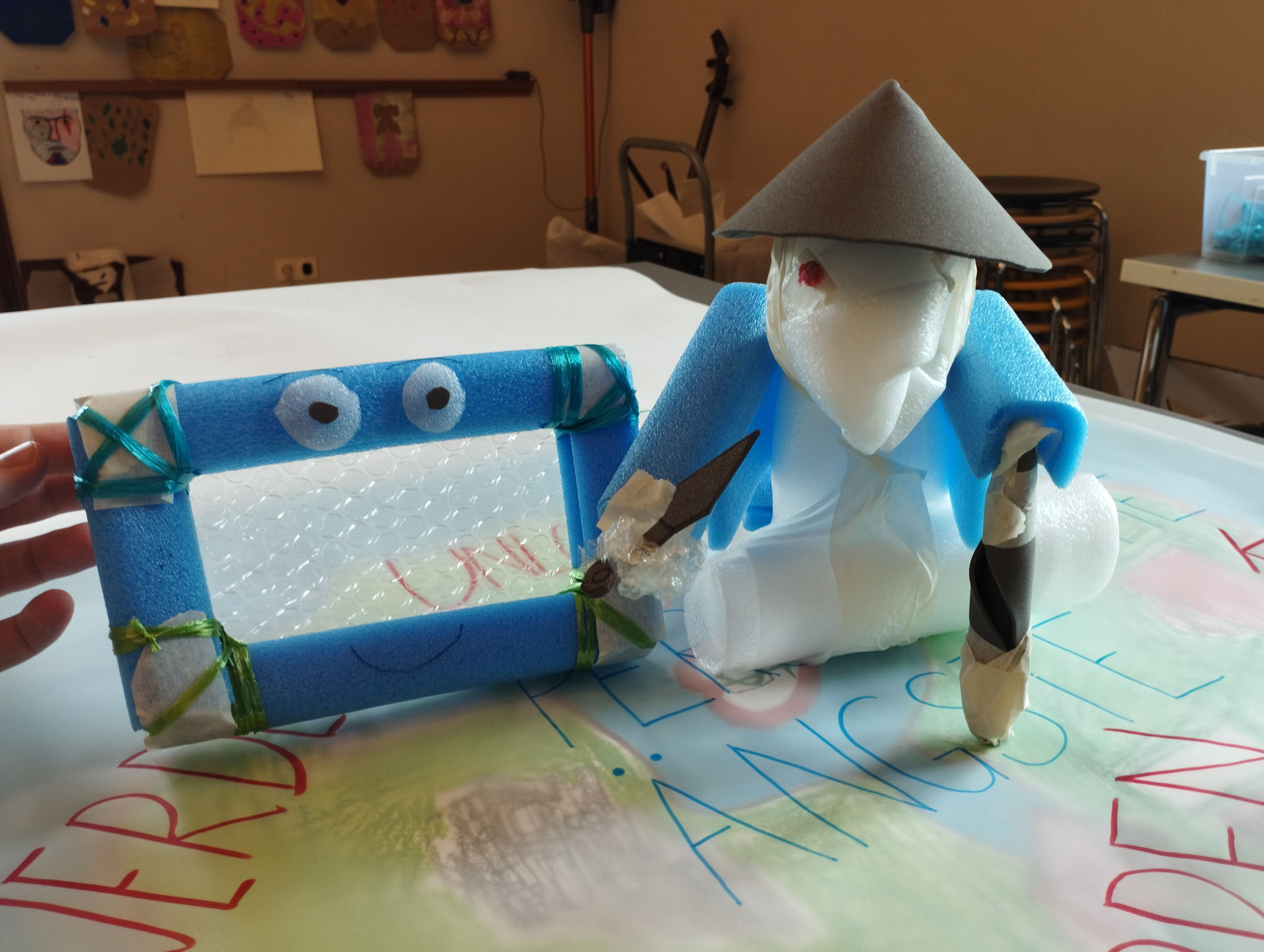
This piece of jewelry once belonged to a wizard who had the ability to heal. One day, when the wizard died, all of his magical objects dissolved except for the healing amulet. A young girl finds the piece of jewelry years later and when she puts it around her neck, she is no longer sick. The girl first heals her family, then friends, and soon her whole village has no more illnesses. This decorative amulet box is then passed on from generation to generation and thus almost the entire continent remains healthy. After many years, the magical power seems to come to an end and the piece of jewelry dissolves.

Science-fiction story about the decorative amulet box
It is February 31, 2740. Steve and Cheng are preparing for their final apprenticeship exam in the middle of a global crisis.

One day, when the two wanted to study in the attic, they found a magical necklace that changed everything.

When the apprentices touched the necklace, it began to glow and vibrate. Suddenly, the two got a strange feeling and transformed. Cheng suddenly found himself in the body of a samurai master and even had two swords and armor. He looked around the room but could not find Steve. When Cheng wanted to look out the window, it suddenly spoke to him.

Steve had turned into a magical window.

With the help of Steve’s special ability to always give the right advice, Cheng fought all the evil in the world and freed people from their personal fears.

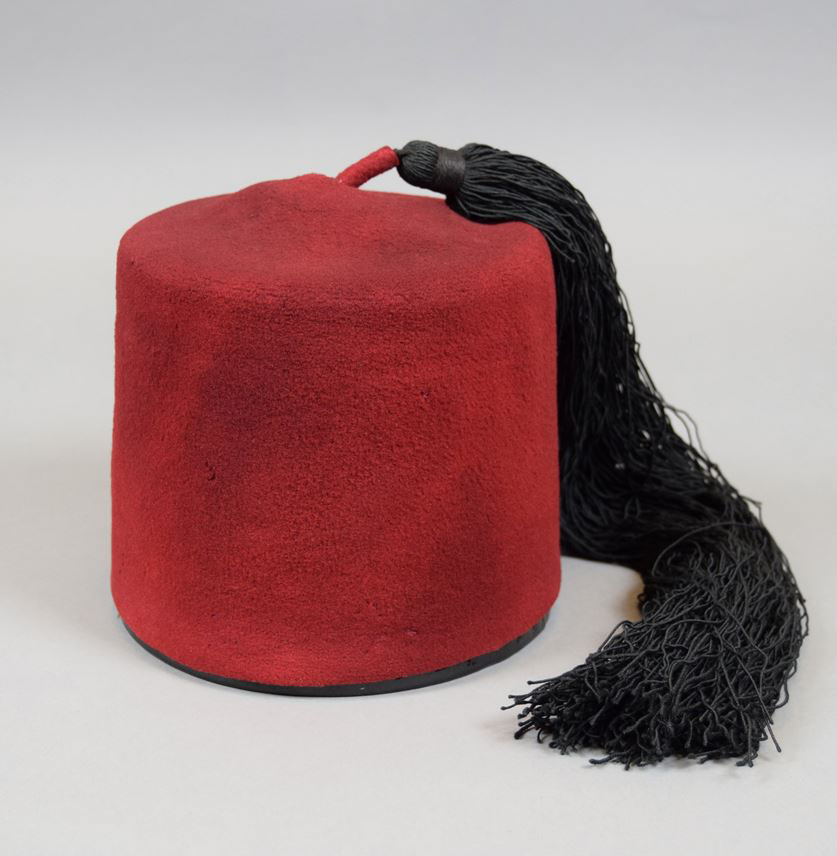
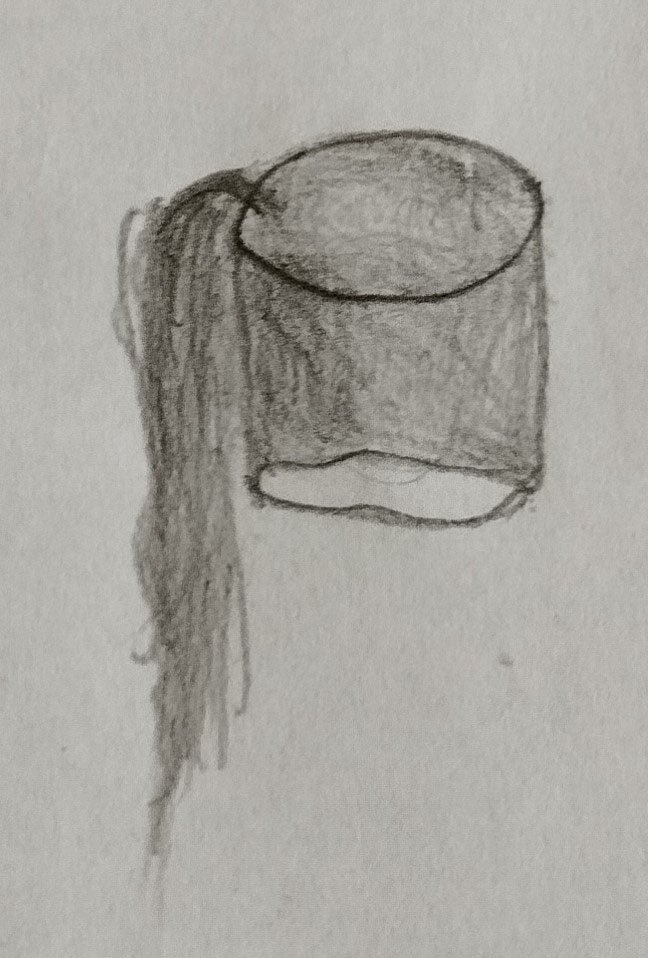
3. Ottoman fez
What is the object called?
Ottoman fez

Which room is it in?
Turkish Room –  At the Threshold of the Orient 

Where does the object come from?
Turkey

Why did you choose this object?
My grandfather had such an object.

Fantasy story about the Ottoman fez
This object is a magical fez. It was found in Gold Lake. The man who found it discovered after a while that it was a magical fez that makes all ideas and wishes come true. So he hid the fez so that no one would find out about it. His granddaughter then threw the fez away. He was sad, and then suddenly his wife woke him up. The whole thing was just a dream.

Science-fiction story about the Ottoman fez
This story is about the four Habibi heroes who want to fight inflation and poverty. The cause is the war between Russia and Ukraine. They decided to end this war to make the world better and cheaper.

They went to Ukraine to fight when they found the magical fez and then decided to use it to create the perfect world. Soldierboy saves people. Space flies to other planets to bring resources, metals and food so that there is enough food and drink for everyone. Lewa ensures that food is cooked and prepared for all of humanity. Luka begins to gradually fulfill people’s wishes, and with the help of the magical fez he can fulfill many wishes at the same time.

Through the great teamwork of the four heroes Soldierboy, Lewa, Luka and Space, they manage to create the perfect world. In this world, no one suffers. Everyone is rich, everyone loves each other and peace prevails. No more war.

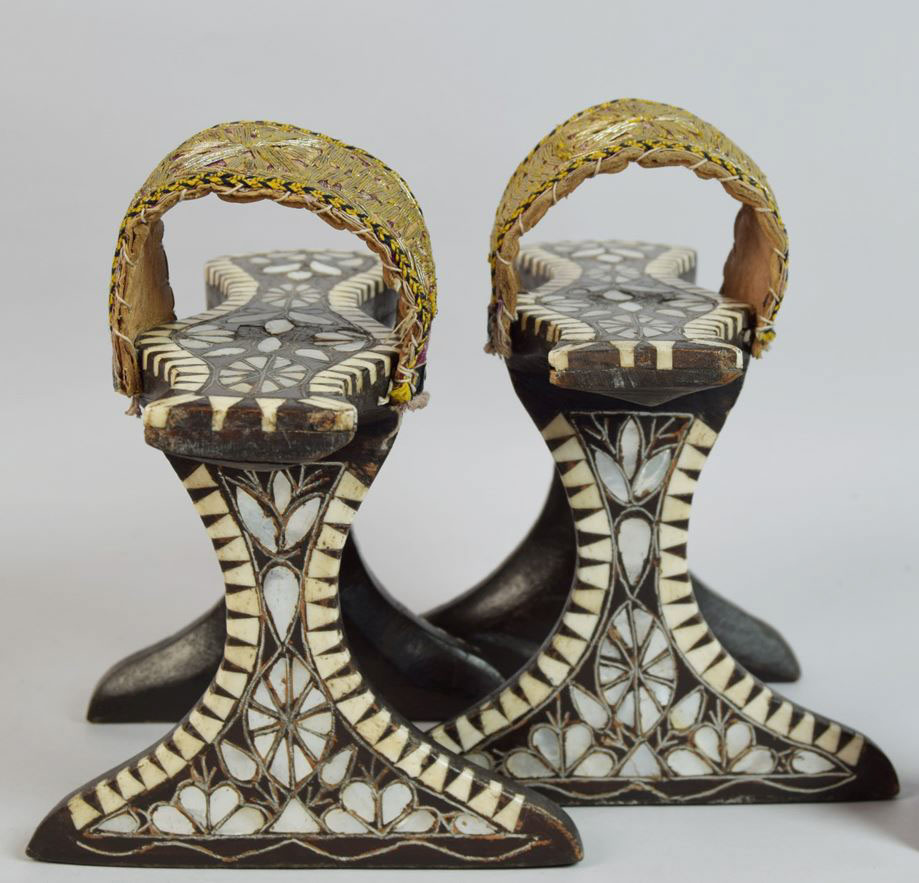
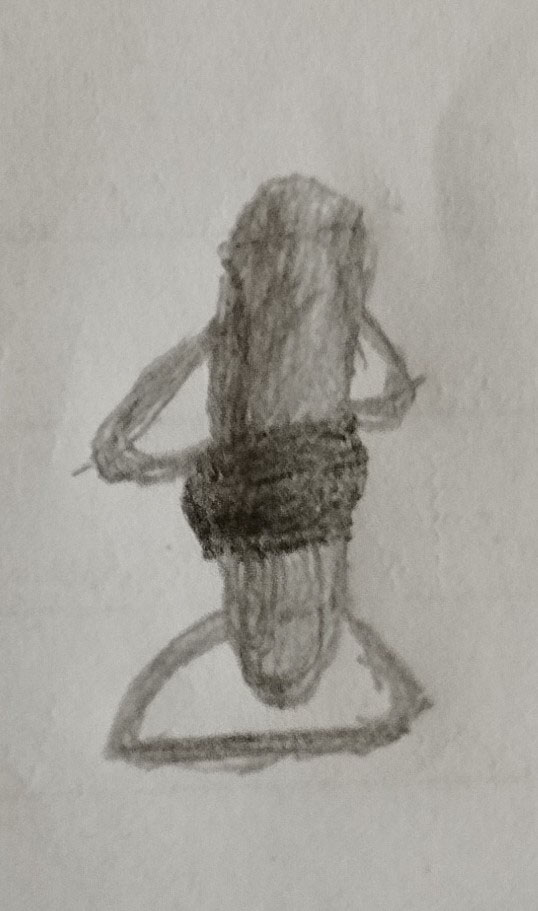
4. Hammam sandals
What is the object called?
Hammam sandals

Which room is it in?
Turkish Room –  At the Threshold of the Orient 

Where does the object come from?
Turkey

Why did you choose this object?
Because it looks so beautiful and in Damascus similar hammam sandals are worn in the hammam.

Story about the hammam sandals
A few years ago, my grandfather and I were in a hammam in Damascus. At first we wanted to enter, but you have to wear hammam shoes. At first it was very difficult to walk in the shoes, but afterwards it was very funny because everyone wears similar shoes.

Science-fiction story about the hammam sandals
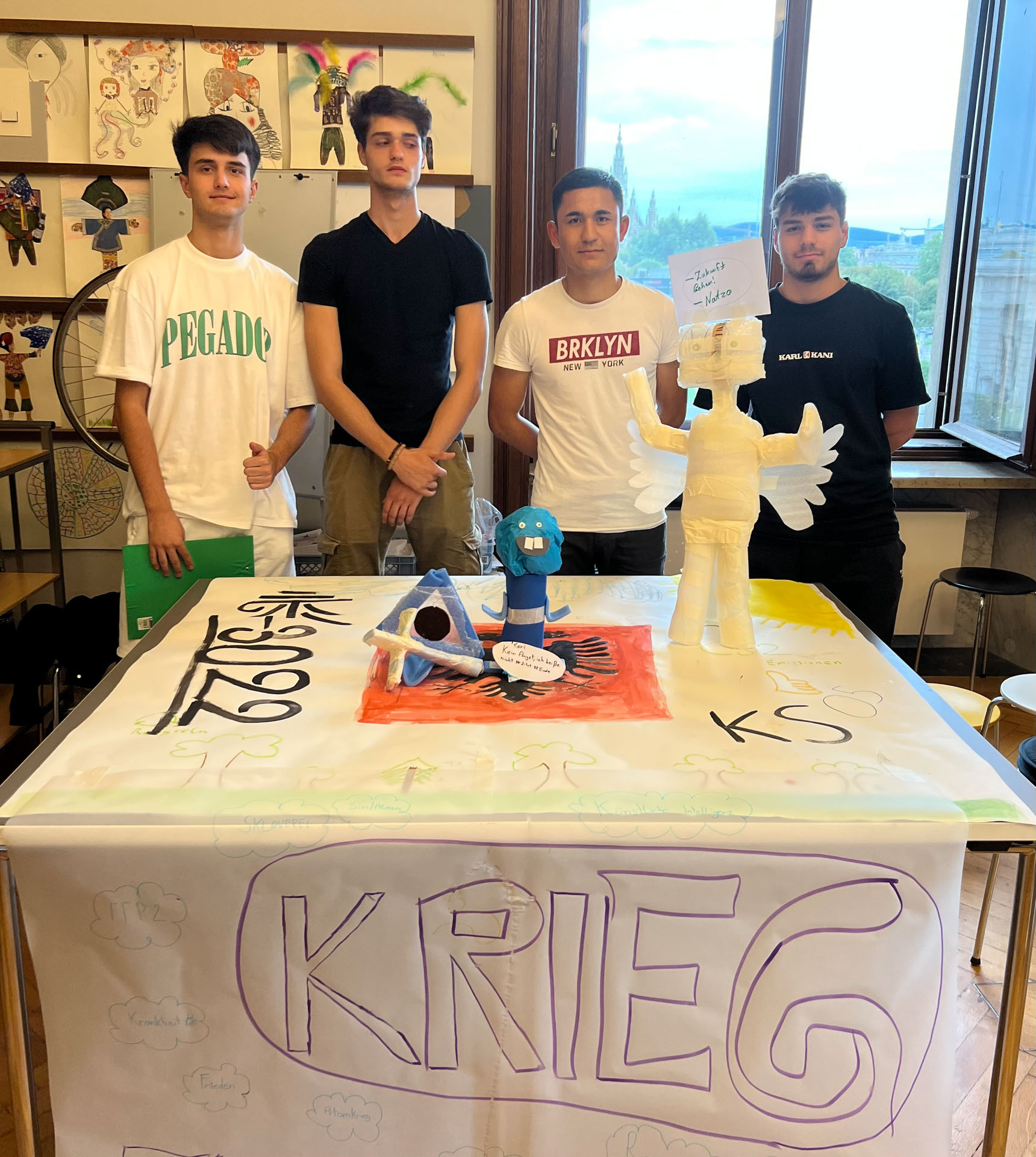
The date is November 1, 2322, and the heroes Kari, Hapi and their objects were bored on the planet Granot. So they decided to visit planet Earth.

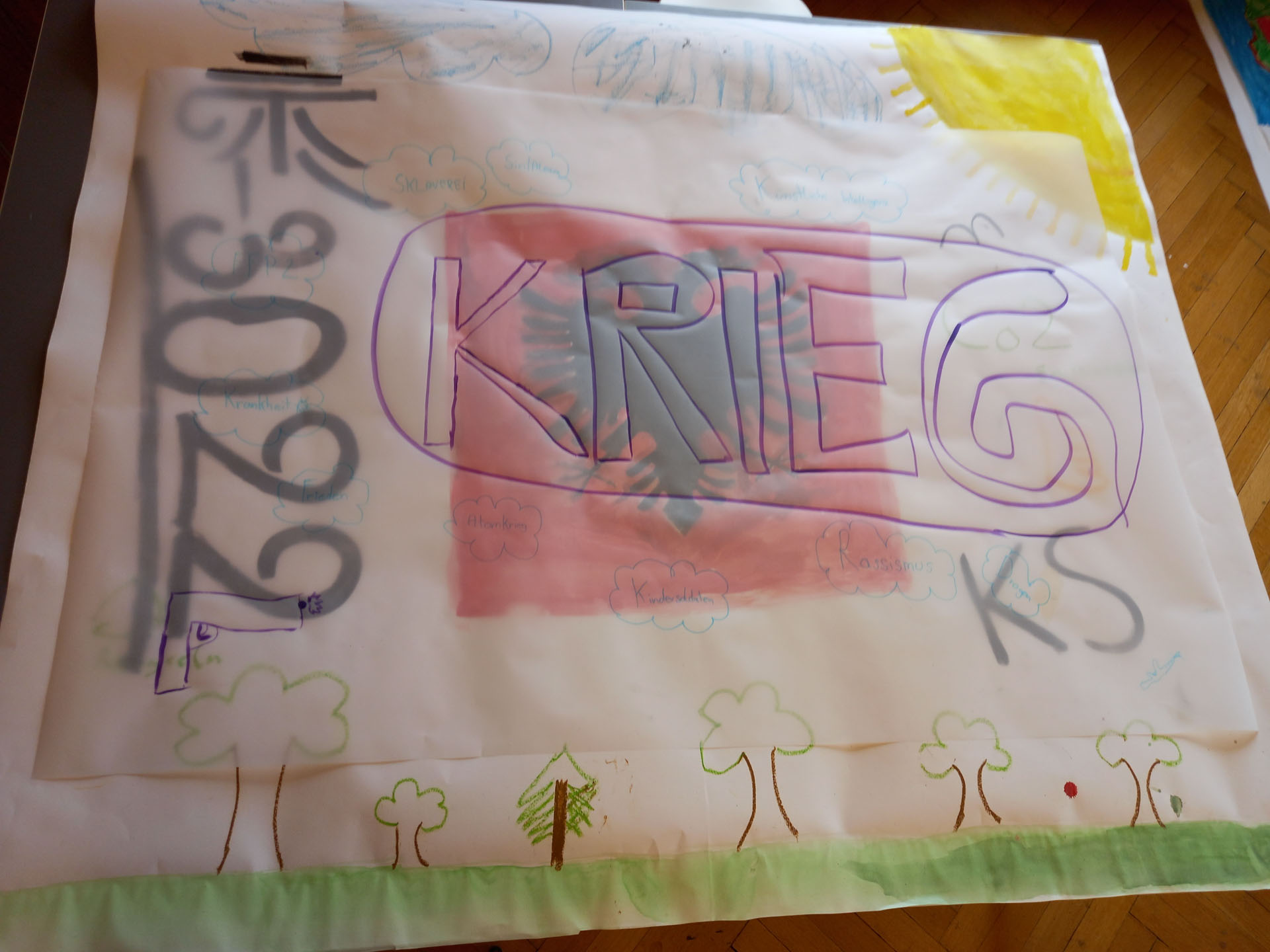
When they arrived, they could not believe their eyes. Kari took another look through his invisible triangle, but nothing changed. The world lay in ruins. Hapi met an Albanian wearing hammam shoes, who explained what had happened. Apparently they were in Albania, or rather the entire world had become Albania due to a war with Mexico.

The story is similar to that of the Trojan Horse. Mexicans wanted to bribe the local ambassador with hammam shoes, but he did not accept them. Instead, he manipulated the shoes, sent them back, spied on Mexico and passed the information on to Albania. That is how the war started and Albania rules the whole world.

Kari and Hapi were shocked and asked the Albanian how the world could return to normal. The Albanian named Drolon Krashiqi said that in former Mexico there is a holy cross that belongs to Albania. Kari and Hapi set out to search for it. According to the invisible triangle, the cross was located in an ancient Mexican cemetery. According to a legend, the dead rise on All Saints’ Day and walk around the cemetery. Kari and Hapi did not know this.

When they arrived, there were 1,312 zombies who attacked the heroes when they noticed them. They fought and fought and were close to defeat. Suddenly, Drolon appeared out of nowhere and sacrificed his left hammam shoe, throwing it into the crowd. The shoe exploded and all the zombies died.

Hapi grabbed the cross and brought it to the Albanian prime minister Albin Kurti. When he saw the cross, he said that he would never do anything like that again. The cross began to glow and the whole world returned to normal. Well, partially – the whole world is still Albania, but now with different cultures. There are Polish Albanians, Austrian Albanians, Bosnian Albanians, and so on.

Hapi and Kari were satisfied with that and returned to Granot with a smile.

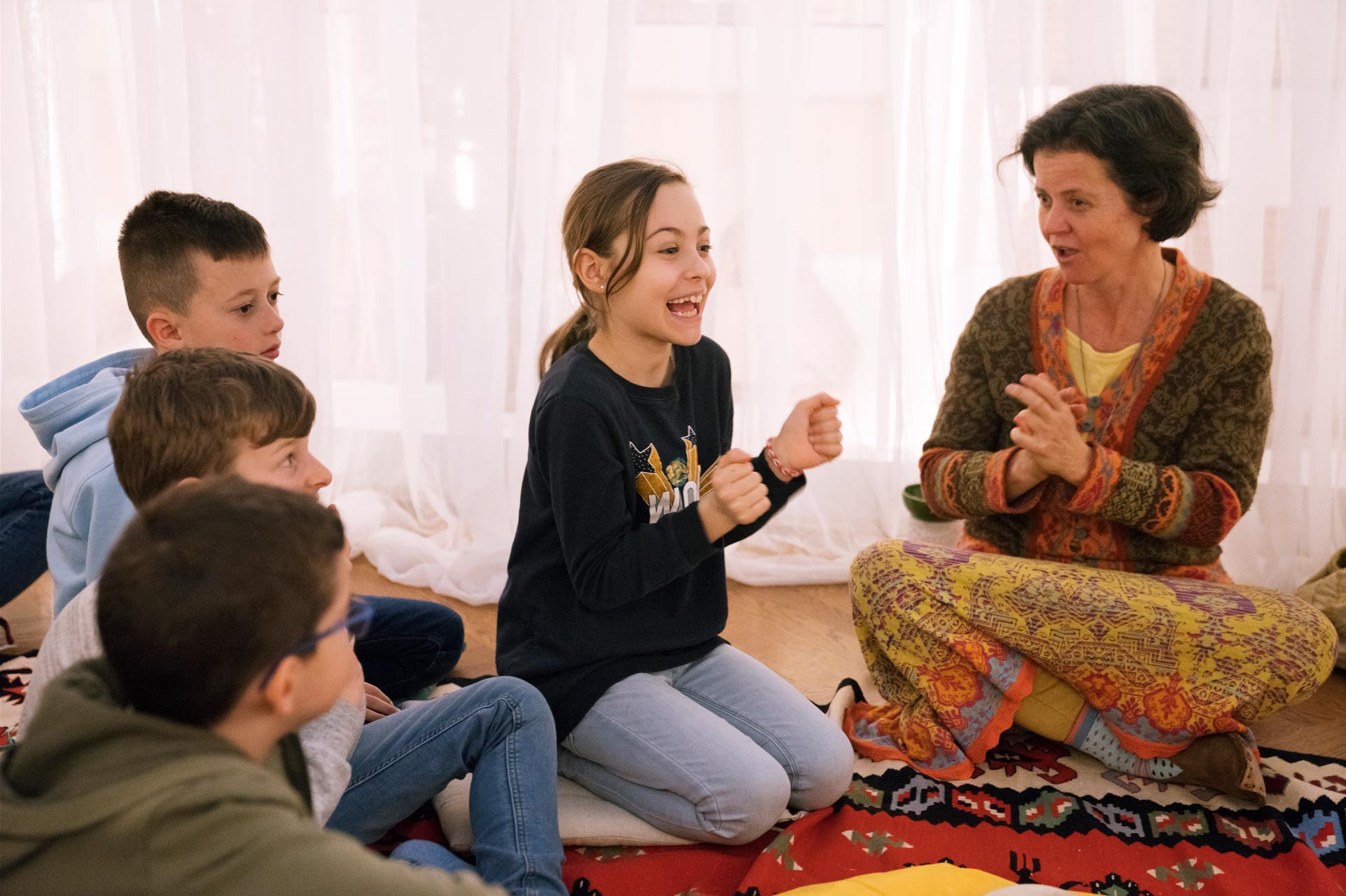
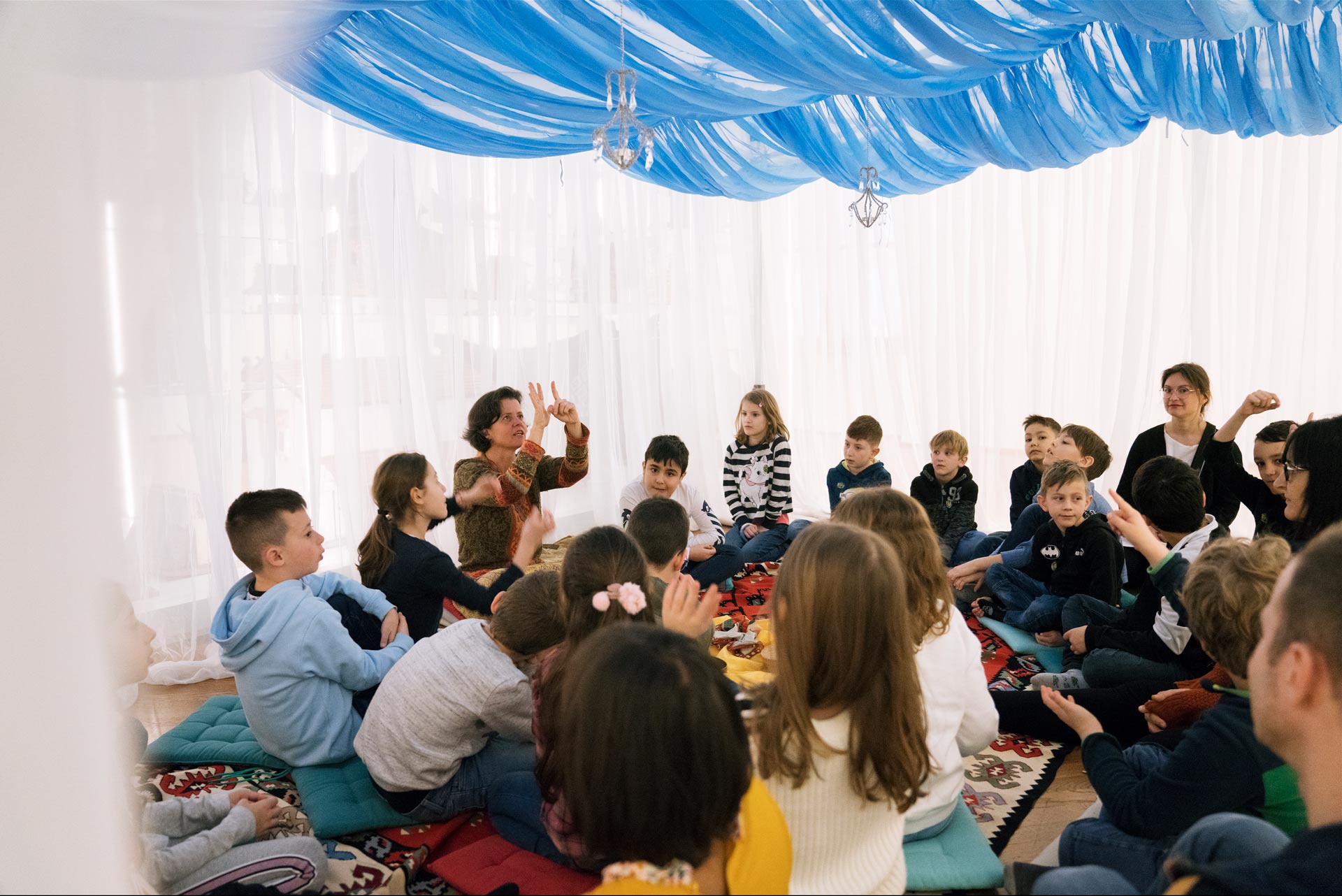
The Fairy Tale Tent is a joint project of the Art and Cultural Space of Caritas, the Cultural Education Department of the Weltmuseum Wien, and the association KULTUR FÜR KINDER. The aim is to encourage primary school children to listen and tell stories beyond the categories of “right” and “wrong” and to integrate early literary education in oral form into everyday school life. Fairy tales are particularly suitable for children in the second year of primary school. In addition, with their roots in different countries, they provide insights into diverse ways of life.

The project includes the three fundamental pedagogical components of the Kulturschultüte: teacher coaching, an artists’ workshop for children at school, and an event at a cultural institution – in this case, the Weltmuseum Wien. In the Corridor of Wonder, the Fairy Tale Tent is available to students on six days in March. Afterwards, the students attend a workshop in the exhibition space View of China.

Photos © Lukas Beck / Kultur für Kinder

In Vienna, PROSA does not only stand for a literary genre, but also for the Project School for All, which supports young people with refugee experience, prepares them for the compulsory school leaving certificate, provides inclusive employment opportunities, and teaches anti-racist competencies.

For the book project PROSA for Welt, the school is now collaborating with the Weltmuseum Wien. Since autumn 2021, current and former learners of PROSA have begun a writing process that engages with the Weltmuseum Wien and its exhibition objects. The texts created through this process have been published in a book, which can be used as learning material both at the Weltmuseum Wien and at the PROSA school. Proceeds from the sale of the book finance new school places. The book is sold in the museum shop and online.

A project by PROSA School Vienna and the Weltmuseum Wien, implemented with graduates and current learners of PROSA under the direction of Muhammet Ali Baş, Sassan Esmailzadeh, Luca Manuel Kieser, Mela Maresch, Katharina Pressl, Sevde Özdemir, and Elena Ritschard.

www.prosa-schule.org

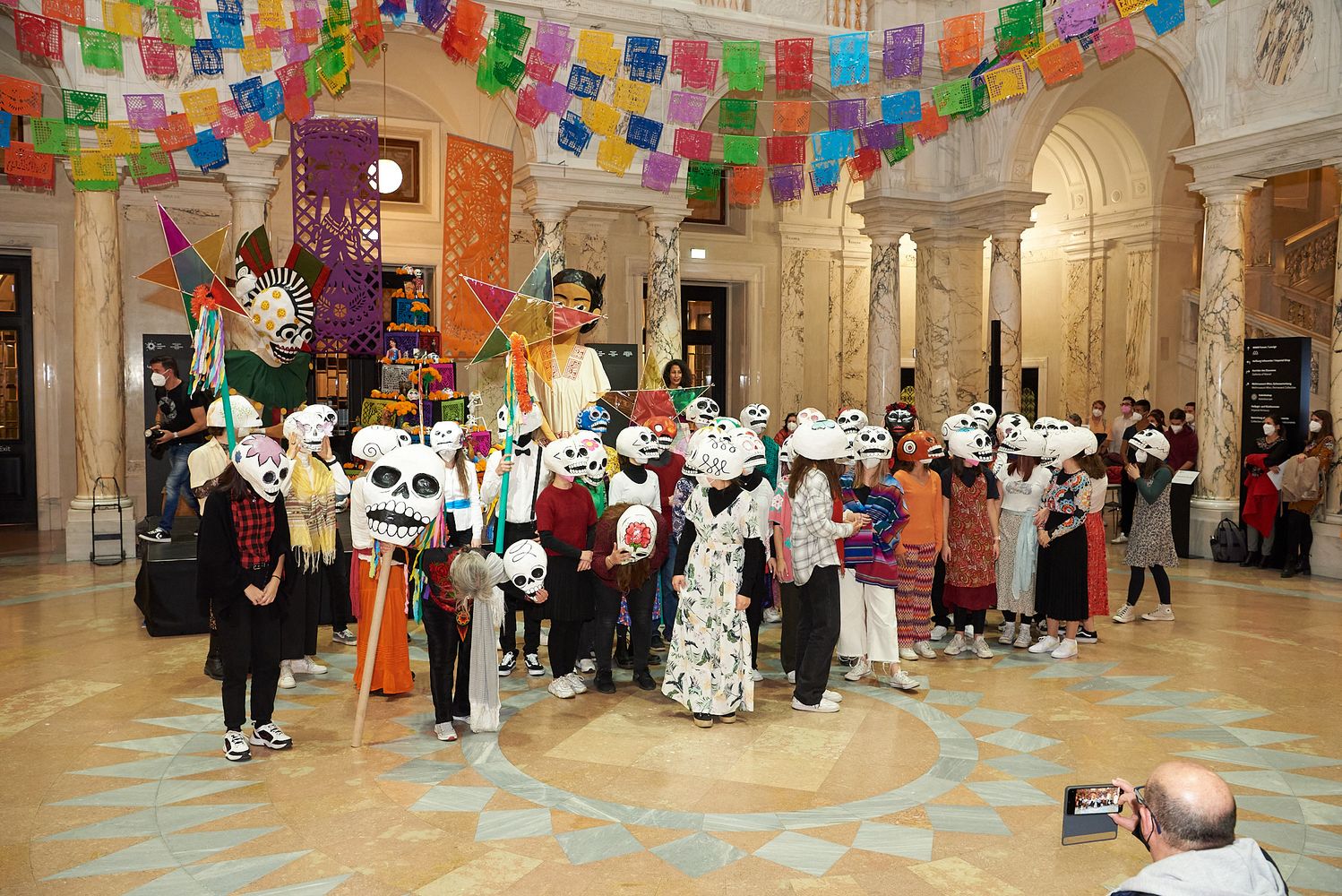
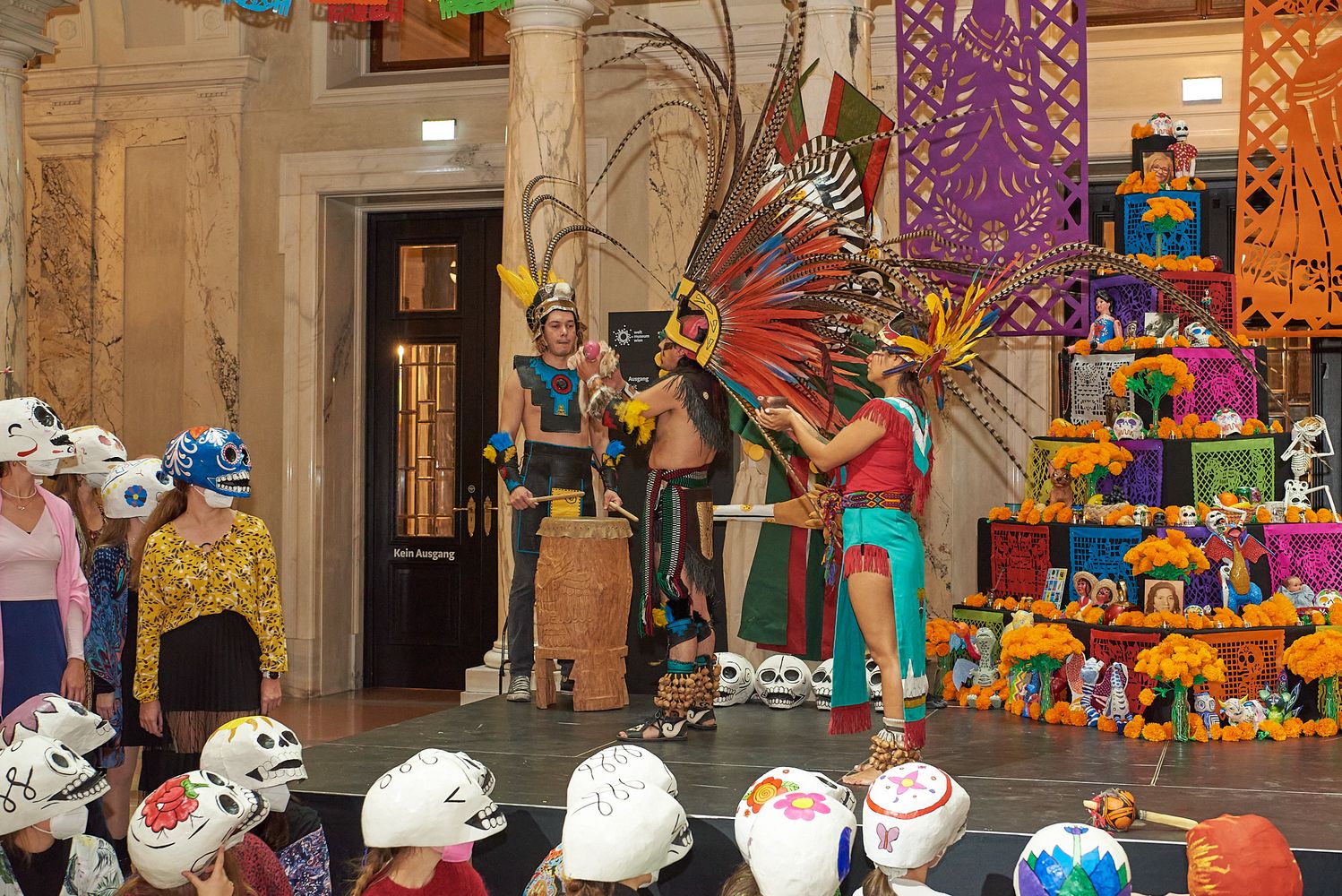
On October 19, 2021, the students of classes 6b, 8a, and 8b of BG Mödling Untere Bachgasse participated, under the guidance of Prof. Melanie Mertz, in the opening of the festivities for the Mexican Day of the Dead at the Weltmuseum Wien. Impressions of the colorful celebration can be found here.

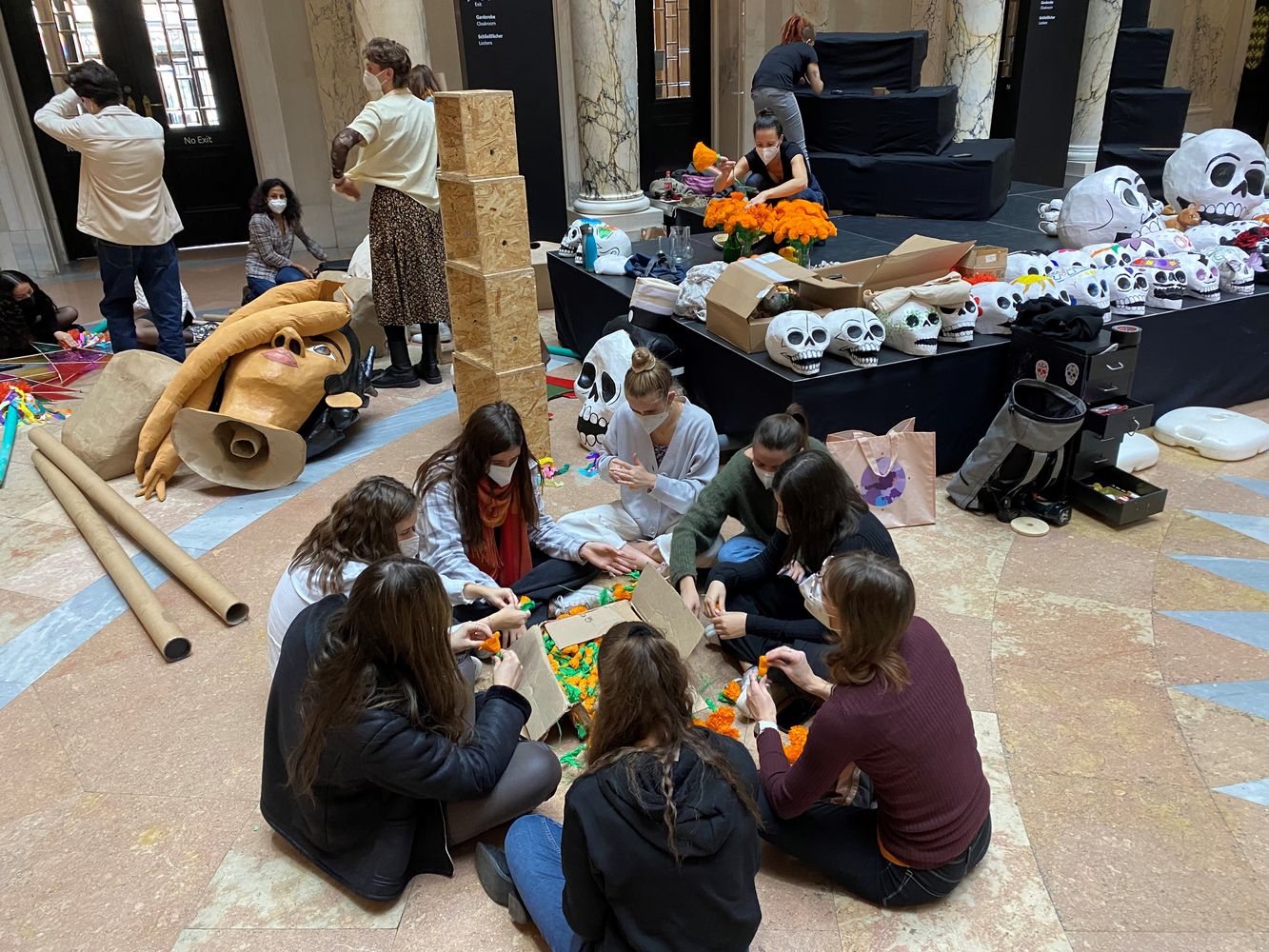
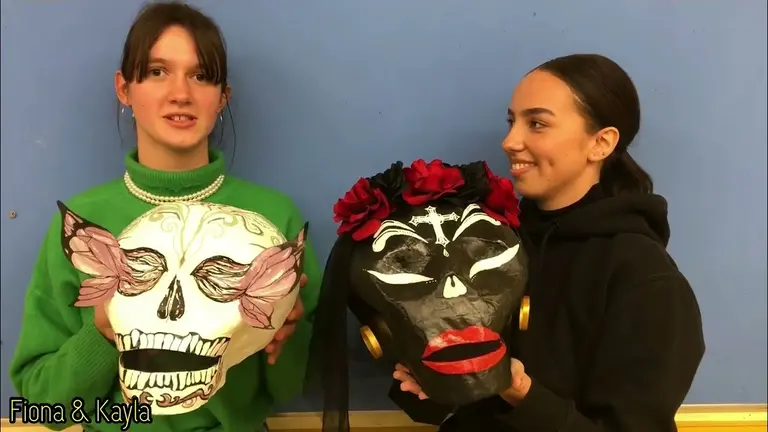
Under the guidance of papier-mâché artist Stephany Rodriguez Cabañas, the students created their own death masks for the mask dance (choreography and rehearsal by Hena Moreno Corzo). The mask dance was performed in the Columned Hall of the Weltmuseum Wien.

In addition, Stephany Rodriguez Cabañas prepared the altar together with the students. It featured several alebrijes, Mexican fantasy figures that were created during the previous school year through intensive work with Stephany in the elective subject Spanish. The calaveras – the skulls floating above the audience – were also created in collaboration with Stephany in the subject of Art Education. During art lessons, the students spoke Spanish with Stephany.

Interdisciplinary, intercultural learning requires collaboration with artists or individuals from different cultural backgrounds.

Media literacy and working with new technologies are essential in contemporary education. However, working with one’s hands is also a quality that deserves renewed attention. The students shaped and painted their figures and skulls from cardboard and glue with the greatest care.

In Mexico, the Day of the Dead is celebrated because the souls and spirits of deceased relatives come to visit. Mexicans do not see death as the opposite of life; it is part of it. They try to integrate death into life, to lose their fear of it, to make it a friend – to celebrate, laugh, and flirt with death so that it becomes less foreign. Learning about other cultures has definitely given the students of BG Bachgasse a new perspective on such a life-related topic as death.

(Text: Melanie Mertz)

https://www.bgmoedling-bach.ac.at/dias-de-los-muertos-im-weltmuseum-wien/

As part of the Culture Connected funding program, we invited 50 students from BORG Hegelgasse 12 and MS Stromstraße 40 to the Weltmuseum Wien and the Natural History Museum Vienna.

The interactive workshop focused on the representation of Indigenous people in museum visual worlds – particularly in the colonial murals of the Natural History Museum and selected objects from the Weltmuseum Wien. Young people aged 14 and older were invited to critically question the colonial regimes of gaze manifested in historical representations and to develop their own perspectives on representation, visibility, and cultural appropriation.

Central to the workshop was the question: “Who is looking through whose window?” – a guiding metaphor encouraging reflection on the positioning of viewers and those depicted. Together with the participants, museum images were analyzed, concepts such as external representation, static representation, and colonial continuities were discussed, and creative counter-images were developed.

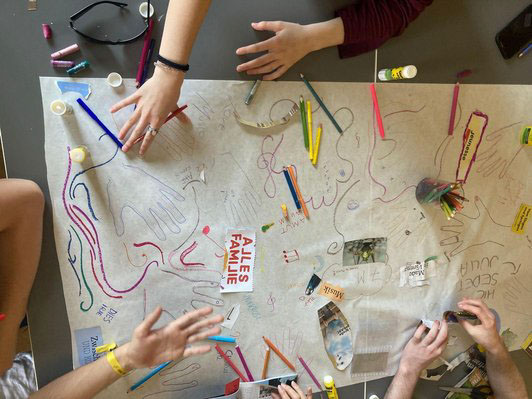
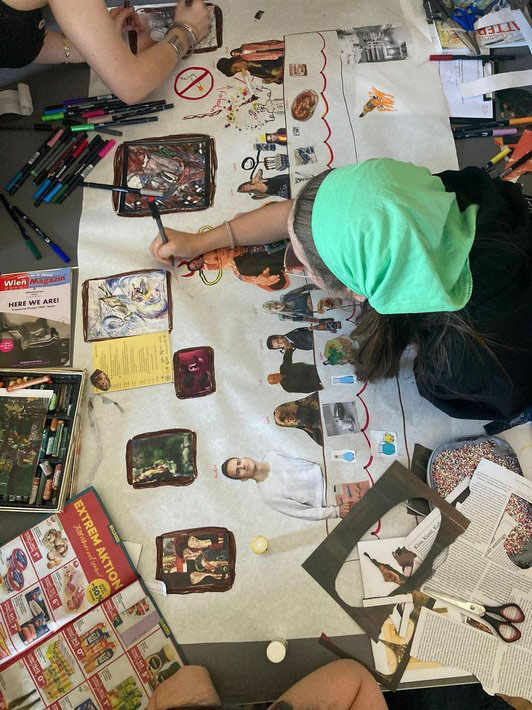
Through group and station-based work, the young people approached themes such as identity, power, and history from an anti-colonial and discrimination-critical perspective. The aim was not only to convey knowledge, but also to open spaces for participants’ own questions, doubts, and artistic responses. The final outcome was a collaboratively created collage in which the young people positioned themselves – as a response to the norm-setting images of past centuries.

Neslihan Yakut, Selina Wagner, Amba Botland, and Asiye Yildiz, Cultural Educators Weltmuseum Wien

Logo of the OEAD (Austrian Agency for International Cooperation in Education and Research). It features the letters

Guided Tours for Educators

For our current special exhibitions, we regularly offer guided tours specifically for educators (see dates below).

You can also subscribe to our newsletter to stay informed about our latest school and kindergarten programmes.

Upcoming dates A wide-ranging programme awaits you