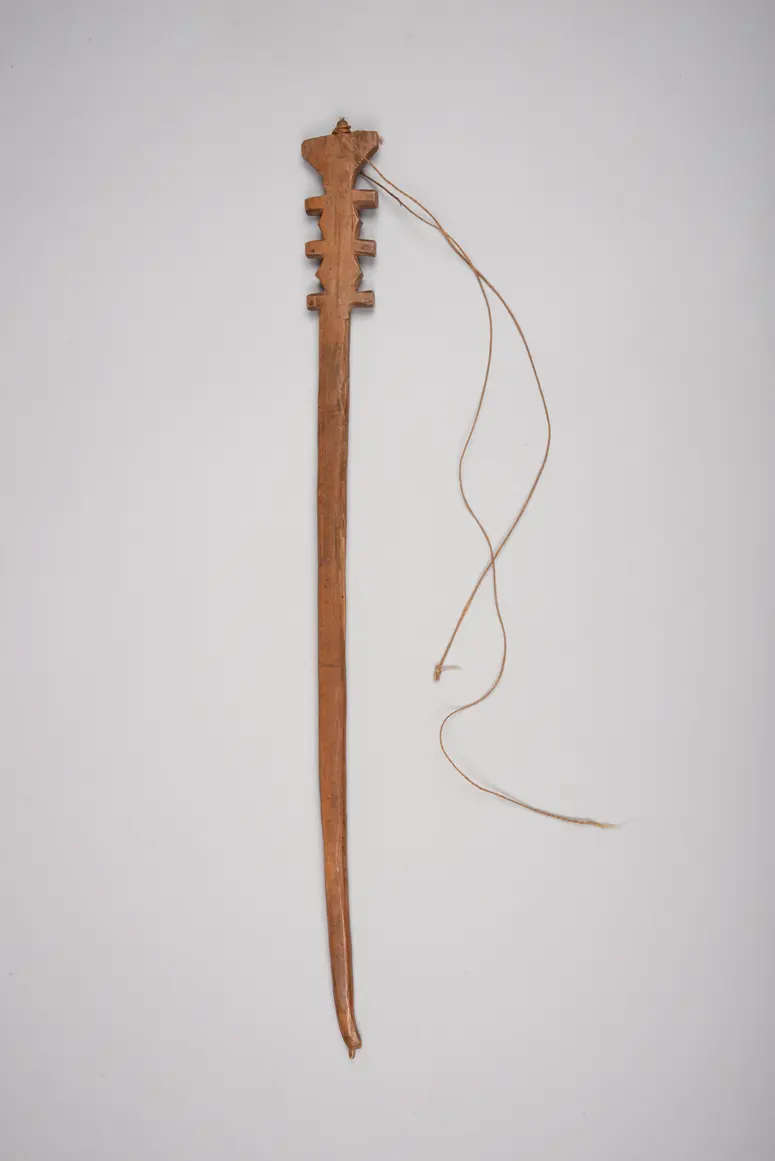
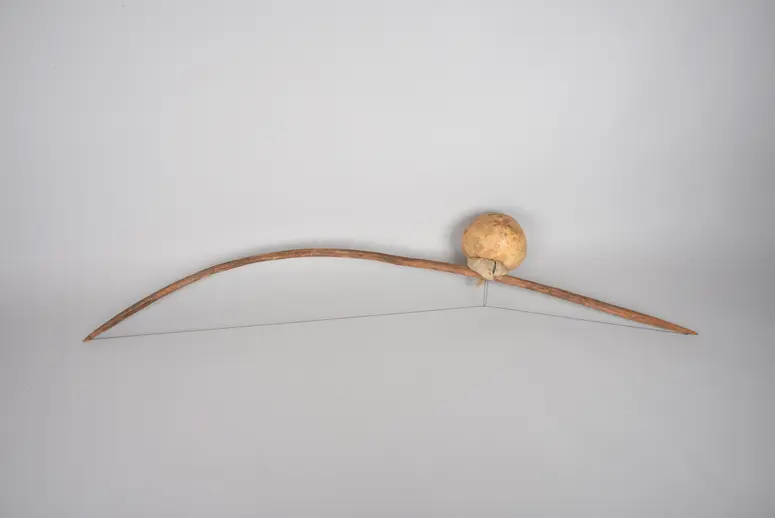
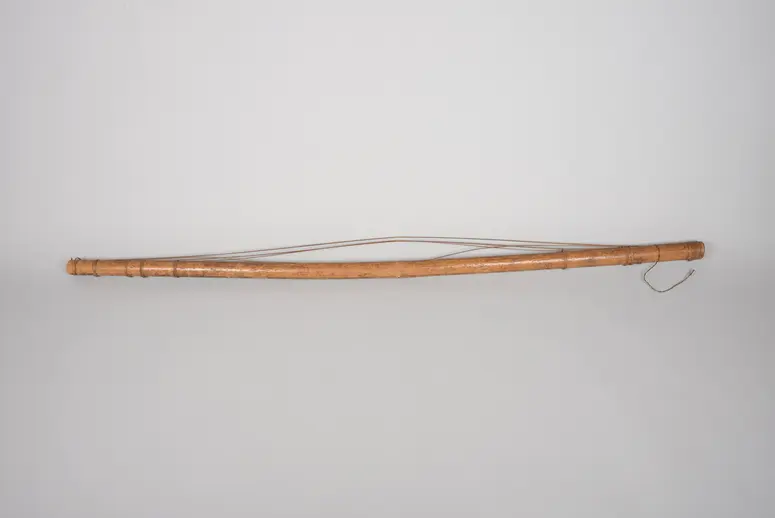
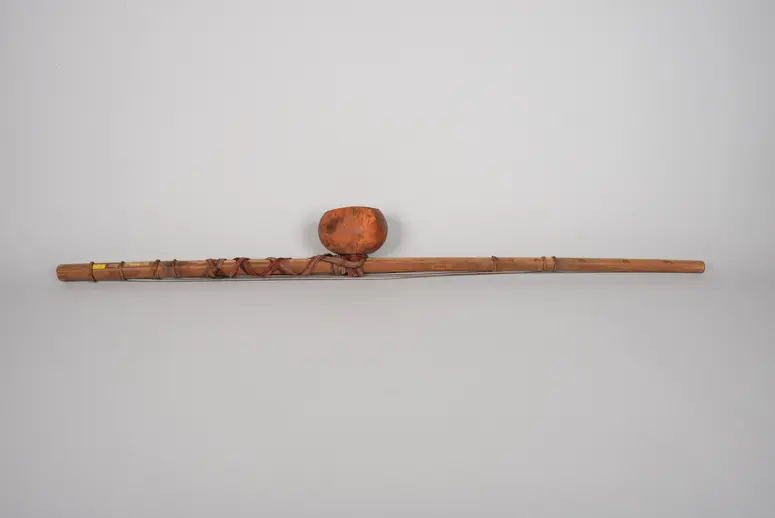
Stabzither
rudra vīṇā
18./19. Jahrhundert | Franz Ferdinand von Österreich-Este
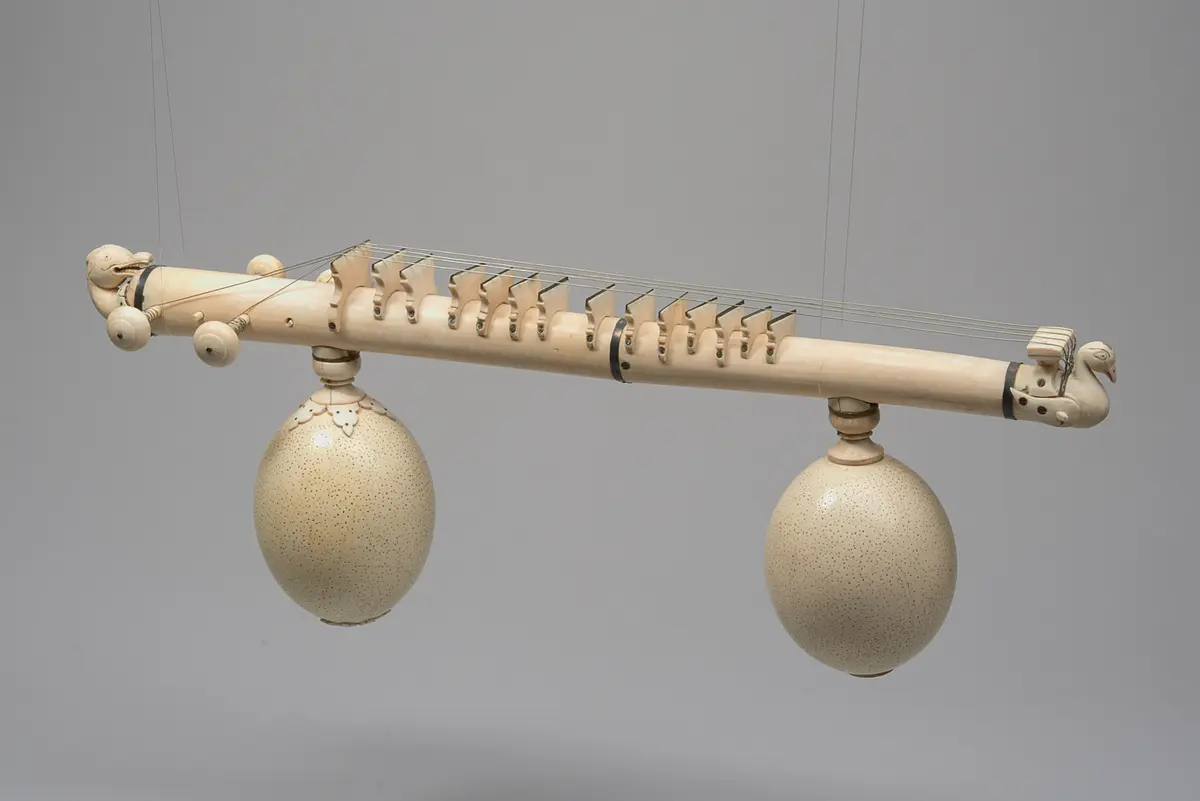
Seiner komplizierten Spieltechnik wegen ist die Stabzither ausschließlich ein Soloinstrument der höchststehenden Musiker. Auch im mythologischem Hindupantheon genießt das Instrument eine privilegierte Stellung: Narada, der Gott der Musik und Sohn des Schöpfers Brahma, hat es erfunden und spielt darauf den Göttern vor.
Der Spieler sitzt meist am Boden, das Instrument liegt dabei mit dem den Wirbeln nahen Resonanzkörper über seiner linken Schulter. Der Saitenträger liegt mit den Saiten nach außen quer vor der Brust.
Der Saitenträger ist vollständig aus indischem Elfenbein gefertigt. Vier Saiten aus Metall sind über zwei Stege und 13 Griffbünde geführt und werden mittels Flankenwirbeln gespannt. Zwei angeschraubte Straußeneier als Resonatoren verstärken den Ton.
Sammlung:
Franz Ferdinand von Österreich-Este (1863 Graz - 1914 Sarajevo) DNB
Zeit:
18./19. Jahrhundert
Objektbezeichnung
Stabzither
Kultur
Indien
Material/Technik:
Elfenbein, Straußenei, Stahl
Bildrecht
Weltmuseum Wien
Sammlungsbereich
Süd-, SO-Asien, Himalaya
Geographie
Südasien/Subkontinent/Indien
Inv. Nr.
102802