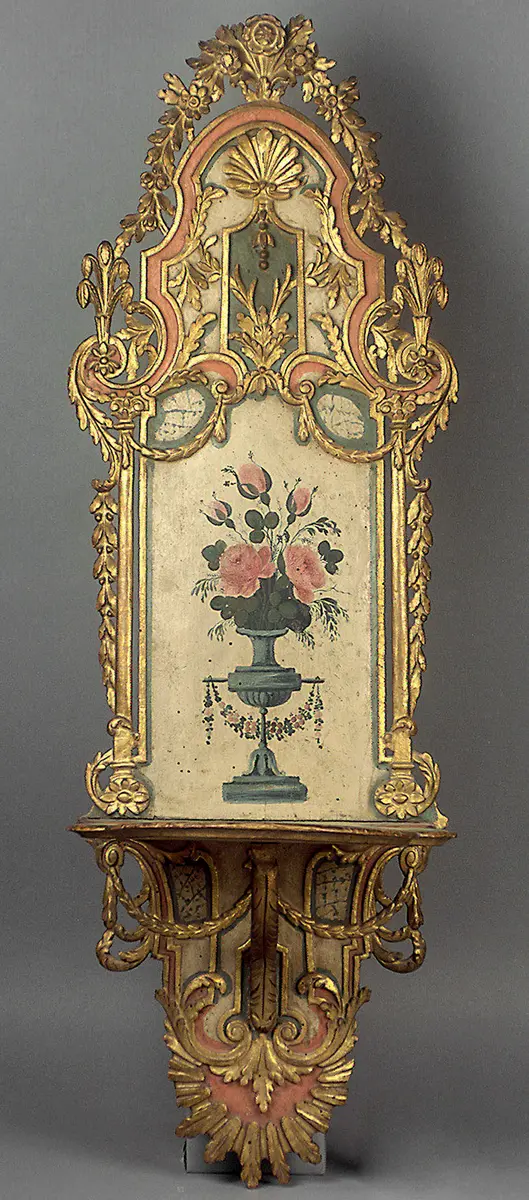
Turbanständer im Stil des osmanischen Rokoko
kavukluk
18. Jahrhundert | Betty Grossmann
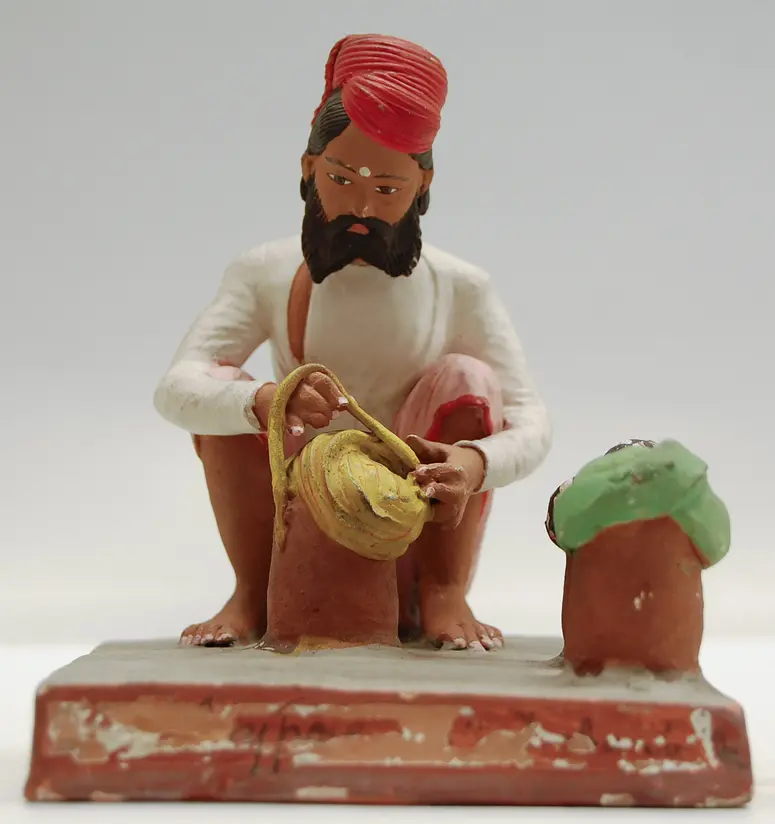
Einst trugen osmanische Hofbeamte und Angehörige der Elite kunstvoll gestaltete Turbane, deren Form, Farbe und Schmuck Amt und Stand ihrer Träger signalisierten. Der Berufsstand der Turbanwinder sorgte dafür, dass die Turbane den Kleidervorschriften entsprachen. Nach dem Tragen wurden die Turbane zu ihrem Schutz auf Turbanständer abgelegt. 1829 wird der Turban abgeschafft und der Fes als nationale Kopfbedeckung eingeführt; das Tragen des Turbans blieb auf geistliche Würdenträger beschränkt.
Sammlung:
Betty Grossmann
Zeit:
18. Jahrhundert
Zugangsdatum:
1934
Objektbezeichnung
Turbanständer im Stil des osmanischen Rokoko
Kultur
Türkei
Material/Technik:
Holz, Pigmente, Blattgold, Samt
Maße:
H. 106,5 cm, B. max. 41 cm, T. 26 cm
Bildrecht
Weltmuseum Wien
Sammlungsbereich
Nordafrika, Vorder- und Zentralasien, Sibirien
Inv. Nr.
124676