Turban stand in Ottoman rococo style
kavukluk
18th century | Betty Grossmann
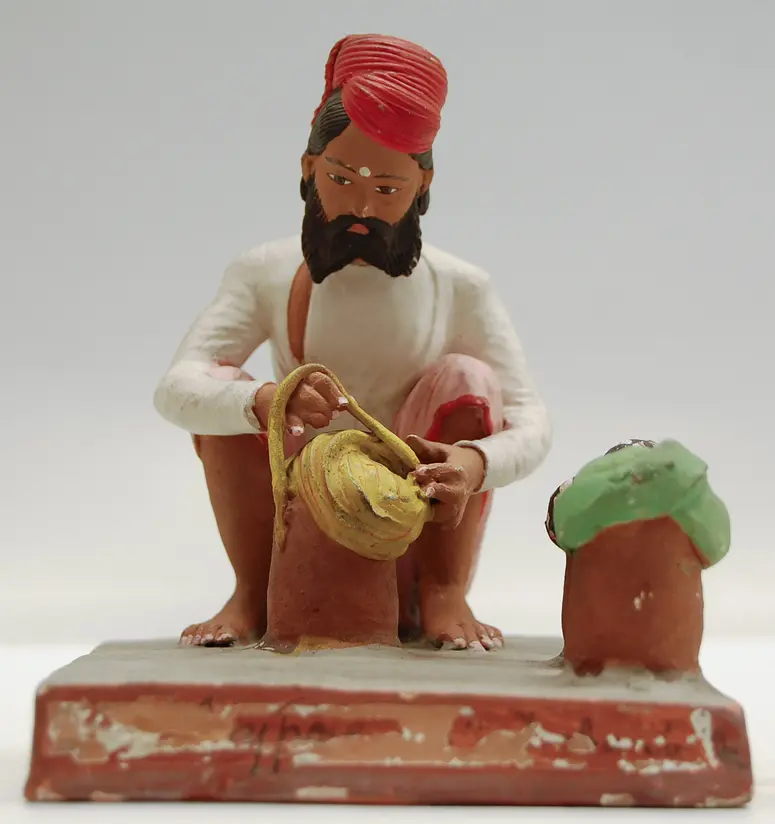
Ottoman court officials and members of the elite classes used to wear elaborately shaped turbans, whose form, colour and decoration signalled the position and status of the wearer. The profession of the turban winder ensured that the turbans complied with the clothing regulations. After being worn, the turbans were placed for their protection on turban stands. In 1829 the turban was abolished and replaced by the fez as the national headwear. From this time on, the wearing of a turban was restricted to religious dignitaries.
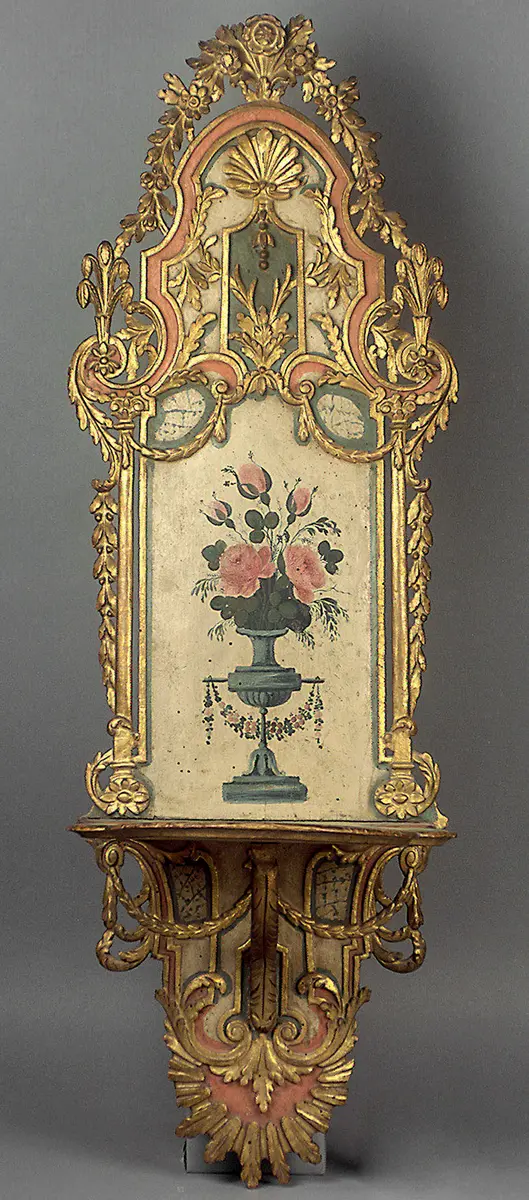
Ottoman court officials and members of the elite classes used to wear elaborately shaped turbans, whose form, colour and decoration signalled the position and status of the wearer. The profession of the turban winder ensured that the turbans complied with the clothing regulations. After being worn, the turbans were placed for their protection on turban stands. In 1829 the turban was abolished and replaced by the fez as the national headwear. From this time on, the wearing of a turban was restricted to religious dignitaries.
Collection:
Betty Grossmann
Time:
18th century
Entry Date:
1934
Object Name
Turban stand in Ottoman rococo style
Culture
Turkey
Material/technology:
Wood, pigments, gold leaf, velvet
Dimensions:
H. 106,5 cm, B. max. 41 cm, T. 26 cm
Copyright
Weltmuseum Wien
Collection area
North Africa, Middle East, Central Asia and Siberia
Invs.
124676
Browse more Similar items you might be interested in
Turbanbinder Franz Ferdinand von Österreich-Este 1893 oder früher