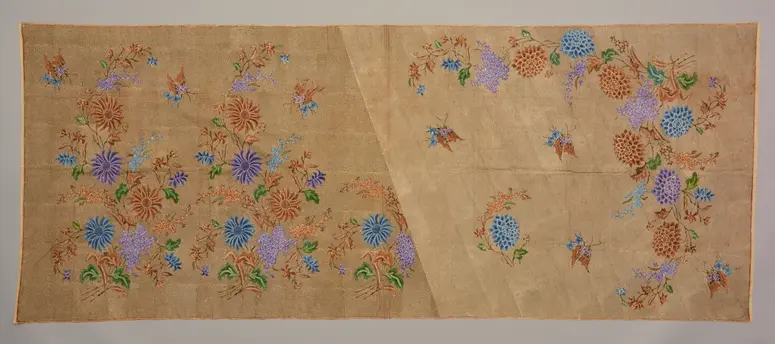
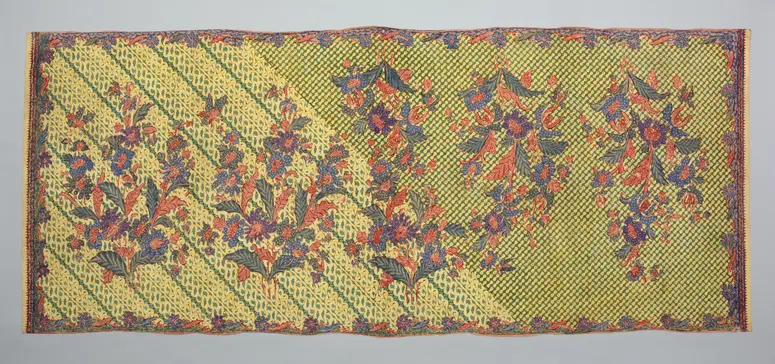
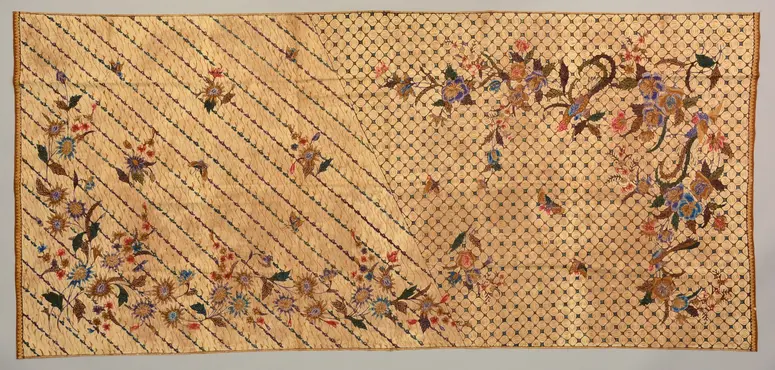
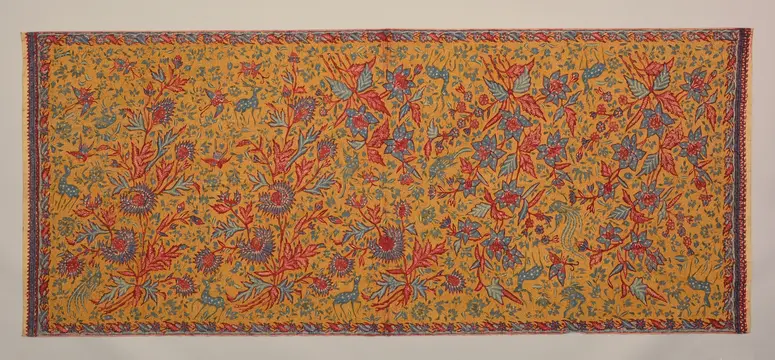
Wandtuch, Batik
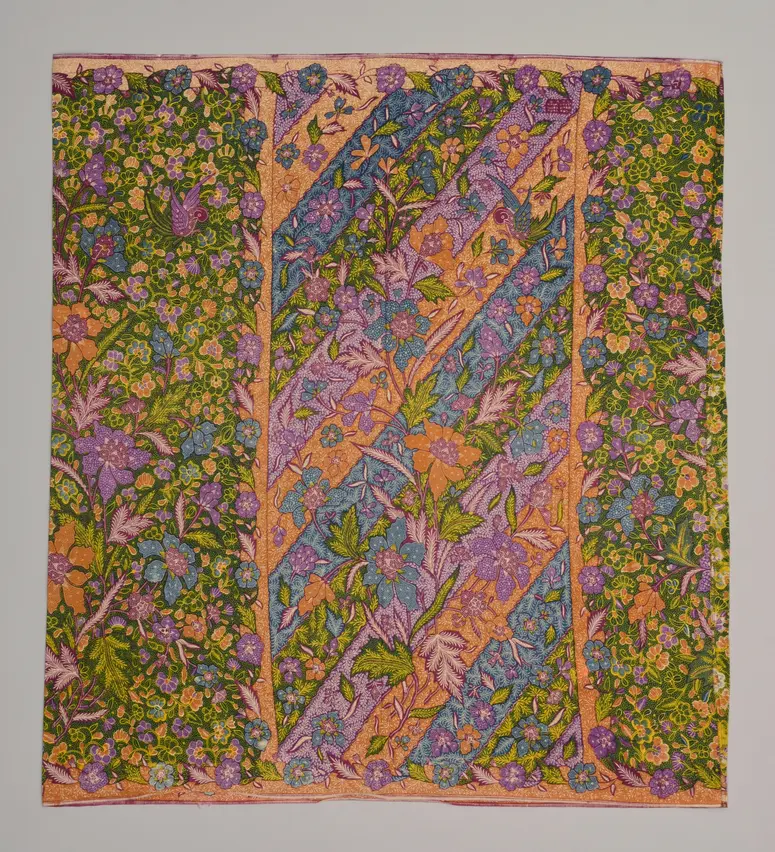
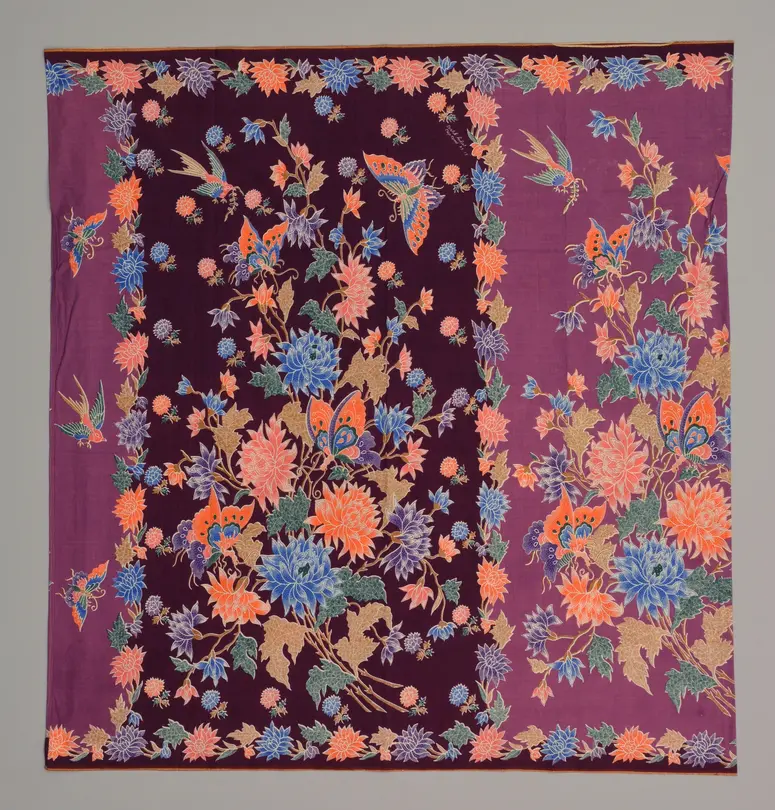
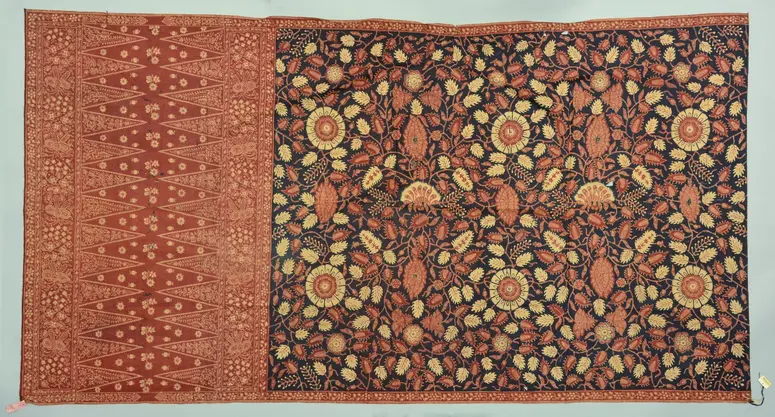
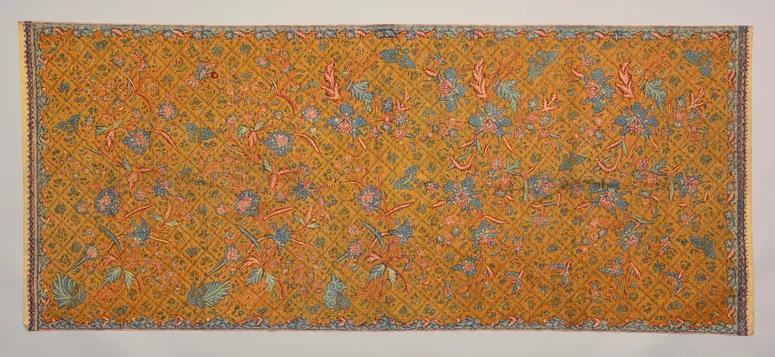
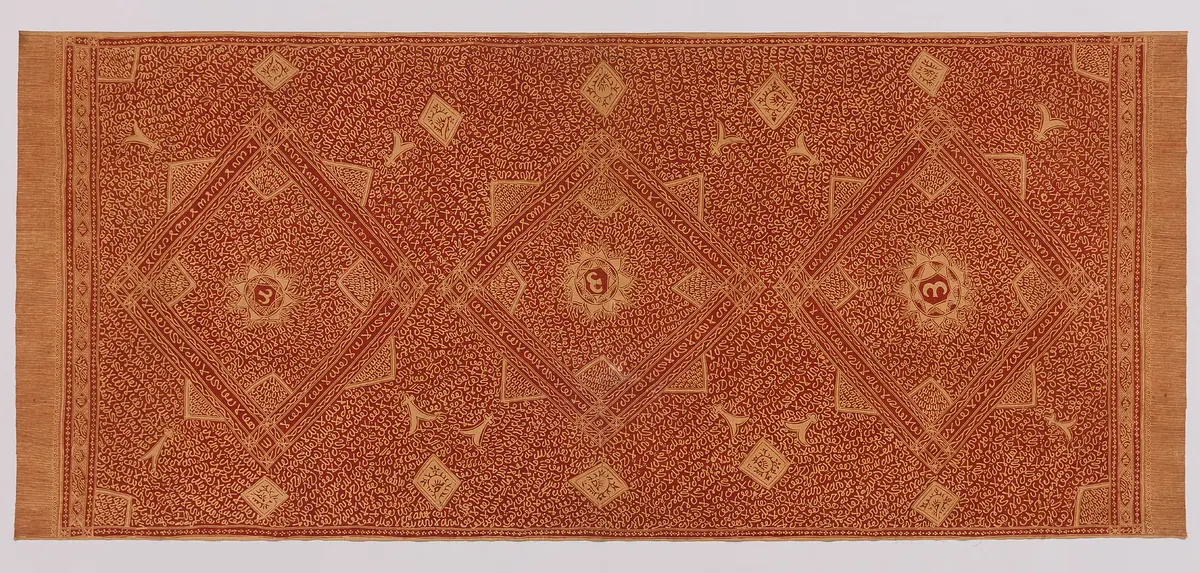
Batik basurek
Anfang 20. Jahrhundert | Reinhold Mittersakschmöller
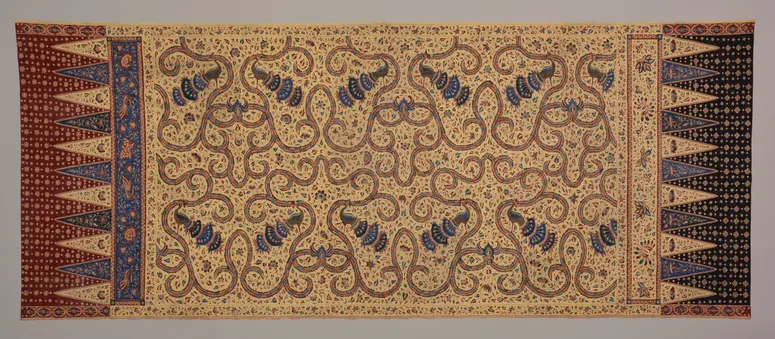
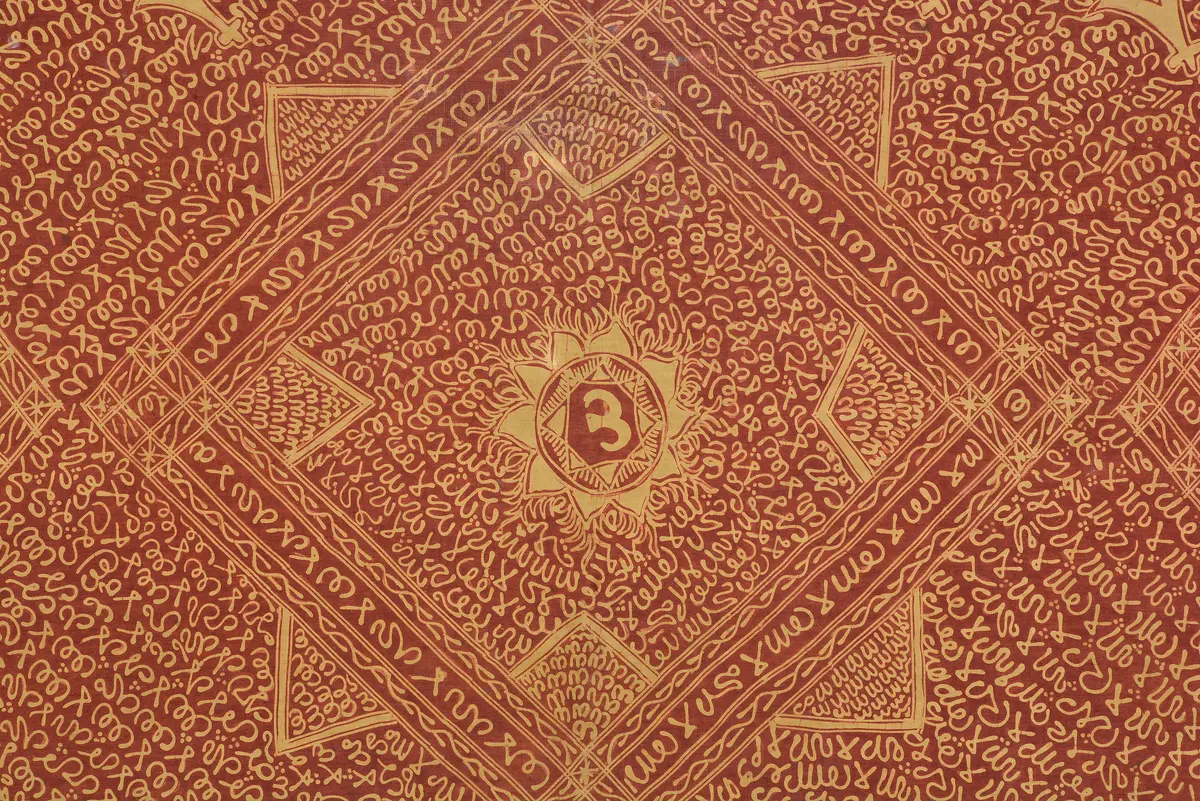
Batik basurek benutzt „arabisierte“ Schrift, um auf den arabischen Einfluss hinzuweisen, ohne dabei eine richtige arabische Schrift zu verwenden. Das kann daran liegen, dass die Batikzeichner die arabische Schrift nicht beherrschen. Die meisten dieser Batiken werden in chinesischen Peranakan-Batikwerkstätten an der Nordküste Javas (Persisiran) hergestellt. Der Auftraggeber ist oft ein arabischer Peranakan.
Das Zentrum der Lotusblume bildet das Zeichen „Allah“, das in arabischer Kalligraphie geschrieben ist. Das Wort für „Allah“ ist mit Absicht verfälscht, damit das Tuch keine sakrale Eigenschaft bekommt und außerhalb der religiösen Zeremonie verwendet werden kann.
Darstellung des mythischen zweiendigen Schwerts Dhu'l-Faqar (Zulfikar), das der Prophet Muhammad seinem Schwiegersohn Ali ibn Abi Talib bei einer Schlacht gab. Die Darstellung ist ein beliebtes Symbol bei Muslimen.
Die Nelke ist typisch für die Batik von der Nordküste Javas. Das Motiv ist beliebt und gehört zu den chinesischen Motiven. Dies weist auf die starken chinesischen Einflüsse in der Region an der Nordküste Javas hin.
Sammlung:
Reinhold Mittersakschmöller DNB
Zeit:
Anfang 20. Jahrhundert
Zugangsdatum:
1996
Objektbezeichnung
Wandtuch, Batik
Material/Technik:
Wachsbatik (Hand- und Stempelbatik) mit natürlichen Farbstoffen auf maschinell gewebter Baumwolle; Leinwandbindung
Bildrecht
Weltmuseum Wien
Sammlungsbereich
Insulares Südostasien
Inv. Nr.
176002