Cloth, Batik
Batik basurek
early 20th century | Reinhold Mittersakschmöller
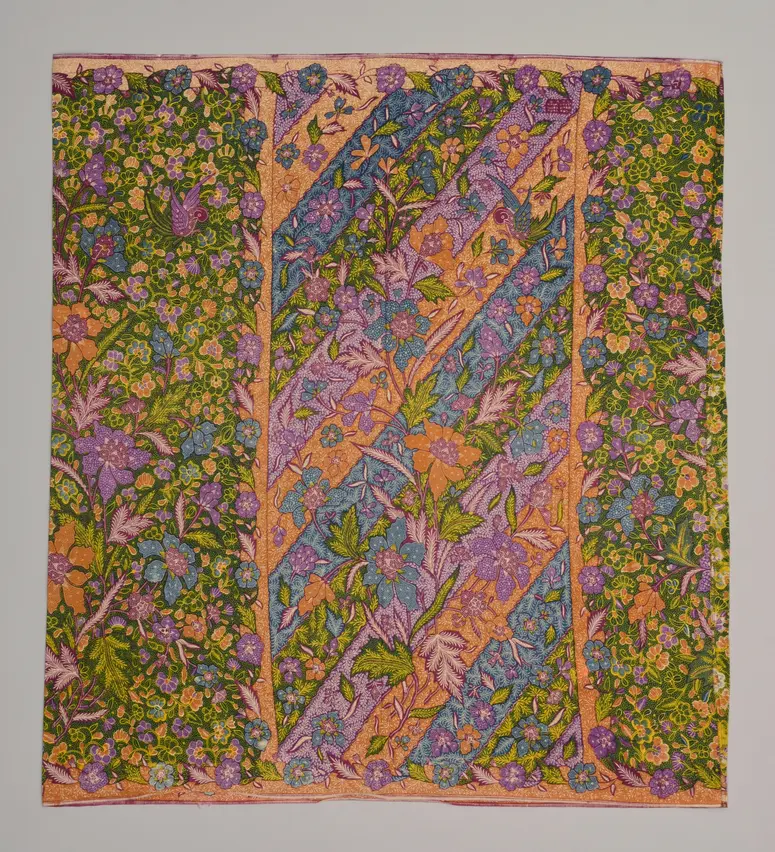
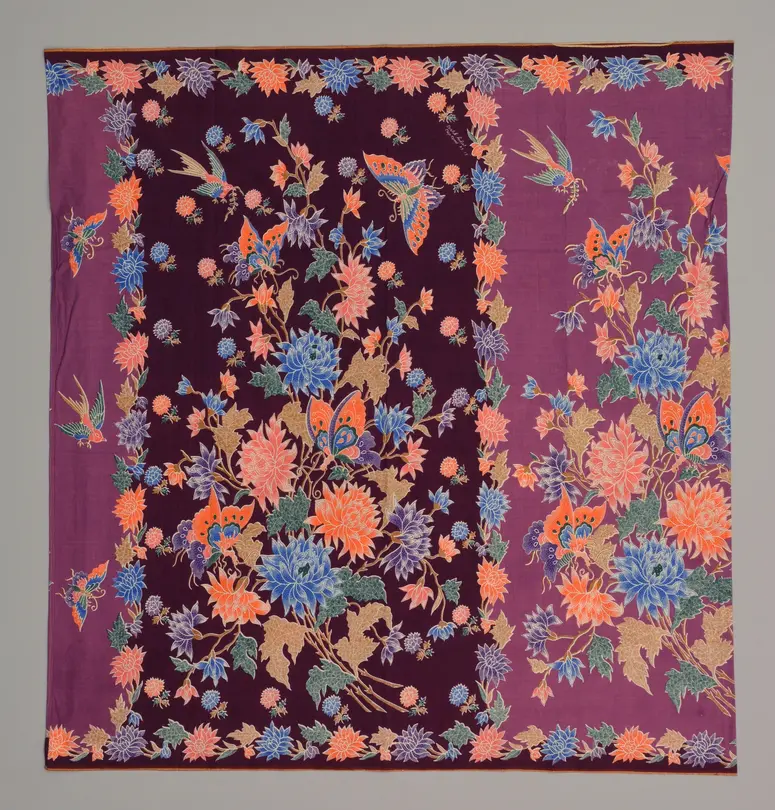
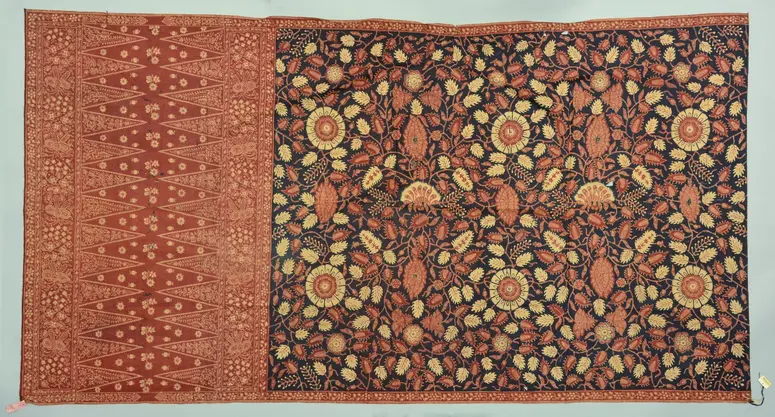
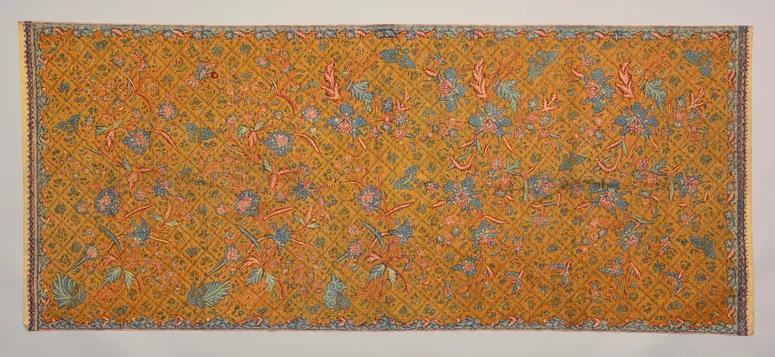
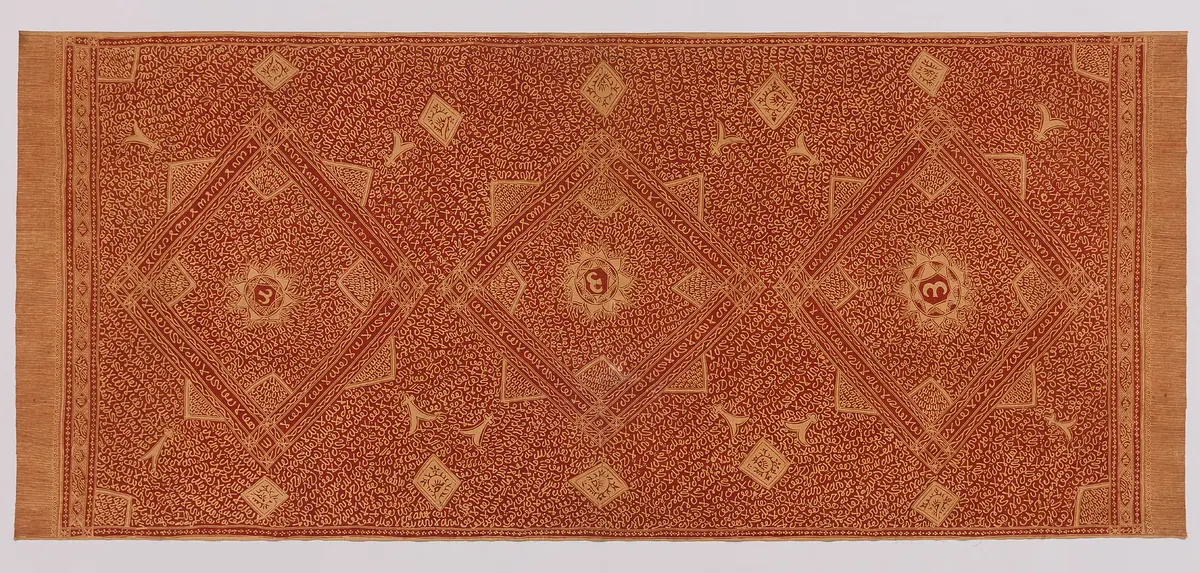
The centre of the lotus blossom forms the sign “Allah” that was written in the art of Arabic calligraphy. The word for “Allah” is intentionally distorted, so the cloth is not vested with sacred properties and can still be used other than religious ceremonies.Representation of the legendary, split-bladed sword Dhu'l-Faqar (Zulfikar) that the Prophet Muhammad gave to his son-in-law Ali ibn Abi Talib in battle. This image is a popular Muslim symbol.The carnation blossom (celuki) is typical of the batik tradition at the north coast of Java. The popular motif also appears in Chinese patterns, which also points out the strong Chinese influence in the region along the north coast of Java.Batik basurek uses “Arabised” letters to refer to the great Arab influence without depicting actual Arabic writing. This development is the result of the batik artists’ lack of knowledge concerning Arabic script. Nevertheless, the customers ordering such cloths are often Arab Peranakan (migrants).
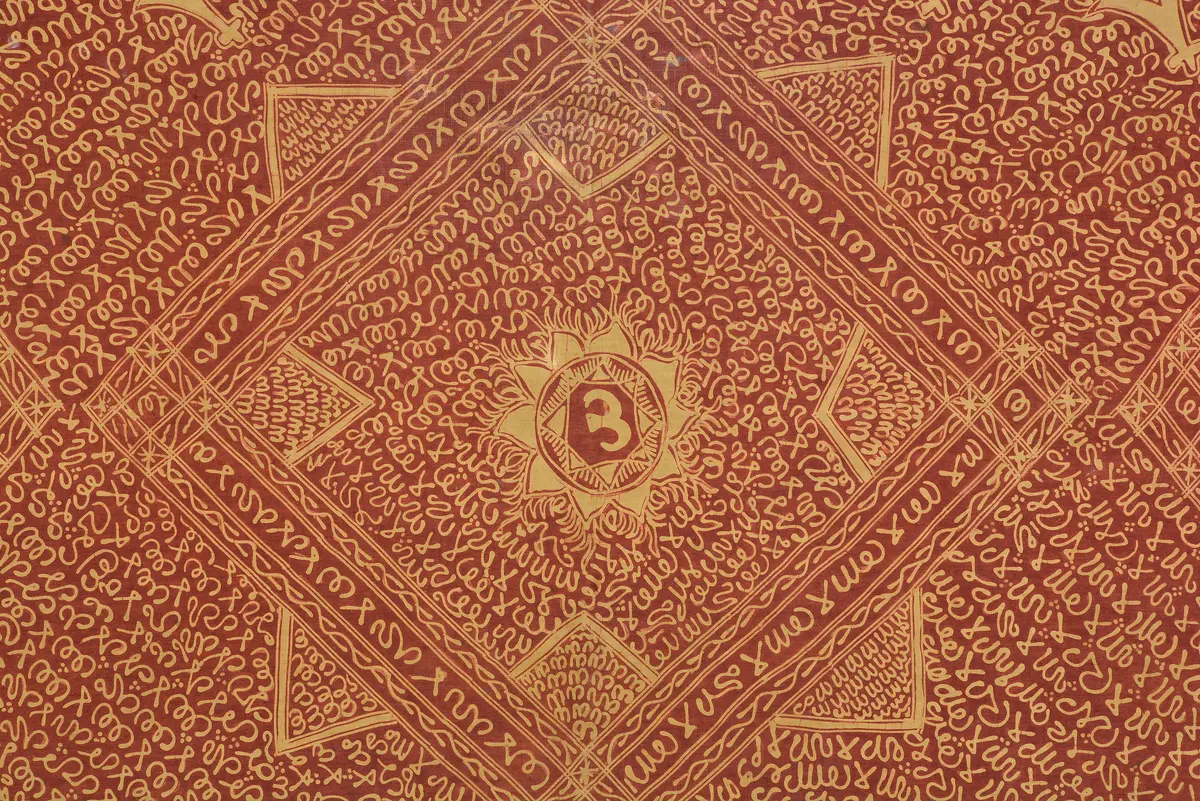
The centre of the lotus blossom forms the sign “Allah” that was written in the art of Arabic calligraphy. The word for “Allah” is intentionally distorted, so the cloth is not vested with sacred properties and can still be used other than religious ceremonies.Representation of the legendary, split-bladed sword Dhu'l-Faqar (Zulfikar) that the Prophet Muhammad gave to his son-in-law Ali ibn Abi Talib in battle. This image is a popular Muslim symbol.The carnation blossom (celuki) is typical of the batik tradition at the north coast of Java. The popular motif also appears in Chinese patterns, which also points out the strong Chinese influence in the region along the north coast of Java.Batik basurek uses “Arabised” letters to refer to the great Arab influence without depicting actual Arabic writing. This development is the result of the batik artists’ lack of knowledge concerning Arabic script. Nevertheless, the customers ordering such cloths are often Arab Peranakan (migrants).
Collection:
Reinhold Mittersakschmöller DNB
Time:
early 20th century
Entry Date:
1996
Object Name
Cloth, Batik
Material/technology:
Cotton, natural colours, hand and cap batik
Copyright
Weltmuseum Wien
Collection area
Insular Southeast Asia
Invs.
176002