Wasserpuppenfiguren
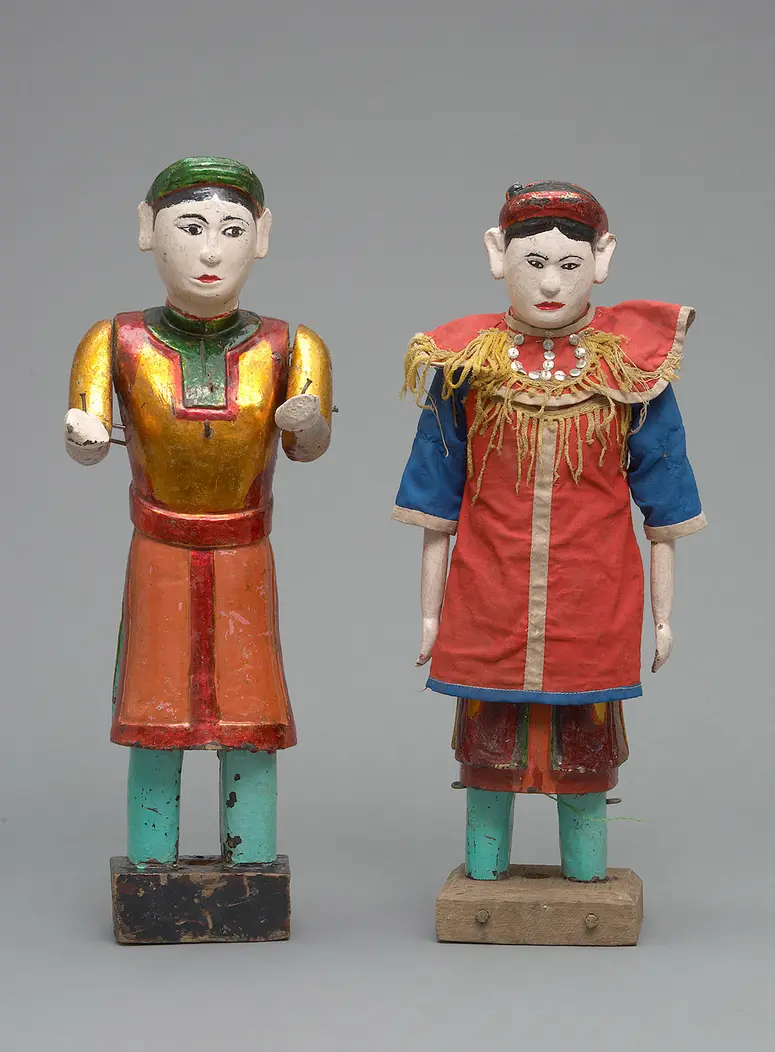
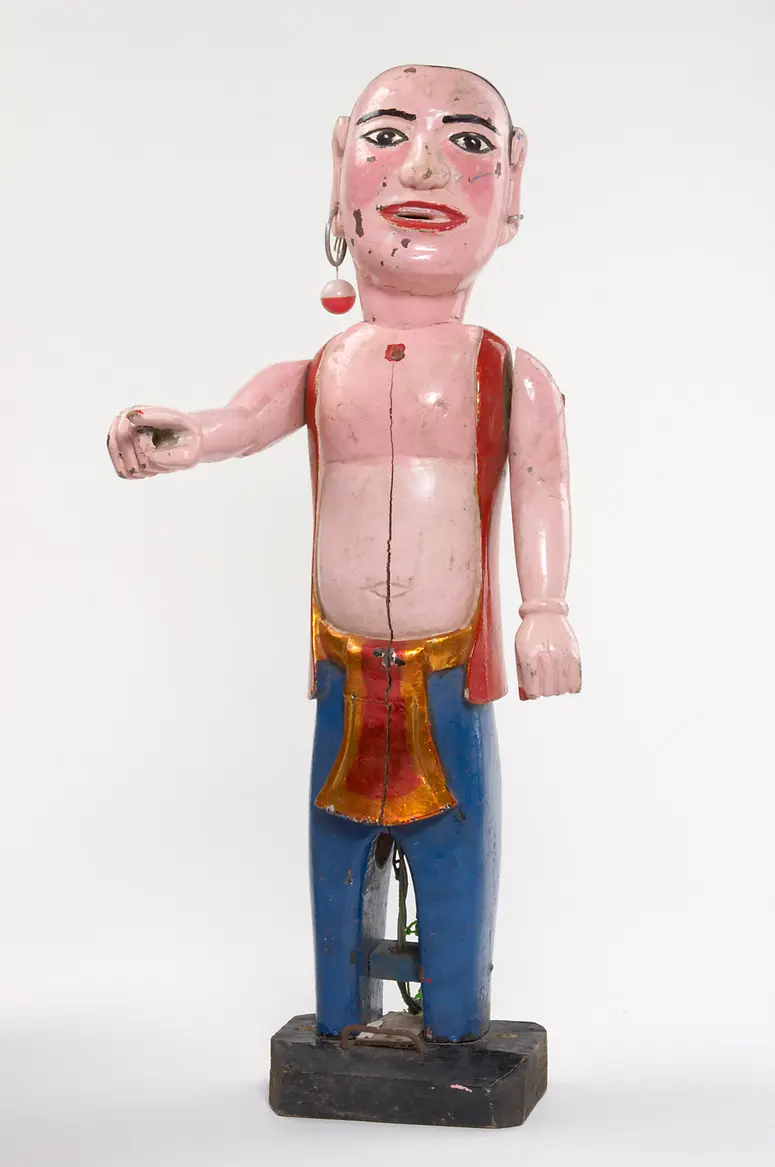
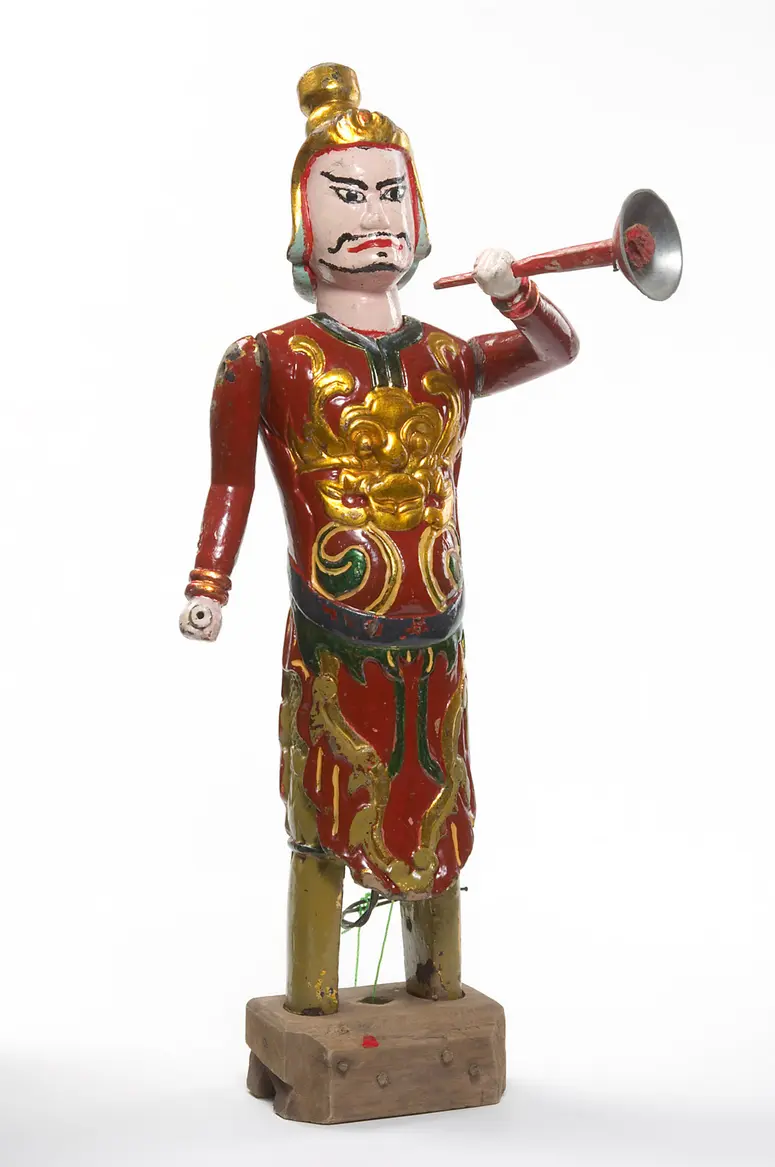
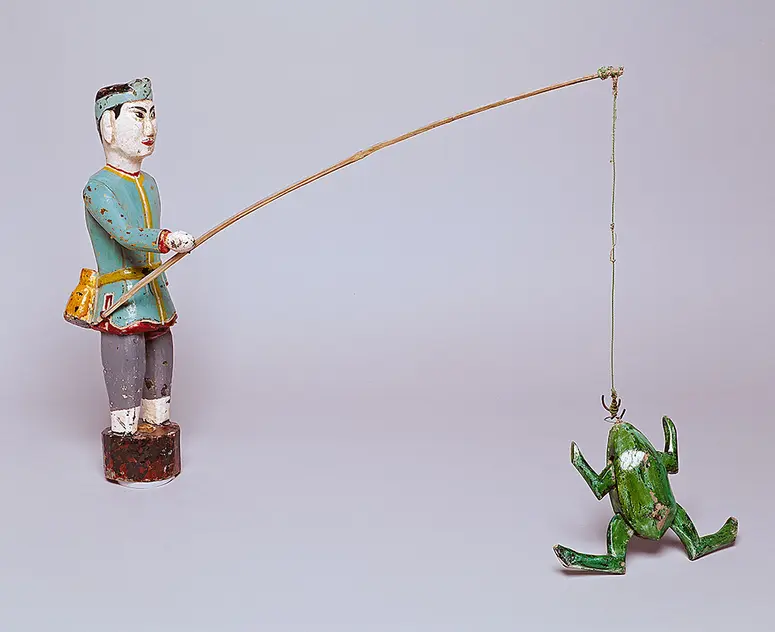
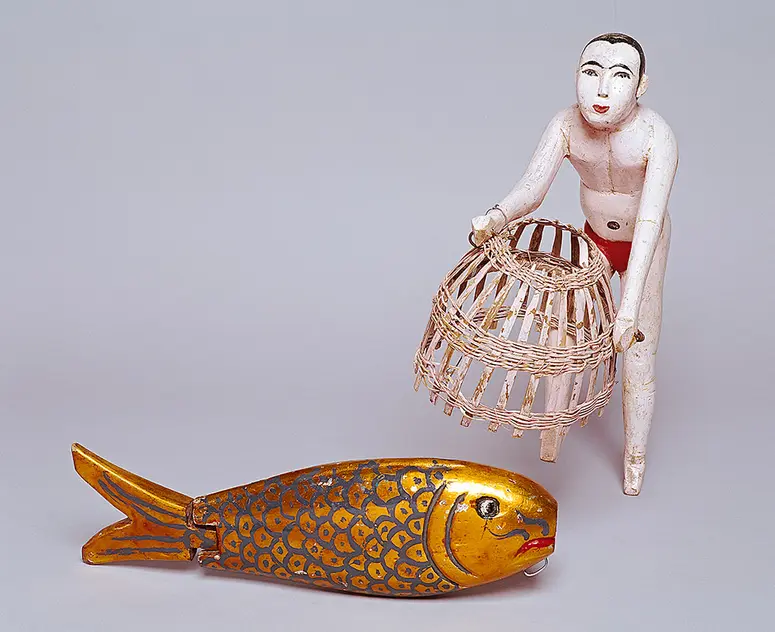
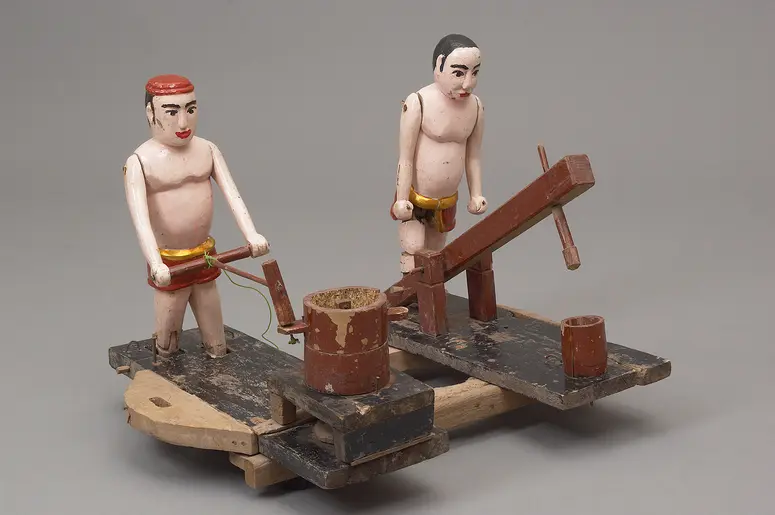
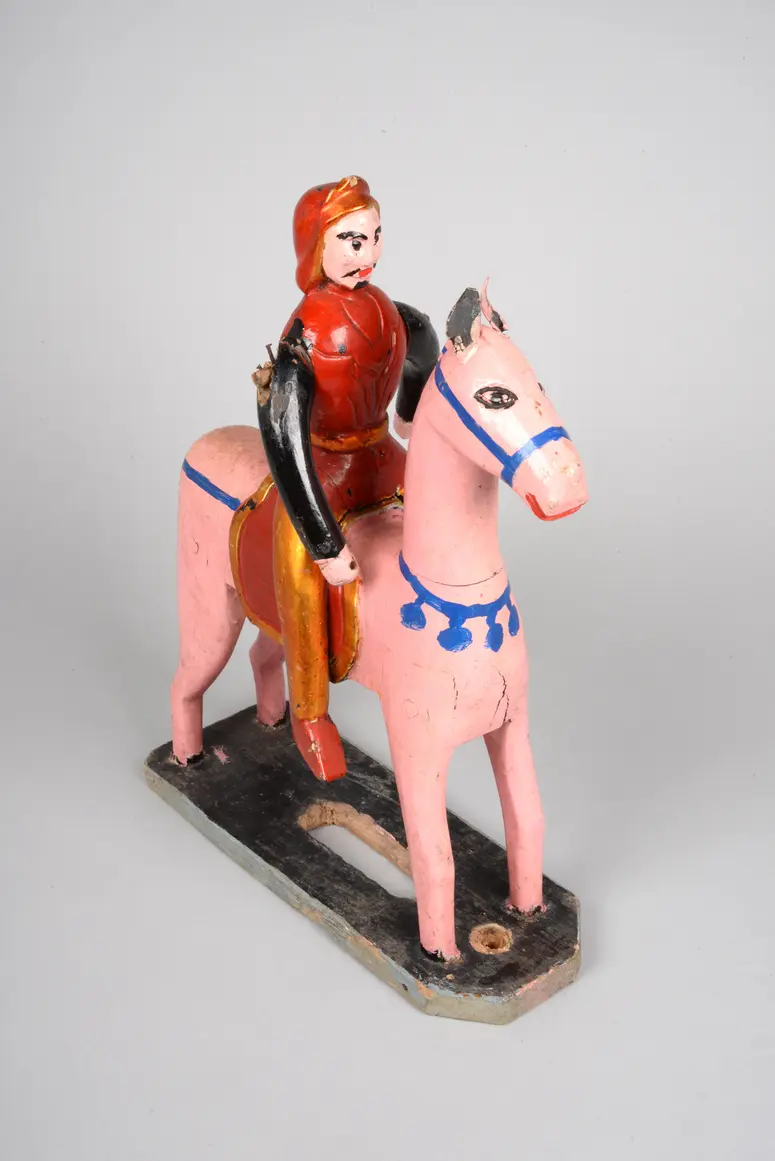
Das Theaterspiel mit über das Wasser des Dorfteiches gleitenden Holzfiguren erfreut sich in Nordvietnam einer tausendjährigen Tradition. Es geht auf den als Kulturheros verehrten Mönch Tu Dao Hanh zurück, der im 11. Jahrhundert gelebt hat. Meist im Rahmen von Festen für die Schutzgottheit des Dorfes wird vor der versammelten Gemeinde eine von Musik und belehrenden oder unterhaltenden Gesängen begleitete Abfolge von Szenen zur Aufführung gebracht.
Das Spiel beginnt mit der Verehrung des vergöttlichten Gründers dieser Theaterform. In der Folge wechseln sich Episoden mit belehrenden Inhalten zur Geschichte und Religion mit unterhaltsamen Szenen aus dem alltäglichen Leben der Dorfbewohner ab.
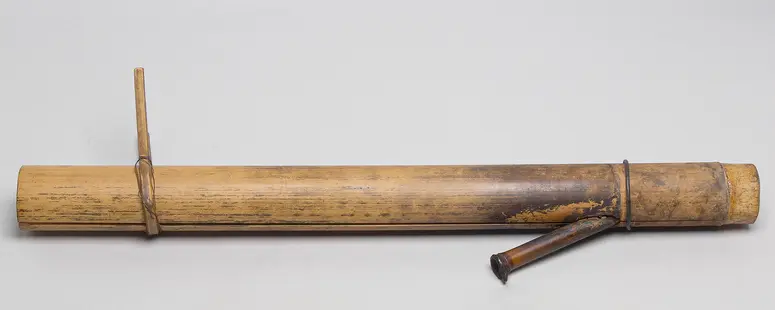
Die in Gilden organisierten Spieler führen die Figuren an langen Stangen, die über der Wasseroberfläche nicht sichtbar sind. So entsteht der Eindruck, als ob die Figuren frei über das Wasser gleiten würden. Dem Element Wasser kommt bei dieser Theaterform eine besondere Rolle zu. Während es generell als eines der „vier schrecklichen Unheile“ (Flut, Feuer, Räuber und Besatzungsmächte) negativ besetzt ist, wird es zugleich aber auch positiv, nämlich als wichtigste Voraussetzung für den Nassreisbau, gesehen.
Das Wasserpuppenspiel war ursprünglich eine rein dörfliche Angelegenheit, wird jedoch heute als Manifestation vietnamesischer Identität sogar von der Regierung gefördert.
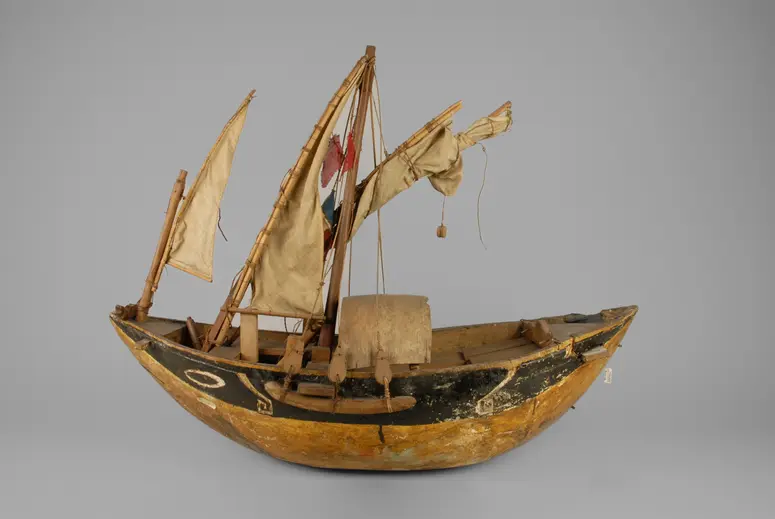
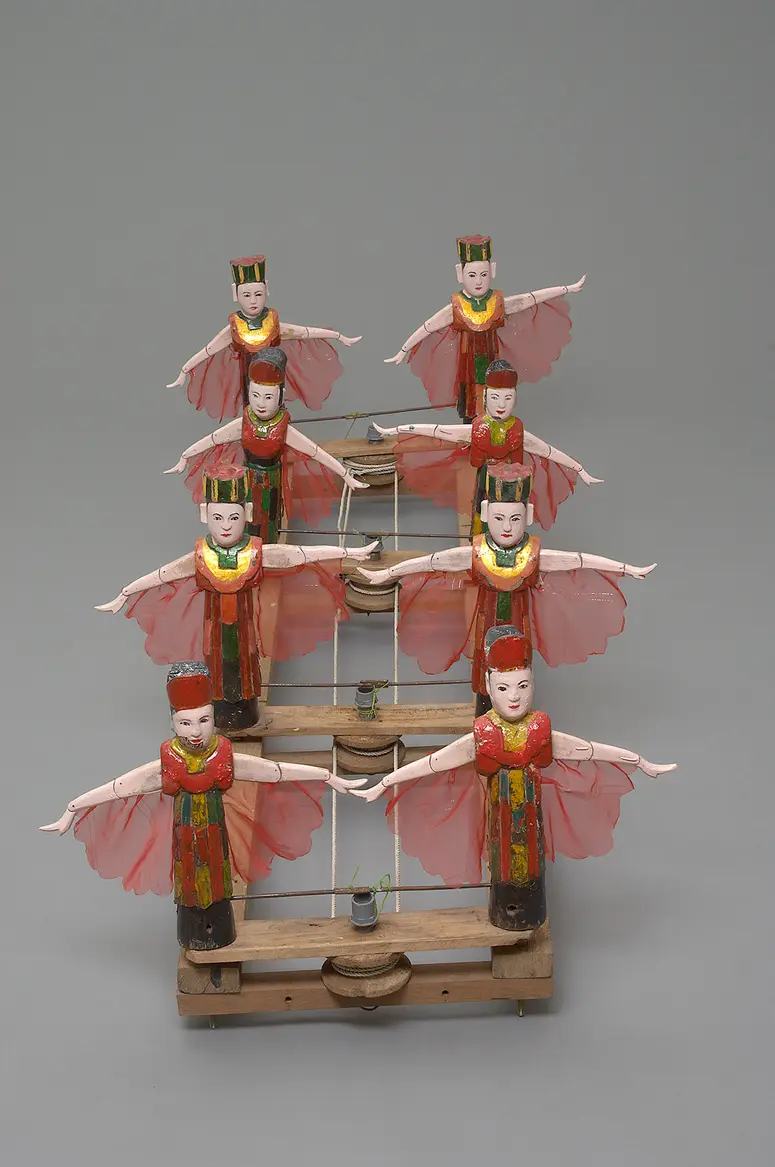
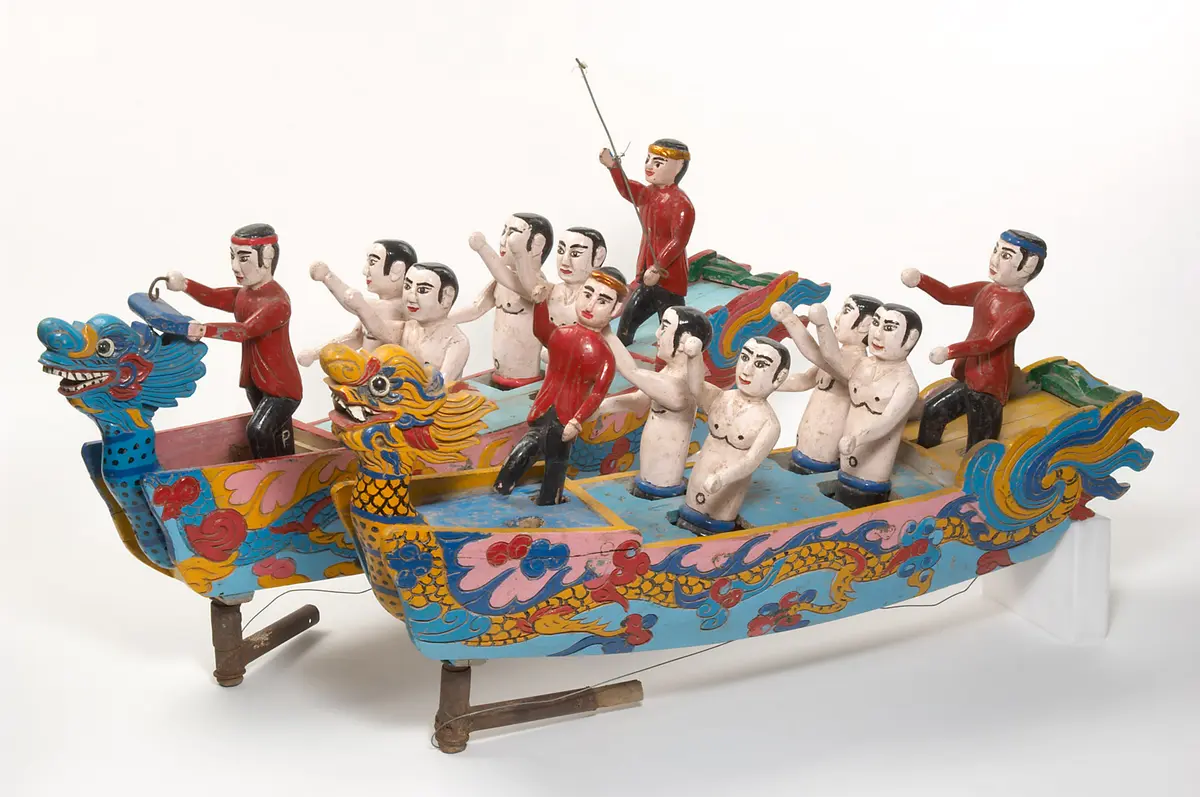
Zu dieser Figurengruppe:
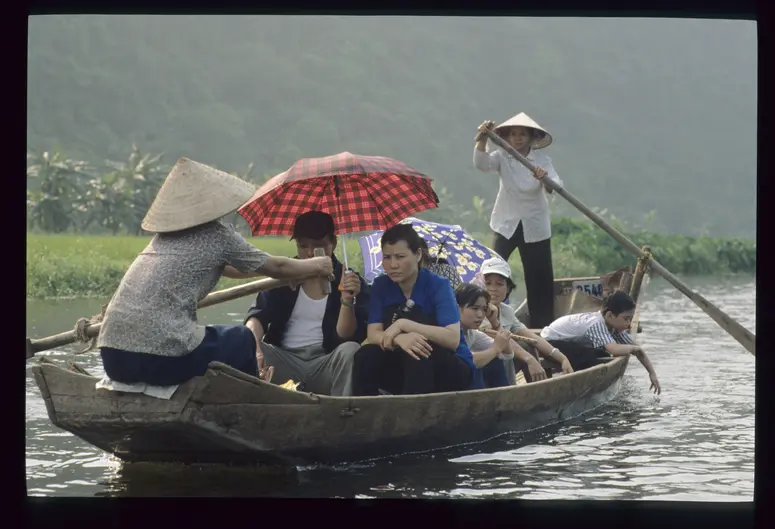
Im Rahmen eines Dorffestes zur Verehrung des örtlichen Schutzgottes werden in Dörfern, die an Gewässern liegen, Bootsrennen veranstaltet. Auch eine Szene des Wasserpuppenspiels im Dorfteich ist ihnen gewidmet. Dazu ertönt ein Lied aus dem Lautsprecher:
Ich rudere im tiefen Fluss
Bei starkem Wind hole ich die Segel ein
Unser Dorf folgt der (kommunistischen) Partei
Heute ist der Norden und der Süden (Vietnams) vereint
Wir singen das Lied der Wiedervereinigung der Nation
Wir singen das Lied des Friedens
Ich rudere im tiefen Fluss
Bei starkem Wind hole ich die Segel ein
Sammler/in:
Christian Schicklgruber DNB
Kultur
Vietnam
Bildrecht
Weltmuseum Wien
Sammlungsbereich
Süd-, SO-Asien, Himalaya
Geographie
Südostasien/Festland/Vietnam/Nord-Vietnam
Inv. Nr.
179200