Wasserpuppenfiguren
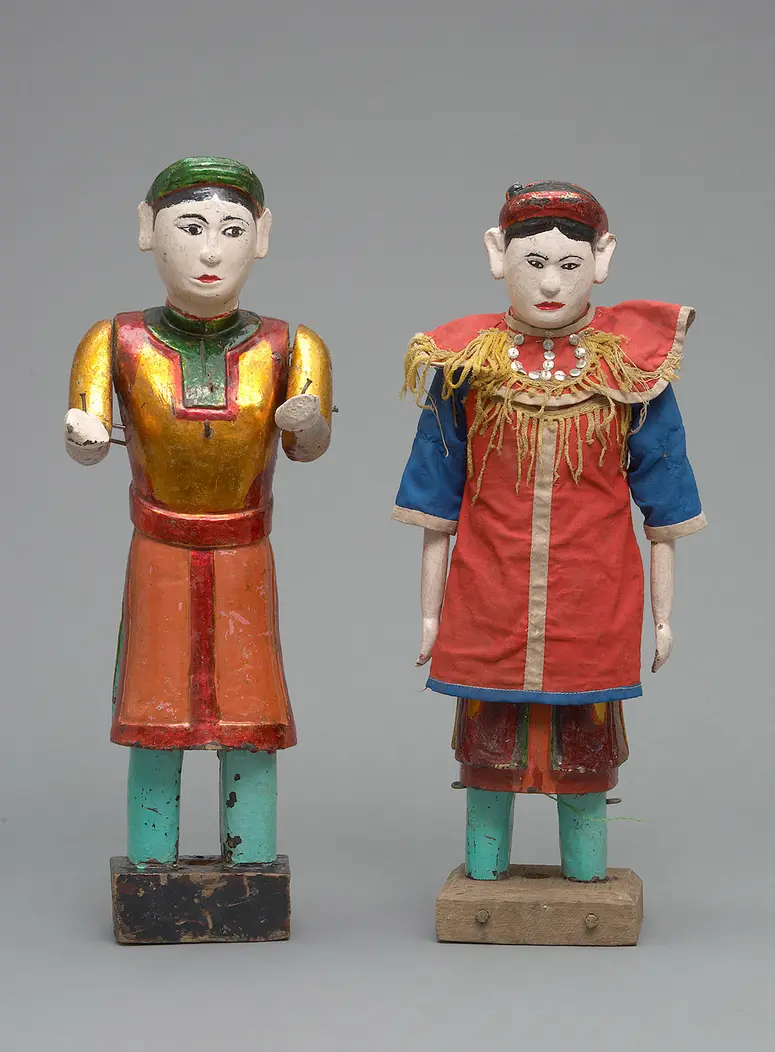
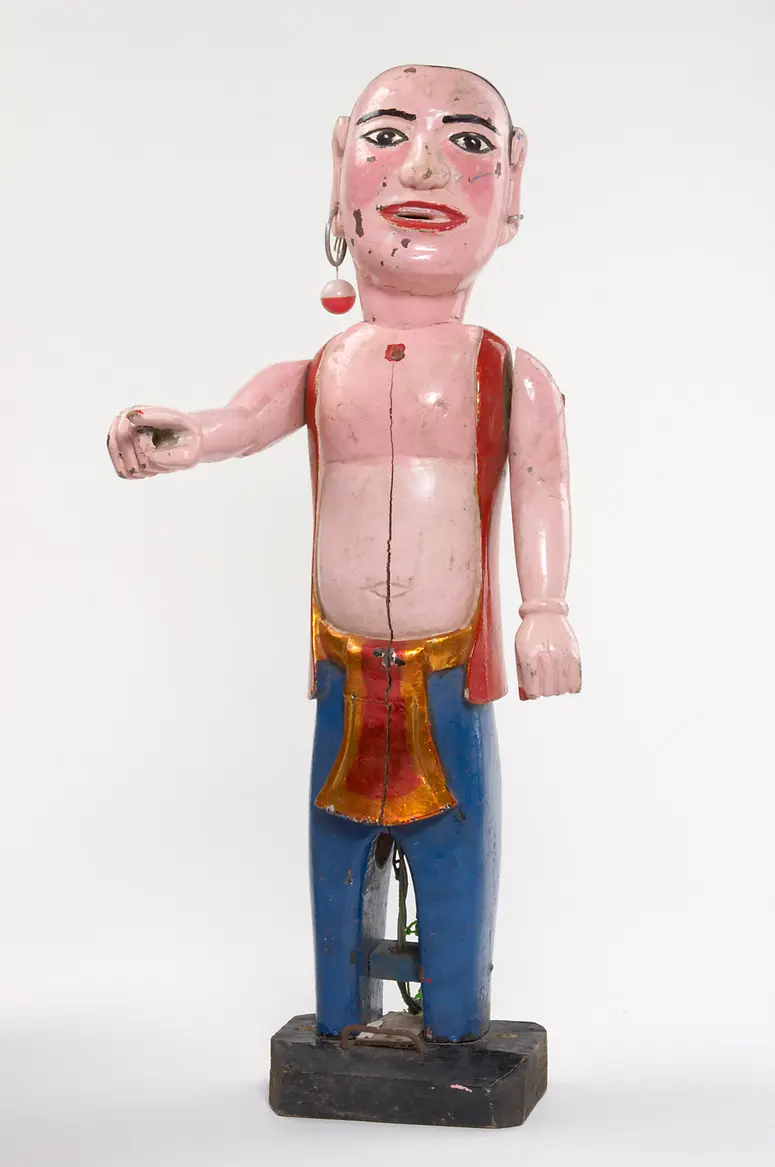
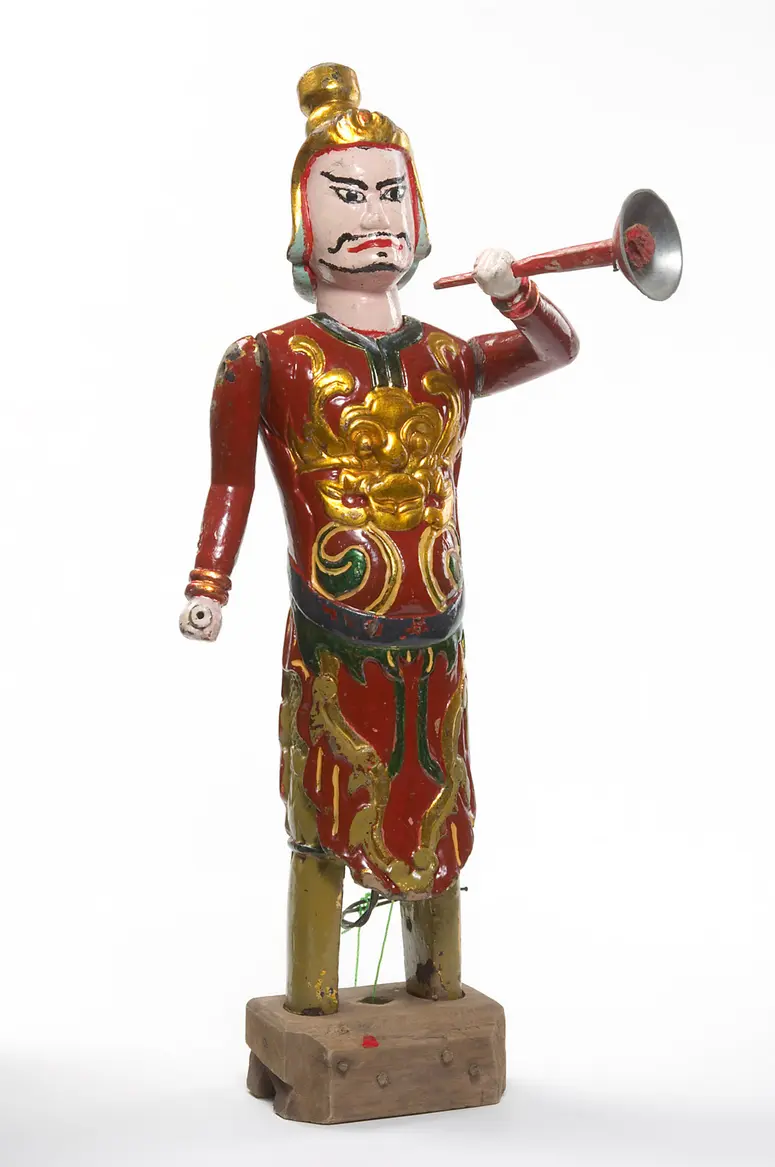
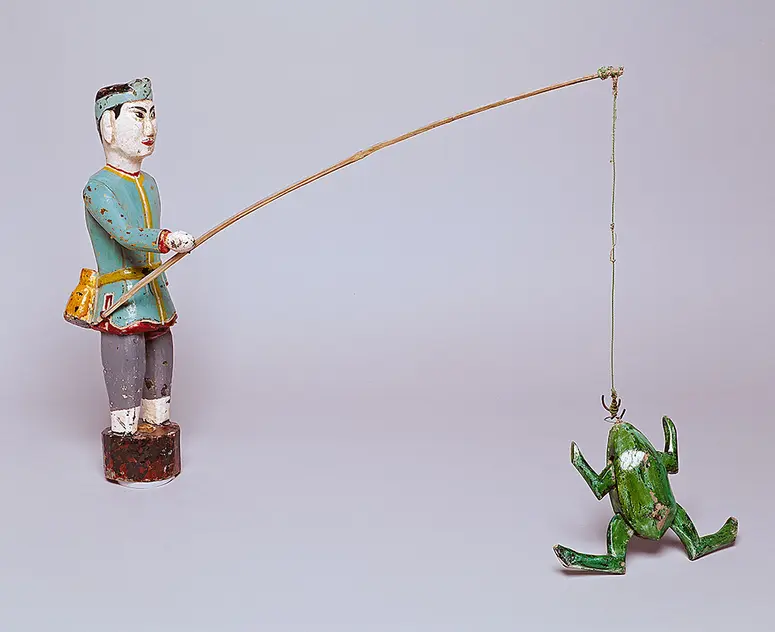
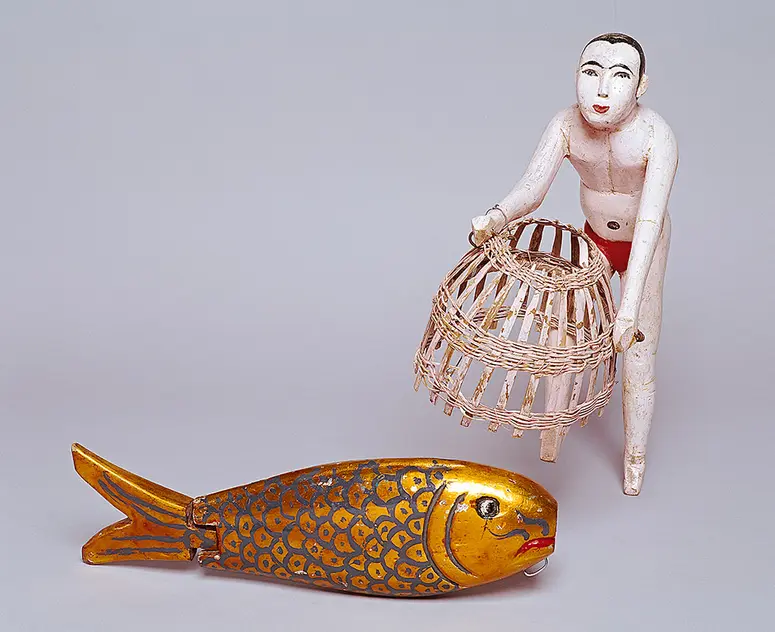
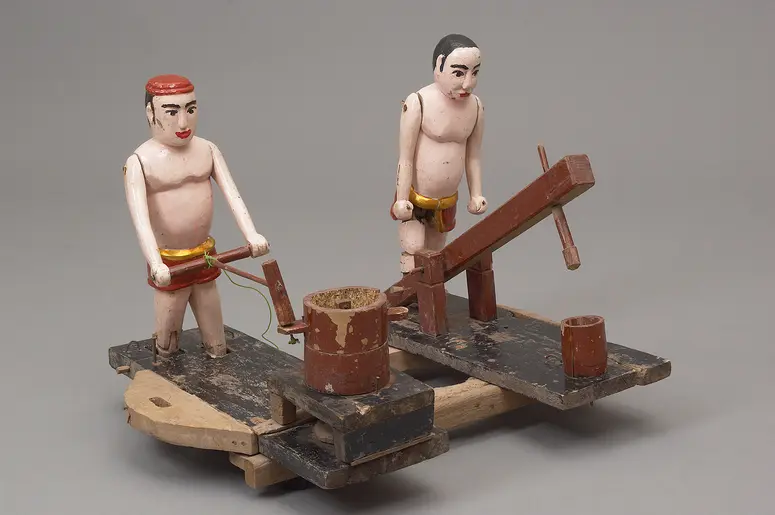
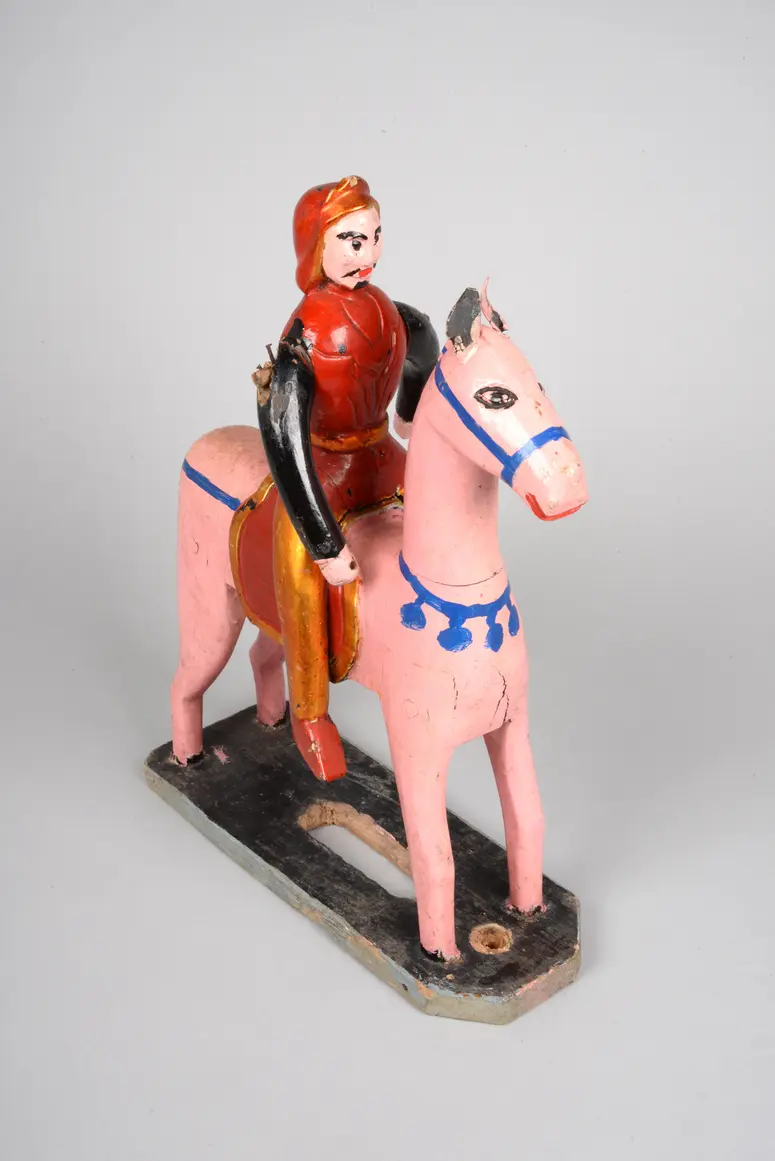
The theater play with wooden figures gliding over the water of the village pond has a thousand-year-old tradition in northern Vietnam. It goes back to the monk Tu Dao Hanh, who was revered as a cultural hero and lived in the 11th century. century. Usually as part of festivals for the village's patron deity, a sequence of scenes accompanied by music and instructive or entertaining songs is performed in front of the assembled community.
The play begins with the worship of the deified founder of this form of theater. Subsequently, episodes with instructive content on history and religion alternate with entertaining scenes from the everyday life of the villagers.
The players, organized in guilds, guide the characters on long poles that are not visible above the surface of the water. This creates the impression that the figures are gliding freely over the water. The element of water plays a special role in this form of theater. While it generally has a negative connotation as one of the "four terrible calamities" (flood, fire, robbers and occupying powers), it is also seen in a positive light, namely as the most important prerequisite for the construction of wet rice.
Water puppetry was originally a purely village affair, but is now even promoted by the government as a manifestation of Vietnamese identity.
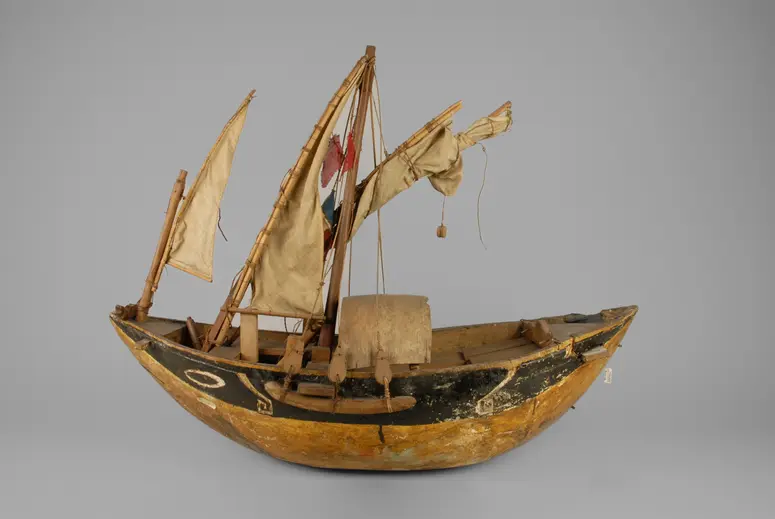
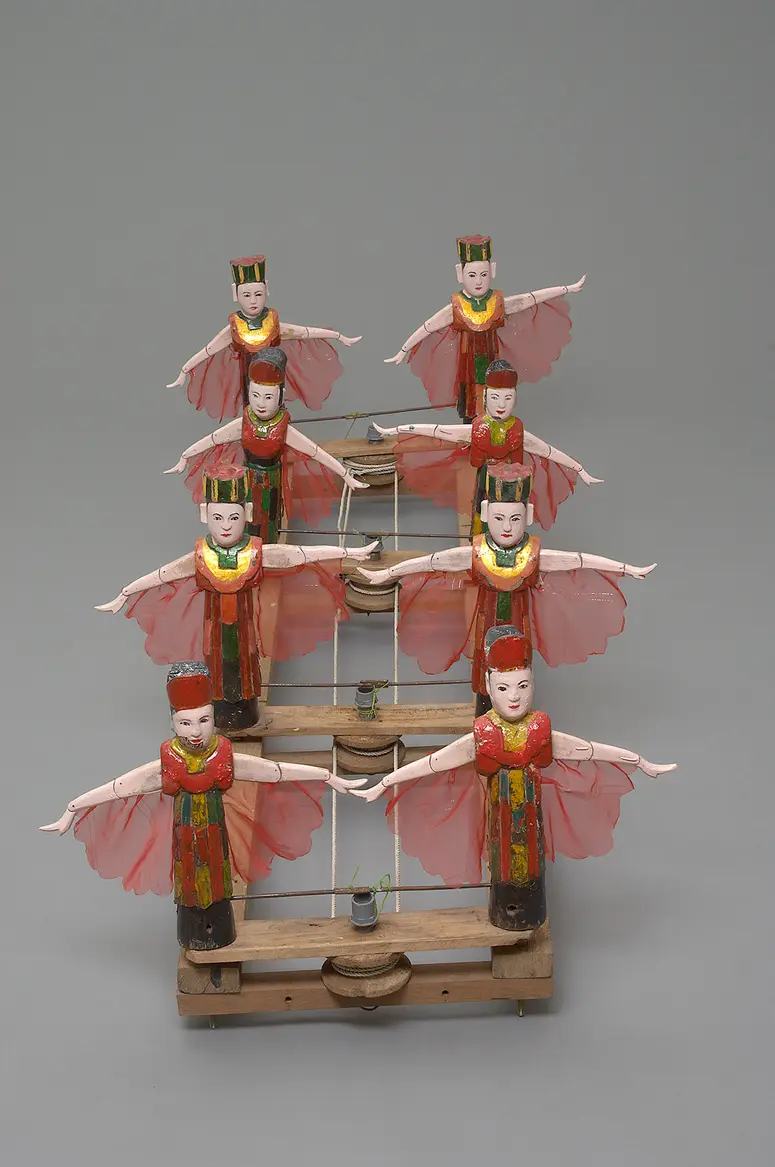
About this group of figures:
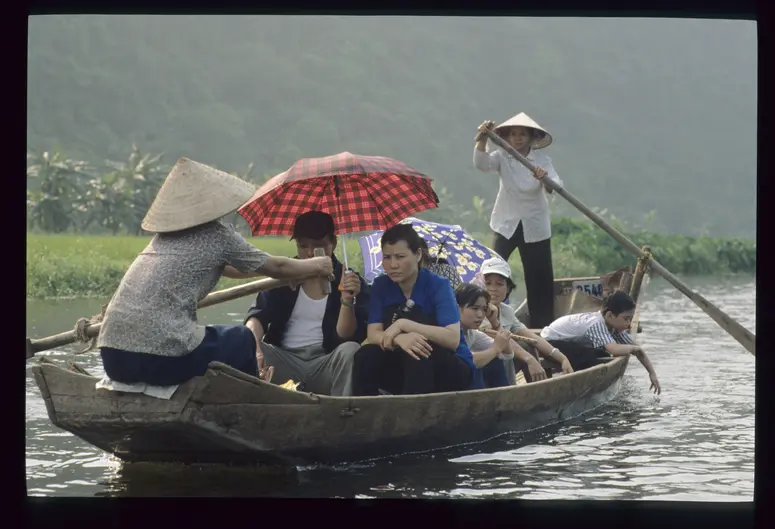
As part of a village festival to worship the local patron god, boat races are held in villages that lie on bodies of water. A scene of the water puppet show in the village pond is also dedicated to them. A song plays from the loudspeaker:
I row in the deep river
When the wind is strong, I take in the sails
Our village follows the (communist) party
Today the north and the south (of Vietnam) are united
We sing the song of the reunification of the nation
We sing the song of peace
I row in the deep river
When the wind is strong, I take in the sails
The theater play with wooden figures gliding over the water of the village pond has a thousand-year-old tradition in northern Vietnam. It goes back to the monk Tu Dao Hanh, who was revered as a cultural hero and lived in the 11th century. century. Usually as part of festivals for the village's patron deity, a sequence of scenes accompanied by music and instructive or entertaining songs is performed in front of the assembled community.
The play begins with the worship of the deified founder of this form of theater. Subsequently, episodes with instructive content on history and religion alternate with entertaining scenes from the everyday life of the villagers.
The players, organized in guilds, guide the characters on long poles that are not visible above the surface of the water. This creates the impression that the figures are gliding freely over the water. The element of water plays a special role in this form of theater. While it generally has a negative connotation as one of the "four terrible calamities" (flood, fire, robbers and occupying powers), it is also seen in a positive light, namely as the most important prerequisite for the construction of wet rice.
Water puppetry was originally a purely village affair, but is now even promoted by the government as a manifestation of Vietnamese identity.
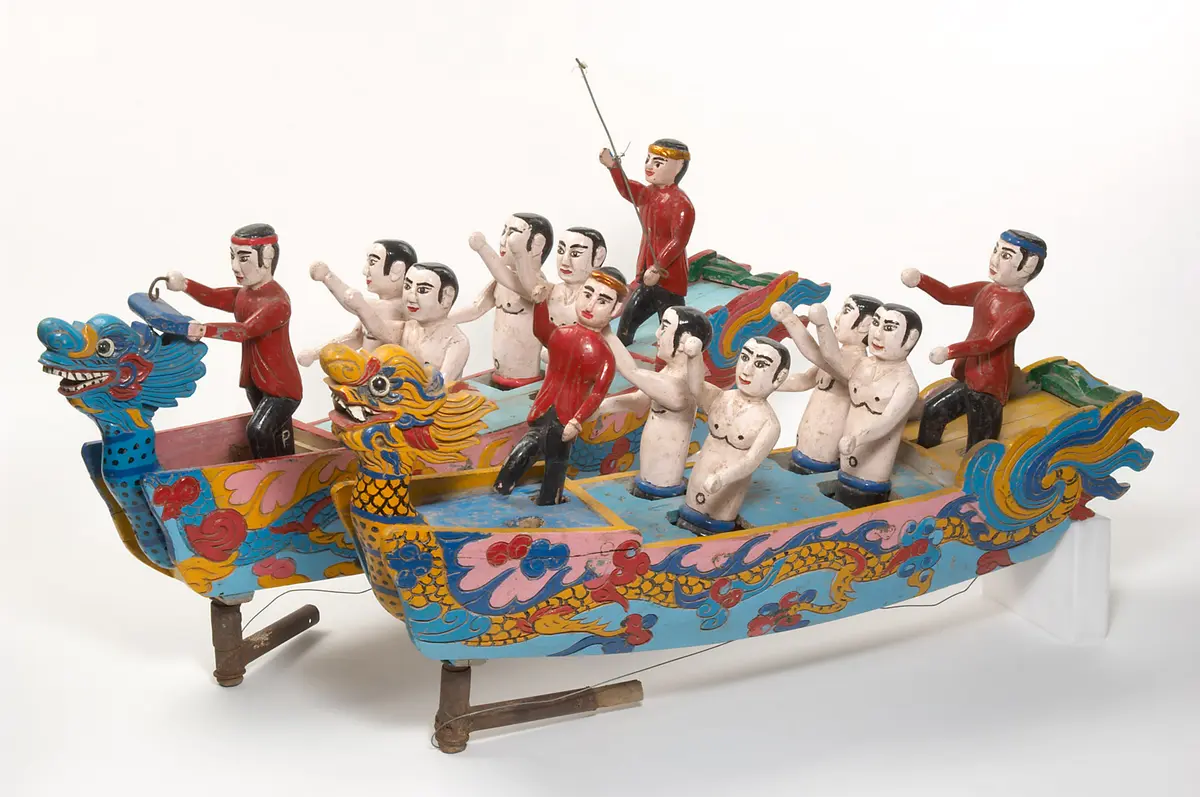
About this group of figures:
As part of a village festival to worship the local patron god, boat races are held in villages that lie on bodies of water. A scene of the water puppet show in the village pond is also dedicated to them. A song plays from the loudspeaker:
I row in the deep river
When the wind is strong, I take in the sails
Our village follows the (communist) party
Today the north and the south (of Vietnam) are united
We sing the song of the reunification of the nation
We sing the song of peace
I row in the deep river
When the wind is strong, I take in the sails
Collector:
Christian Schicklgruber DNB
Culture
Vietnam
Copyright
Weltmuseum Wien
Collection area
South Asia, Southeast Asia, Himalayas
Invs.
179200