Cloth, Batik
Kain Panjang
mid-20th century | Sri Tjahjani Kuhnt-Saptodewo
This motif is called Paksi Naga Liman, a fantastic animal combining bird (paksi), dragon (naga) and elephant (liman). It is the symbol of the principality of Kanoman in Cirebon at the north coast of Java. The representation of the hybrid creature weaves together the influences of various cultures into one magnificent image: the feet and horns are from Qilin, a mythical Chinese creature; the wings come from the bird Garuda (paksi); the scaly body is based on a dragon (naga); the elephant head is from Ganesha (liman). Garuda and Ganesha are divine beings in Hinduism. At the north coast of Java, Naga is interpreted as a Chinese dragon. The connection between Chinese immigrants and Islam shaped the culture at the north coast of Java.Singa Barong (lion), is a symbol of the second principality of Kasepuhan in Cirebon at the north coast of Java. The symbol of the lion stands for the king himself. This batik cloth was made by the famous Indonesian designer Iwan Tirta who developed classic Cirebon palace motifs yet modified with a solo background (dark colour from Central Java); they are called “soloan”.The wadasan motif (‘rock’) is typical of Cirebon and was once exclusively used for palace members. It depicts a stylised mountain and is often associated with “Mount Meru”, a cosmic mountain that is believed to be the centre of the world.
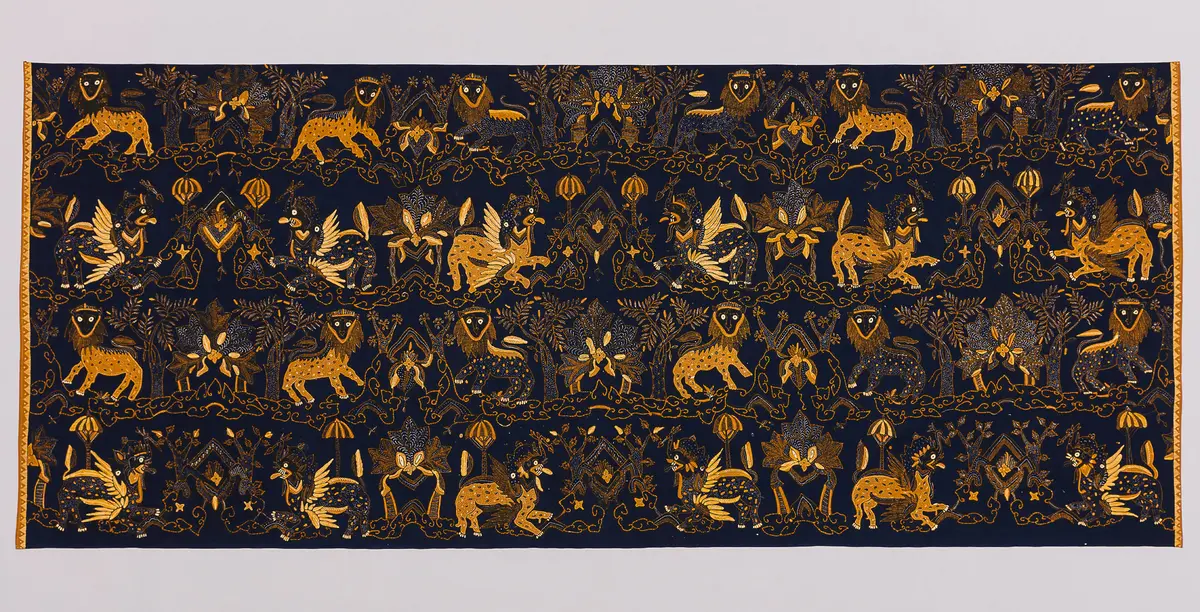
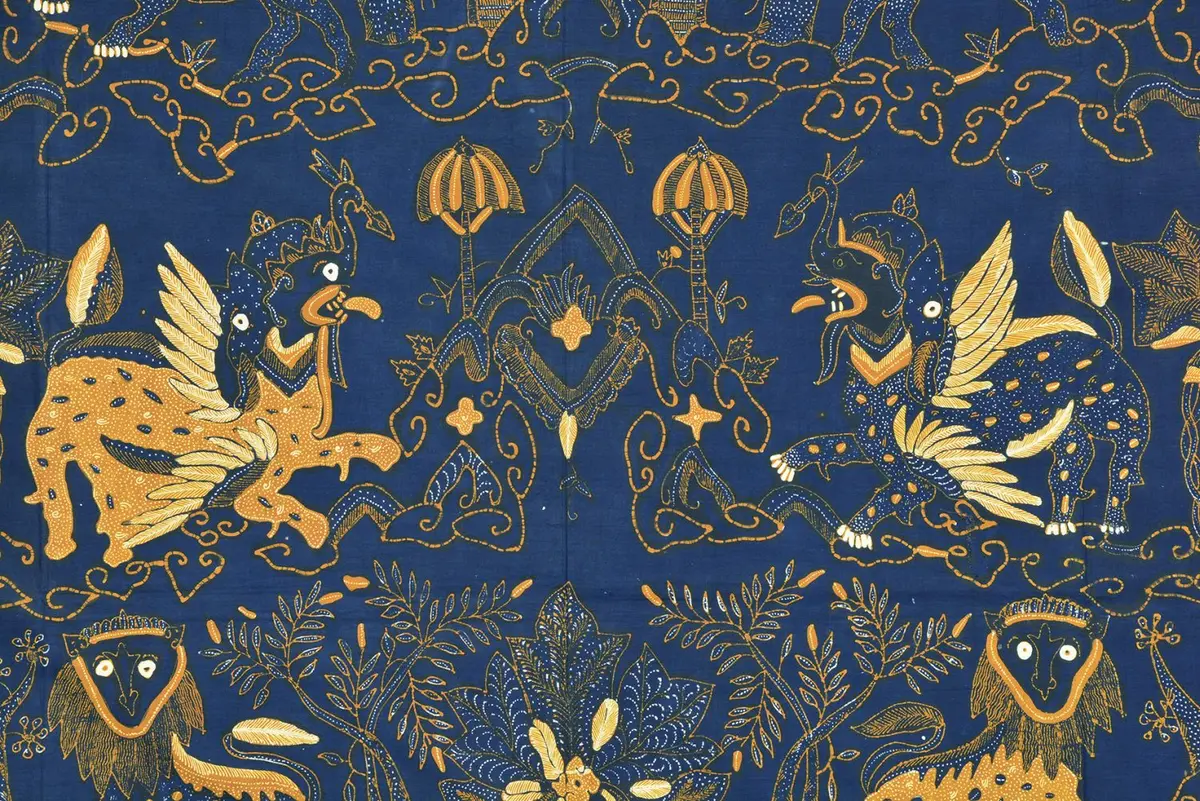
This motif is called Paksi Naga Liman, a fantastic animal combining bird (paksi), dragon (naga) and elephant (liman). It is the symbol of the principality of Kanoman in Cirebon at the north coast of Java. The representation of the hybrid creature weaves together the influences of various cultures into one magnificent image: the feet and horns are from Qilin, a mythical Chinese creature; the wings come from the bird Garuda (paksi); the scaly body is based on a dragon (naga); the elephant head is from Ganesha (liman). Garuda and Ganesha are divine beings in Hinduism. At the north coast of Java, Naga is interpreted as a Chinese dragon. The connection between Chinese immigrants and Islam shaped the culture at the north coast of Java.Singa Barong (lion), is a symbol of the second principality of Kasepuhan in Cirebon at the north coast of Java. The symbol of the lion stands for the king himself. This batik cloth was made by the famous Indonesian designer Iwan Tirta who developed classic Cirebon palace motifs yet modified with a solo background (dark colour from Central Java); they are called “soloan”.The wadasan motif (‘rock’) is typical of Cirebon and was once exclusively used for palace members. It depicts a stylised mountain and is often associated with “Mount Meru”, a cosmic mountain that is believed to be the centre of the world.
Collection:
Sri Tjahjani Kuhnt-Saptodewo (Kuratorin für Insulares Südostasien im Weltmuseum Wien (2005 bis 2017))
Artist:
Iwan Tirta (1935 - 2010)
Time:
mid-20th century
Entry Date:
2007
Object Name
Cloth, Batik
Culture
Peranakan / Cirebon, Java
Material/technology:
Cotton, synthetic colours, hand batik
Copyright
Weltmuseum Wien
Collection area
Insular Southeast Asia
Invs.
186146