Zur Navigation springen Zum Inhalt springen Zum Kontakt springen Zur Suche springen Zur Suche springen Zum Footer springen

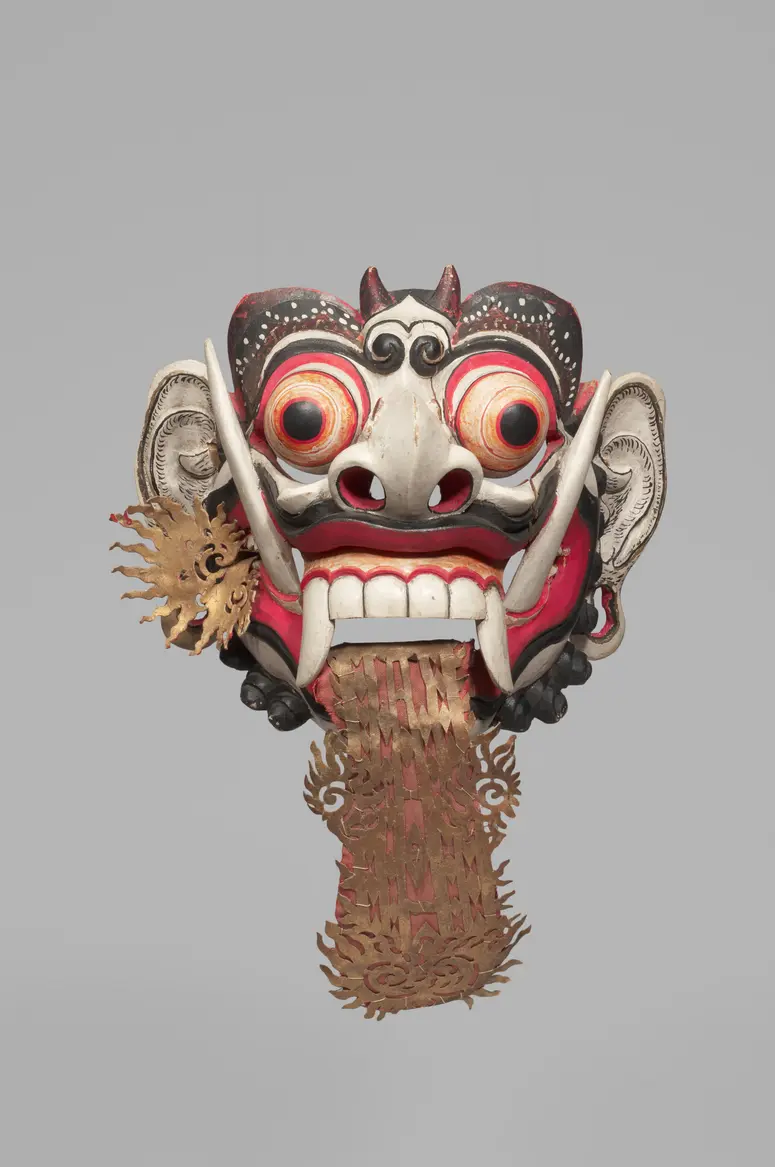
Holzfigur

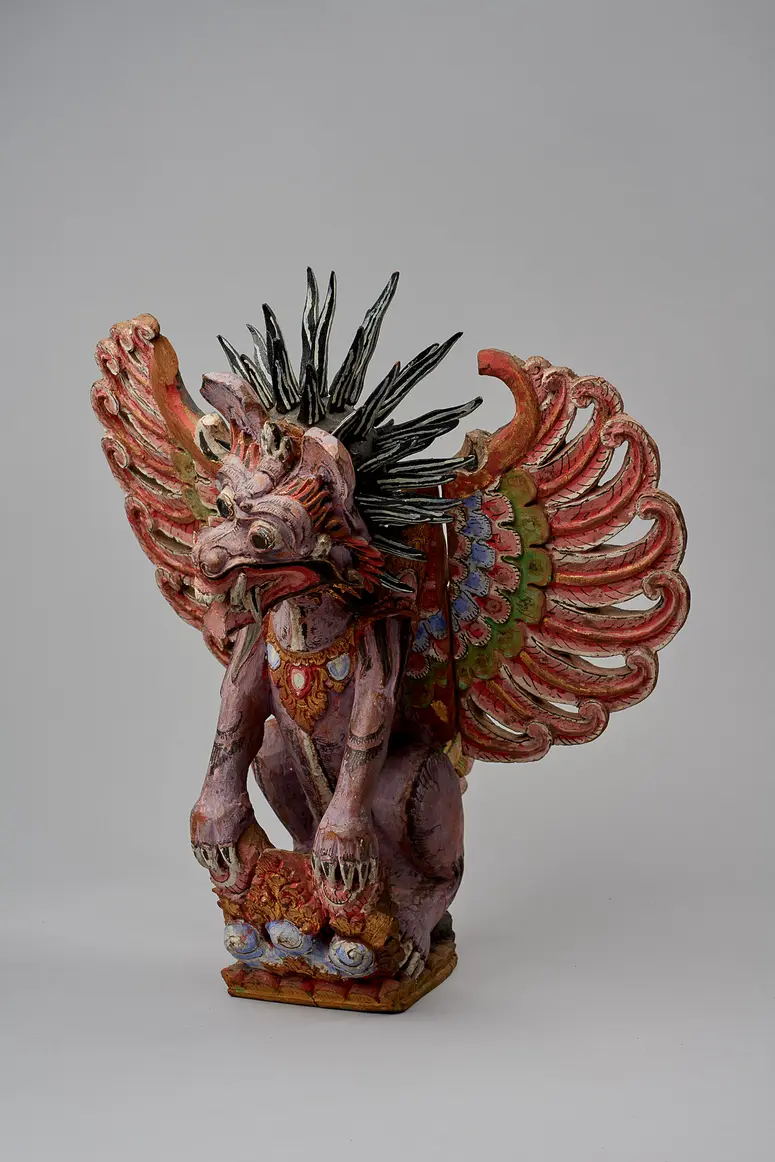
Singa Ambara Raja

19. Jahrhundert | Helene Potjewijd

In bali, a statue of a winged lion is often placed at the joining of the beams of a building's roof structure. The sculpture acts as a symbolic protector to fend off spirits that might disturb the occupants. The ridge of a tent-shaped roof in Bali rests upon a vertical post; this post rests on a horizontal beam, and this in its turn rest upon the poles of the house or small temple structure. The place where the vertical post rests on the horizontal beam is often embellished with a fine piece of wood-carving, such as garuda. This winged lion served the purpose indicated.

Aus: Sri Kuhnt-Saptodewo [u.a]: Balinese Art in Transition. Wien: Museum für Völkerkunde Wien and The Embassy of the Republic of Indonesia, 2010, S.11.

In bali, a statue of a winged lion is often placed at the joining of the beams of a building's roof structure. The sculpture acts as a symbolic protector to fend off spirits that might disturb the occupants. The ridge of a tent-shaped roof in Bali rests upon a vertical post; this post rests on a horizontal beam, and this in its turn rest upon the poles of the house or small temple structure. The place where the vertical post rests on the horizontal beam is often embellished with a fine piece of wood-carving, such as garuda. This winged lion served the purpose indicated.

Aus: Sri Kuhnt-Saptodewo [u.a]: Balinese Art in Transition. Wien: Museum für Völkerkunde Wien and The Embassy of the Republic of Indonesia, 2010, S.11.

Sammlung:
Helene Potjewijd (1872 Meester Cornelis /Java - 1949 Wien)

Zeit:
19. Jahrhundert

Objektbezeichnung
Holzfigur

Kultur
Bali

Material/Technik:
Holz

Bildrecht
Weltmuseum Wien

Sammlungsbereich
Insulares Südostasien

Inv. Nr.
130570