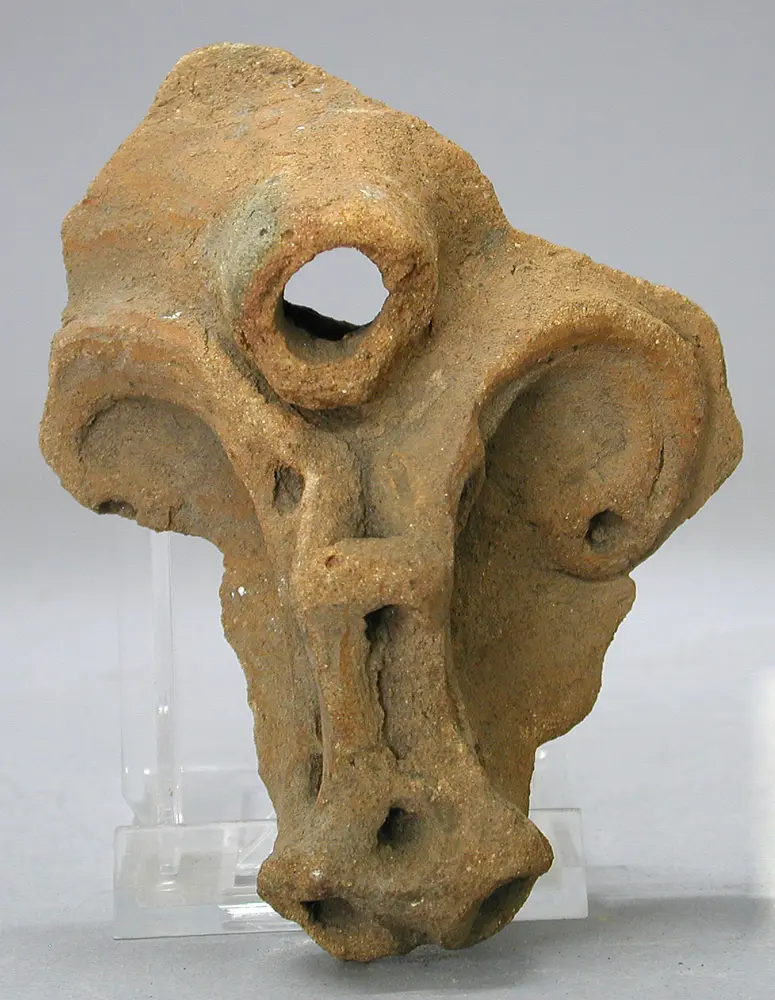
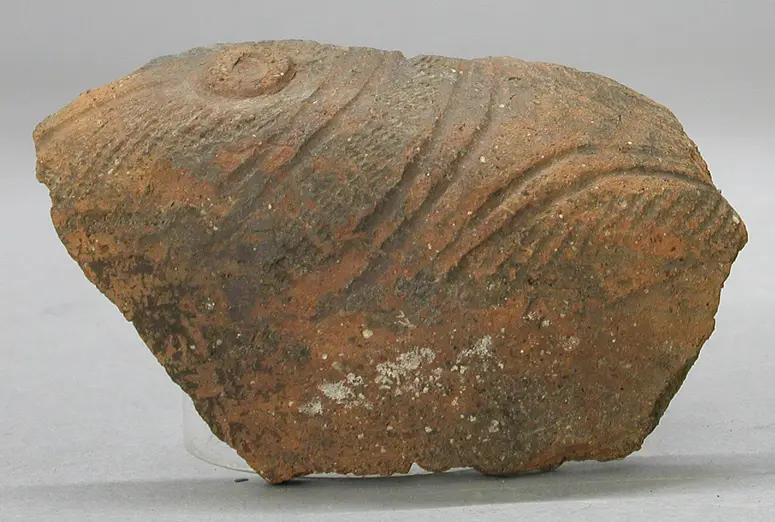
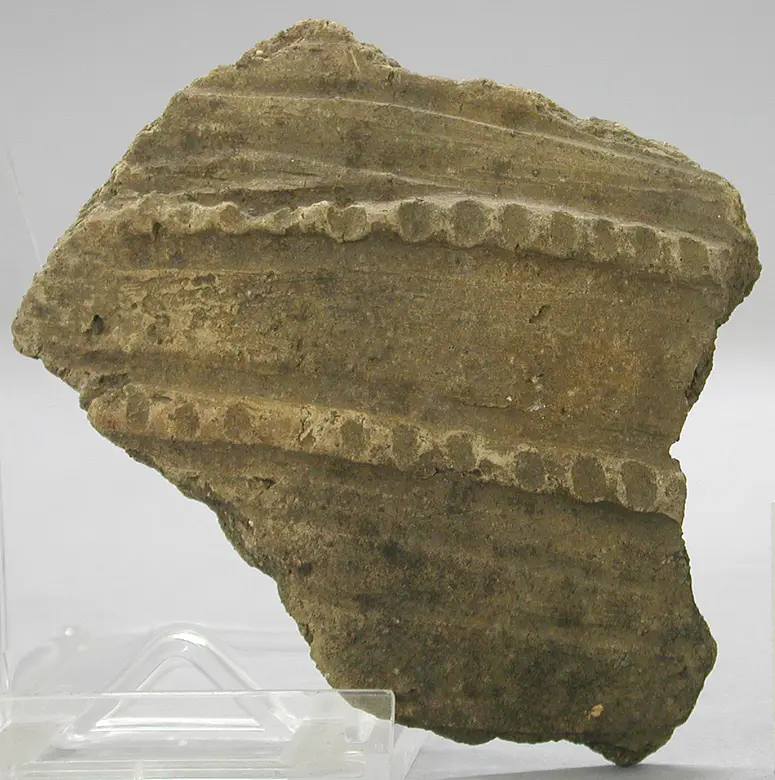
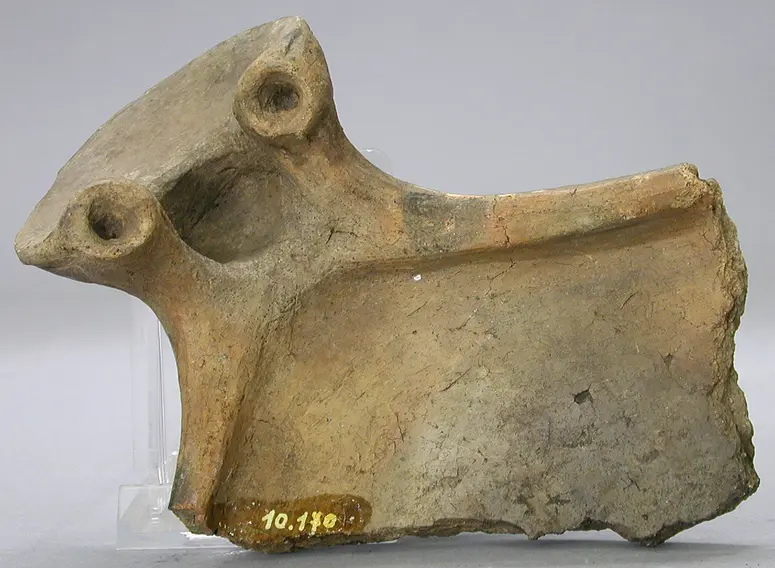
After returning to Europe from Japan in 1874, Heinrich actively worked to collect archaeological materials. It appears that his collecting work was primarily done through Tokyo acquaintances and curio shops. In his 1879 work Notes on Japanese Archaeology with Especial Reference to the Stone Age, we find a chapter entitled “Stone Implements and Stone Weapons,” which includes explanations regarding various items. The vast majority of Weltmuseum Wien’s archaeological materials collected by Heinrich are Jomon period stone arrowheads. We also find polished stone axes, chipped stone axes (stone hoes), and stone spearheads. While there are traces of annotations and labels on some of the stone implements and weapons, their findspots are unknown. Many of the Jomon pottery fragments are from the late Jomon period (ca. 2400 BC-1300 CE). Out of all the topics in archeological research, Heinrich was the most interested in shell mounds and theories regarding the origins of the Japanese people. He collected Stone Age items in order to elucidate these topics. Heinrich excavated the Ōmori Shell Mounds at a different location than Edward Morse, and it is highly likely that these pottery fragments include pieces from there, but the details are unclear. Yuichiro KUDO
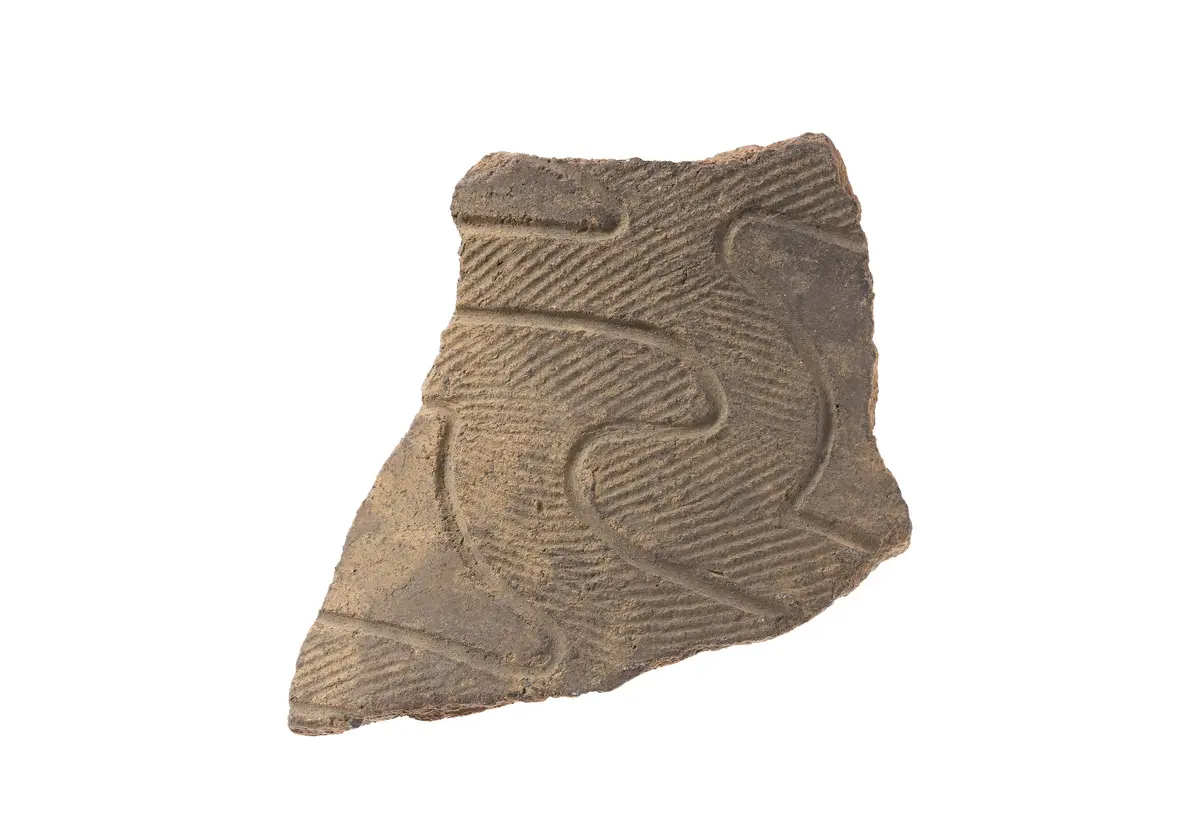

After returning to Europe from Japan in 1874, Heinrich actively worked to collect archaeological materials. It appears that his collecting work was primarily done through Tokyo acquaintances and curio shops. In his 1879 work Notes on Japanese Archaeology with Especial Reference to the Stone Age, we find a chapter entitled “Stone Implements and Stone Weapons,” which includes explanations regarding various items. The vast majority of Weltmuseum Wien’s archaeological materials collected by Heinrich are Jomon period stone arrowheads. We also find polished stone axes, chipped stone axes (stone hoes), and stone spearheads. While there are traces of annotations and labels on some of the stone implements and weapons, their findspots are unknown. Many of the Jomon pottery fragments are from the late Jomon period (ca. 2400 BC-1300 CE). Out of all the topics in archeological research, Heinrich was the most interested in shell mounds and theories regarding the origins of the Japanese people. He collected Stone Age items in order to elucidate these topics. Heinrich excavated the Ōmori Shell Mounds at a different location than Edward Morse, and it is highly likely that these pottery fragments include pieces from there, but the details are unclear. Yuichiro KUDO
Collector:
Heinrich von Siebold (1852 St. Martin/Boppard - 1908 Schloss Freudenstein/Bozen) DNB
Material/technology:
Ton
Copyright
Weltmuseum Wien
Collection area
East Asia: China, Korea, Japan
Geography
Ostasien/Japan/Honshu/Kanto/Tokyo
Invs.
37226
Browse more Similar items you might be interested in

![Nikko: Urami cascade [Uraminotaki], 21.8.1893](/typo3temp/assets/_processed_/a/7/csm_VF_15226_728a82d875.webp)
Nikko: Urami cascade [Uraminotaki], 21.8.1893 Franz Ferdinand von Österreich-Este 21.8.1893
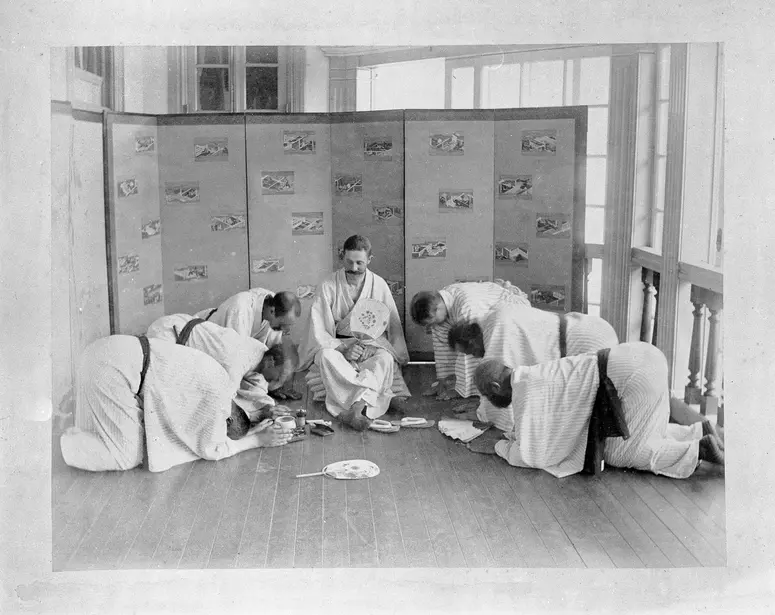
His k.u.k. Highness and entourage in japanese clothing Franz Ferdinand von Österreich-Este 16.8.1893
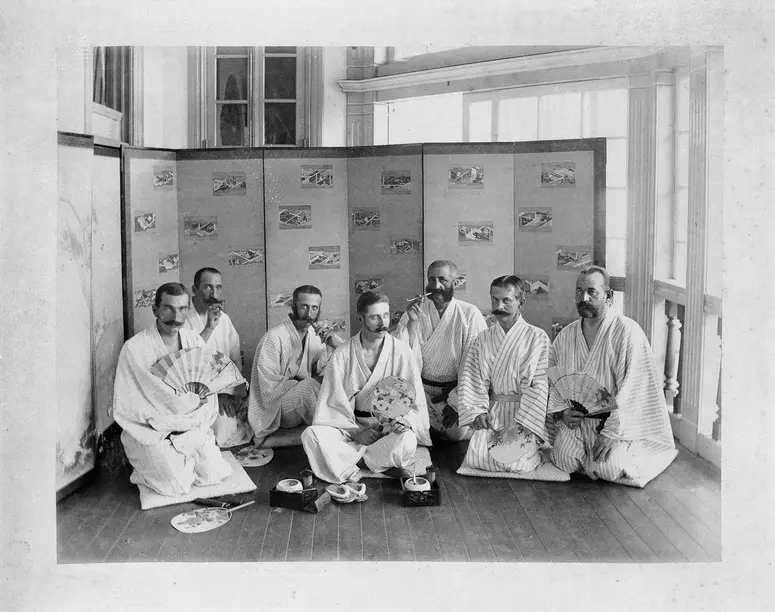
Erzherzog Franz Ferdinand of Austria-Este with Entourage in Japanese costume at the Fujiya Hotel Franz Ferdinand von Österreich-Este 16 August 1893


Ankunft des österreichischen Erzherzogs (Franz Ferdinand) am Shinbashi-Bahnhof in Tōkyō Franz Ferdinand von Österreich-Este 1893 or earlier

![Japan, Nikko, Urami Wasserfall [Uraminotaki]. 21.VIII.1893; Franz Ferdinand mit Reisegesellschaft](/typo3temp/assets/_processed_/1/f/csm_VF_15225_4ec15712c5.webp)
Japan, Nikko, Urami Wasserfall [Uraminotaki]. 21.VIII.1893; Franz Ferdinand mit Reisegesellschaft Franz Ferdinand von Österreich-Este 21.8.1893