Charango
1979 | Peter Kann
The charango is a plucked string instrument from the South American region of the Andes. Armadillo shell serves as the resonating body. The origins of the charango are presumably found in the Bolivian city of Potosí in the 16th century. At this time, silver deposits lured people from all over the world into the city. They brought guitars, vihuelas, and turning lyres with them. The local population, the Quechua, copied these plucked string instruments and created the charango.
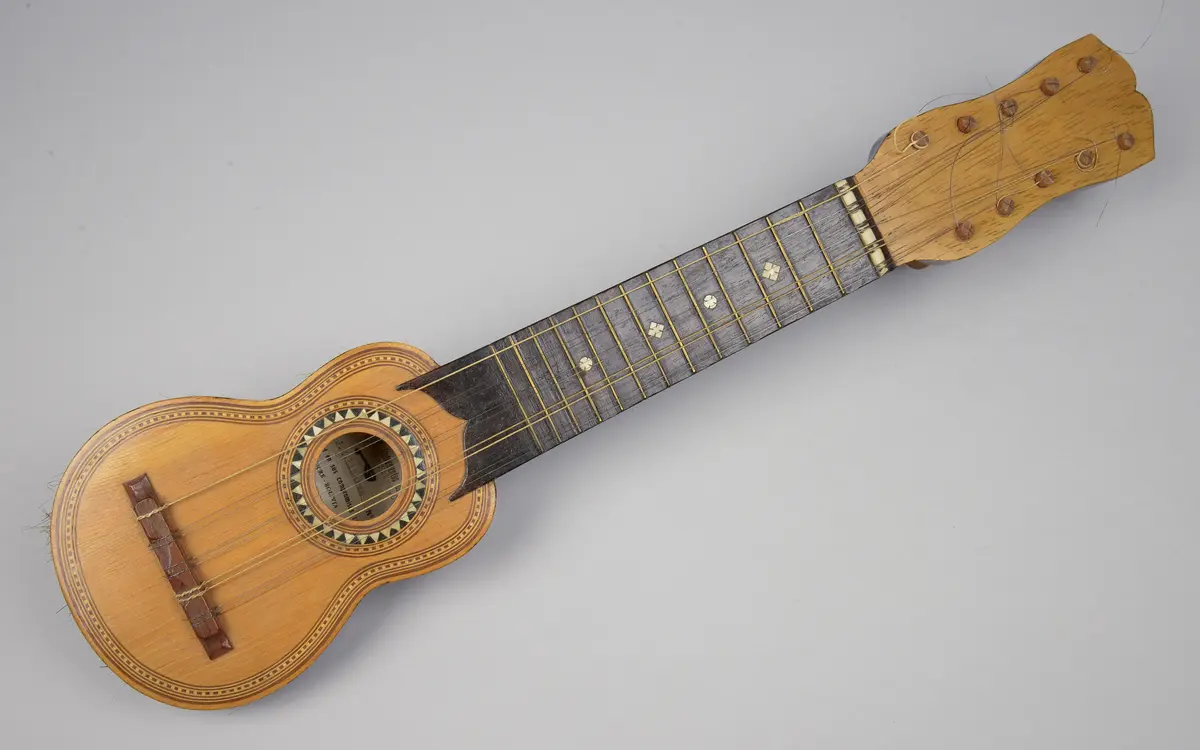
The charango is a plucked string instrument from the South American region of the Andes. Armadillo shell serves as the resonating body. The origins of the charango are presumably found in the Bolivian city of Potosí in the 16th century. At this time, silver deposits lured people from all over the world into the city. They brought guitars, vihuelas, and turning lyres with them. The local population, the Quechua, copied these plucked string instruments and created the charango.
Collection:
Peter Kann DNB
Time:
1979
Entry Date:
1979
Object Name
Charango
Culture
Quechua
Material/technology:
Armadillo shell, wood, mother-of-pearl, gut and wire strings, tin
Copyright
Weltmuseum Wien
Collection area
South America
Geography
Südamerika/Zentralanden/Bolivien/Sucre
Invs.
160672