Dorje
16./17. Jahrhundert
In Buddhism, a distinctive system of rituals points the way to leaving the cycle of rebirths. A variety of ritual instruments are used in the performance of a Buddhist ceremony. Each symbolizes certain contents of Buddhist philosophy, which become effective through the handling of these objects in the ritual. In tantric rites, the diamond sceptre or vajra is held in the right hand with prescribed gestures and stands for the masculine principle of "method", which is used to act selflessly for the benefit of all living beings.As the most perfect symbol of Buddhism, the vajra symbolizes the absolute and the "true reality", which is as clear and hard as a diamond, hence the name diamond sceptre. Iron pieces like this one are said to have special power. As iron in Tibet was only extracted from meteorites, the Tibetans regard it as having been sent by the gods of heaven. Sceptres are usually cast from bronze.
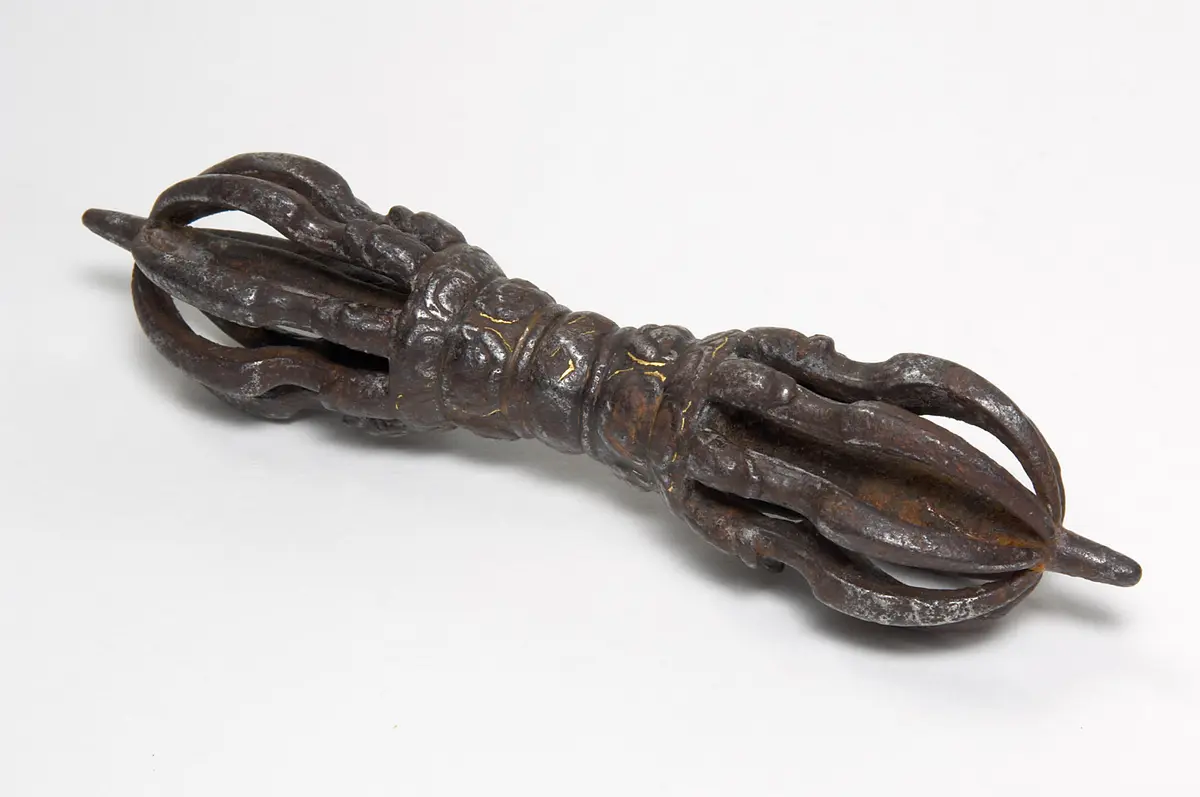
In Buddhism, a distinctive system of rituals points the way to leaving the cycle of rebirths. A variety of ritual instruments are used in the performance of a Buddhist ceremony. Each symbolizes certain contents of Buddhist philosophy, which become effective through the handling of these objects in the ritual. In tantric rites, the diamond sceptre or vajra is held in the right hand with prescribed gestures and stands for the masculine principle of "method", which is used to act selflessly for the benefit of all living beings.As the most perfect symbol of Buddhism, the vajra symbolizes the absolute and the "true reality", which is as clear and hard as a diamond, hence the name diamond sceptre. Iron pieces like this one are said to have special power. As iron in Tibet was only extracted from meteorites, the Tibetans regard it as having been sent by the gods of heaven. Sceptres are usually cast from bronze.
Time:
16./17. Jahrhundert
Object Name
Diamantenzepter
Culture
Tibet
Material/technology:
Eisen
Copyright
Weltmuseum Wien
Collection area
South Asia, Southeast Asia, Himalayas
Geography
Südasien/Himalaya/Nepal
Invs.
177537
Browse more Similar items you might be interested in

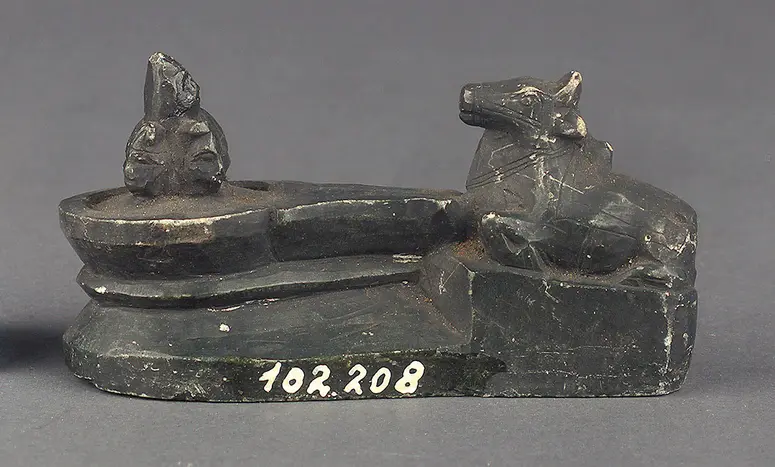
Linga yoni Franz Ferdinand von Österreich-Este 1893 or earlier