Hornbill
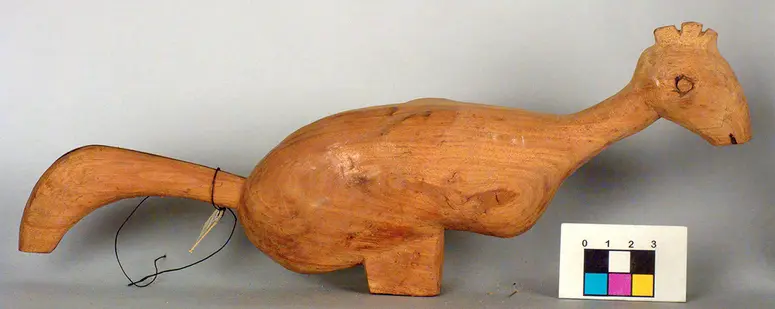
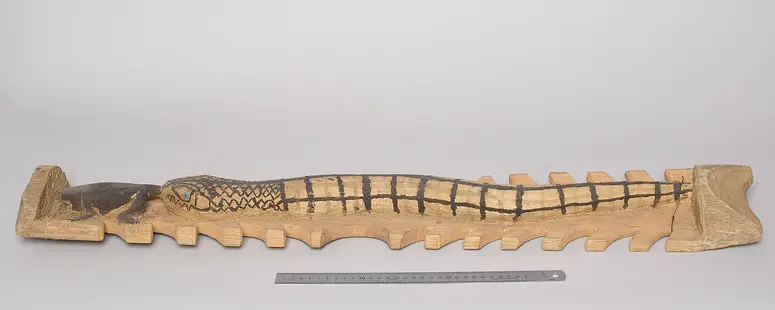
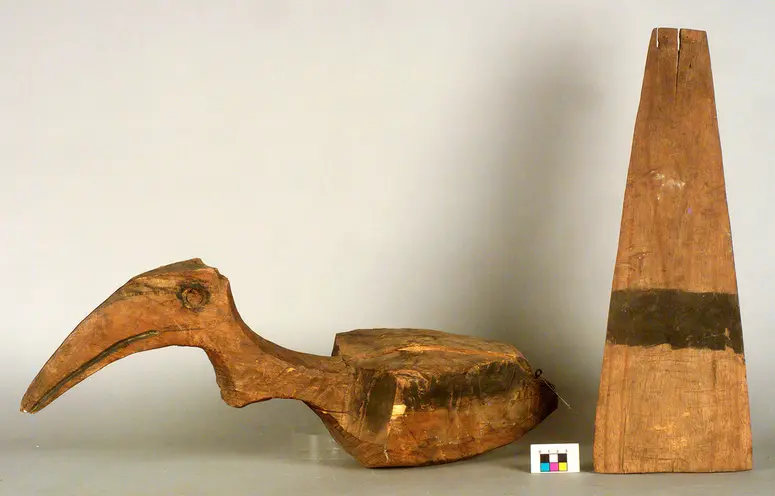
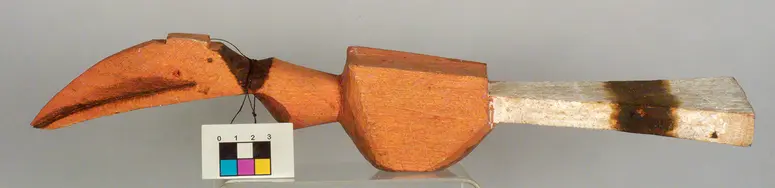
This carved hornbill comes from a man's house (Morung). The hornbill is the epitome of beauty. The feathers of the hornbill on the hats are a sign of social status in all Naga groups, albeit with different meanings depending on the group. Among the Angami, for example, a feather referred to a captured head, among the Ao to a sacrificed buffalo. Among the Khiamniungan, two feathers meant that the wearer hurled the first spear at a slain enemy, while among the Sangtam they indicated that the third of a total of five feasts of merit had been held. Today, personal taste determines the choice.
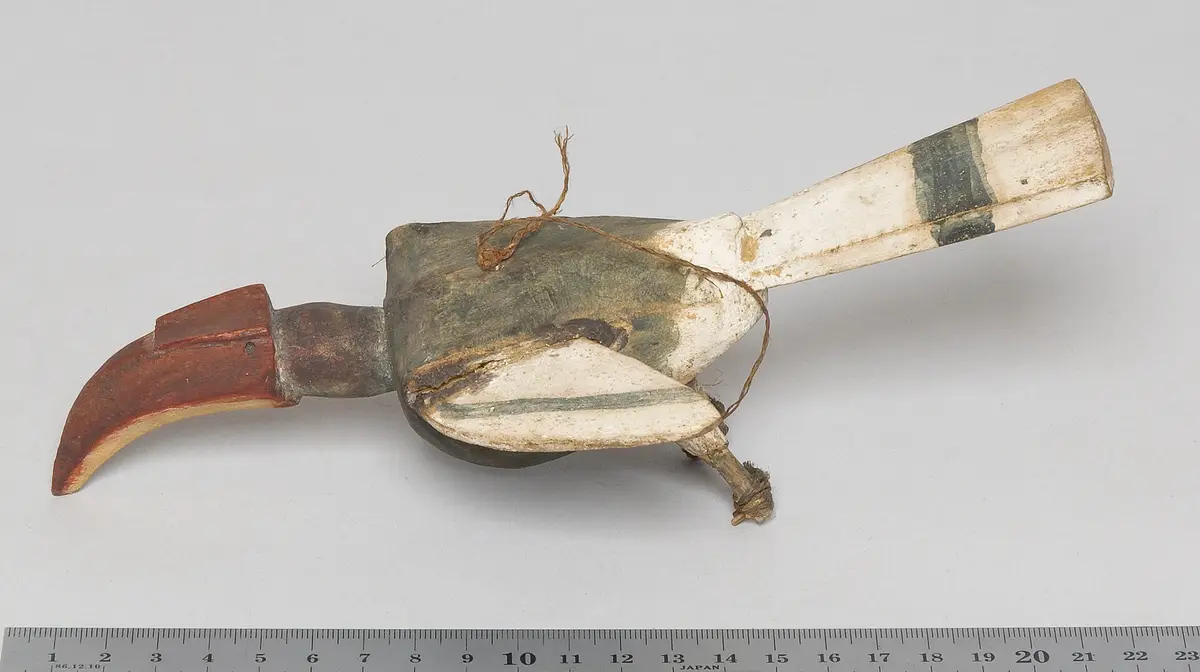
This carved hornbill comes from a man's house (Morung). The hornbill is the epitome of beauty. The feathers of the hornbill on the hats are a sign of social status in all Naga groups, albeit with different meanings depending on the group. Among the Angami, for example, a feather referred to a captured head, among the Ao to a sacrificed buffalo. Among the Khiamniungan, two feathers meant that the wearer hurled the first spear at a slain enemy, while among the Sangtam they indicated that the third of a total of five feasts of merit had been held. Today, personal taste determines the choice.
Collector:
Christoph von Fürer-Haimendorf (1909 Wien - 1995 London) DNB
Culture
Naga / Konyak
Copyright
Weltmuseum Wien
Collection area
South Asia, Southeast Asia, Himalayas
Invs.
126295