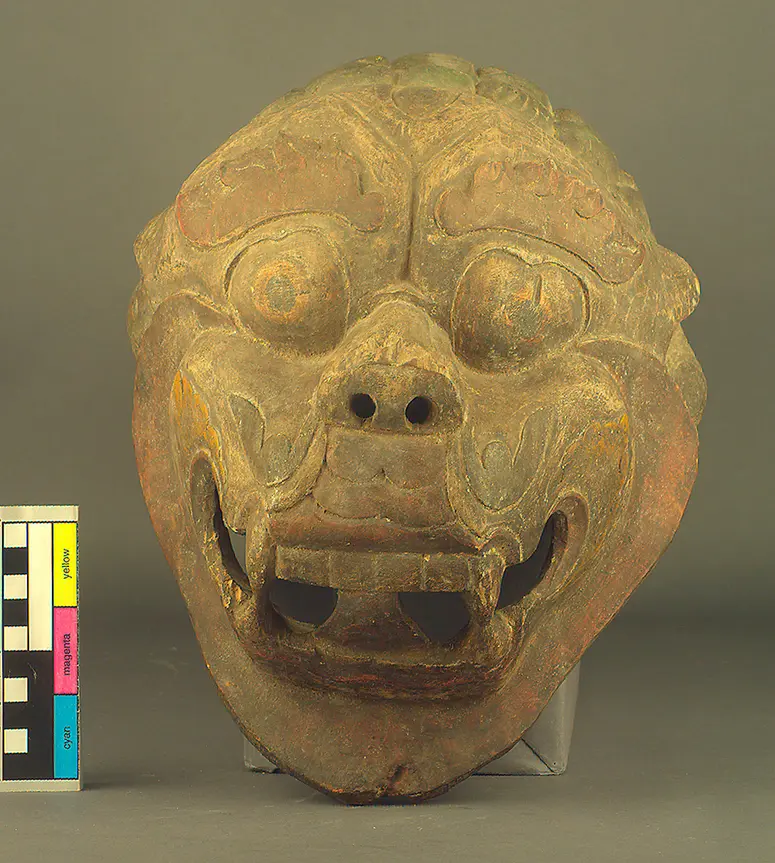
Mask of a snow lion (Tib.: gangs seng ge)
19. Jahrhundert | Gustav Brayer
In the mask of a snow lion (Tib.: gangs seng ge) worn in the ritual dance (Tib. 'cham), the historical Buddha Shakyamuni himself appears to the audience. The lion lives on the snow-covered peaks of the Tibetan mountains over which he reigns and presides over the sacred mountains. As he leaps from mountain peak to mountain peak in boundless freedom, he also reminds us of the absolute freedom of all yogis. In Tibetan Buddhism, the lion symbolises fearlessness, unconditional cheerfulness and freedom from all doubts. Its beauty and dignity are based on the unity of body and mind.
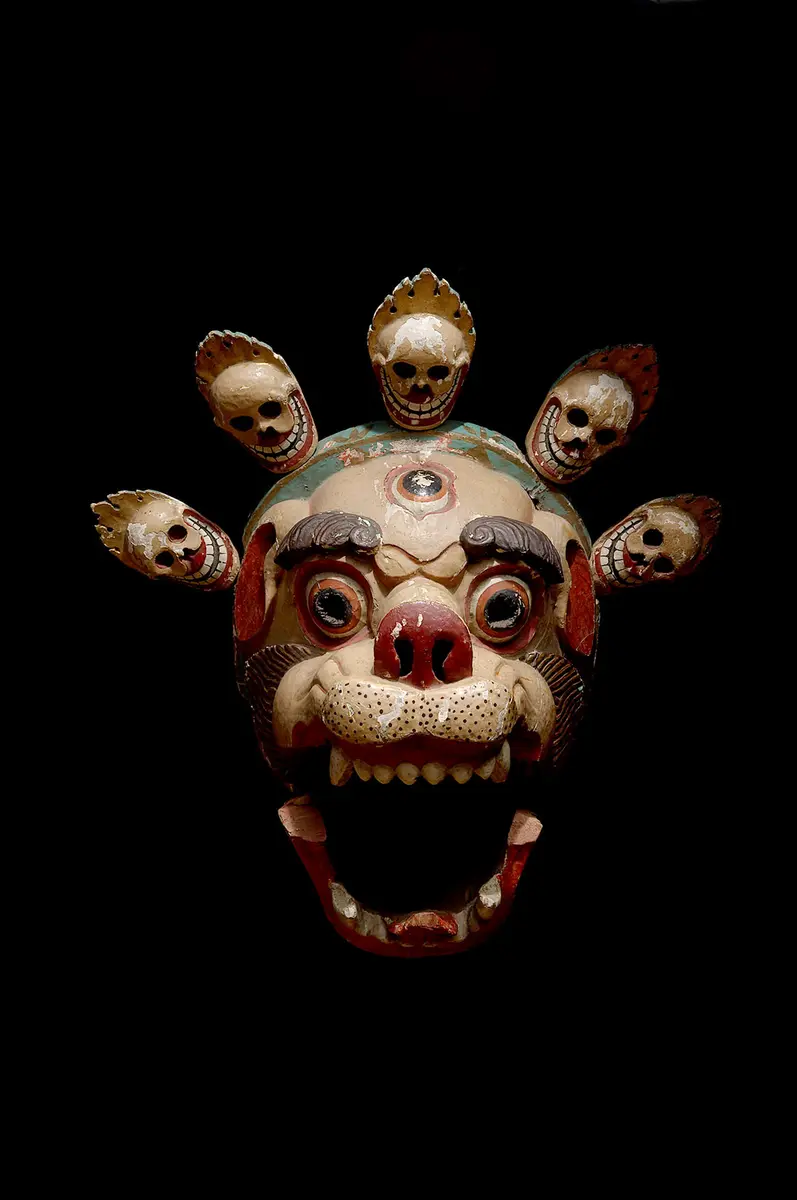
In the mask of a snow lion (Tib.: gangs seng ge) worn in the ritual dance (Tib. 'cham), the historical Buddha Shakyamuni himself appears to the audience. The lion lives on the snow-covered peaks of the Tibetan mountains over which he reigns and presides over the sacred mountains. As he leaps from mountain peak to mountain peak in boundless freedom, he also reminds us of the absolute freedom of all yogis. In Tibetan Buddhism, the lion symbolises fearlessness, unconditional cheerfulness and freedom from all doubts. Its beauty and dignity are based on the unity of body and mind.
Collector:
Gustav Brayer DNB
Time:
19. Jahrhundert
Object Name
Maske eines Schneelöwen
Culture
Tibet
Material/technology:
Holz, bemalt
Copyright
Weltmuseum Wien
Collection area
South Asia, Southeast Asia, Himalayas
Geography
Südasien/Himalaya/Tibet
Invs.
95877
Browse more Similar items you might be interested in
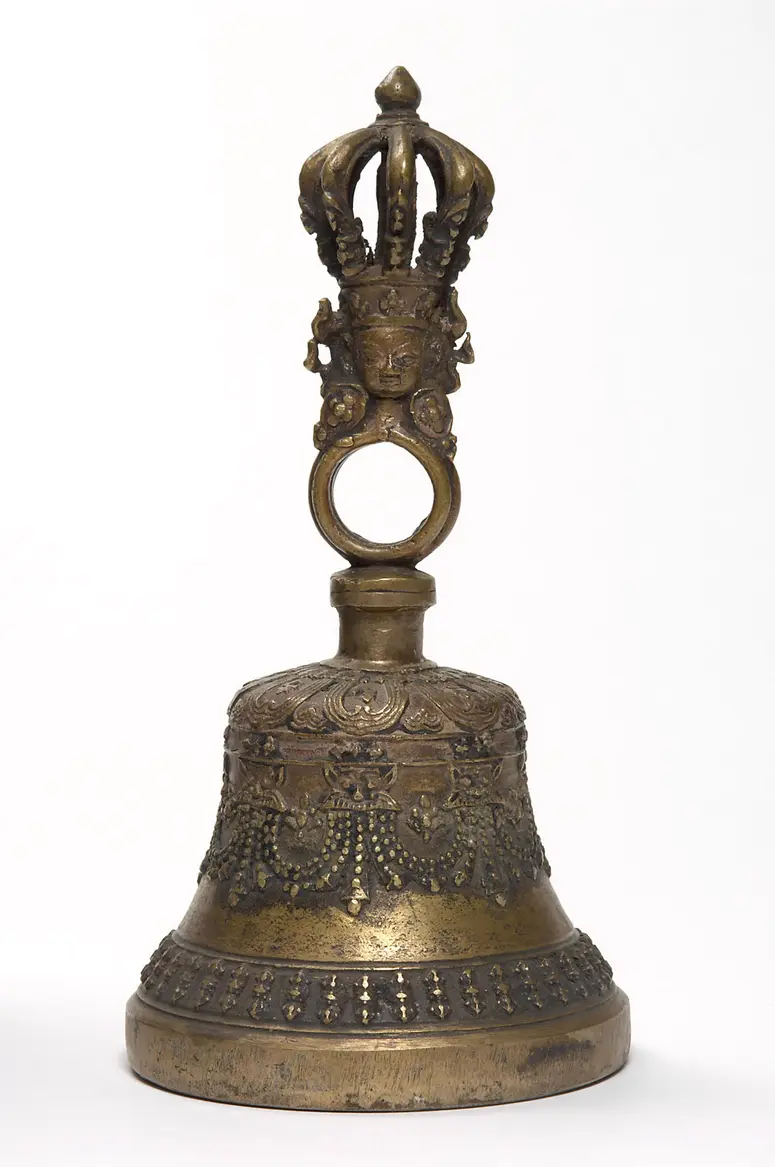
Hand prayer wheel Franz Ferdinand von Österreich-Este 1893 or earlier
Hand prayer wheel Franz Ferdinand von Österreich-Este 1893 or earlier
Hand prayer wheel Franz Ferdinand von Österreich-Este 1893 or earlier
Hand prayer wheel Franz Ferdinand von Österreich-Este 1893 or earlier
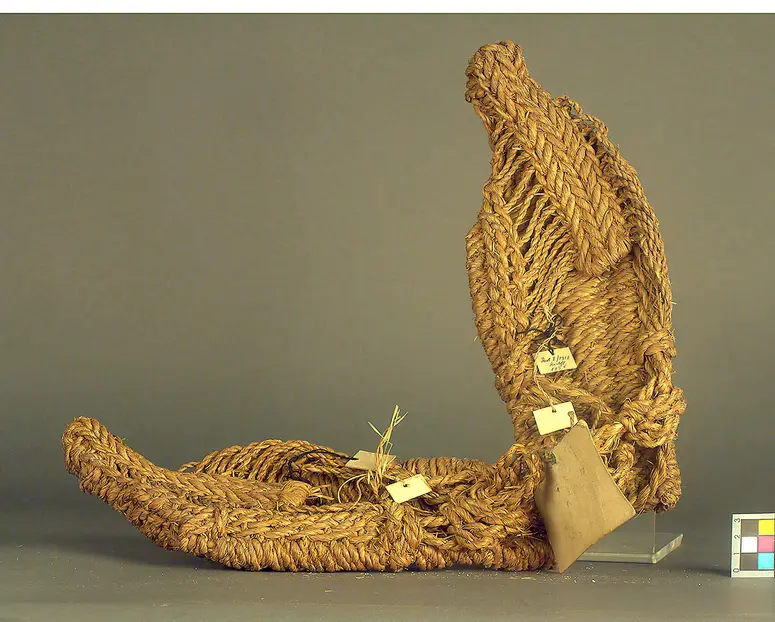
Schneeschuhe Gewerbeförderungsinstitut des Bundesministerium für Handel und Verkehr, Wien
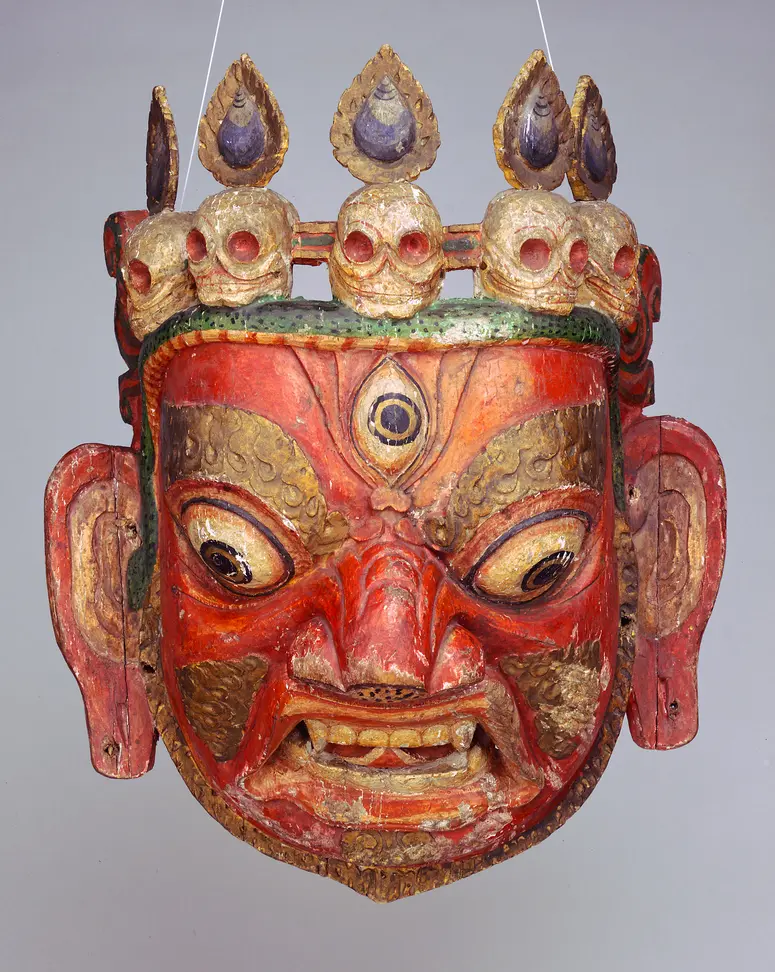
Mask Shinje Chögyel Franz Ferdinand von Österreich-Este 19th century
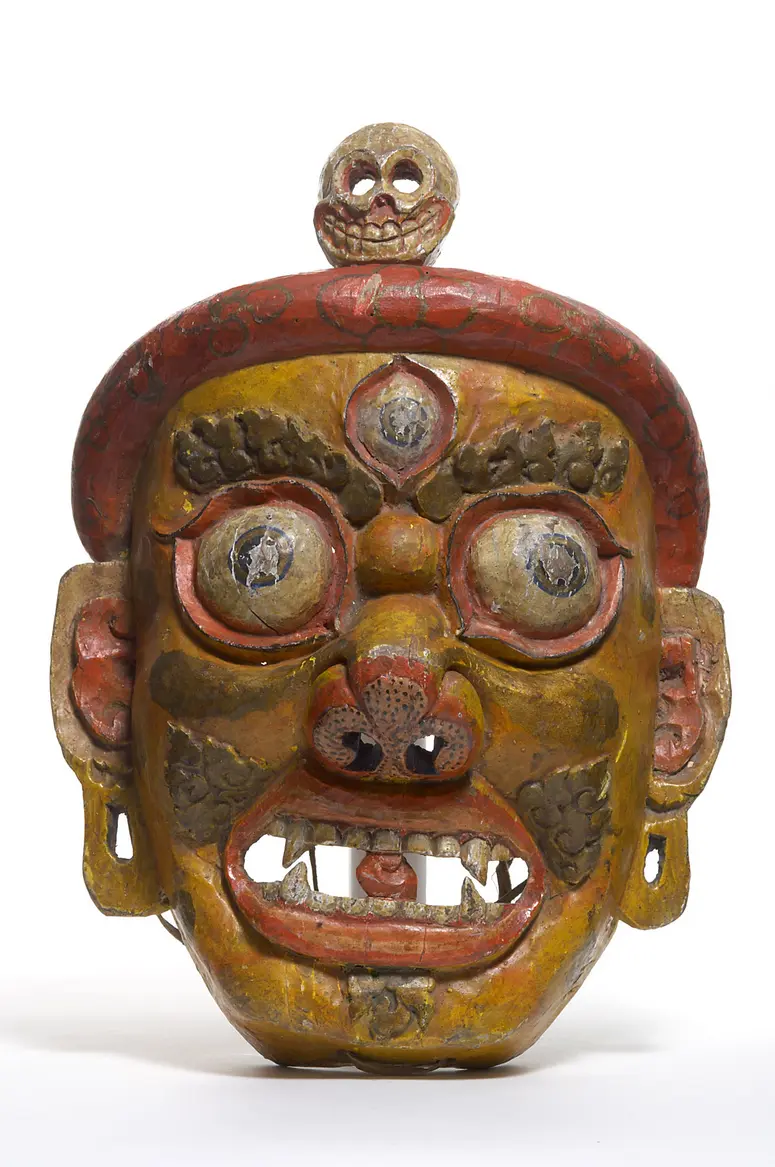
Lord of Death mask Franz Ferdinand von Österreich-Este 19th century