Miniature painting
17. Jh. | Franz Ferdinand von Österreich-Este
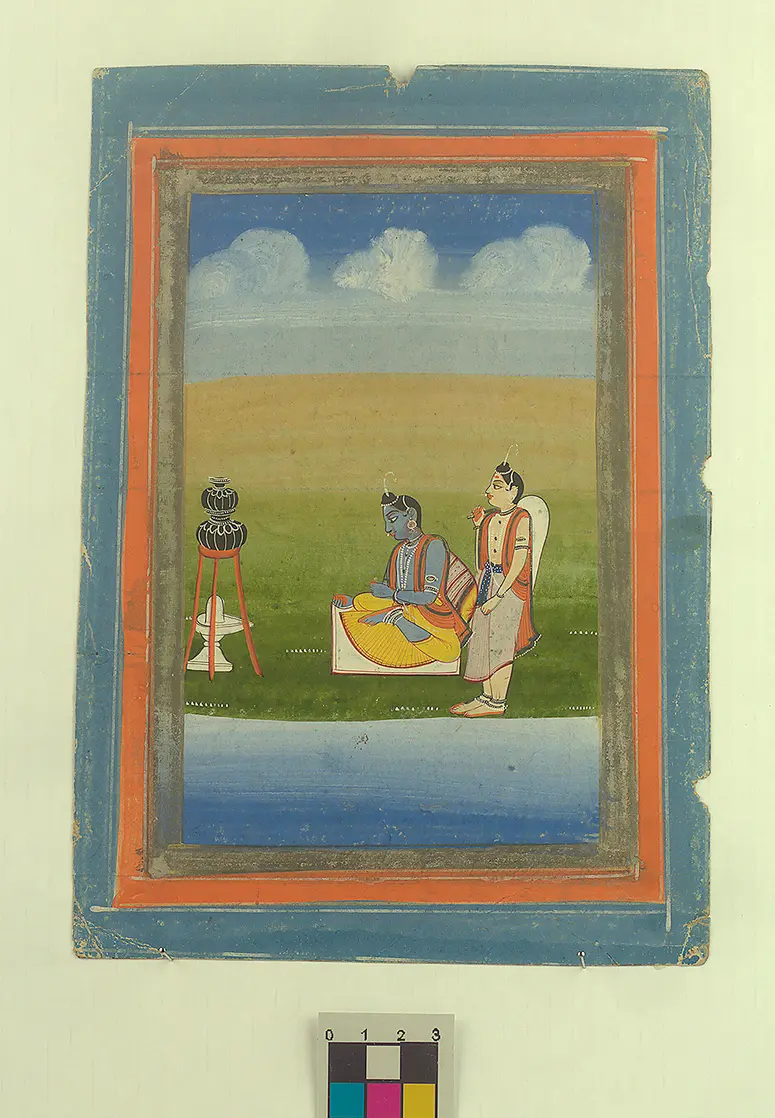
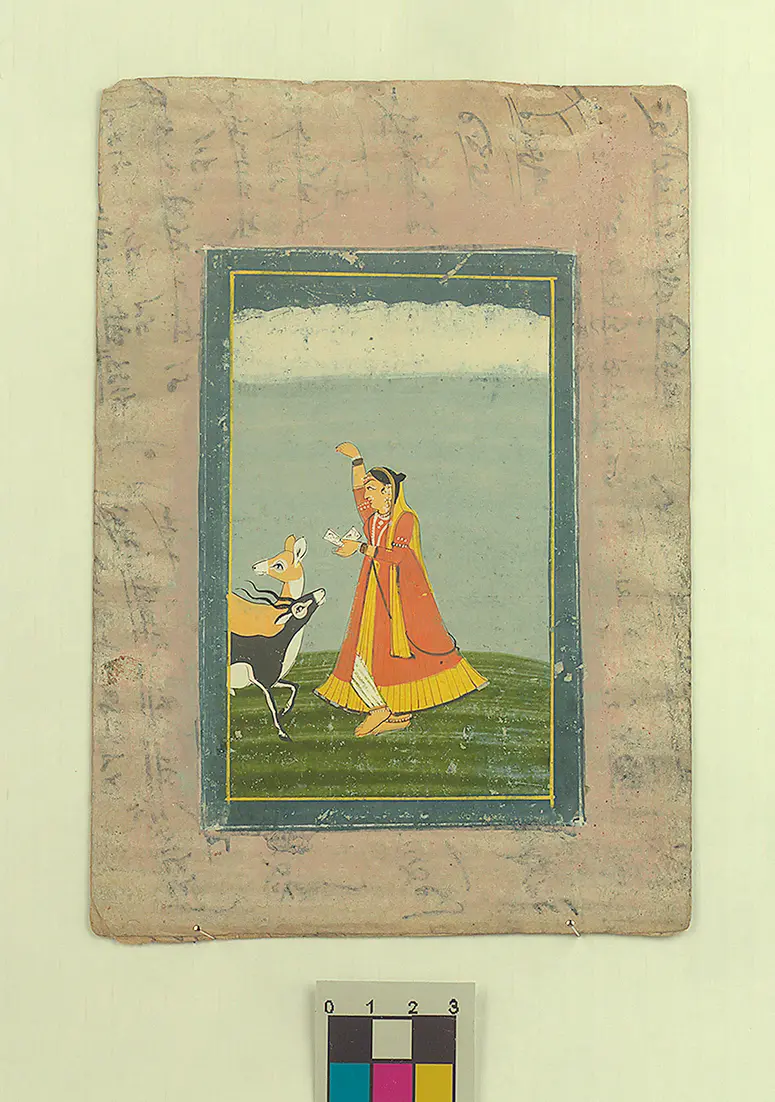
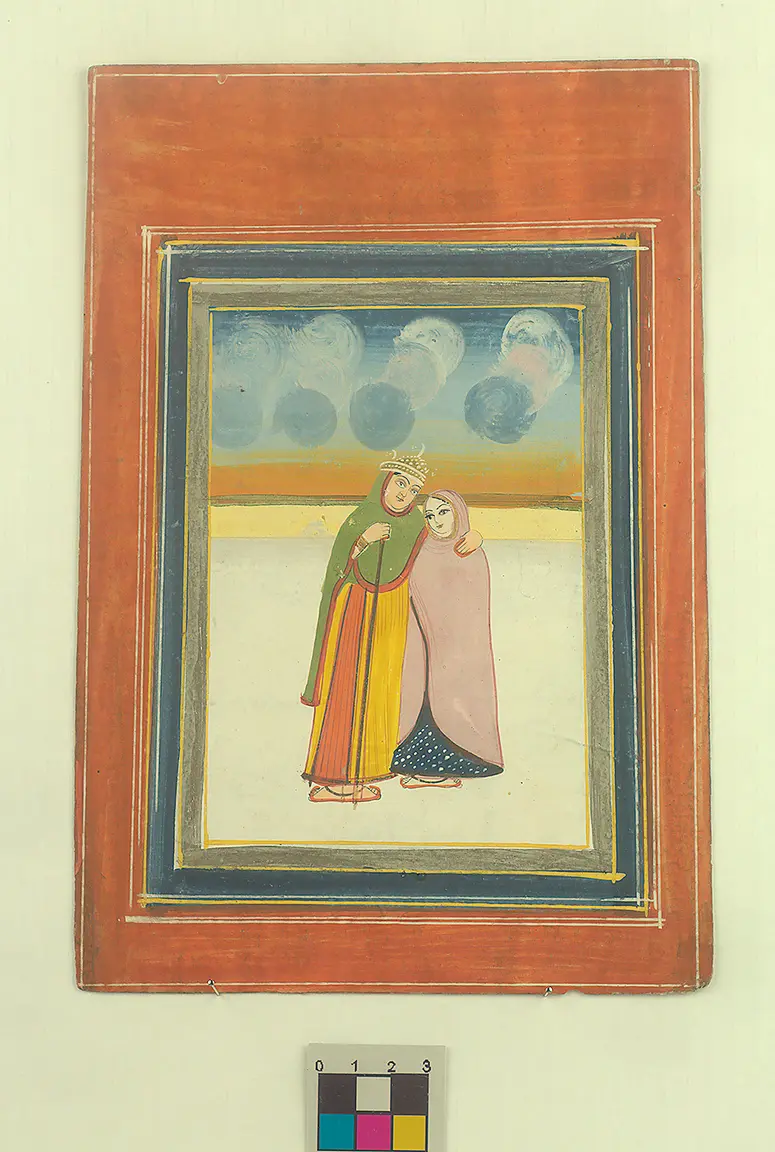
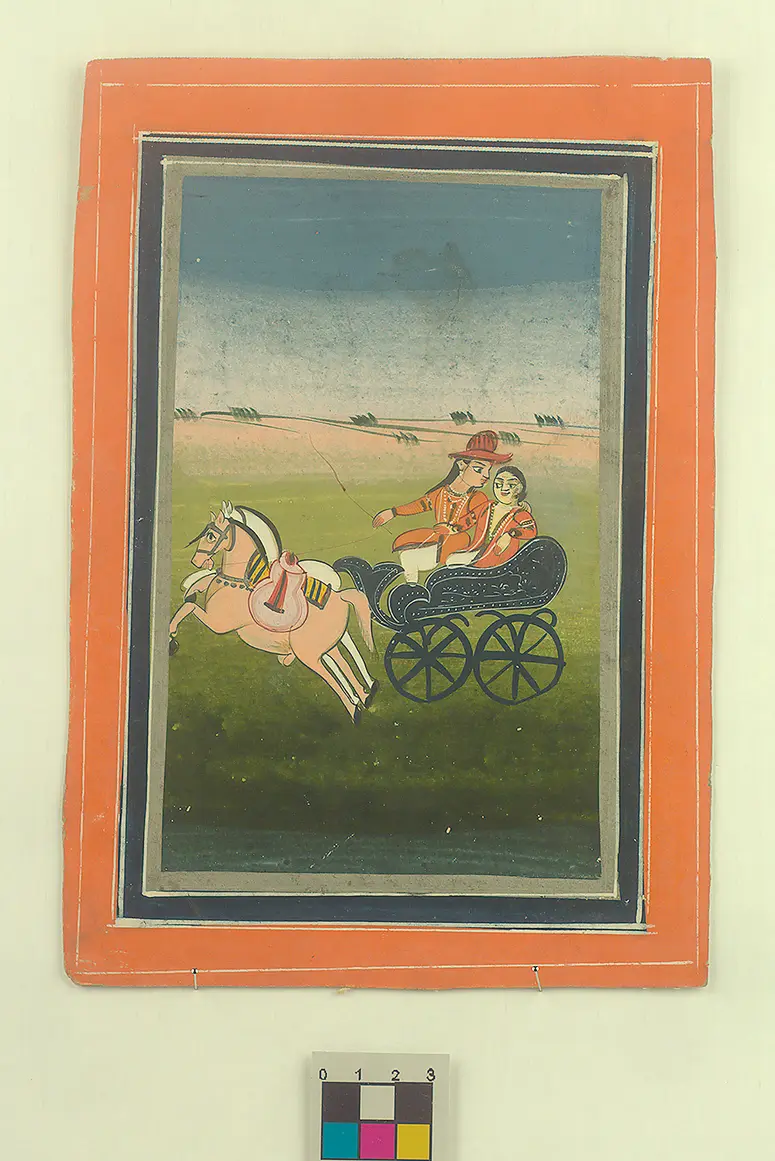
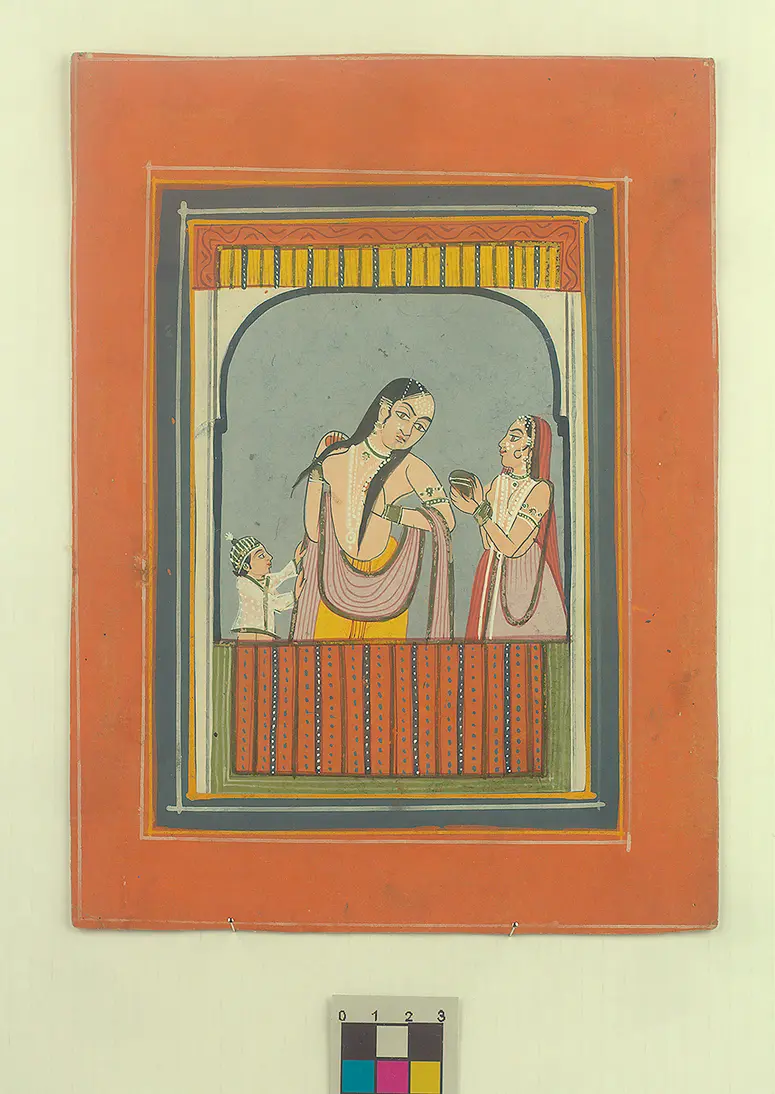
In the 17th century, an art of painting emerged in the Mughal courts from the illustration of manuscripts for its own sake. The Persian roots remained dominant. Portraits of women were rarer than those of men and far more idealized.
The woman sits working in front of a background painted in gold with various floral motifs. In Islamic tradition, the tree on her left side symbolizes not only the tree of life but also the "soul tree", which symbolizes the transcendental realm of the transition from this world to the afterlife. As a "cosmic tree", it crosses the microcosm and the macrocosm as the axis of the world.
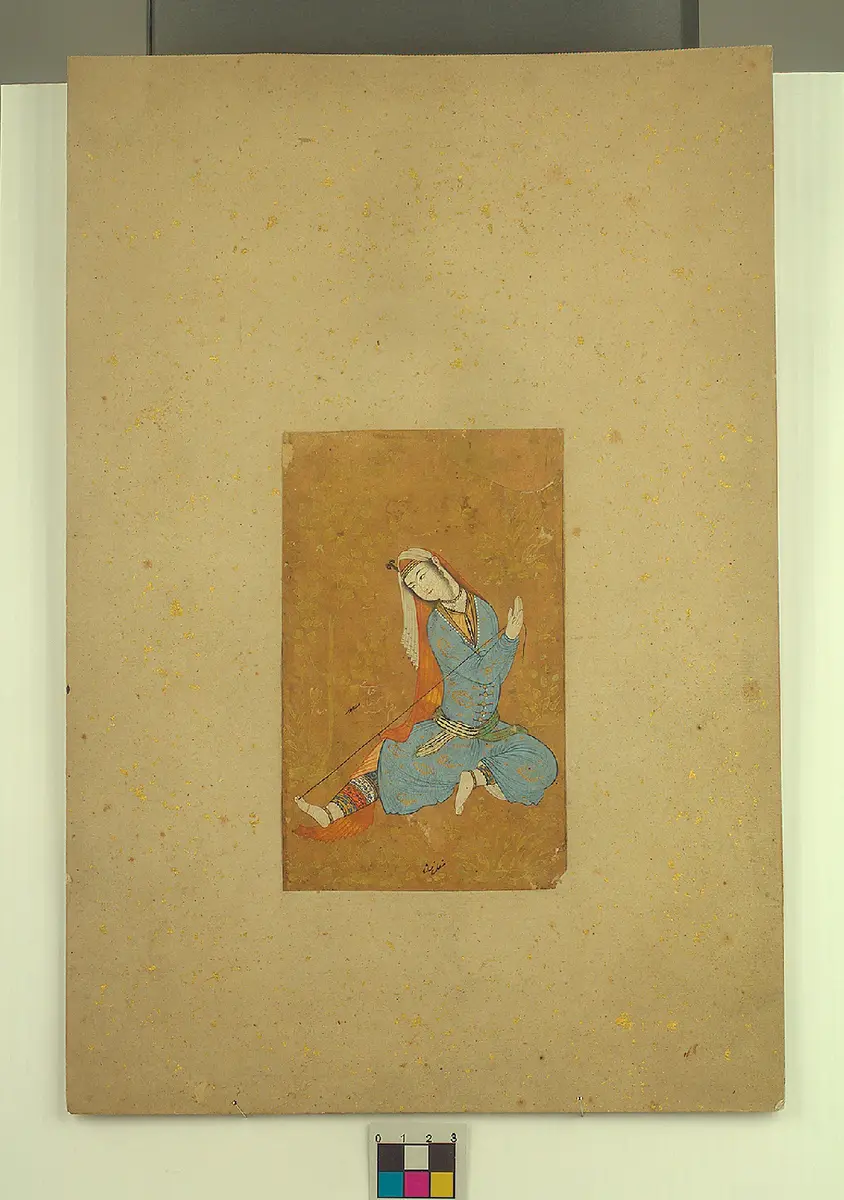
In the 17th century, an art of painting emerged in the Mughal courts from the illustration of manuscripts for its own sake. The Persian roots remained dominant. Portraits of women were rarer than those of men and far more idealized.
The woman sits working in front of a background painted in gold with various floral motifs. In Islamic tradition, the tree on her left side symbolizes not only the tree of life but also the "soul tree", which symbolizes the transcendental realm of the transition from this world to the afterlife. As a "cosmic tree", it crosses the microcosm and the macrocosm as the axis of the world.
Collection:
Franz Ferdinand von Österreich-Este (1863 Graz - 1914 Sarajevo) DNB
Time:
17. Jh.
Object Name
Frauenporträt
Culture
Indien
Material/technology:
Karton, Wasserfarben
Copyright
Weltmuseum Wien
Collection area
South Asia, Southeast Asia, Himalayas
Geography
Südasien/Subkontinent/Indien
Invs.
102402
Browse more Similar items you might be interested in
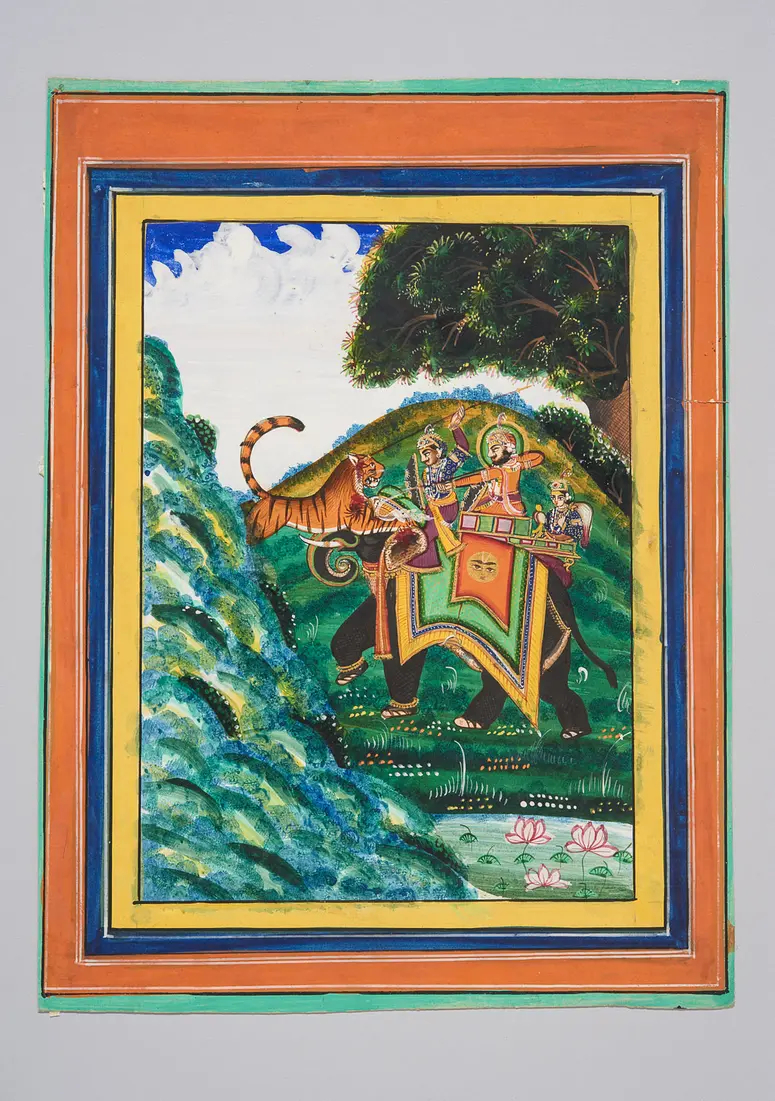
Maharaja hunting a tiger Franz Ferdinand von Österreich-Este 1893 or earlier