Odissi dance costume
20. Jahrhundert
In India, dance is a sacred activity in which men - and even more often women - give expression to the highest spirituality in a way that is never possible with the spoken or written word. In dance, the human merges with the divine and the material with the spiritual. The gods themselves are said to have once revealed the art of dance to the sage Bharata. All seven classical dance styles lend artistic expression to content from the fields of religious philosophy and mythology, especially the great epics Ramayana and Mahabarata. Dance also symbolizes the eternal cycle of becoming and passing away, as the god Shiva even ensures the cycle of creation and destruction of the world in dance. A predetermined repertoire of hand gestures, eye movements, head postures and leg positions, together with the colors and styles of the costumes, express emotions such as serenity, joy, sadness, anger or terror. Originally, temples formed the stage for these dances, which were an integral part of rituals and ceremonies. It was not until the Islamic Mughal rulers brought dance to their courts and thus placed it in a profane context; today it is the all-powerful film industry that offers dance a modern stage on the movie screen. This costume is worn by dancers of the Odissi style, which has been documented for two thousand years and originally comes from the temple tradition of Orissa in eastern India, where it was practiced as a form of worship. While some dances depict the ten appearances of Vishnu, others are dedicated to the god of dance - Shiva. The appearance of Vishnu as Jagannatha plays a special role; dancers of the Odissi dance are ritually married to him.
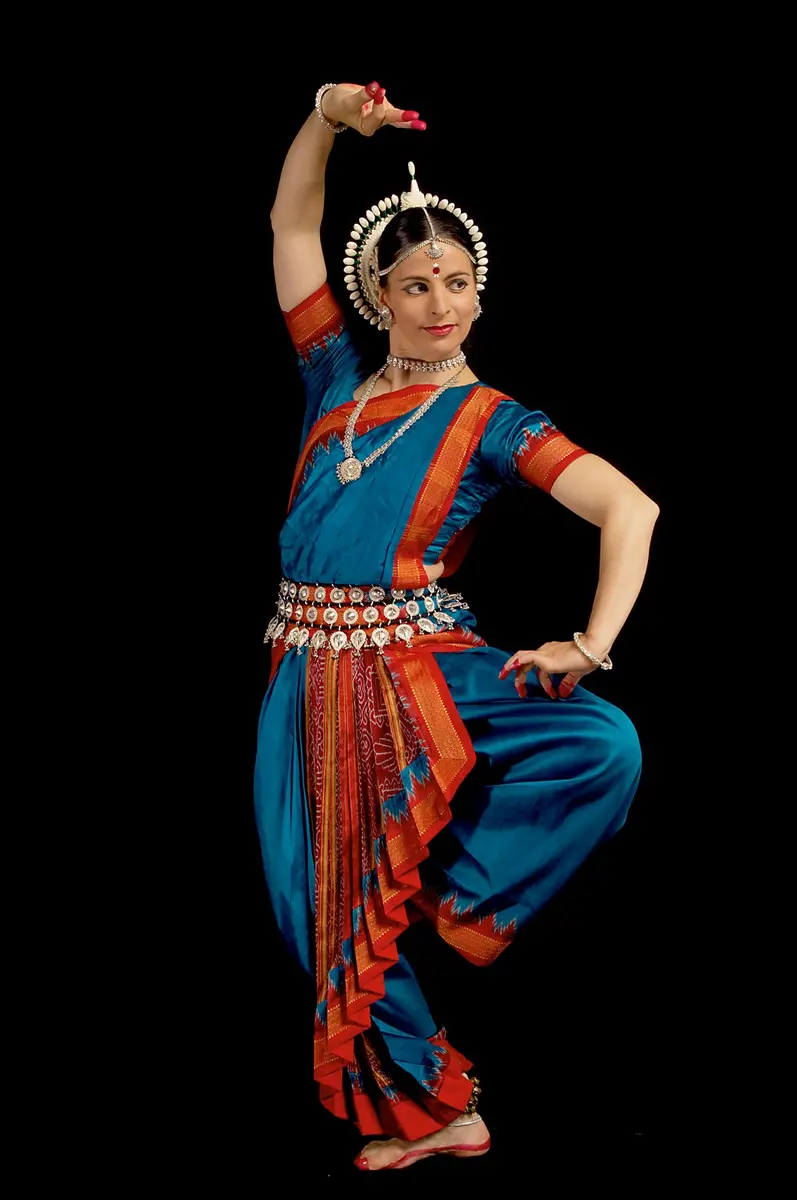
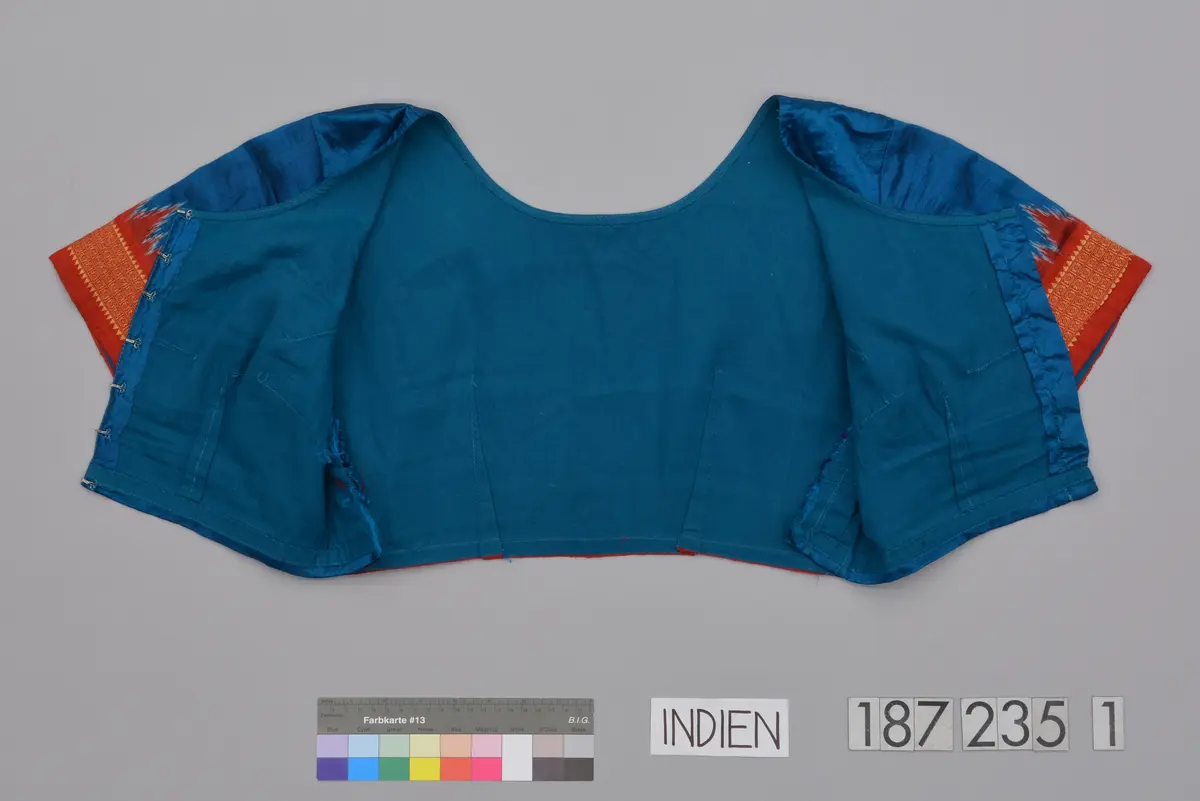
In India, dance is a sacred activity in which men - and even more often women - give expression to the highest spirituality in a way that is never possible with the spoken or written word. In dance, the human merges with the divine and the material with the spiritual. The gods themselves are said to have once revealed the art of dance to the sage Bharata. All seven classical dance styles lend artistic expression to content from the fields of religious philosophy and mythology, especially the great epics Ramayana and Mahabarata. Dance also symbolizes the eternal cycle of becoming and passing away, as the god Shiva even ensures the cycle of creation and destruction of the world in dance. A predetermined repertoire of hand gestures, eye movements, head postures and leg positions, together with the colors and styles of the costumes, express emotions such as serenity, joy, sadness, anger or terror. Originally, temples formed the stage for these dances, which were an integral part of rituals and ceremonies. It was not until the Islamic Mughal rulers brought dance to their courts and thus placed it in a profane context; today it is the all-powerful film industry that offers dance a modern stage on the movie screen. This costume is worn by dancers of the Odissi style, which has been documented for two thousand years and originally comes from the temple tradition of Orissa in eastern India, where it was practiced as a form of worship. While some dances depict the ten appearances of Vishnu, others are dedicated to the god of dance - Shiva. The appearance of Vishnu as Jagannatha plays a special role; dancers of the Odissi dance are ritually married to him.
Time:
20. Jahrhundert
Entry Date:
2008
Object Name
Kostüm des Odissi Tanzes
Culture
Indien
Copyright
Weltmuseum Wien
Collection area
South Asia, Southeast Asia, Himalayas
Geography
Südasien/Subkontinent/Indien
Invs.
187235_1