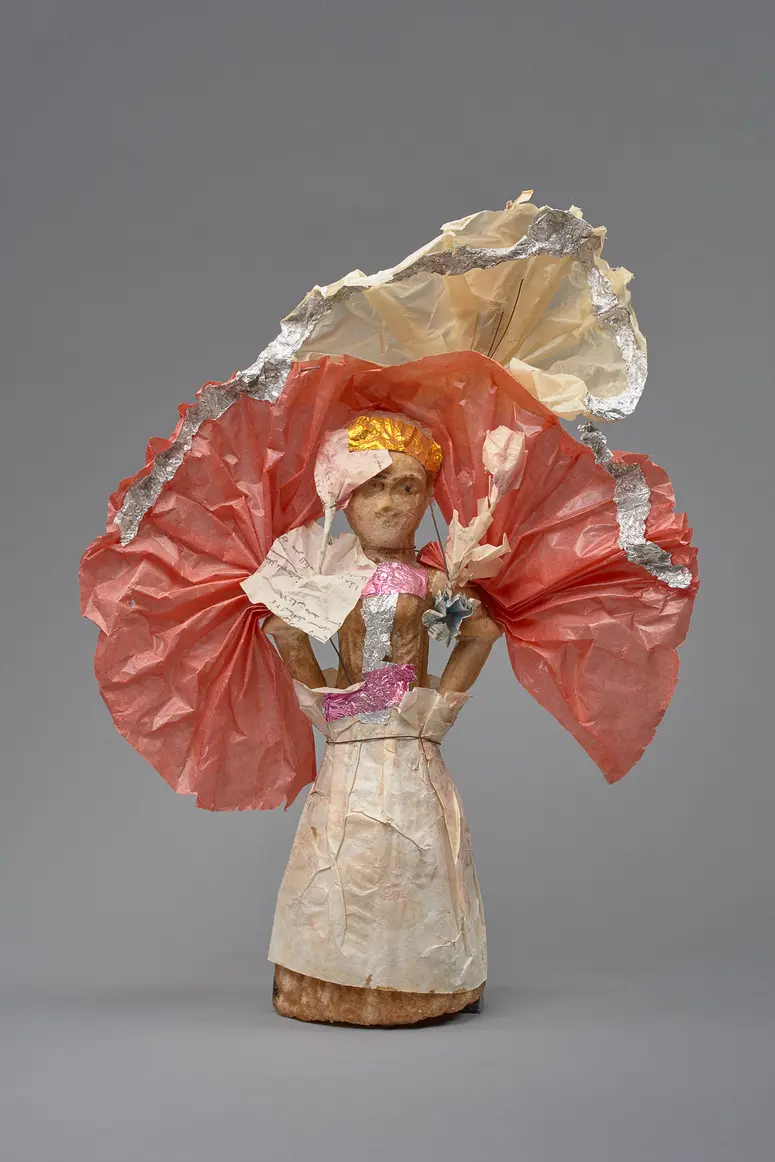
Paper crown for Maulid an-Nabi
before 1976 | Peter Wolfgang Schienerl
An entire city is ecstatic – it's the Prophet's birthday. It is the twelth night of the third month in the Islamic lunar calendar. In Egypt, houses are festively decorated for the Prophet's birthday, the Maulid an-Nabi, and the mosques are brightly lit. Jugglers, fire-swallowers and dancing Sufis fill the streets and squares of Cairo. Processions snake through the streets. Children are treated to carousel rides. From all sides, merchants appear and sell a variety of figures made out of sugar, wrapped with coloured paper; these are particularly popular with children. Girls receive a brightly coloured ʿArusat al-Maulid, a "birthday bride", while boys are given the decorated, mounted figure of Abu Zayd al-Hilali, an Arabic hero from the time of the Fatimid Caliphate in the eleventh century. Another hit amongst the children is a birthday crown, made out of cardboard, printed tissue paper and wire, on the forehead of which is displayed a paper image, cut out of a newspaper, of an ʿud (lute) player, or a famous star from film and television.Gifts given at the festival of Maulid are made of ephemeral, perishable materials such as sugar and paper. They are small works of art full of poetry and definite meaning. As so-called ephemera they are intended for short-term use; they are unsuitable for prolonged use in daily life.
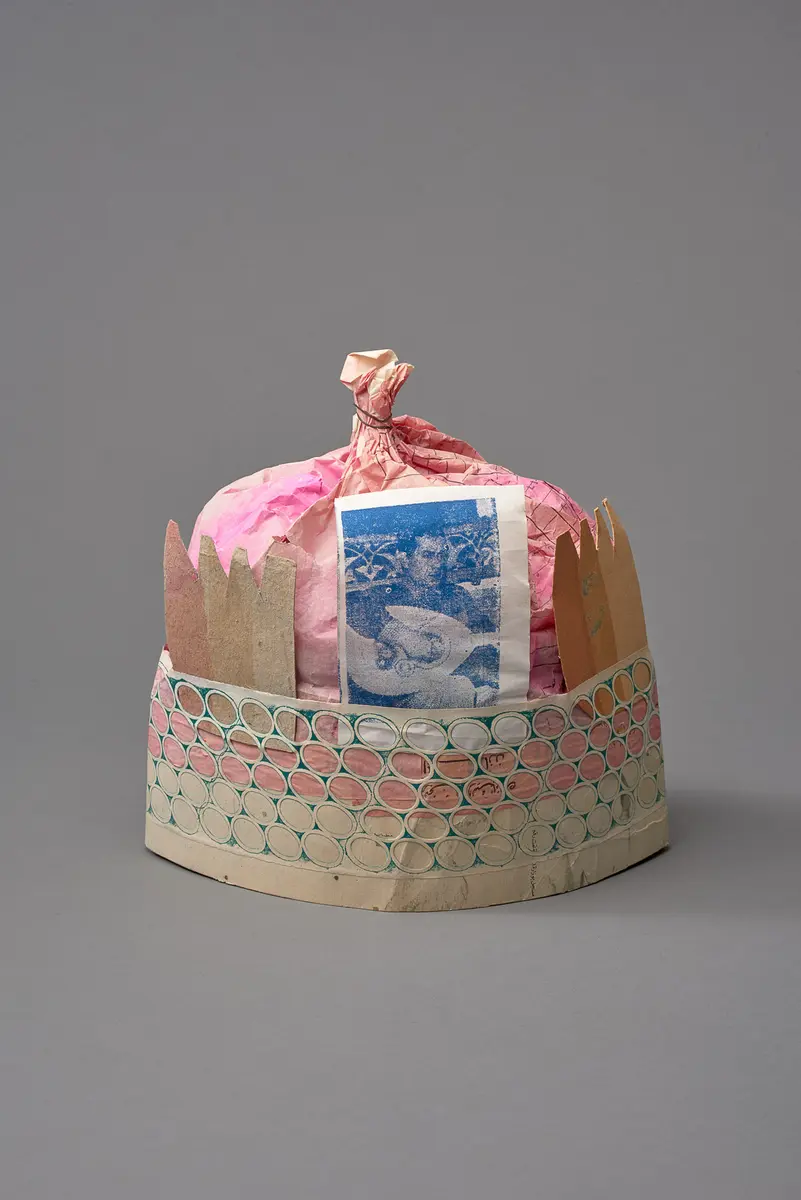
An entire city is ecstatic – it's the Prophet's birthday. It is the twelth night of the third month in the Islamic lunar calendar. In Egypt, houses are festively decorated for the Prophet's birthday, the Maulid an-Nabi, and the mosques are brightly lit. Jugglers, fire-swallowers and dancing Sufis fill the streets and squares of Cairo. Processions snake through the streets. Children are treated to carousel rides. From all sides, merchants appear and sell a variety of figures made out of sugar, wrapped with coloured paper; these are particularly popular with children. Girls receive a brightly coloured ʿArusat al-Maulid, a "birthday bride", while boys are given the decorated, mounted figure of Abu Zayd al-Hilali, an Arabic hero from the time of the Fatimid Caliphate in the eleventh century. Another hit amongst the children is a birthday crown, made out of cardboard, printed tissue paper and wire, on the forehead of which is displayed a paper image, cut out of a newspaper, of an ʿud (lute) player, or a famous star from film and television.Gifts given at the festival of Maulid are made of ephemeral, perishable materials such as sugar and paper. They are small works of art full of poetry and definite meaning. As so-called ephemera they are intended for short-term use; they are unsuitable for prolonged use in daily life.
Collector:
Peter Wolfgang Schienerl (1940 Wien - 2001 München) DNB
Time:
before 1976
Entry Date:
1976
Object Name
Paper crown for Maulid an-Nabi
Culture
Egypt, Cairo
Material/technology:
Cardboard, paper, pigment, wire
Dimensions:
Dia. 17 cm
Copyright
Weltmuseum Wien
Collection area
North Africa, Middle East, Central Asia and Siberia
Invs.
158033
Browse more Similar items you might be interested in
Dagger decorated with Arabic script Kronprinz Rudolf von Österreich-Ungarn early 19th century
Orchestral concert in front of the terrace of Shepheard’s Hotel Max Ritter von Lommer ca. 1880
Flintlock espingole (blunderbuss) Kronprinz Rudolf von Österreich-Ungarn 1881 oder früher
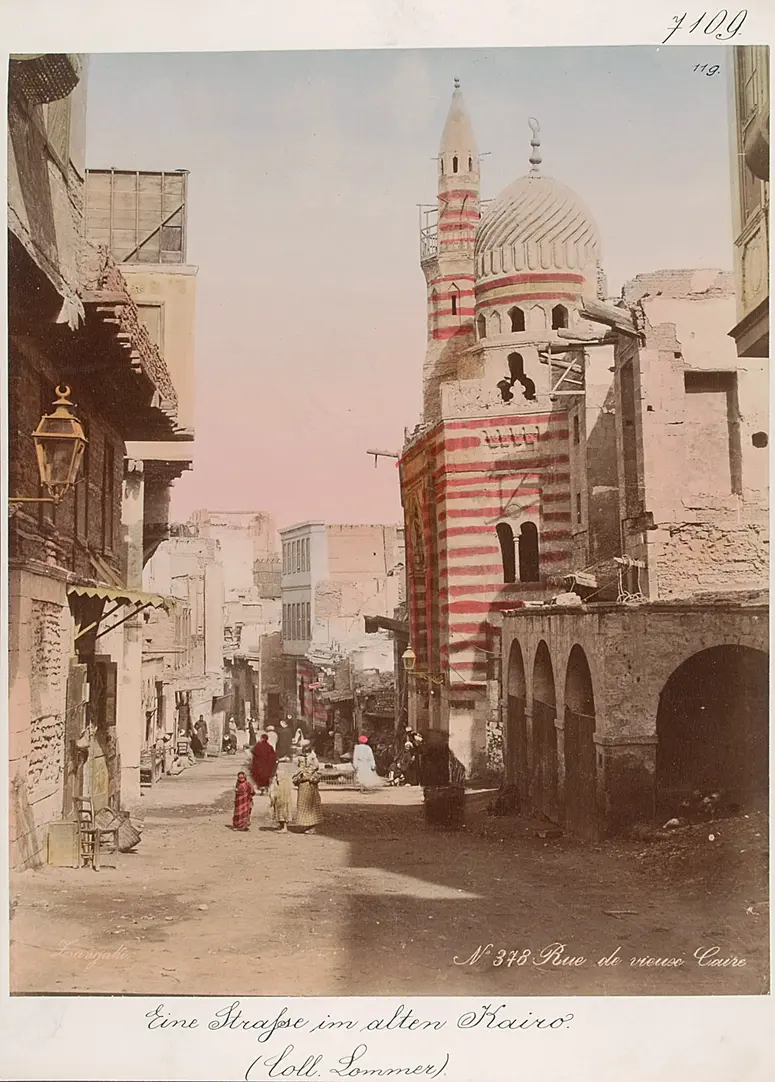
The Bab al-Wazir Street with the mosque of Aytmish al-Bagasi Max Ritter von Lommer ca. 1880
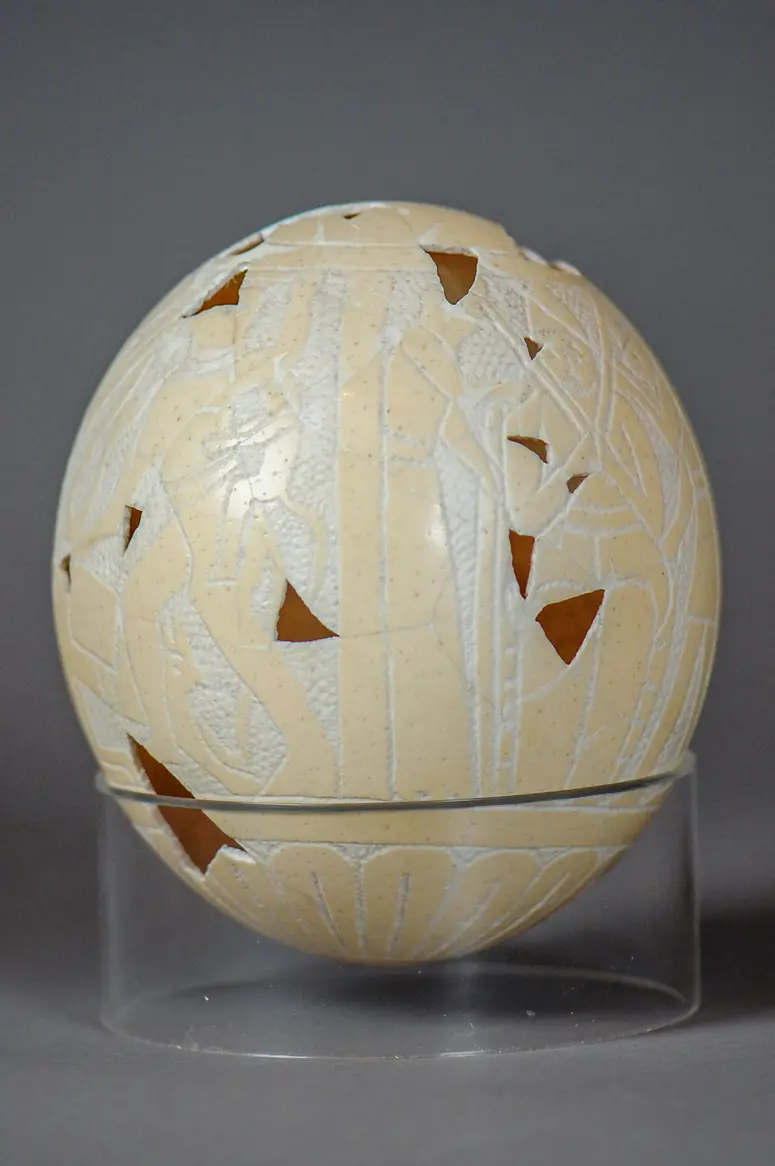
Ostrich egg with relief carvings based on antique Egyptian motifs Sophie Deutsch ca. 1900
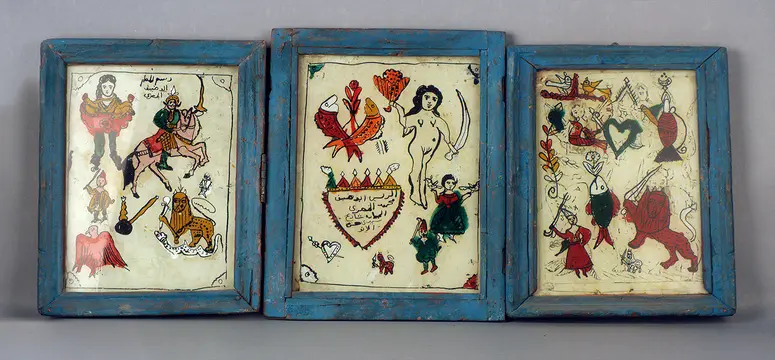
Reverse paintings on glass with tattoo motifs Peter Wolfgang Schienerl mid-20th century
Picture frame with photograph of James Camille Samson James Camille Samson prob. 1885