Sarong, Batik
Sarung
Zweite Hälfte des 19. Jh. | James Camille Samson
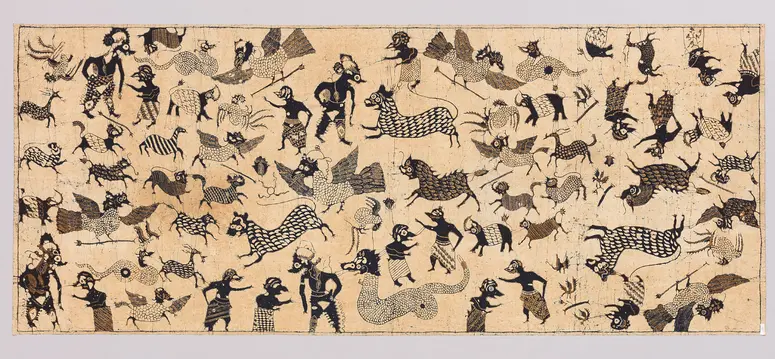
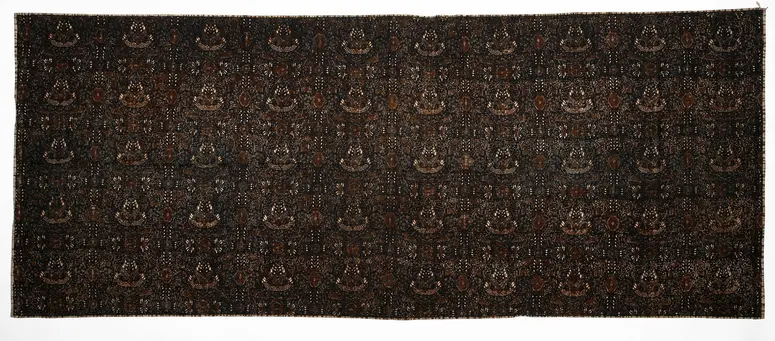
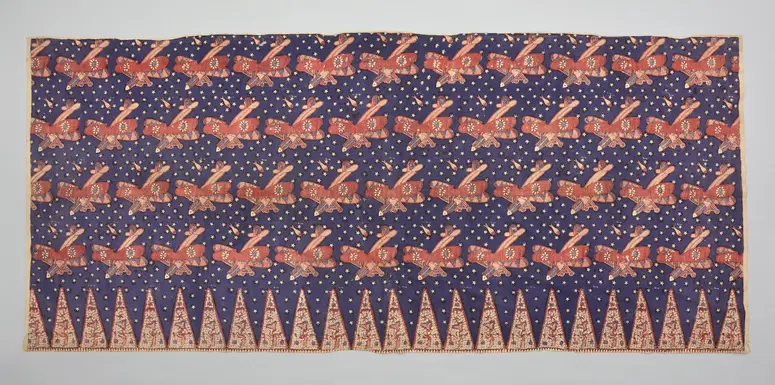
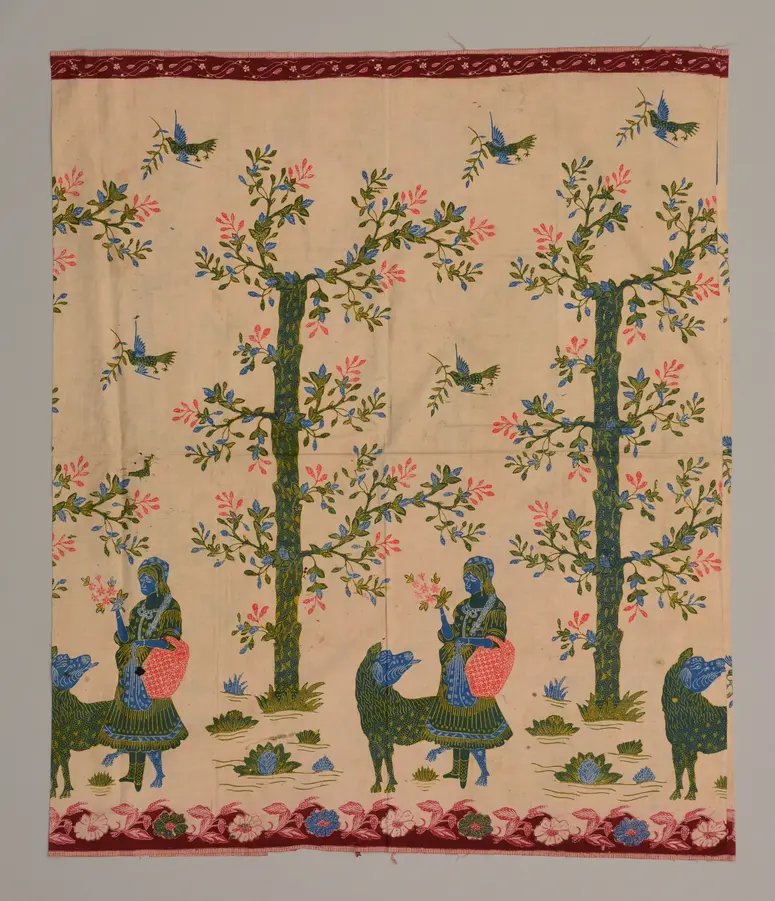
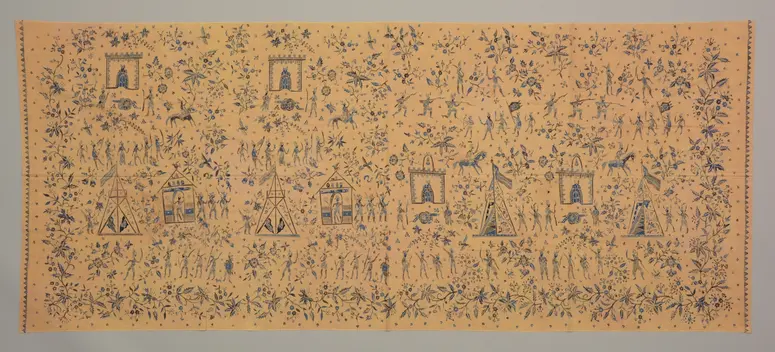
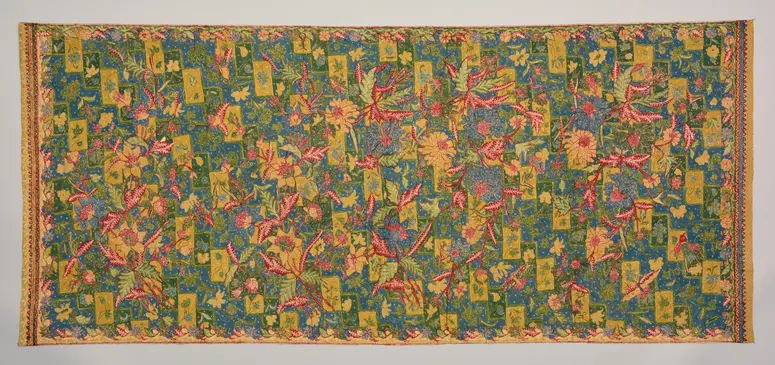
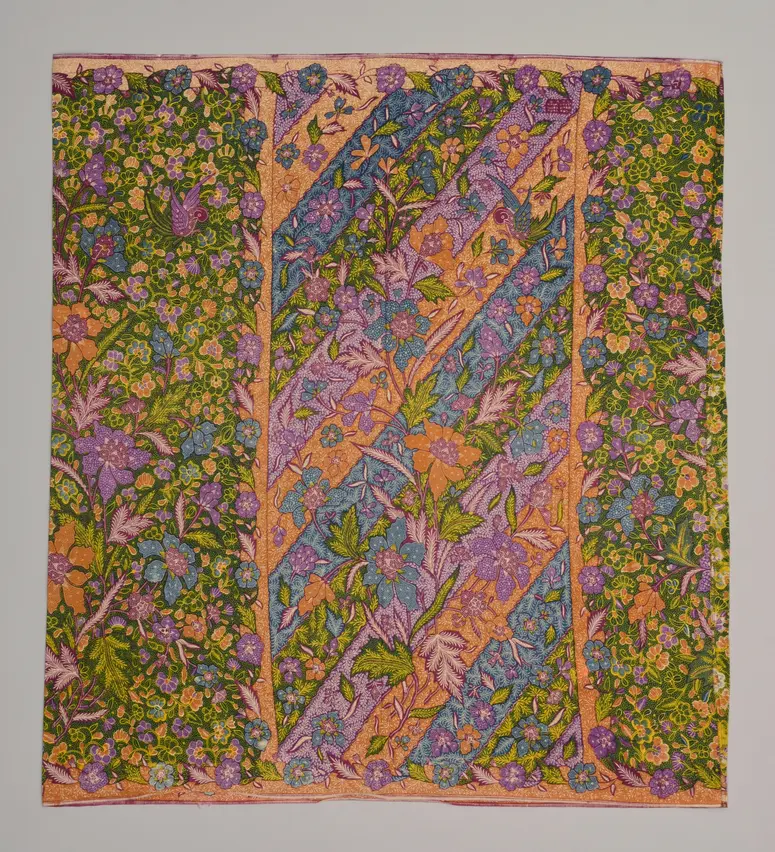
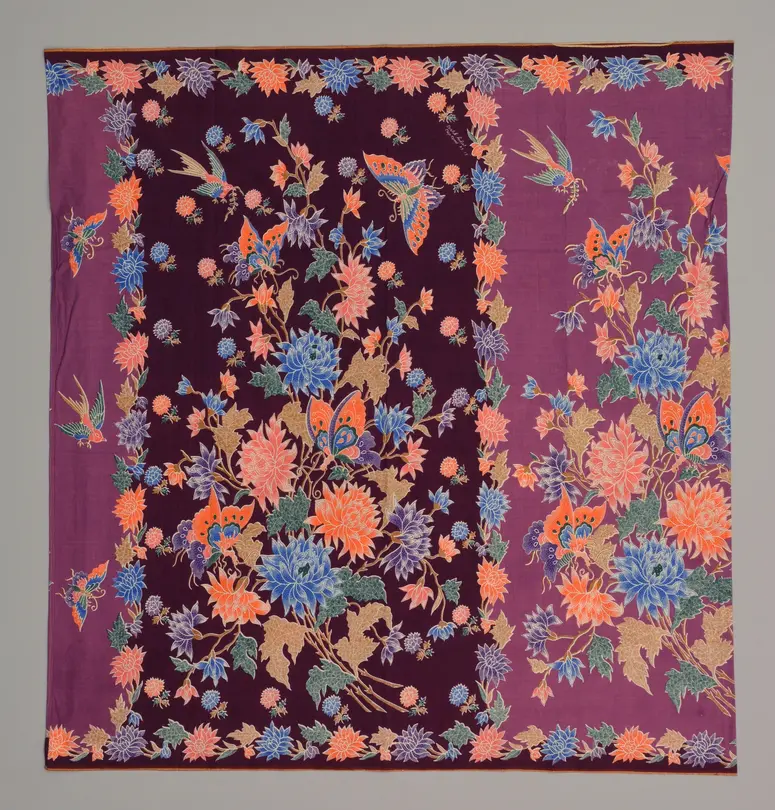
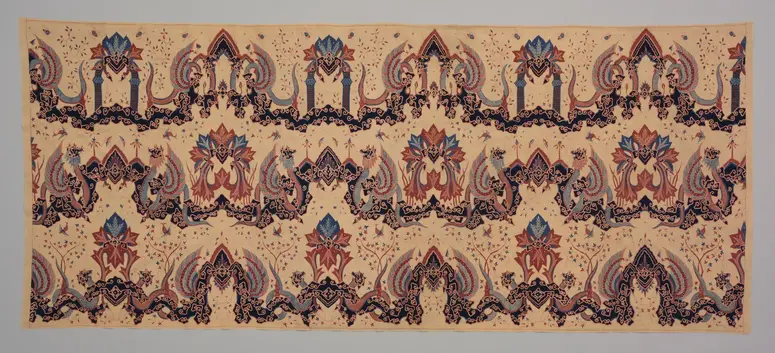
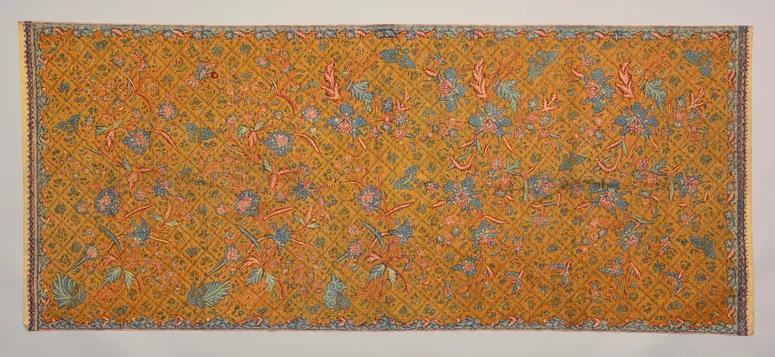
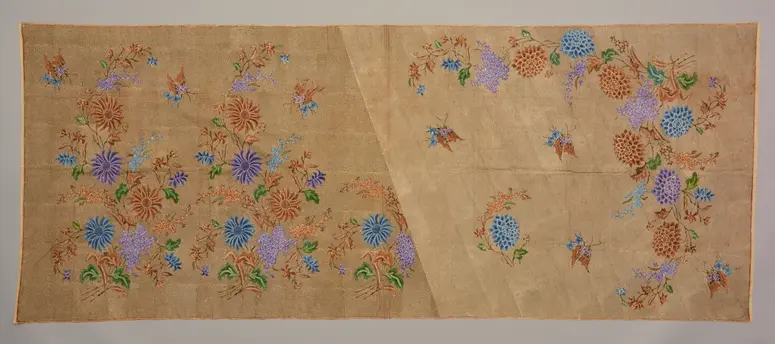
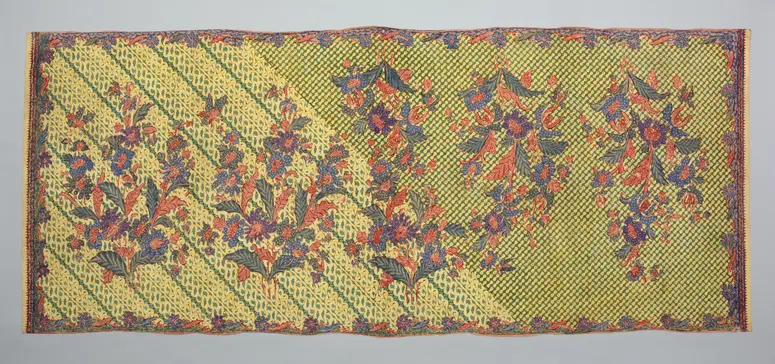
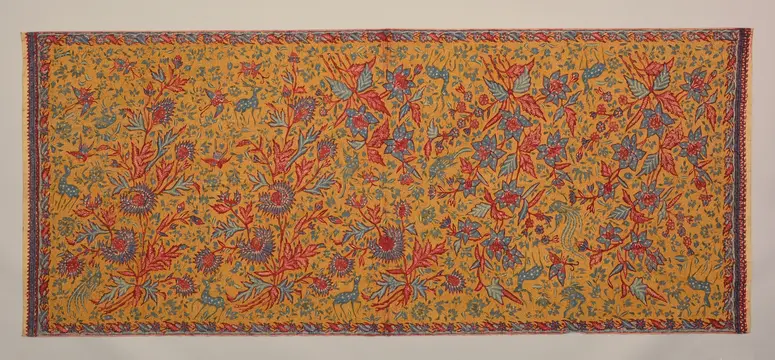
A Peranakan sarong with the triangular motifs of tumpal pucuk rebung (tips of young bamboo) in the kepala, which are filled with phoenixes. We also see phoenixes and floral motifs in the papan area (between kepala and badan). The badan is decorated with animals from three levels: fish in the sea, peacocks on the ground and birds in the air. These three different animal species are also very important for the offerings at the Chinese Peranakan.Batik is art. Instead of canvas, the artwork is drawn on fabric. When synthetic dyes were introduced to Indonesia from Europe at the end of the 19th century, many artists felt inspired to play with the colors and develop new motifs. On the north coast of Java, Chinese, Dutch and Arab immigrants established new batik production facilities along the port cities. The patterns were influenced and supplemented by motifs from their culture of origin. This resulted in fresh motifs and color styles typical of the region and new dyeing methods. The names of the batik patterns correspond to the places where they were produced, such as Pekalongan, Kedungwuni, Lasem and Cirebon. Batik is constantly changing. Creativity knows no bounds. Many motifs were also influenced by Europe through European magazines or postcards. Another new development was that individual batiks were signed by the manufacturers. The “pesisiran style” emerged in contrast to the traditional “kraton style” (palace style) from the interior of the country.
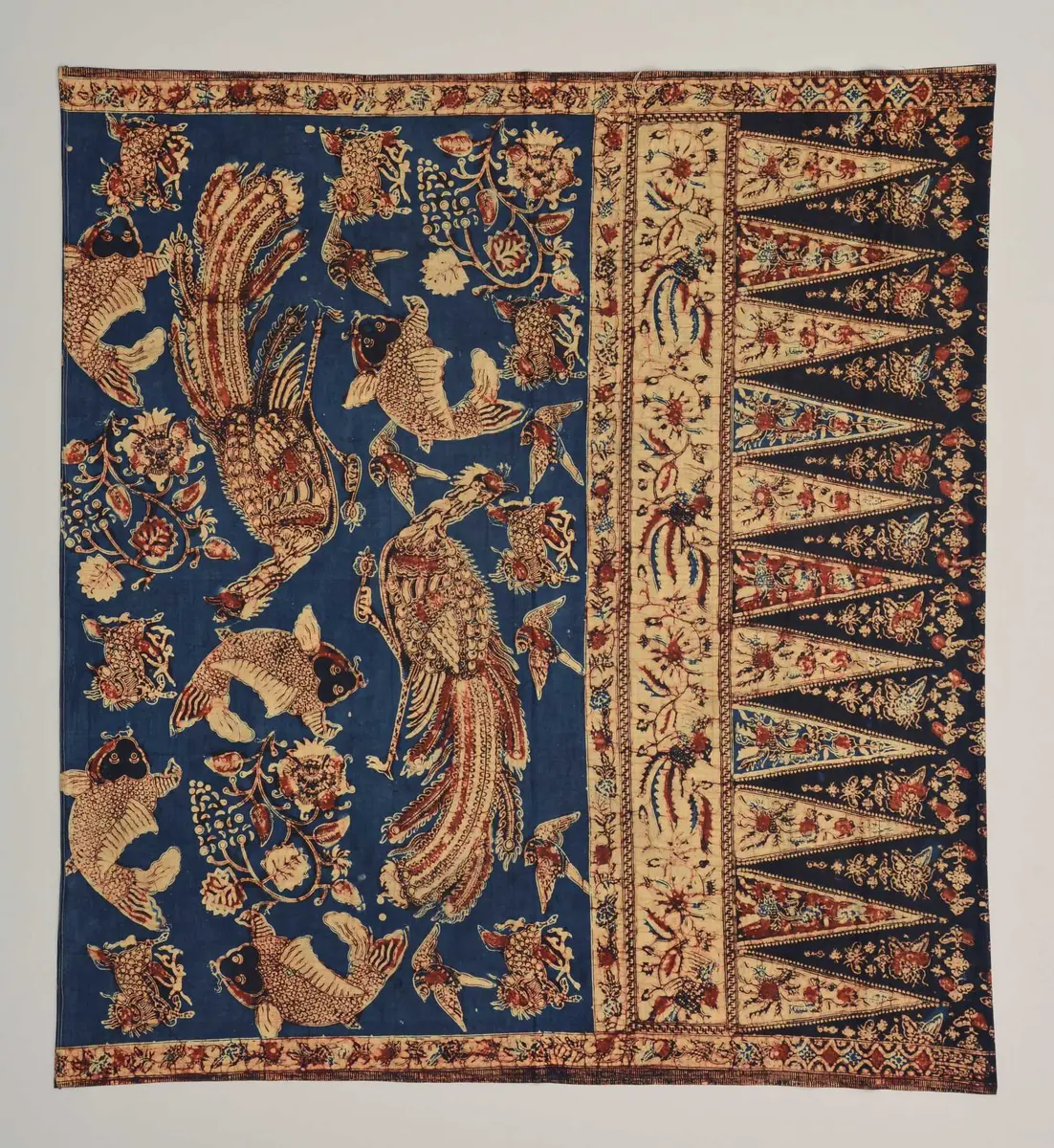
A Peranakan sarong with the triangular motifs of tumpal pucuk rebung (tips of young bamboo) in the kepala, which are filled with phoenixes. We also see phoenixes and floral motifs in the papan area (between kepala and badan). The badan is decorated with animals from three levels: fish in the sea, peacocks on the ground and birds in the air. These three different animal species are also very important for the offerings at the Chinese Peranakan.Batik is art. Instead of canvas, the artwork is drawn on fabric. When synthetic dyes were introduced to Indonesia from Europe at the end of the 19th century, many artists felt inspired to play with the colors and develop new motifs. On the north coast of Java, Chinese, Dutch and Arab immigrants established new batik production facilities along the port cities. The patterns were influenced and supplemented by motifs from their culture of origin. This resulted in fresh motifs and color styles typical of the region and new dyeing methods. The names of the batik patterns correspond to the places where they were produced, such as Pekalongan, Kedungwuni, Lasem and Cirebon. Batik is constantly changing. Creativity knows no bounds. Many motifs were also influenced by Europe through European magazines or postcards. Another new development was that individual batiks were signed by the manufacturers. The “pesisiran style” emerged in contrast to the traditional “kraton style” (palace style) from the interior of the country.
Collector:
James Camille Samson (1856 New York - 1896 Wien) DNB
Time:
Zweite Hälfte des 19. Jh.
Object Name
Sarong, Batik
Culture
Peranakan / Nordküste Java
Material/technology:
Maschinell gefertigte Baumwolle, Leinwandbindung, Naturfarben (Soga und Indigo), Handbatik (batik tulis)
Copyright
Weltmuseum Wien
Collection area
Insular Southeast Asia
Geography
Insulares Südostasien/Indonesien/Java
Invs.
120481