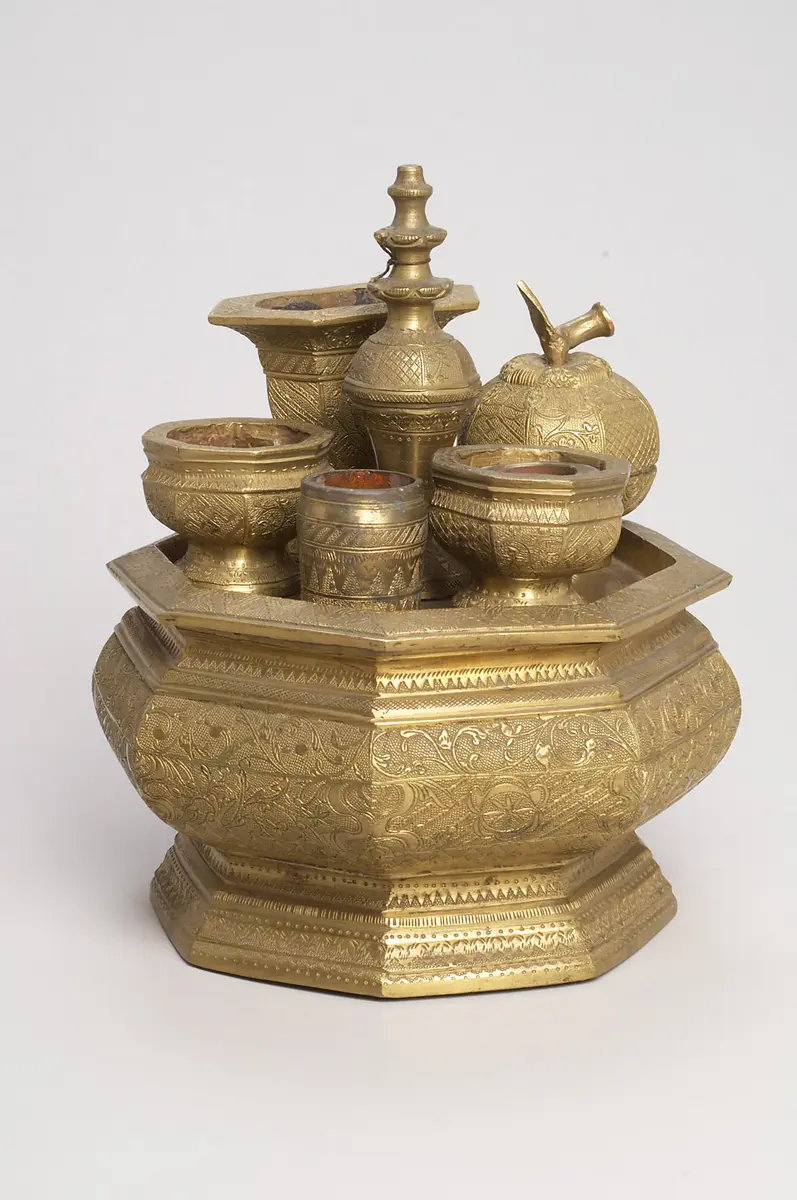
Beteldose
Tempat Sirih
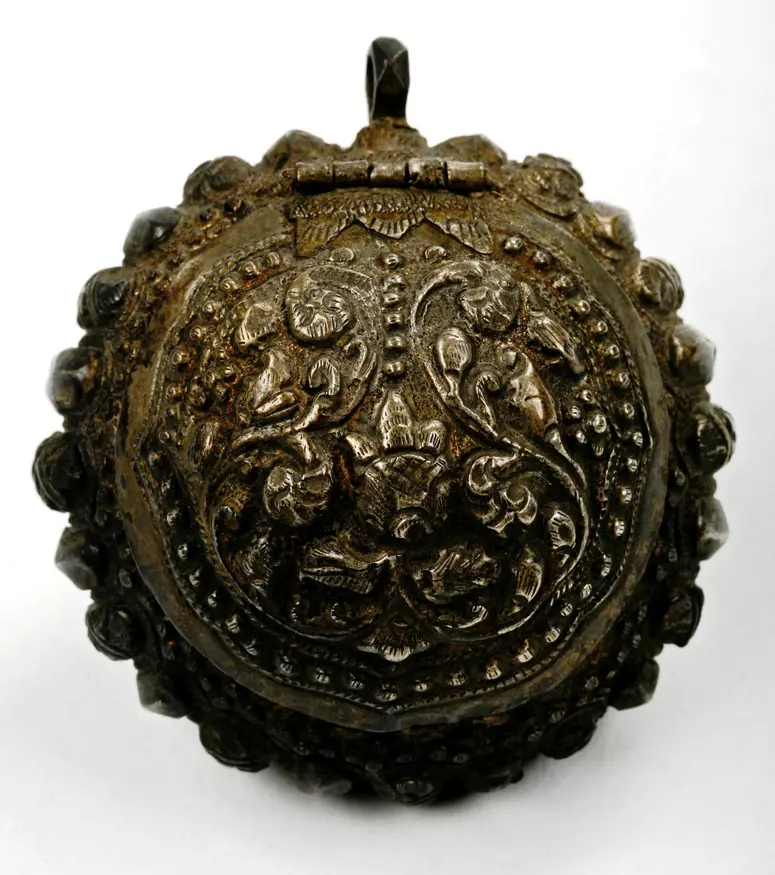
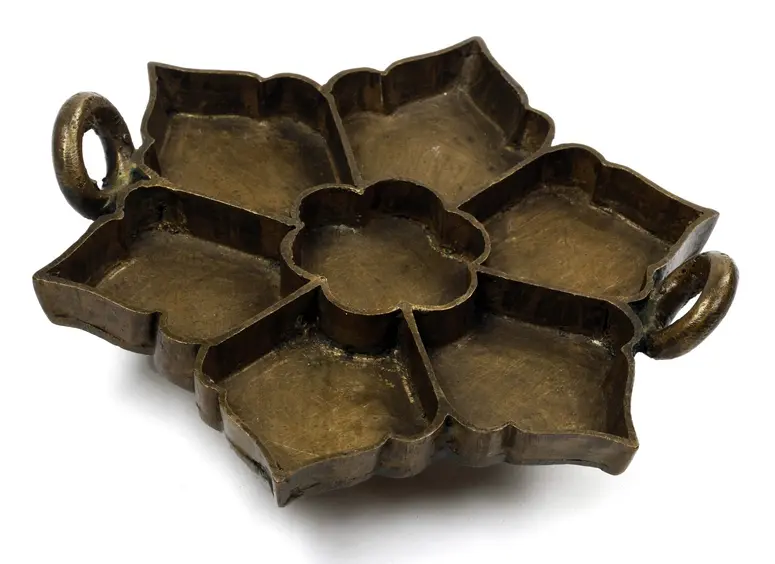
Hinweis: Nachfolgender Text stammt aus einem Sammlungskatalog des 19. Jahrhunderts und spiegelt in Sprache und Perspektive teilweise koloniale Denkmuster wider. Wir präsentieren den Text in seiner Originalfassung, um die Sammlungsgeschichte transparent zu machen und eine kritische Auseinandersetzung mit dem kolonialen Erbe zu fördern. Bestimmte Begriffe und Formulierungen können heute als problematisch empfunden werden. Ein Forschungsprojekt aus dem Jahr 2009 kam zu dem Schluss, dass die meisten Beschreibungen sachlich korrekt und weiterhin verwendbar sind; lediglich wenige Details erwiesen sich als ungenau oder fehlerhaft. Ergebnisse dieses Projektes wurden in folgendem Bestandskatalog publiziert: khm-wmw-tm-library.on.worldcat.org/oclc/1457155265"155. Beteldose - "Tampat Sirih".Eine grosse, aus mehreren Theilen und Behältnissen bestehende Betelbüchse, wie sie bereits oben bei den kleinen Beteldosen erwähnt wurde; die entweder den Fürsten und Vornehmen nach getragen wird ‚ oder aber beim geringen Manne ein Zierstück der Hauseinrichtung bildet. Die vorliegende besteht aus zehn Theilen, einem grossen, schalenartigen Gefässe mit einem Deckel versehen, auf welchem die kleineren Gefässe und Schalen stehen. Das grosse Gefäss dient meist zur Aufnahme des Tabaks oder aber der frischen Betelblätter, während die kleineren Gefässe, auf dem Deckel stehend, zur Aufnahme der eigentlichen Betel-Ingredienzien dienen. Zwei Schalen davon sind mit Deckeln versehen und haben die Form einer indischen Frucht "Mangistan". Alle Theile dieser coniplicirten Betelbüchse sind schön gearbeitet und mit reicher Gravirung verziert."Zitiert aus: Czurda, F. A. J. (1883). Catalog mit Erklärungen der Etnografischen Privatsammlung des Dr. F. A. J. Czurda in Postelberg (Böhmen). (S. 37). Wien, Wilhelm Braumüller
Sammler/in:
František A. J. Czurda (1844 Pisek - 1886 Cirebon) DNB
Zugangsdatum:
1883
Objektbezeichnung
Beteldose
Kultur
Java
Material/Technik:
Messing; gegossen, ziseliert, punziert
Bildrecht
Weltmuseum Wien
Sammlungsbereich
Insulares Südostasien
Inv. Nr.
17939