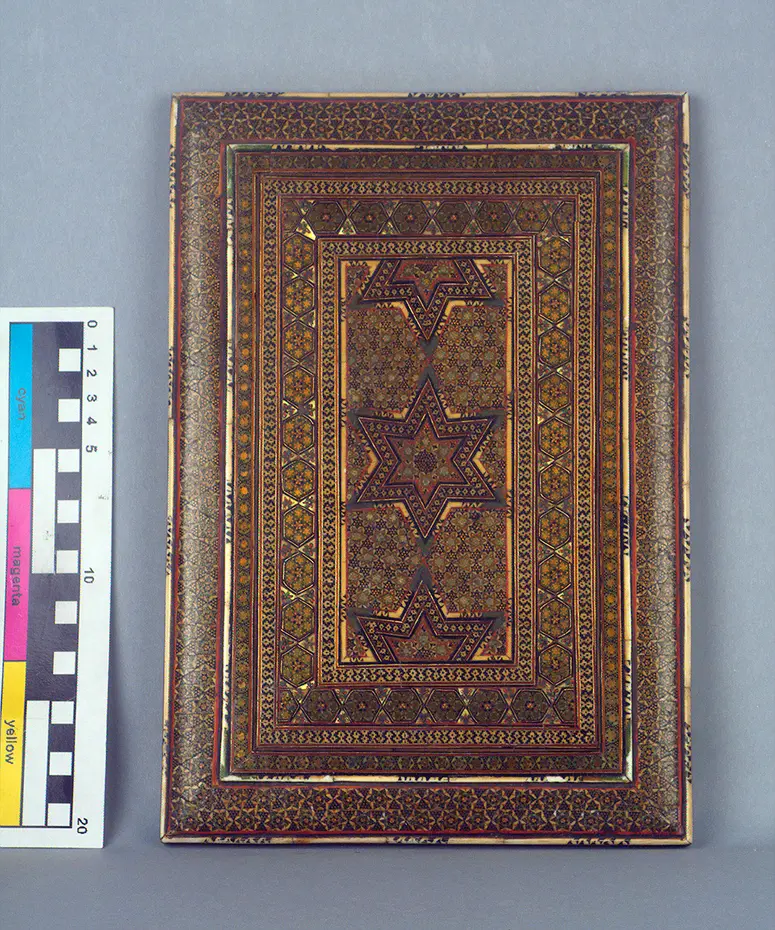
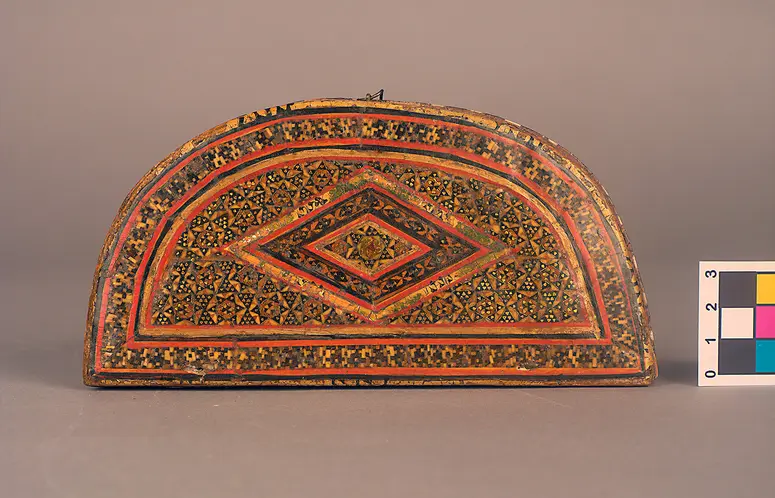
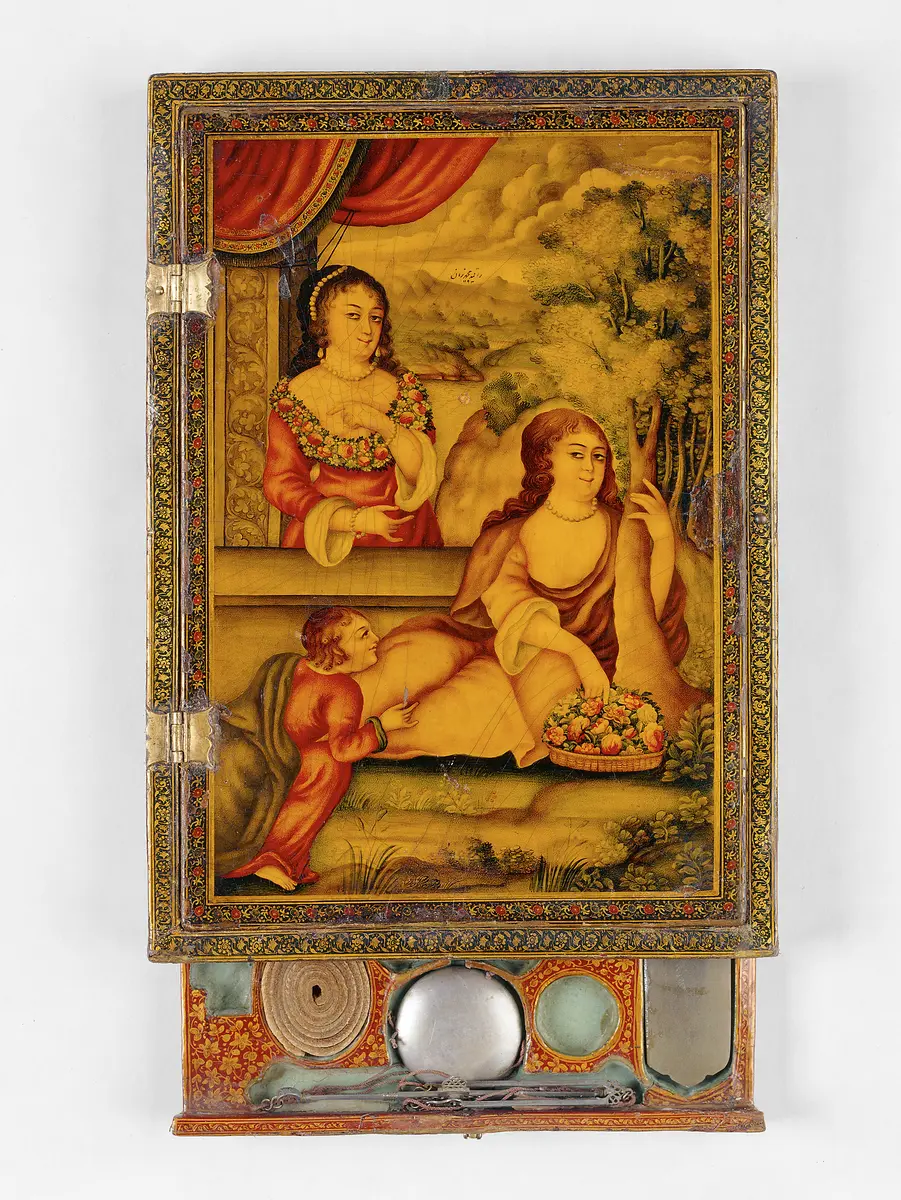
Schatulle mit Toilettrequisiten für einen Mann
1779 (= 1193 AH) | unbekannt
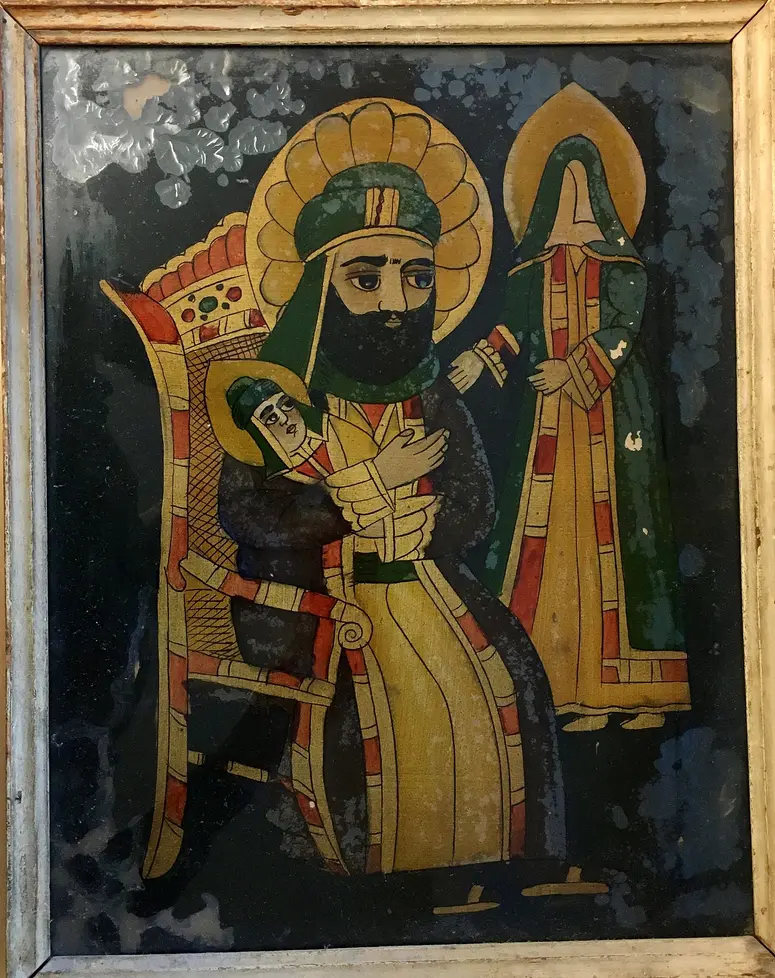
Seit dem 16. bis ins späte 19. Jh. fertigten Meisterhandwerker in den Bazaren von Isfahan und Teheran für den Hof des Schah und die begüterte Oberschicht Lackarbeiten aller Art an: Etageren, Spiegelkästchen, Deckeldosen, Büchsen, Flaschen, Fächerbehälter, Buchdeckel, Spielkarten oder Behältnisse für Schreibzeug. Die gewählten Illustrationen auf der vorliegenden Schatulle, Madonna mit Kind und Maria Magdalena, die Heilige Familie, verweisen auf die engen Kulturkontakte zwischen Iran und Europa, die ab der zweiten Hälfte des 17. Jds. bis zum Ende der Qajaren-Dynastie im Jahr 1925 Malerei und Kunsthandwerk in Persien nachhaltig beeinflussten.
Sammlung:
unbekannt
Zeit:
1779 (= 1193 AH)
Objektbezeichnung
Schatulle mit Toilettrequisiten für einen Mann
Kultur
Iran
Material/Technik:
Holz, Papier, Pigmente, Lack, Metall, Glas
Rest: Papiermaché, Pigmente, Lack (vermutl. Leinöl u Sandarak), Glas (Spiegel), Metall (Beschläge), Papier; Zubehör: Metall, Elfenbein, Holz,, Stein, Leder, textile Fasern
Maße:
25 cm × 17,7 cm × 2,6 cm
Rest: geschlossen: 25,6 cm × 18 cm × 3,2 cm
Bildrecht
Weltmuseum Wien
Sammlungsbereich
Nordafrika, Vorder- und Zentralasien, Sibirien
Geographie
Westasien/Mittlerer Orient/Iran
Inv. Nr.
97383_1_9
Weiterstöbern Ähnliche Stücke, die Sie interessieren könnten
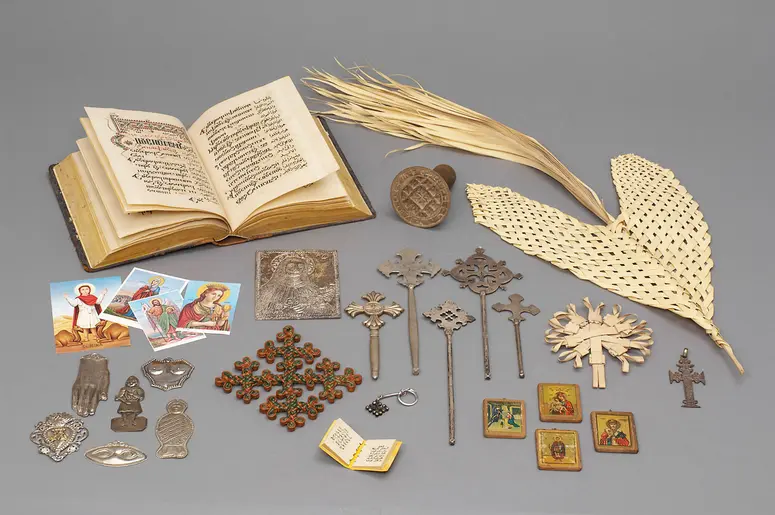
Koptische und griechisch-orthodoxe Religiosa Peter Wolfgang Schienerl 1849/50 - 1985
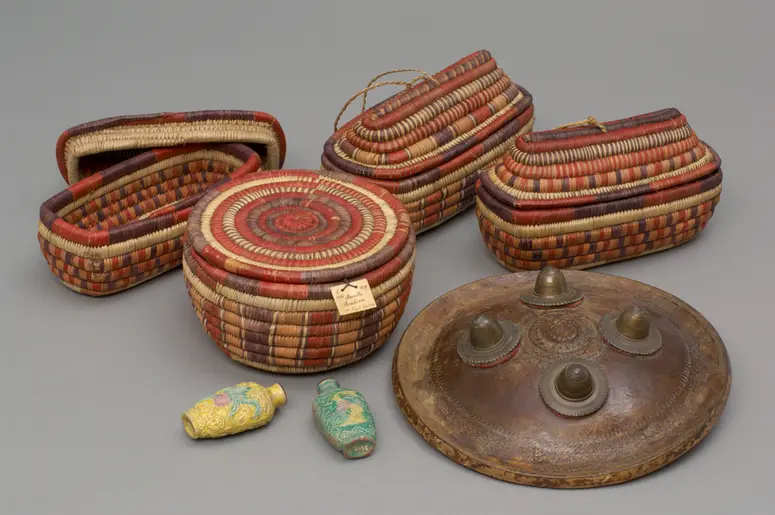
Importierte chinesische Riechfläschchen, lokal gefertigte Korbwaren, ein indischer Rundschild Carl Alexander Anselm von Hügel vor 1831