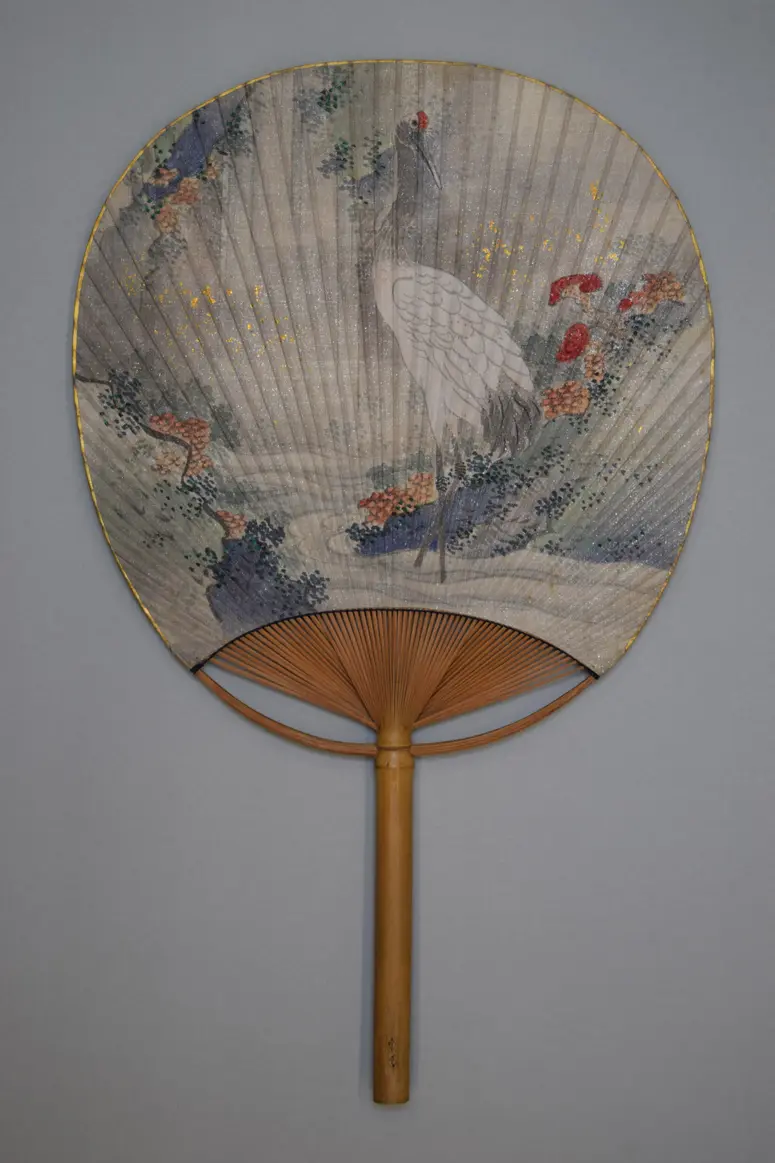
Uchiwa fans are waved by hand to produce a draft that relieves oneself from the heat. They came out of the originally Chinese sashiba (Ch. yi), which were used to, for example hide faces in rituals or held over nobles in processions. They were used for decorum up through the middle ages. Uchiwa fans were made from silk, bird feather, leaves (fountain palm, hardy banana), and woven plant fibers. Around the end of the Muromachi period (1336–1573), uchiwa fans shaped like those of today (paper attached to a bamboo frame extending from the handle). This led to their spread amongst the masses as both presents and practical items. Uchiwa fans can be used for a variety of purposes: blocking strong sunlight, keeping dust away, cooking, and swatting away bugs. Variously decorated, they also became small accessories used when going out in the summer to cool oneself and catch fireflies. During the Edo period (1600–1868) various areas in Japan began producing them. Different kinds were developed, including ones with hand-drawn designs, ornately wood-blocked printed ones, as well as sturdy ones covered in persimmon varnish or lacquer. Various uchiwa fans were on display at the 1873 Vienna World’s Fair. Kaori HIdAKA
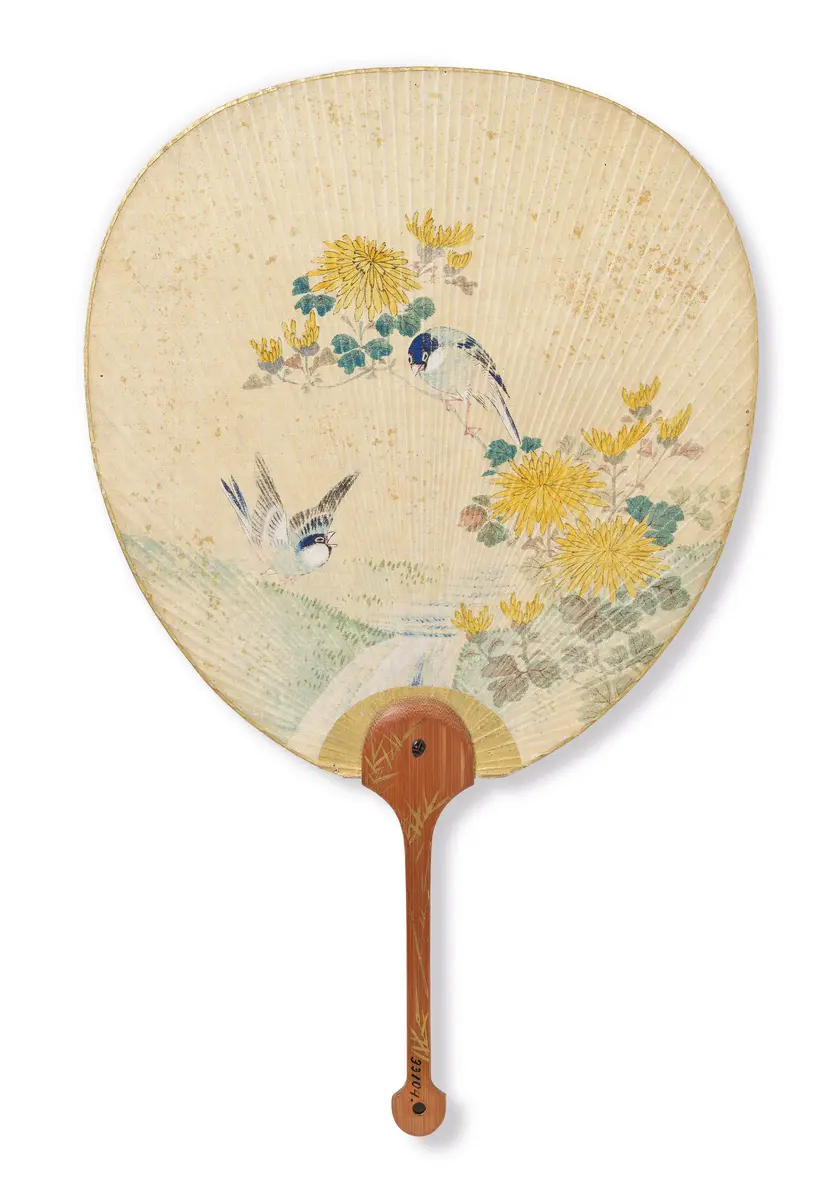
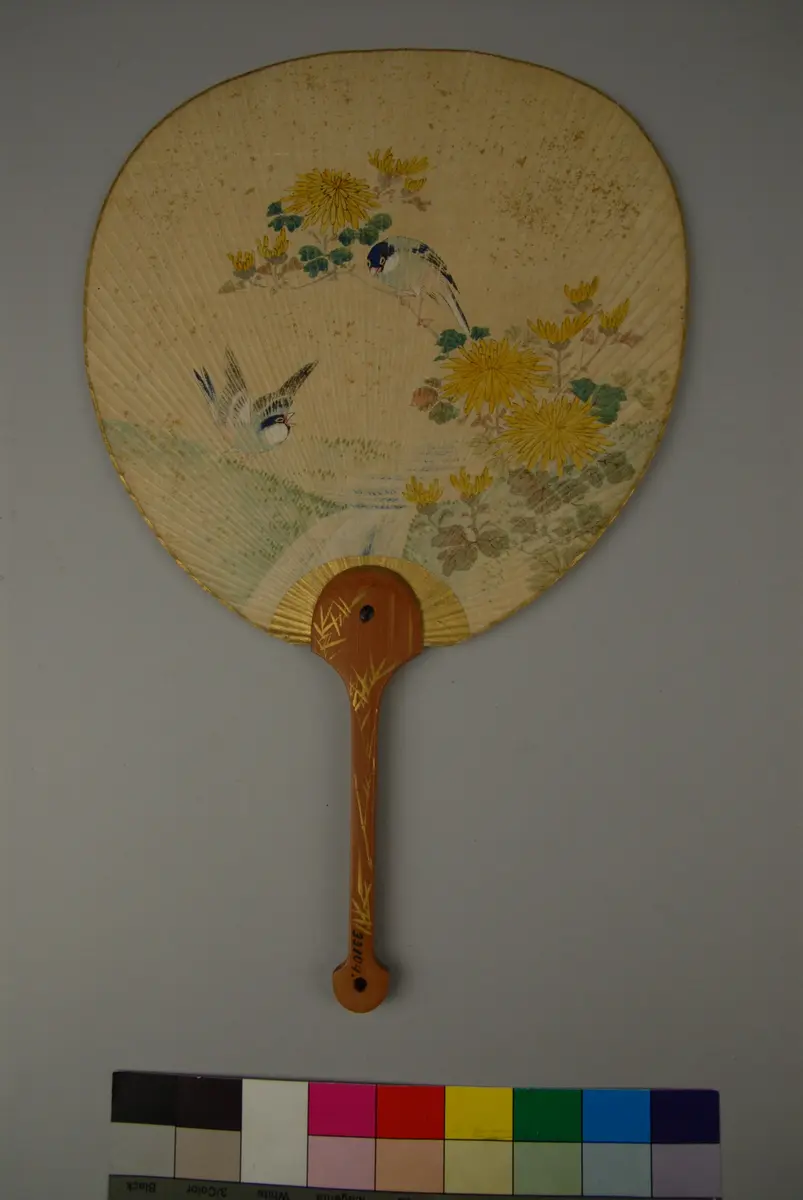
Uchiwa fans are waved by hand to produce a draft that relieves oneself from the heat. They came out of the originally Chinese sashiba (Ch. yi), which were used to, for example hide faces in rituals or held over nobles in processions. They were used for decorum up through the middle ages. Uchiwa fans were made from silk, bird feather, leaves (fountain palm, hardy banana), and woven plant fibers. Around the end of the Muromachi period (1336–1573), uchiwa fans shaped like those of today (paper attached to a bamboo frame extending from the handle). This led to their spread amongst the masses as both presents and practical items. Uchiwa fans can be used for a variety of purposes: blocking strong sunlight, keeping dust away, cooking, and swatting away bugs. Variously decorated, they also became small accessories used when going out in the summer to cool oneself and catch fireflies. During the Edo period (1600–1868) various areas in Japan began producing them. Different kinds were developed, including ones with hand-drawn designs, ornately wood-blocked printed ones, as well as sturdy ones covered in persimmon varnish or lacquer. Various uchiwa fans were on display at the 1873 Vienna World’s Fair. Kaori HIdAKA
Collector:
Heinrich von Siebold (1852 St. Martin/Boppard - 1908 Schloss Freudenstein/Bozen) DNB
Material/technology:
bamboo, paper, water color, gold paper, gold leaf
Dimensions:
H: 36.4 cm x W: 22.9 cm x T: 1.1 cm
Copyright
Weltmuseum Wien
Collection area
East Asia: China, Korea, Japan
Geography
Ostasien/Japan
Invs.
33104
Browse more Similar items you might be interested in

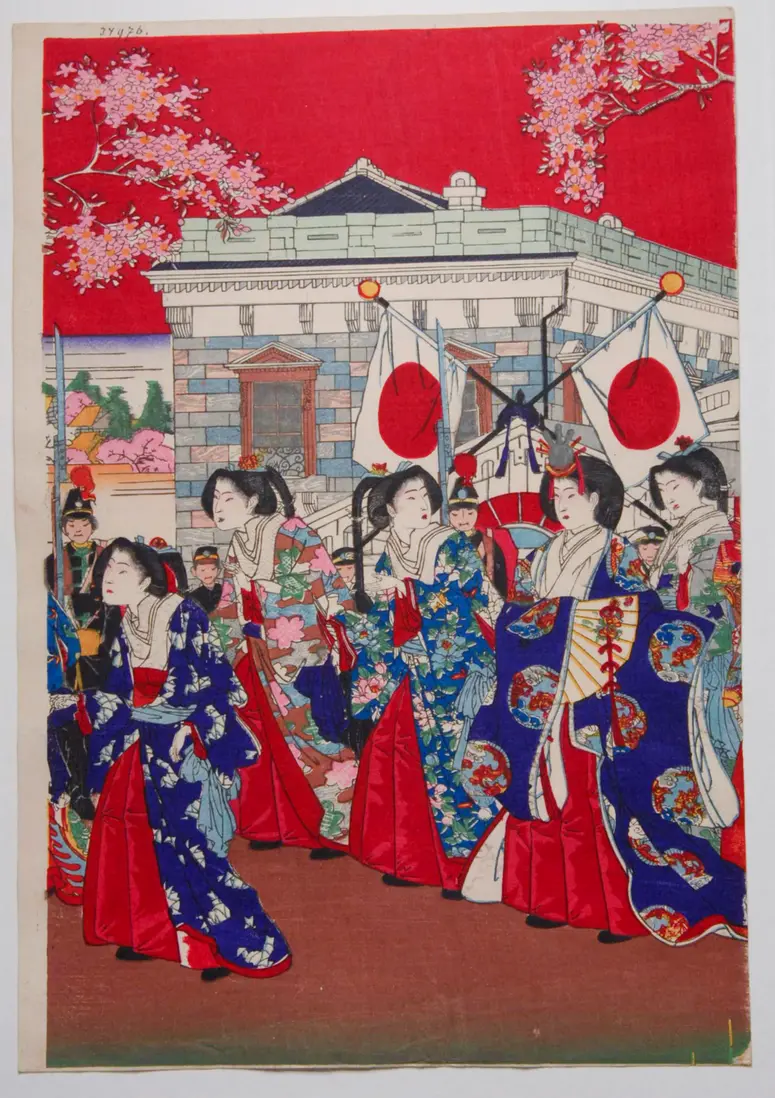
"The Arrival of the Meiji Emperor at the Railway Station" 錦絵「銕道停車場」 Heinrich von Siebold 1885
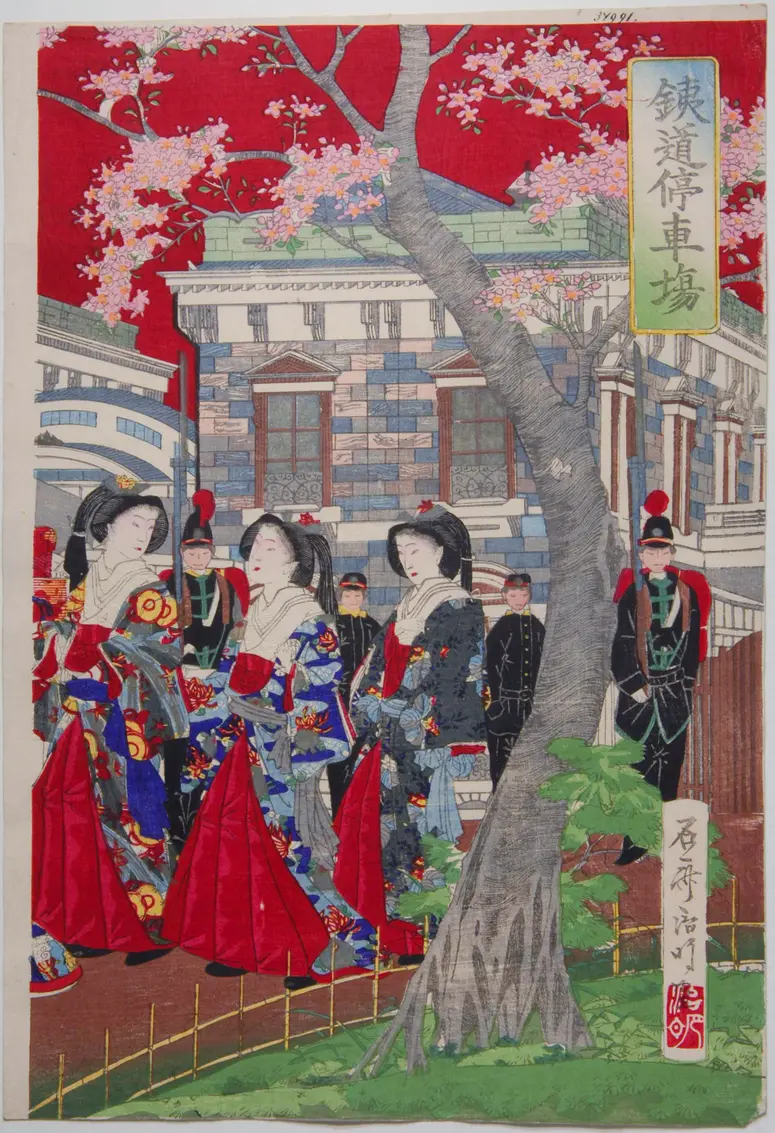
"The Arrival of the Meiji Emperor at the Railway Station" 錦絵「銕道停車場」 Heinrich von Siebold 1885
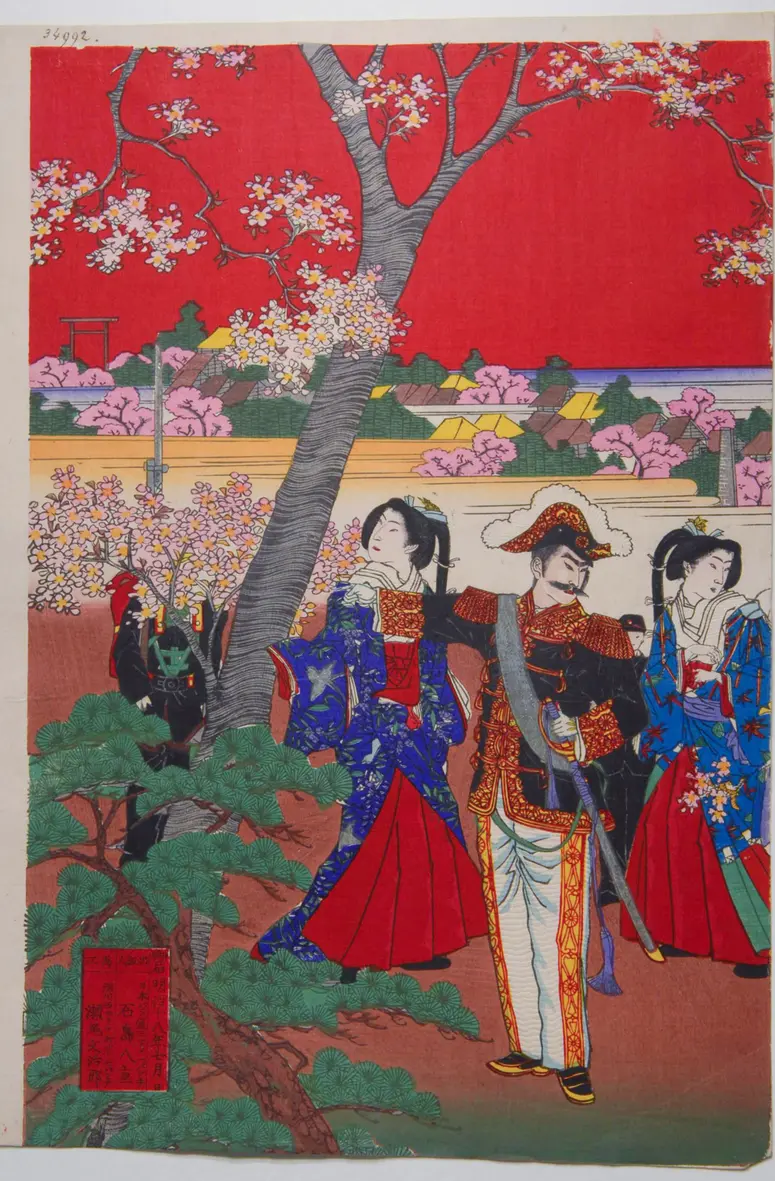
"The Arrival of the Meiji Emperor at the Railway Station" 錦絵「銕道停車場」 Heinrich von Siebold 1885

Objects and scenes of daily life of the Ainu, mounted on a long scroll kakemono Österreichisches Museum für angewandte Kunst, Wien ca. 1878



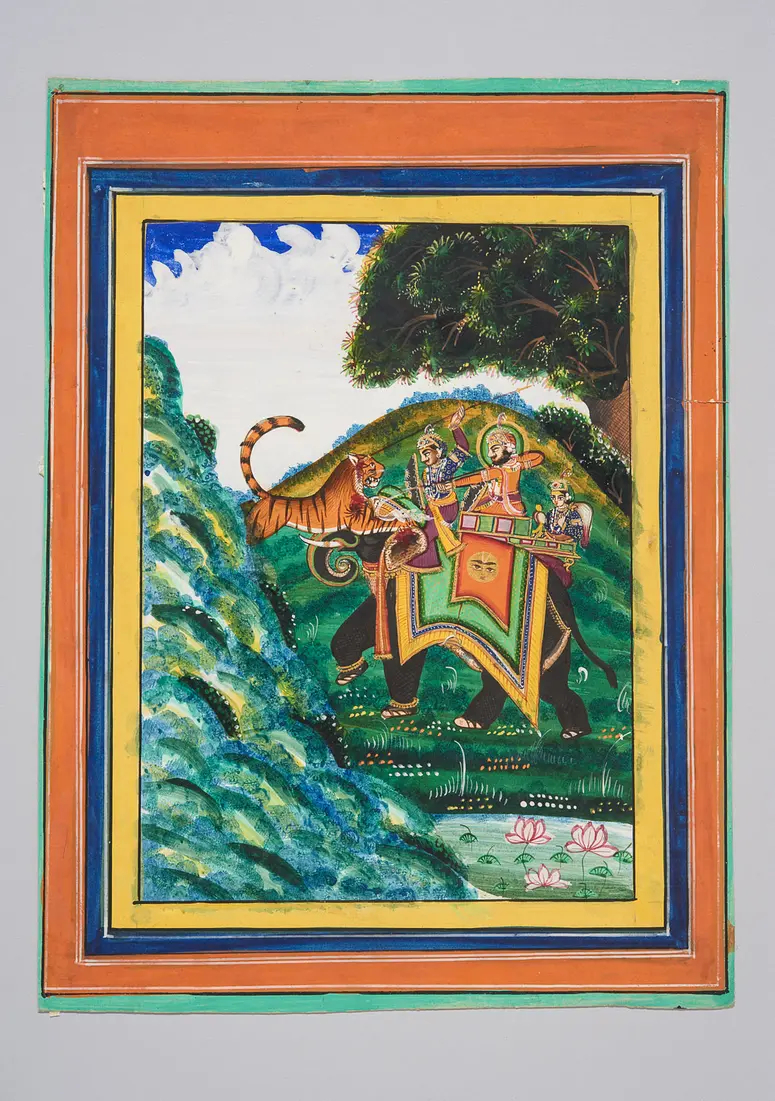
Maharaja hunting a tiger Franz Ferdinand von Österreich-Este 1893 or earlier