Astrological diagram
frühes 20. Jhdt | René Nebesky-Wojkowitz
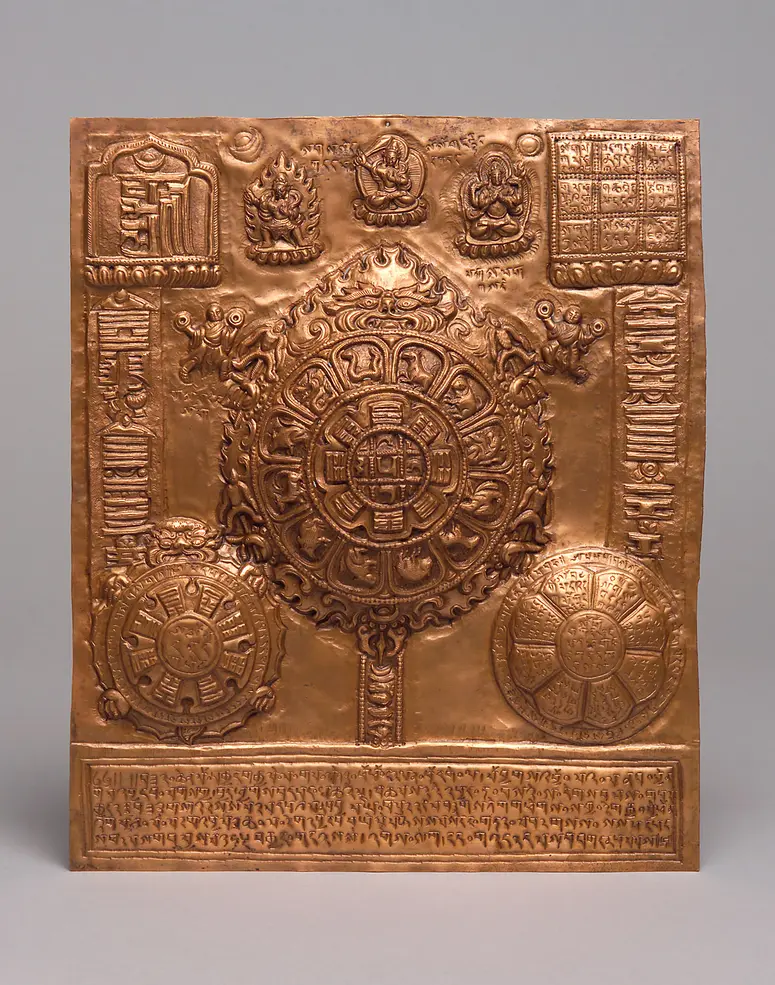
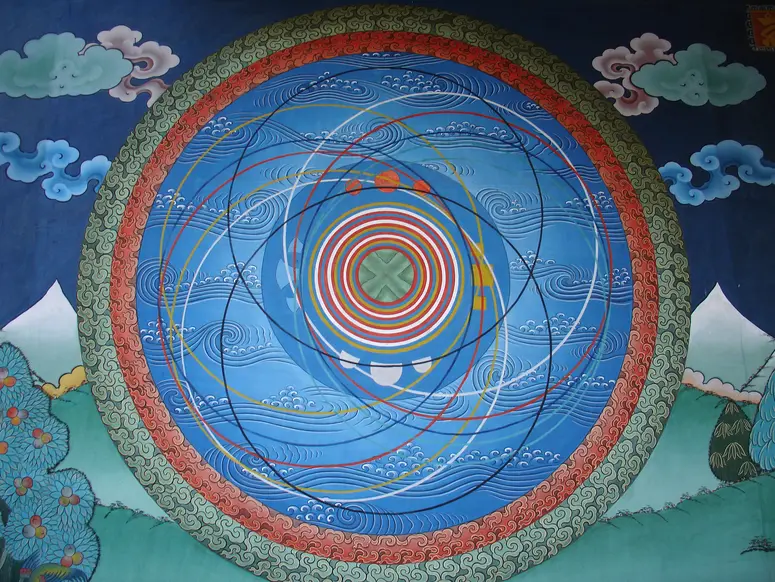
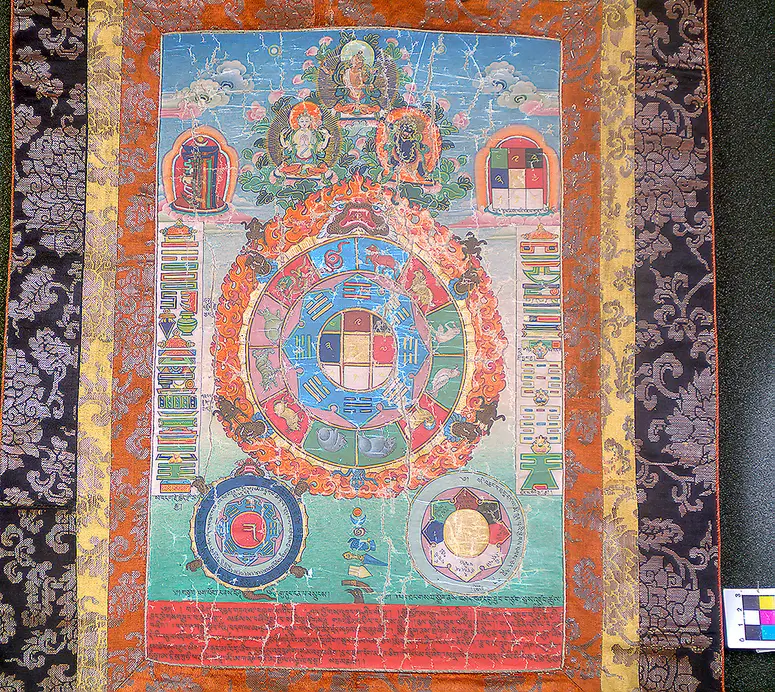
Astrological calculations guide many decisions in Tibet. The astrologer uses diagrams that show the basis for calculating the horoscope. The classic image of "kalacakra" (a tantra cycle) shows a circular arrangement of the twelve animals of the astrological calendar (lo skor). The inner concentric circles are formed by the eight diagrams of Chinese science (spar kha). The nine signs of geomancy (sme ba dgu) form the center. In its entirety, the disc represents the astrological aspect of the cosmos itself and can symbolically connect the human order with the cosmic order on the one hand and ward off harmful influences from there on the other.
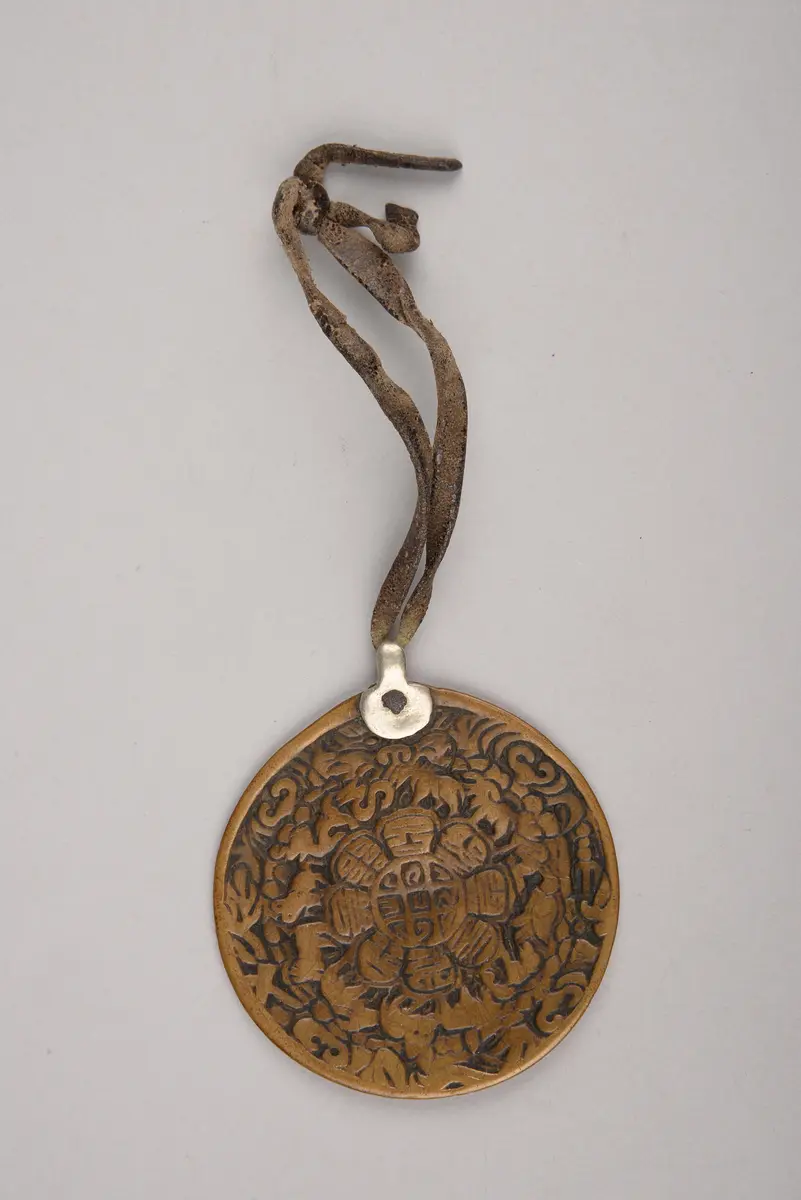
Astrological calculations guide many decisions in Tibet. The astrologer uses diagrams that show the basis for calculating the horoscope. The classic image of "kalacakra" (a tantra cycle) shows a circular arrangement of the twelve animals of the astrological calendar (lo skor). The inner concentric circles are formed by the eight diagrams of Chinese science (spar kha). The nine signs of geomancy (sme ba dgu) form the center. In its entirety, the disc represents the astrological aspect of the cosmos itself and can symbolically connect the human order with the cosmic order on the one hand and ward off harmful influences from there on the other.
Collector:
René Nebesky-Wojkowitz (1923 Groß-Hoschütz - 1959 Wien) DNB
Time:
frühes 20. Jhdt
Object Name
Astrologisches Diagramm
Culture
Tibet
Copyright
Weltmuseum Wien
Collection area
South Asia, Southeast Asia, Himalayas
Geography
Südasien/Himalaya/Nepal
Invs.
140848