Betel box
Ceurupa
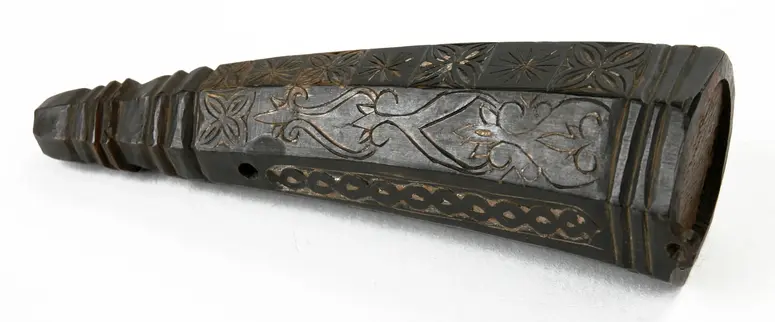
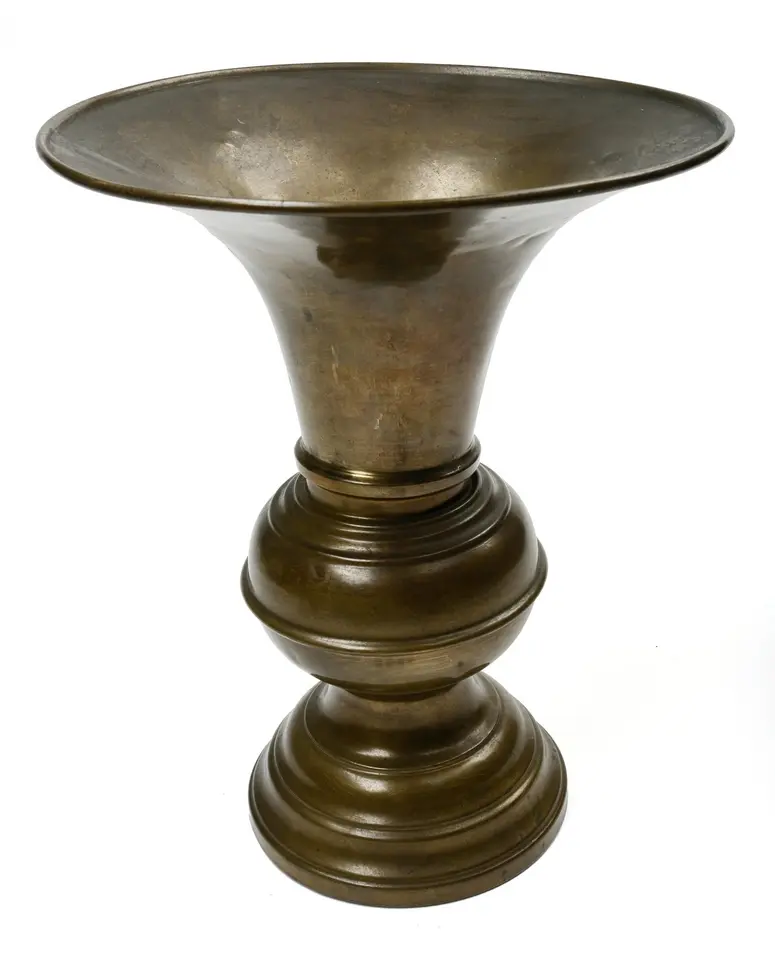
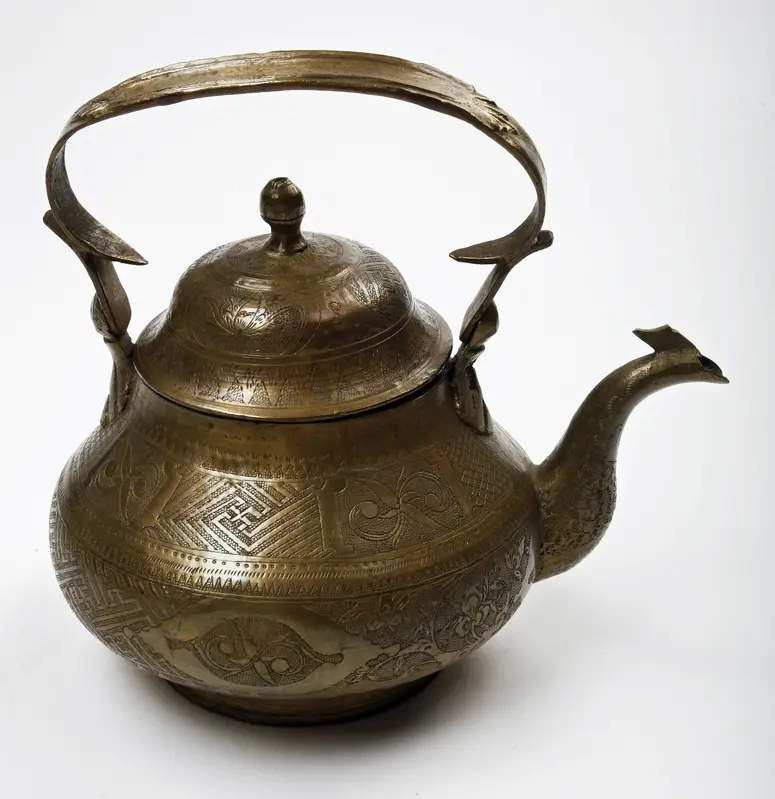
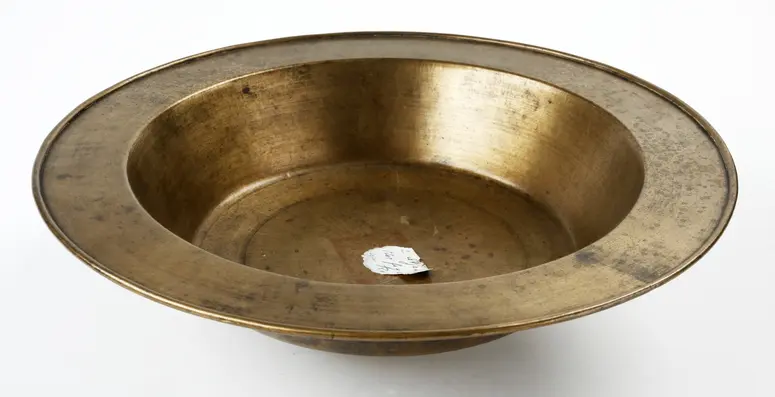
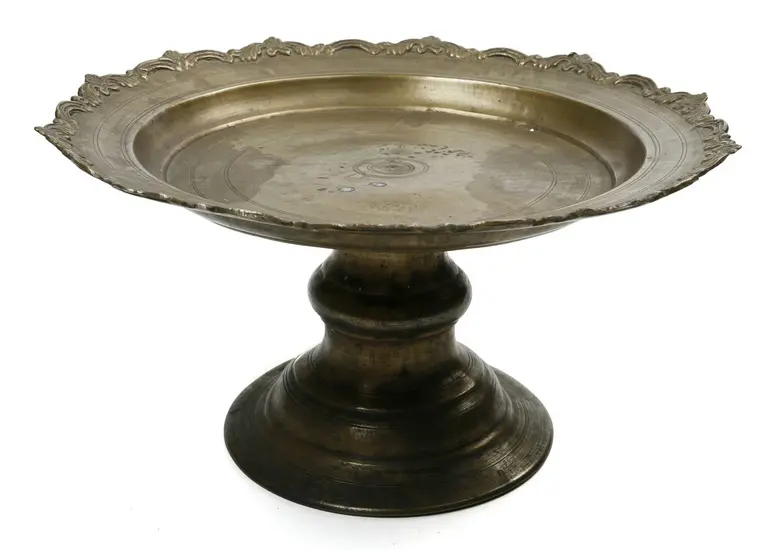
Note: The following text is taken from a 19th-century collection catalog and, in its language and perspective, partially reflects colonial thought patterns. We present the text in its original version to make the collection's history transparent and promote a critical examination of the colonial legacy. Certain terms and formulations may be perceived as problematic today. A 2009 research project concluded that most descriptions are factually correct and still usable; only a few details were found to be inaccurate or incorrect. The results of this project were published in the following collection catalog: khm-wmw-tm-library.on.worldcat.org/oclc/1457155265"141 - 142. Betel box The betel "Sirih" is the most indispensable delicacy for all the natives in the Indian Archipelago, which everyone uses without exception - high and low, young and old, man and woman. The betel box, in which the ingredients for chewing the betel are kept, is a constant companion of the native, just like snuff-tobacco can be for the snuff-taker. The components necessary for chewing have already been mentioned. These are the leaf of the betel plant (piper betel), the crushed areca nut, the thickened juice of the areca palm (Areca catechu) and caustic lime. The enjoyment of chewing betel is only to be found in the stimulation coming from these ingredients which finally becomes a habit, just like smoking and taking snuff for Europeans. The betel plays a role in society just like tobacco, in that it is offered around among acquaintances, as we do cigars or a pinch of tobacco. At parties and official events the betel box serves the same purpose as the Indian peace pipe, as a symbol of friendship and the peaceful intentions of both the guest and the host. The first thing that is offered to the guest when he enters the house is the betel box. There are two types, a smaller one, similar to the snuff tobacco tins such as the one here, and a large one consisting of many parts and containers. The smaller type is usually carried by the common man in his belt, while the large one is carried for the nobles and privileged persons by their slaves. The latter is of brass or richly chased precious metal; it is also an important piece of furniture for the common man, and it can as well be made of wood and finished in the most primitive of manner."Translation of: Czurda, F. A. J. (1883). Catalog mit Erklärungen der Etnografischen Privatsammlung des Dr. F. A. J. Czurda in Postelberg (Böhmen). (p. 33-34). Wien, Wilhelm Braumüller

Note: The following text is taken from a 19th-century collection catalog and, in its language and perspective, partially reflects colonial thought patterns. We present the text in its original version to make the collection's history transparent and promote a critical examination of the colonial legacy. Certain terms and formulations may be perceived as problematic today. A 2009 research project concluded that most descriptions are factually correct and still usable; only a few details were found to be inaccurate or incorrect. The results of this project were published in the following collection catalog: khm-wmw-tm-library.on.worldcat.org/oclc/1457155265"141 - 142. Betel box The betel "Sirih" is the most indispensable delicacy for all the natives in the Indian Archipelago, which everyone uses without exception - high and low, young and old, man and woman. The betel box, in which the ingredients for chewing the betel are kept, is a constant companion of the native, just like snuff-tobacco can be for the snuff-taker. The components necessary for chewing have already been mentioned. These are the leaf of the betel plant (piper betel), the crushed areca nut, the thickened juice of the areca palm (Areca catechu) and caustic lime. The enjoyment of chewing betel is only to be found in the stimulation coming from these ingredients which finally becomes a habit, just like smoking and taking snuff for Europeans. The betel plays a role in society just like tobacco, in that it is offered around among acquaintances, as we do cigars or a pinch of tobacco. At parties and official events the betel box serves the same purpose as the Indian peace pipe, as a symbol of friendship and the peaceful intentions of both the guest and the host. The first thing that is offered to the guest when he enters the house is the betel box. There are two types, a smaller one, similar to the snuff tobacco tins such as the one here, and a large one consisting of many parts and containers. The smaller type is usually carried by the common man in his belt, while the large one is carried for the nobles and privileged persons by their slaves. The latter is of brass or richly chased precious metal; it is also an important piece of furniture for the common man, and it can as well be made of wood and finished in the most primitive of manner."Translation of: Czurda, F. A. J. (1883). Catalog mit Erklärungen der Etnografischen Privatsammlung des Dr. F. A. J. Czurda in Postelberg (Böhmen). (p. 33-34). Wien, Wilhelm Braumüller
Collector:
František A. J. Czurda (1844 Pisek - 1886 Cirebon) DNB
Entry Date:
1883
Object Name
Betel box
Culture
Aceh
Material/technology:
Brass; cast, engraved, embossed
Copyright
Weltmuseum Wien
Collection area
Insular Southeast Asia
Invs.
18076