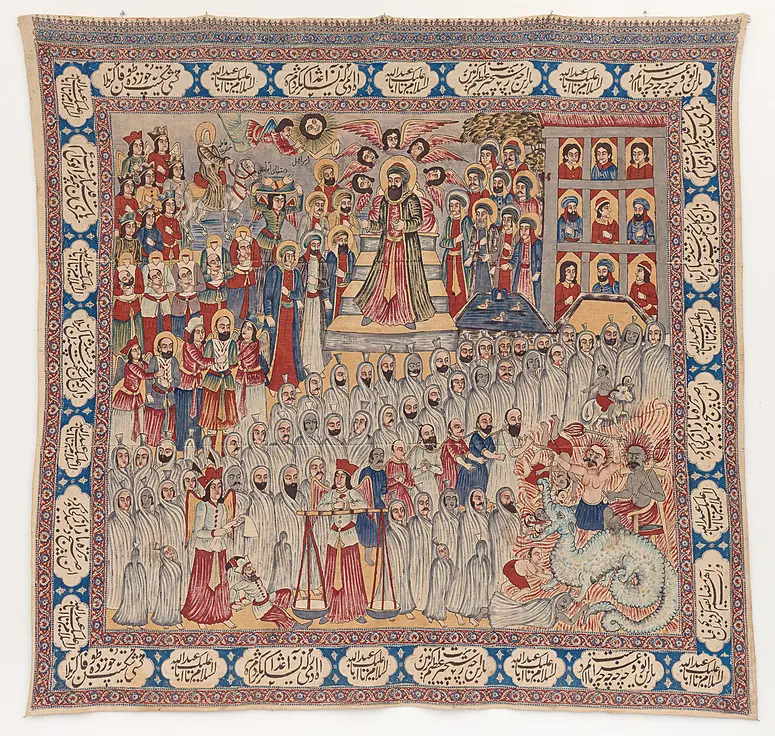
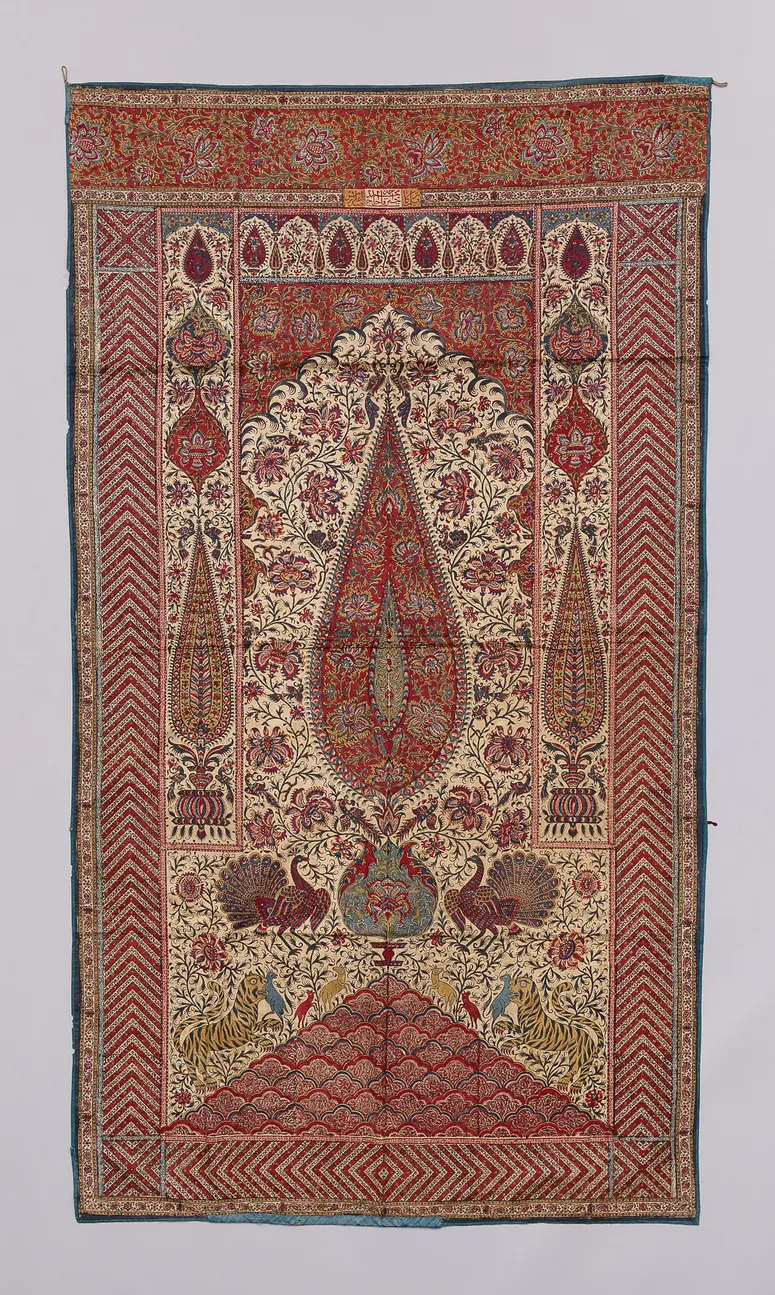
Block printed cotton hanging
pardeh qalamkār
second half of the 19th century | Österreichisches Handelsmuseum, Wien
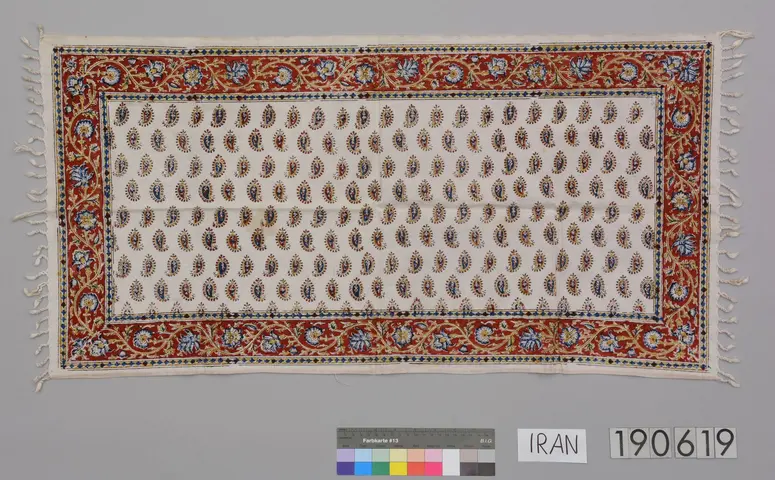
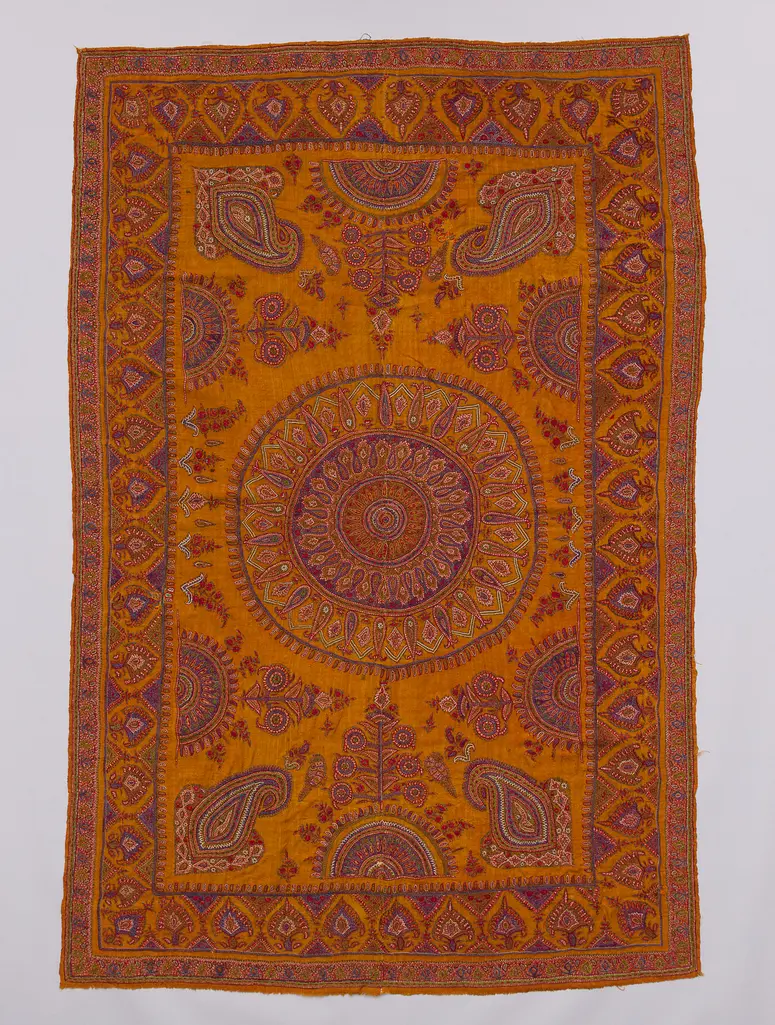
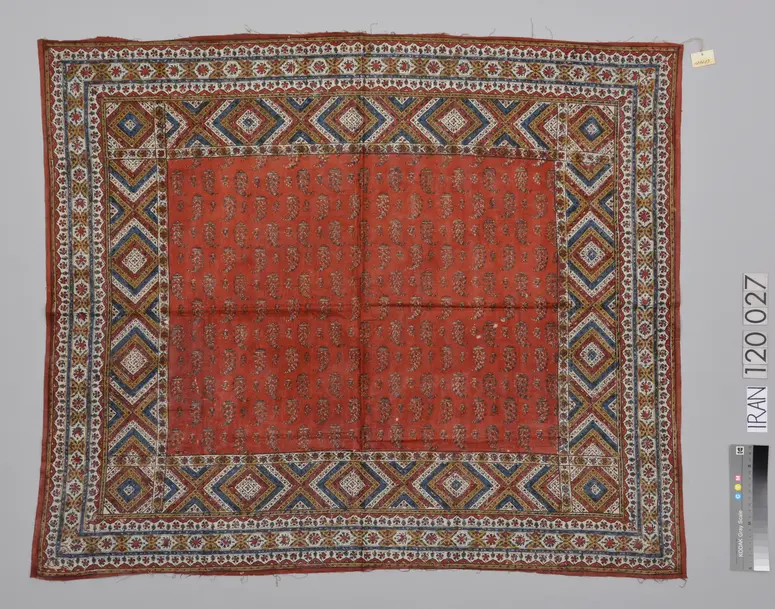
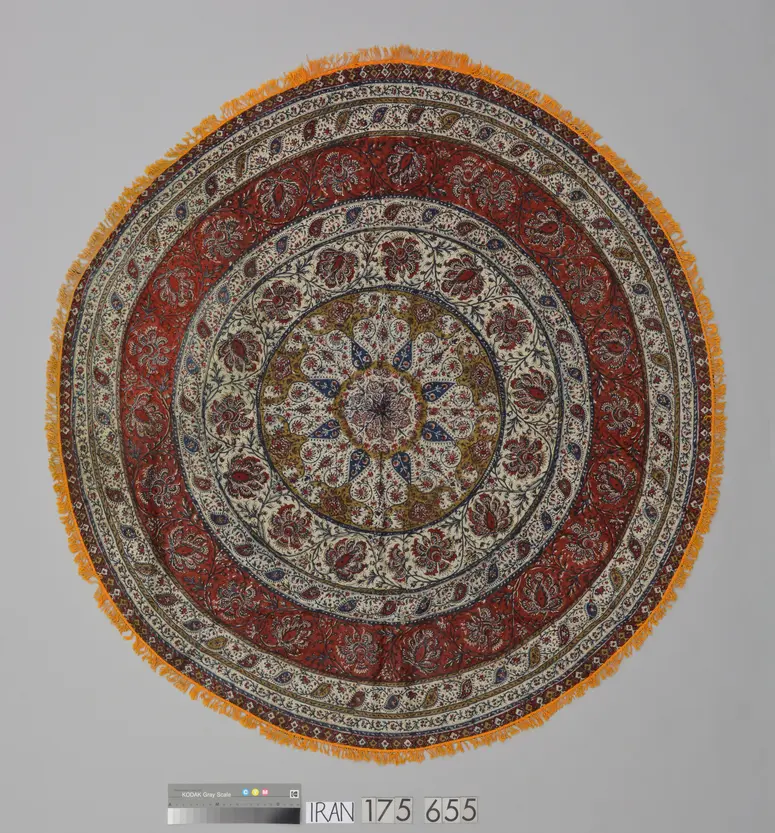
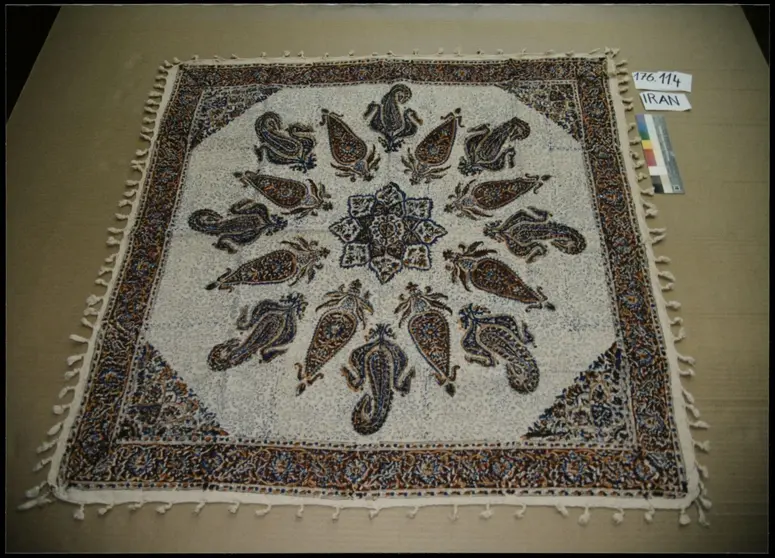
The Persian term qalamkar (literally, “pen-work“) refers to printed or painted cotton fabrics. These are decorated with depictions from Persian heroic fables, floral and tendril patterns or cypresses growing out of vases, and animals. Depending on the motif, qalamkars are employed as fabric for clothing, wall hangings, or table cloths. They belong to the most typical products of the Qajar dynastic period. The most famous member of this dynasty, Naser ad-Din Shah, visits the Vienna World’s Fair in 1873.
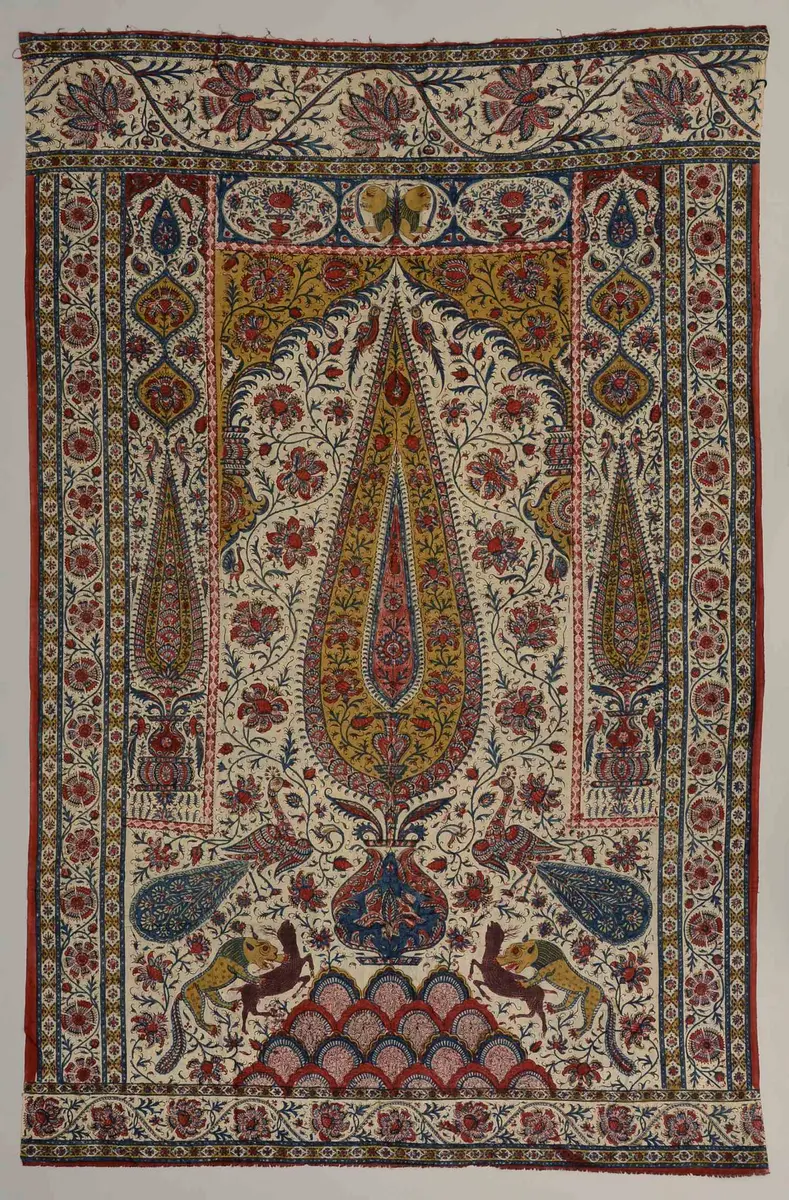
The Persian term qalamkar (literally, “pen-work“) refers to printed or painted cotton fabrics. These are decorated with depictions from Persian heroic fables, floral and tendril patterns or cypresses growing out of vases, and animals. Depending on the motif, qalamkars are employed as fabric for clothing, wall hangings, or table cloths. They belong to the most typical products of the Qajar dynastic period. The most famous member of this dynasty, Naser ad-Din Shah, visits the Vienna World’s Fair in 1873.
Collection:
Österreichisches Handelsmuseum, Wien
Reference/Institution:
Wiener Weltausstellung (1873) DNB
Time:
second half of the 19th century
Entry Date:
1925
Object Name
Block printed cotton hanging
Culture
Iran, Isfahan
Material/technology:
Cotton
Dimensions:
H. 176 cm, W. 116 cm
Copyright
Weltmuseum Wien
Collection area
North Africa, Middle East, Central Asia and Siberia
Period
Qajar period
Invs.
120064
Browse more Similar items you might be interested in
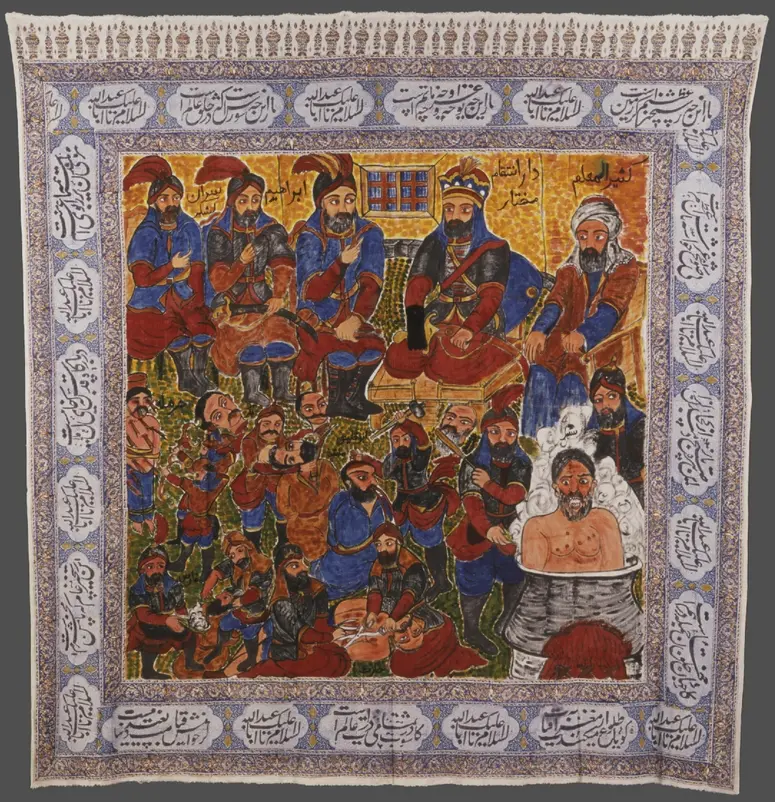
The setting for the revenge of Mokhtār, Dār al-enteghām-e Mokhtār Axel Steinmann before 1996