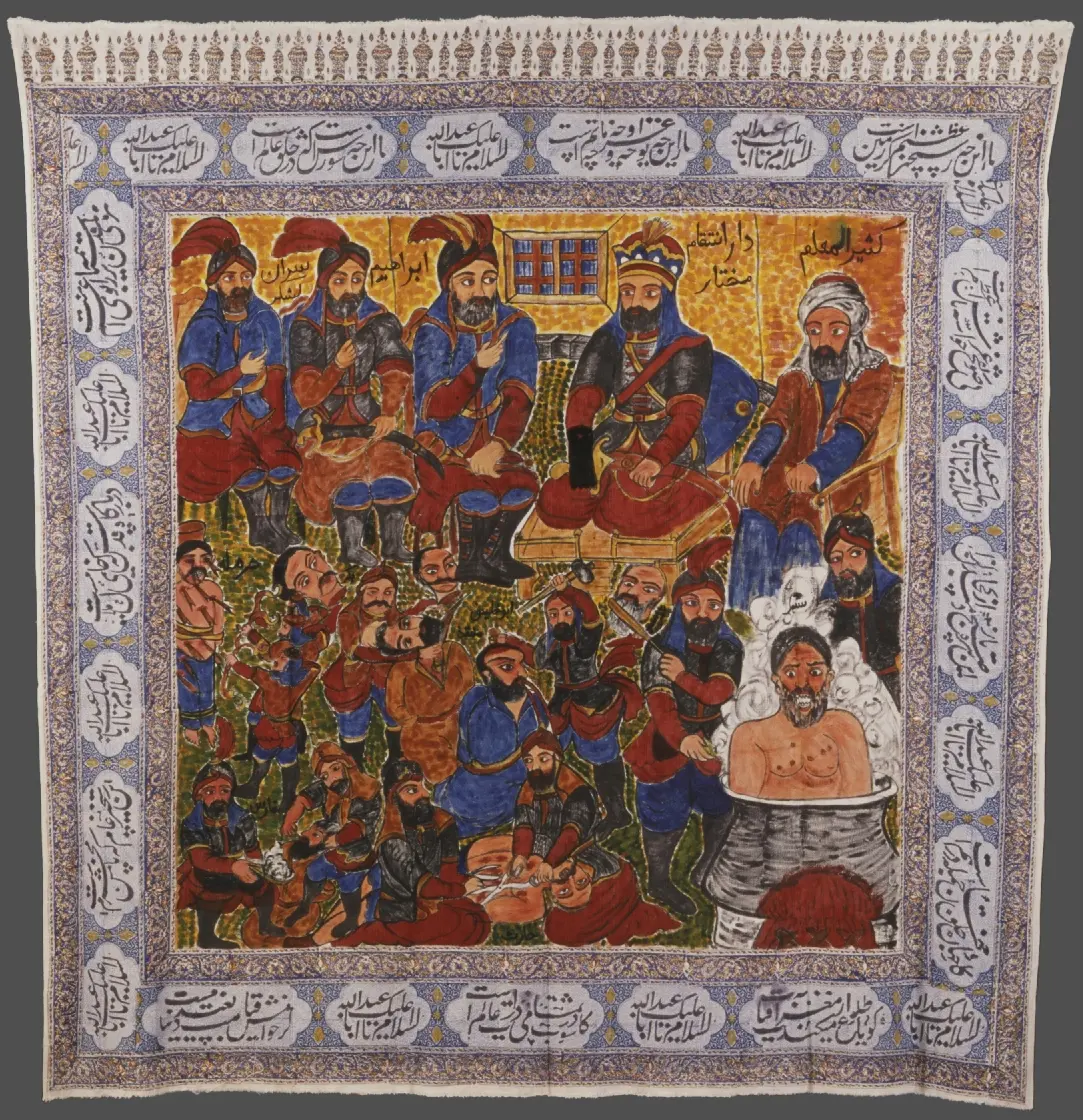
The setting for the revenge of Mokhtār, Dār al-enteghām-e Mokhtār
qalamkār-e taswīrī
before 1996 | Axel Steinmann
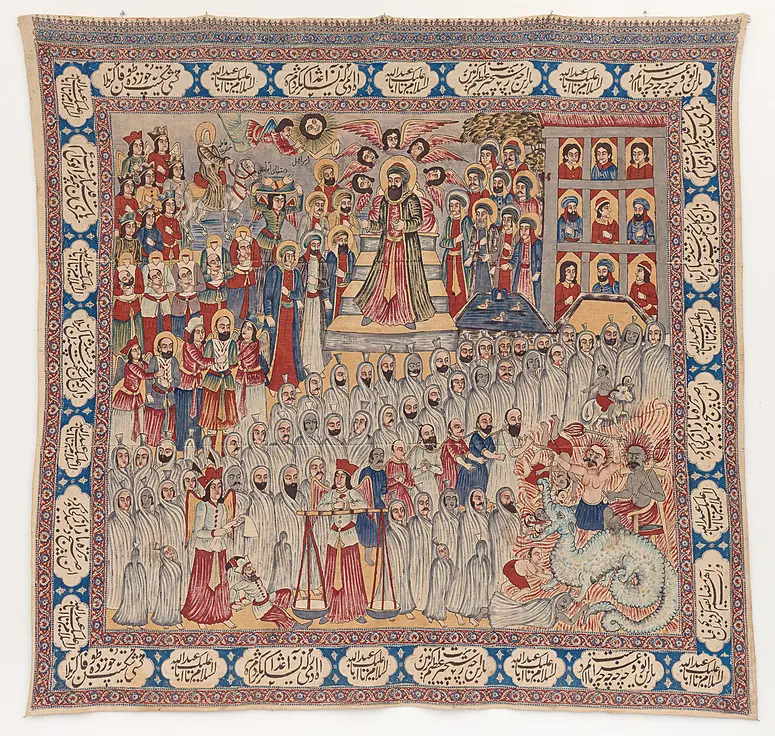
Shia stories of early Islam mainly deal with conspiracies, martyrdoms, and revenge. Imam Hussain, the grandchild of the Prophet, is the greatest martyr of the Shiites; on 10 October 680, he and a small group of attendants were killed near Kerbala by armed forces of the Umayyads. The battle at the Euphrates sealed the division of Muslims into Sunnis and Shiites. Six years after this event, Mokhtar was at the forefront of a Shiite revolt in order to hunt down the murderers of Hussain. Even today, wandering storytellers unroll their painted textiles in every village and town in Iran during the month of mourning, Muharram, with scenes from the Shiite Passion – The Revenge of Mokhtar is part of this story.
Shia stories of early Islam mainly deal with conspiracies, martyrdoms, and revenge. Imam Hussain, the grandchild of the Prophet, is the greatest martyr of the Shiites; on 10 October 680, he and a small group of attendants were killed near Kerbala by armed forces of the Umayyads. The battle at the Euphrates sealed the division of Muslims into Sunnis and Shiites. Six years after this event, Mokhtar was at the forefront of a Shiite revolt in order to hunt down the murderers of Hussain. Even today, wandering storytellers unroll their painted textiles in every village and town in Iran during the month of mourning, Muharram, with scenes from the Shiite Passion – The Revenge of Mokhtar is part of this story.
Collector:
Axel Steinmann DNB
Artist:
Marziyeh Tāheri
Time:
before 1996
Entry Date:
1996-10-24
Object Name
Bemalter Wandbehang
Culture
Iran, Isfahan
Material/technology:
Cotton, pigment
Dimensions:
295 ×285 cm
Copyright
Weltmuseum Wien
Collection area
North Africa, Middle East, Central Asia and Siberia
Invs.
176122
Browse more Similar items you might be interested in
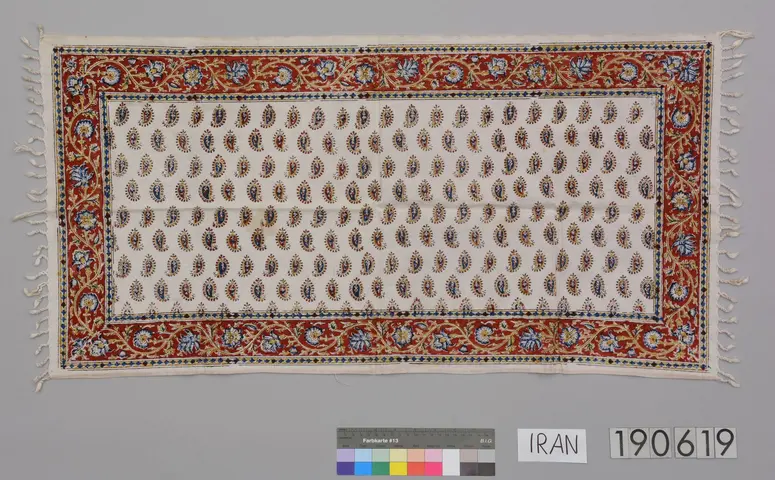
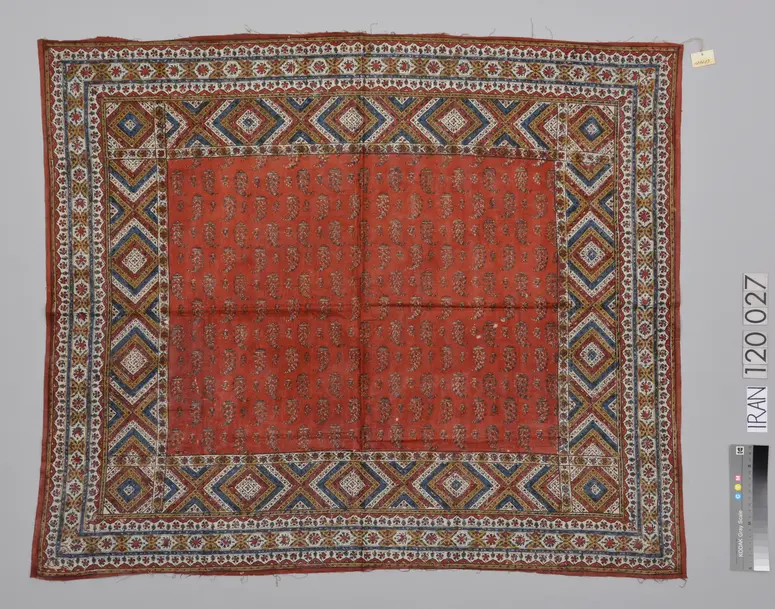
Block printed cotton hanging Österreichisches Handelsmuseum, Wien second half of the 19th century