Buddha
17.-18.Jahrhundert | k. k. Münz- und Antikenkabinett
Buddha stands on a round lotus pedestal, both hands raised in the "abhaya mudra" gesture. This hand gesture of appeasing the water or the tide was very popular during the Bangkok style period. The facial features, as well as the type of garment, refer to the art of Ayuthya, the former capital, which was the metropolis of Southeast Asia in the 18th century. The artists of Bangkok continued the tradition of Ayuthya, at least in the beginning.

Buddha stands on a round lotus pedestal, both hands raised in the "abhaya mudra" gesture. This hand gesture of appeasing the water or the tide was very popular during the Bangkok style period. The facial features, as well as the type of garment, refer to the art of Ayuthya, the former capital, which was the metropolis of Southeast Asia in the 18th century. The artists of Bangkok continued the tradition of Ayuthya, at least in the beginning.
Collector:
k. k. Münz- und Antikenkabinett
Collector:
k. k. Münz- und Antikenkabinett
Acquired by:
Karl Scherzer (1821 - 1903) DNB
Time:
17.-18.Jahrhundert
Object Name
Buddhastatue
Culture
Thailand
Material/technology:
Bronze, vergoldet
Copyright
Weltmuseum Wien
Collection area
South Asia, Southeast Asia, Himalayas
Invs.
12618
Browse more Similar items you might be interested in


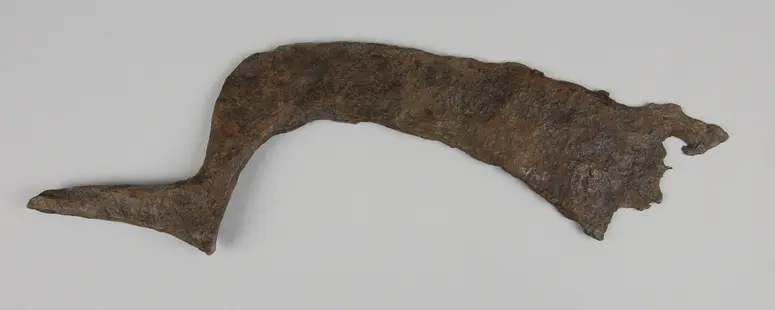
Ritual knife k. k. Münz- und Antikenkabinett Bronze-Iron Age (3rd century BC - 14th century AD)
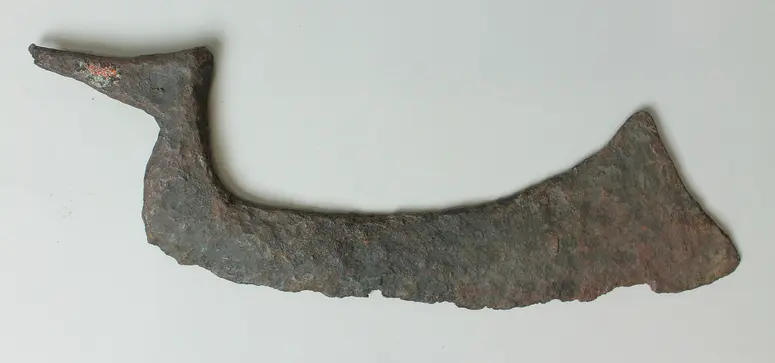
Ritual knife k. k. Münz- und Antikenkabinett Bronze-Iron Age (3rd century BC - 14th century AD)