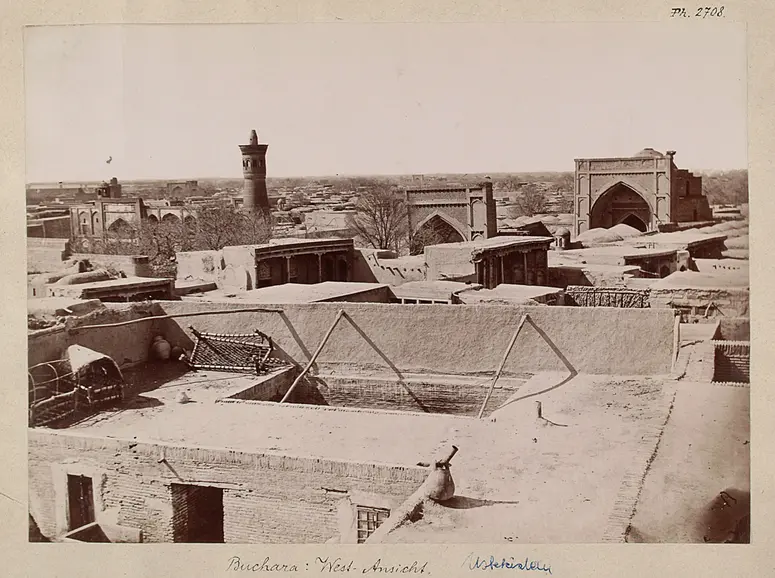
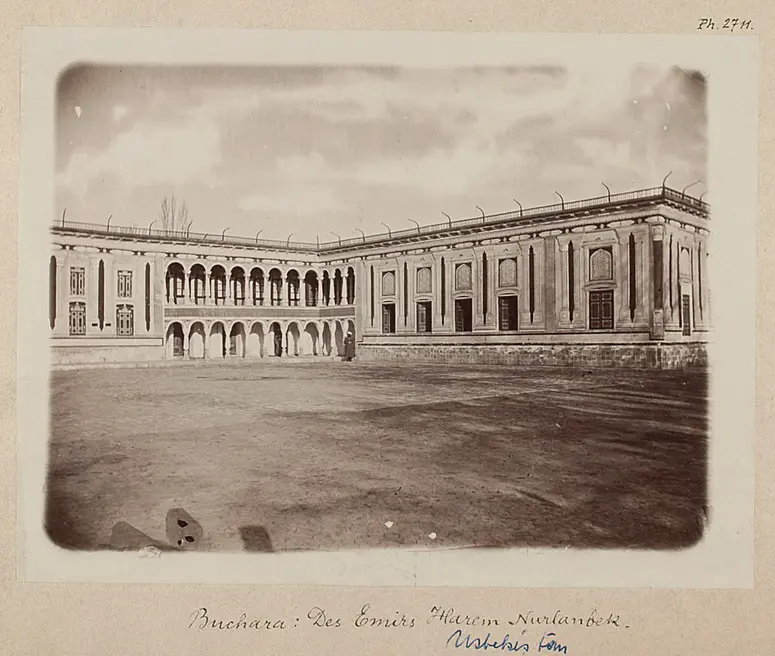
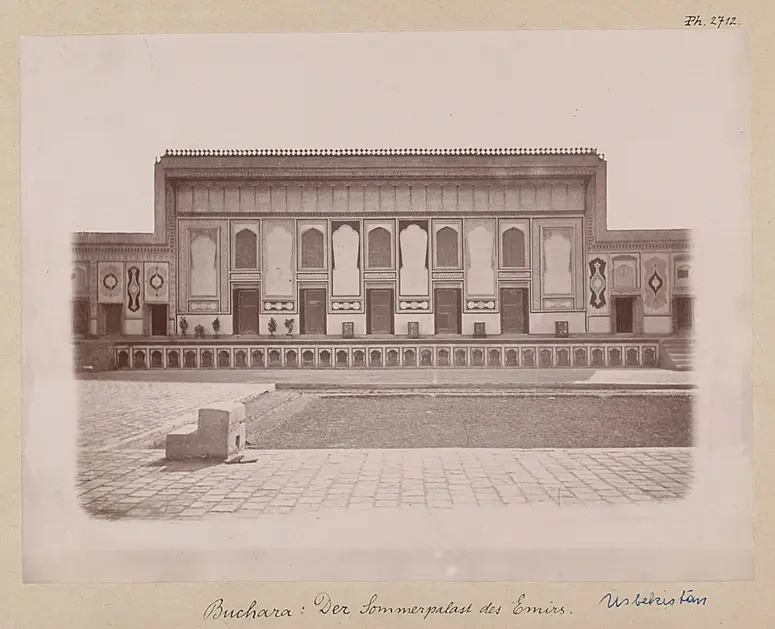
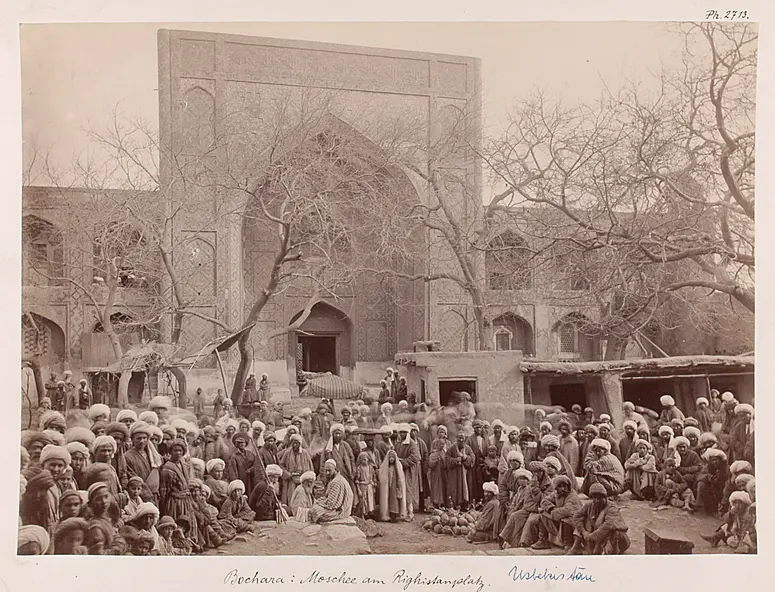
“Bukharan Jews” from the series “Views and Ethnic Groups from Transcaspian”
before 1891 | Franz Heger
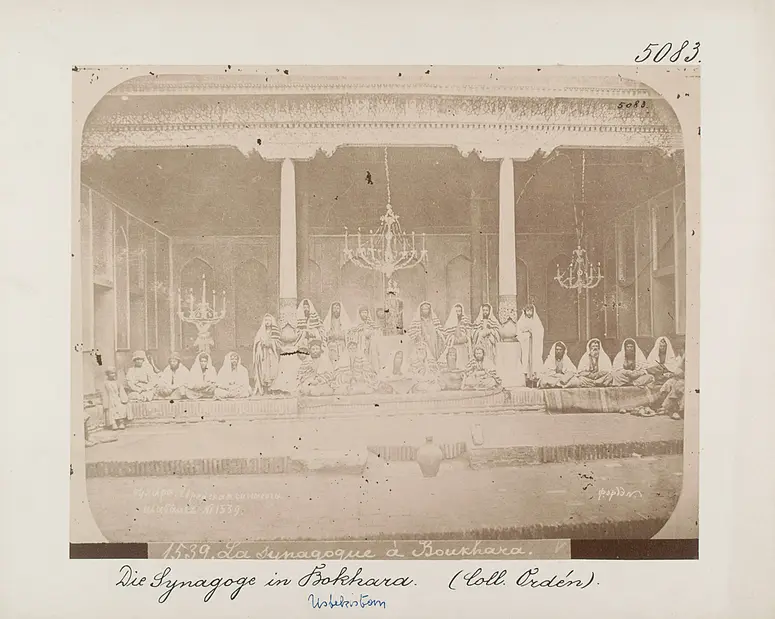
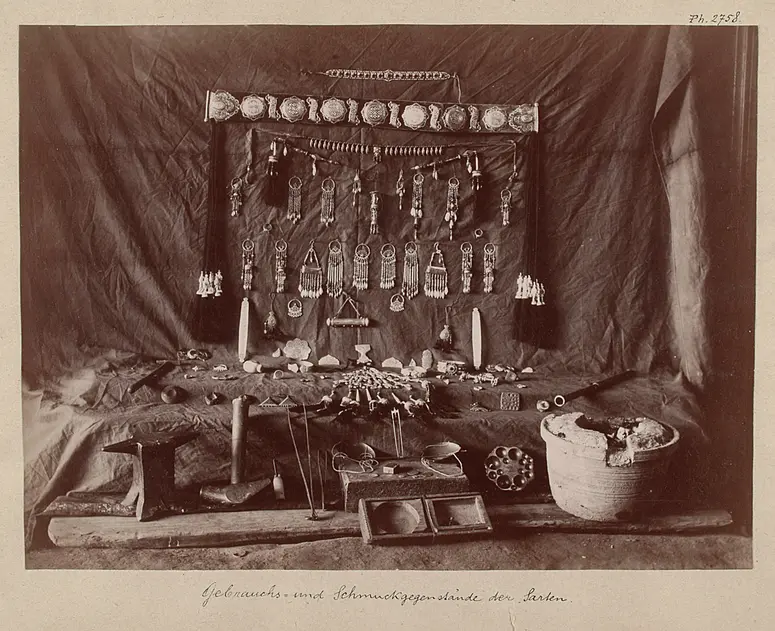
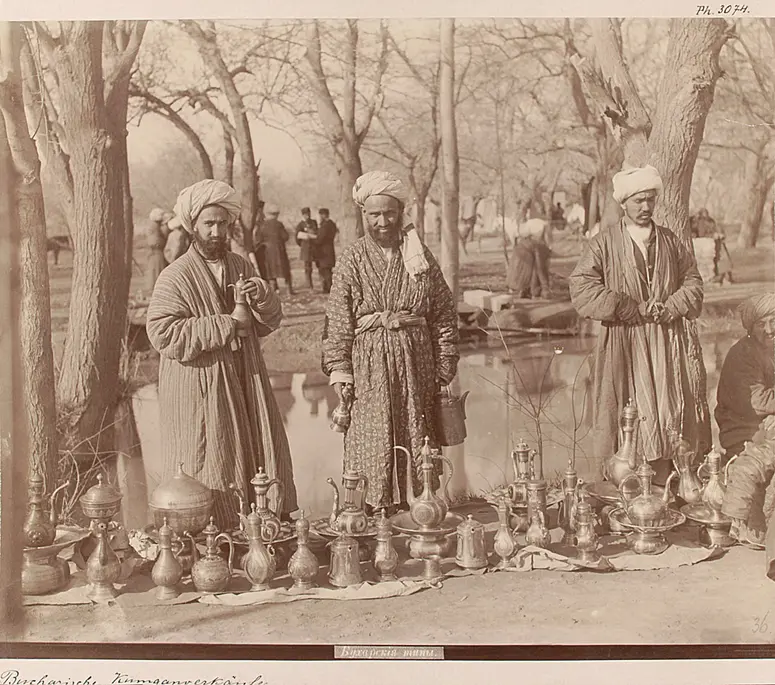
At the end of the nineteenth century, the Jews living in Russian Central Asia attract the attention of only a few European travellers. In many respects they have assimilated themselves to the surrounding Tajiks and Uzbeks, despite the clothing regulations which are still in force. At home in their own residential quarters, they follow a Jewish lifestyle, although not in public. The Jews purchase the objects of furnishings for their houses from the Muslim craftsmen in the civic bazaars. Muslims are treated by Jewish faith healers. The Bukharan Jews practice their faith discreetly. The name of the city of Bukhara, their spiritual capital, becomes a collective term for the Jews of Central Asia
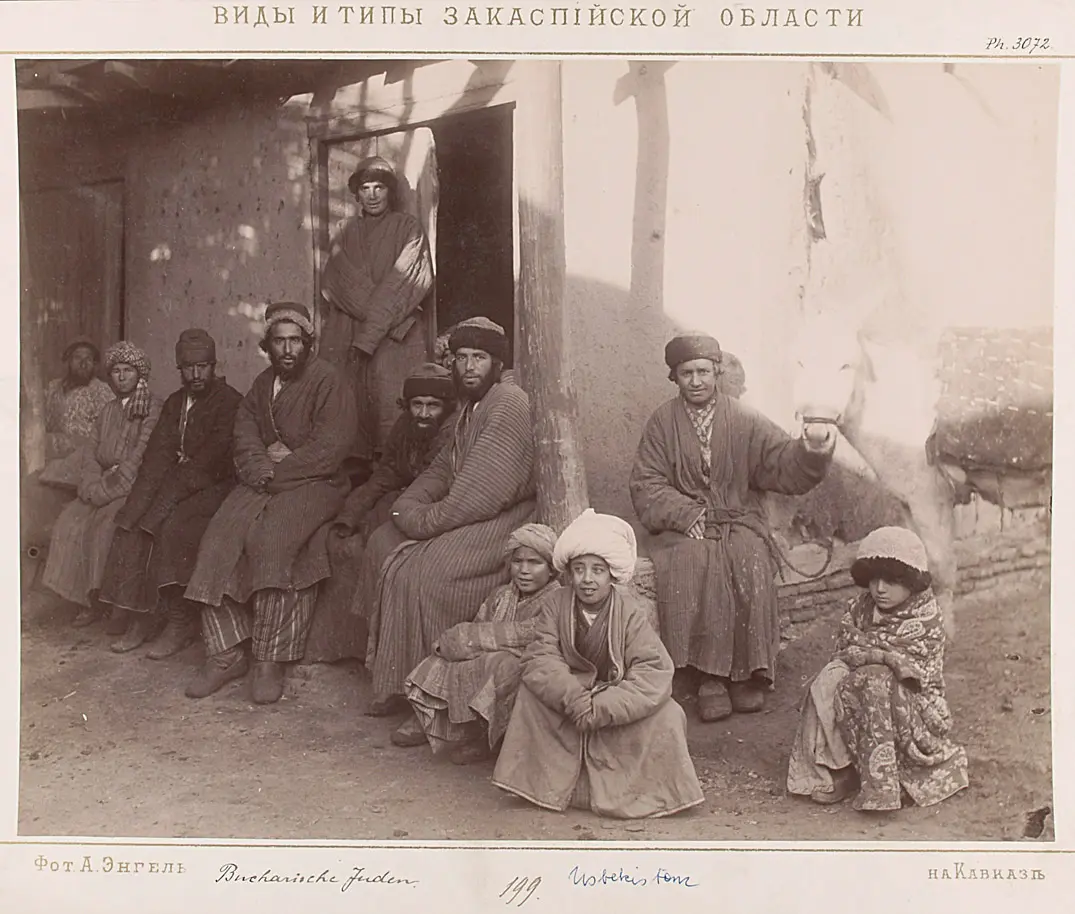
At the end of the nineteenth century, the Jews living in Russian Central Asia attract the attention of only a few European travellers. In many respects they have assimilated themselves to the surrounding Tajiks and Uzbeks, despite the clothing regulations which are still in force. At home in their own residential quarters, they follow a Jewish lifestyle, although not in public. The Jews purchase the objects of furnishings for their houses from the Muslim craftsmen in the civic bazaars. Muslims are treated by Jewish faith healers. The Bukharan Jews practice their faith discreetly. The name of the city of Bukhara, their spiritual capital, becomes a collective term for the Jews of Central Asia
Buyer:
Franz Heger (1853 Brandeis - 1931 Wien) DNB
Photographer:
Alexander Karlowitsch Engel (1848 - 1918)
Time:
before 1891
Object Name
Print
Culture
Uzbekistan; Jews
Material/technology:
Albumen print
Copyright
Weltmuseum Wien, Fotosammlung
Collection area
Photo Collection
Browse more Similar items you might be interested in
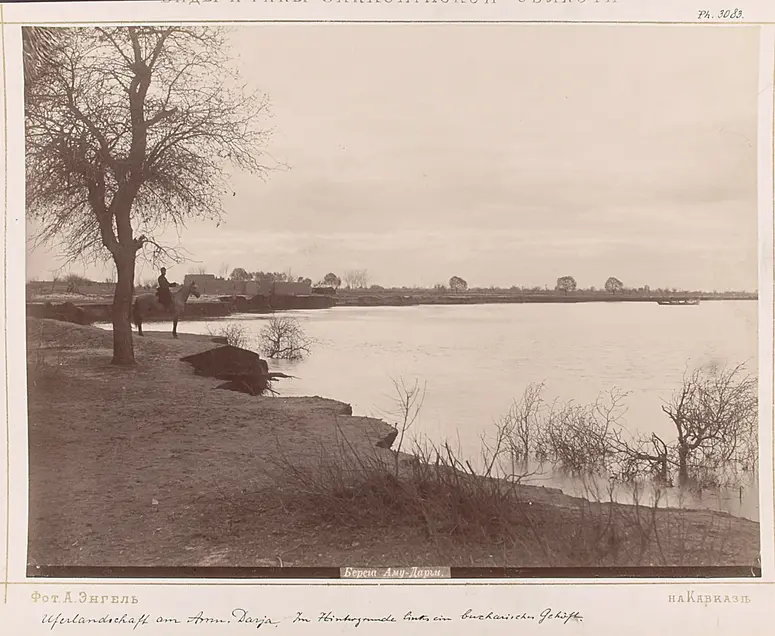
Uferlandschaft am Amu-Darja. Im Hintergrunde links ein bucharisches Gehöft Franz Heger vor 1890