Ceremonial hat
At festivals and ceremonies, Naga men transformed everyday objects such as hats, baskets or spears into elaborately designed ornaments. While hats were relatively standardised among some tribes, the Konyak-Naga followed the principle: the more eye-catching and imaginative, the better. This led to surprising solutions and expressive qualities in ritual headgear.
The application of animal materials follows the desire to appropriate the characteristic features of certain animals - for example the strength and courage of the leopard or boar, the invincibility of the elephant or the beauty of the hornbill. The red of the coloured goat hair conveyed the idea of strength or blood, but also of the fire that consumed enemy villages. The feathers of the hornbill on the hats are a sign of social status among all Naga groups, albeit with different meanings depending on the group. For example, a feather once signalled a captured head among the Angami and a sacrificed buffalo among the Ao. Among the Khiamniungan, two feathers signified that the wearer had hurled the first spear at a slain enemy, while among the Sangtam they indicated that the third of a total of five feasts of merit had been organised. Today, personal taste determines the choice.
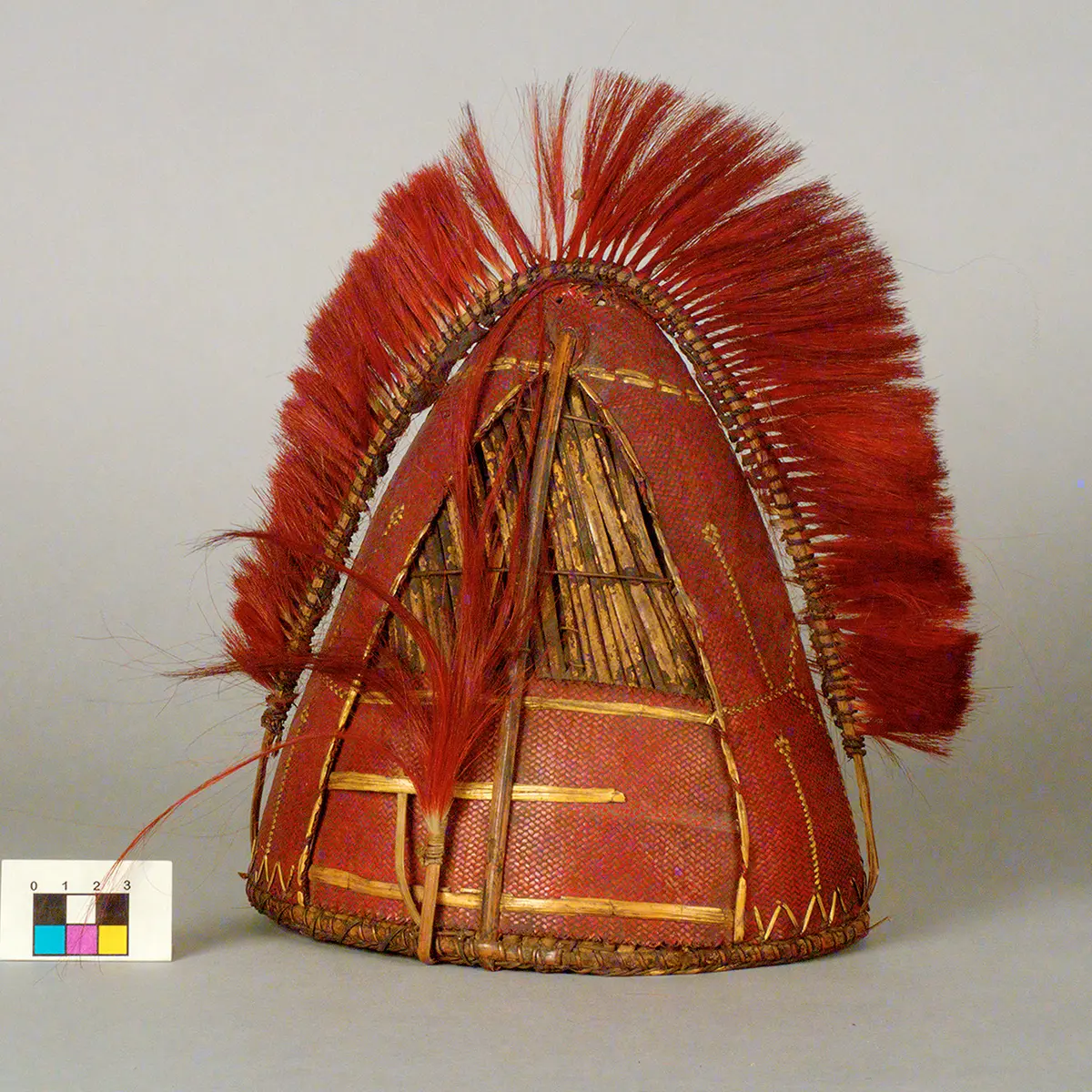
At festivals and ceremonies, Naga men transformed everyday objects such as hats, baskets or spears into elaborately designed ornaments. While hats were relatively standardised among some tribes, the Konyak-Naga followed the principle: the more eye-catching and imaginative, the better. This led to surprising solutions and expressive qualities in ritual headgear.
The application of animal materials follows the desire to appropriate the characteristic features of certain animals - for example the strength and courage of the leopard or boar, the invincibility of the elephant or the beauty of the hornbill. The red of the coloured goat hair conveyed the idea of strength or blood, but also of the fire that consumed enemy villages. The feathers of the hornbill on the hats are a sign of social status among all Naga groups, albeit with different meanings depending on the group. For example, a feather once signalled a captured head among the Angami and a sacrificed buffalo among the Ao. Among the Khiamniungan, two feathers signified that the wearer had hurled the first spear at a slain enemy, while among the Sangtam they indicated that the third of a total of five feasts of merit had been organised. Today, personal taste determines the choice.
Collector:
Johann Anger DNB
Object Name
Zeremonialhut
Culture
Nagaland / Angami
Copyright
Weltmuseum Wien
Collection area
South Asia, Southeast Asia, Himalayas
Geography
Südasien/Subkontinent/Indien/Assam
Invs.
68715
Browse more Similar items you might be interested in
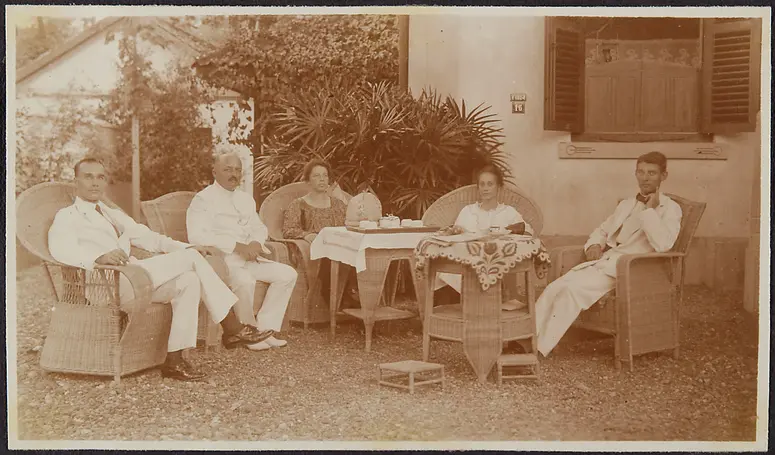
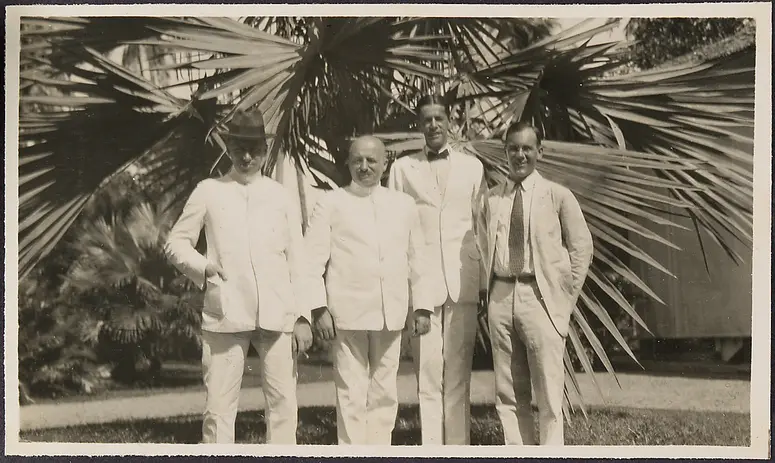
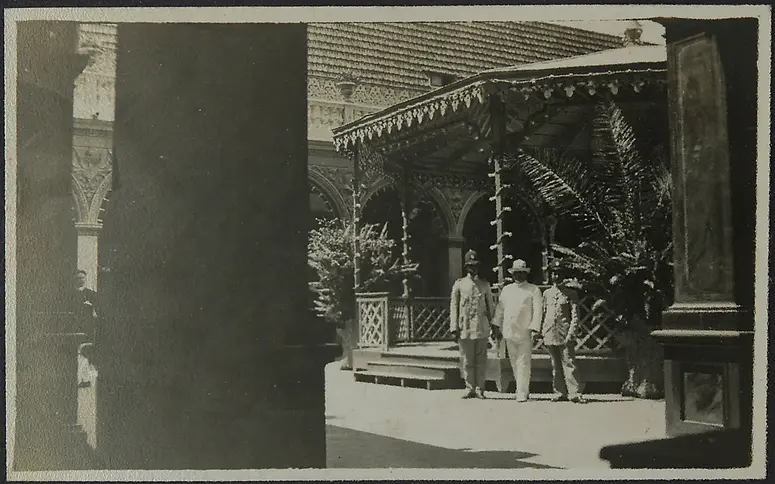
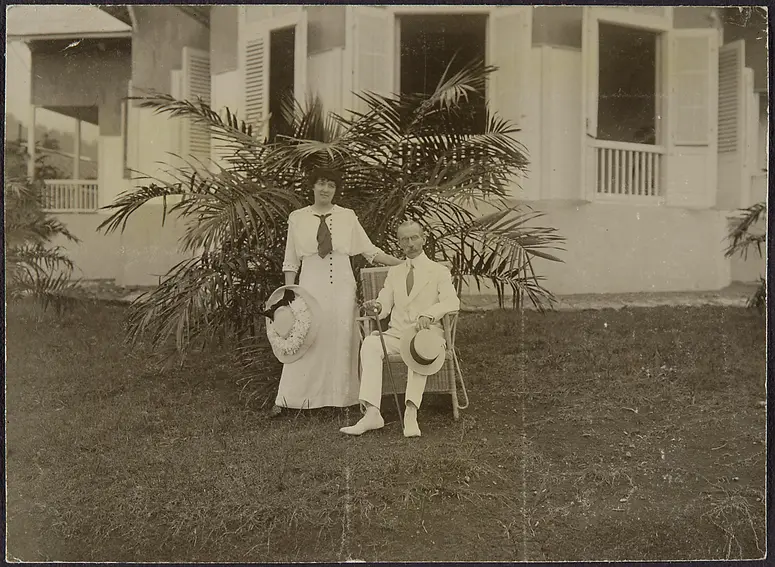
Consul Johann Schild with two civil servants in front of a house Johann Schild ca. 1900
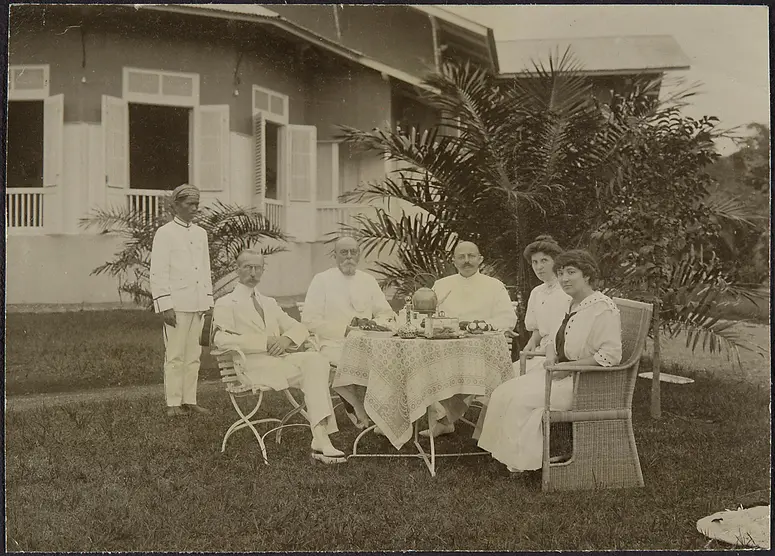
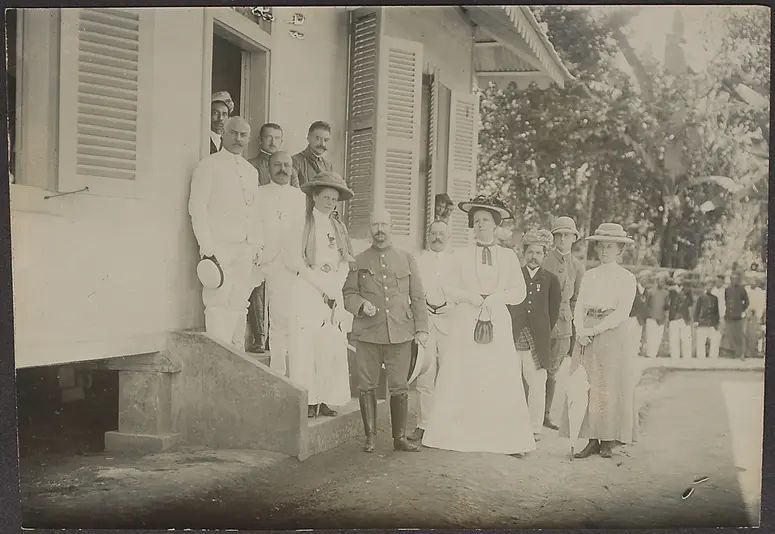

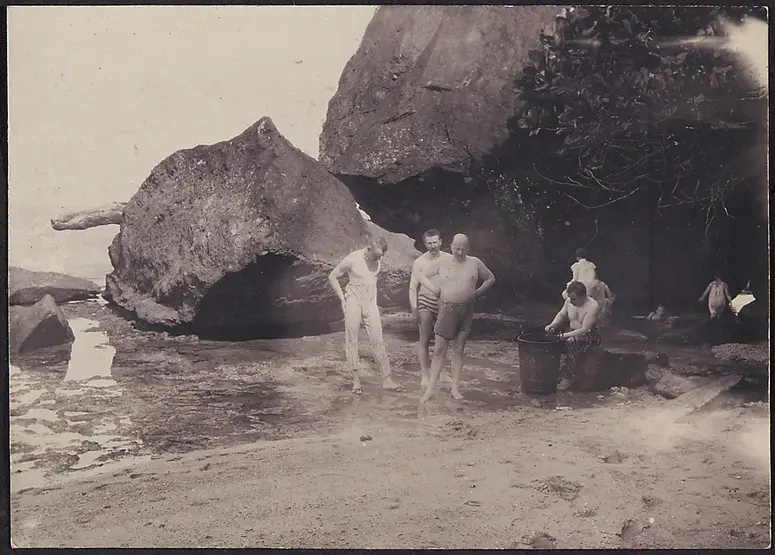
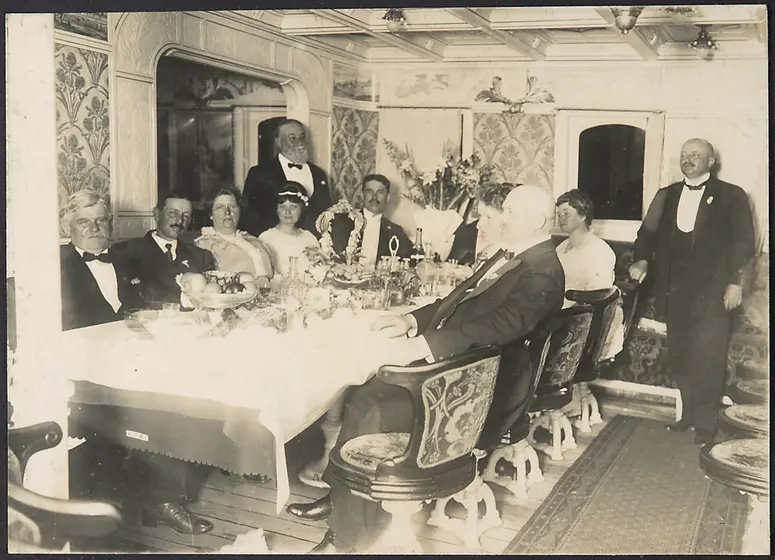
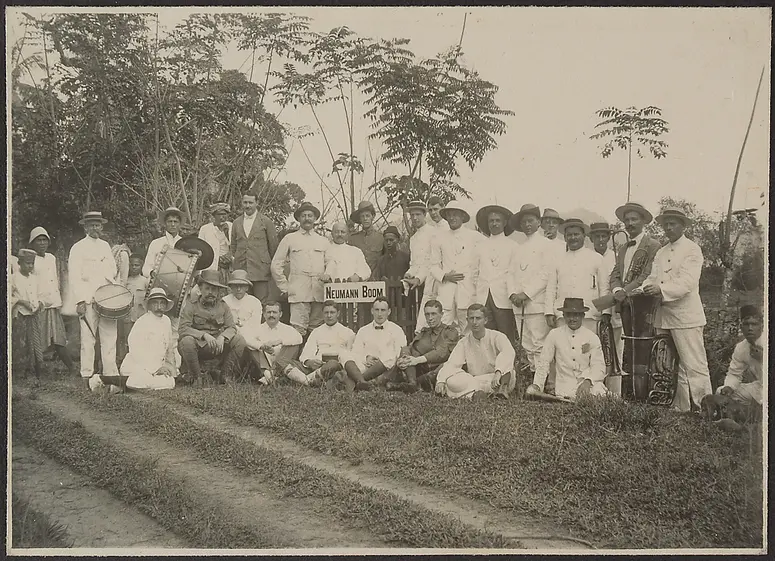
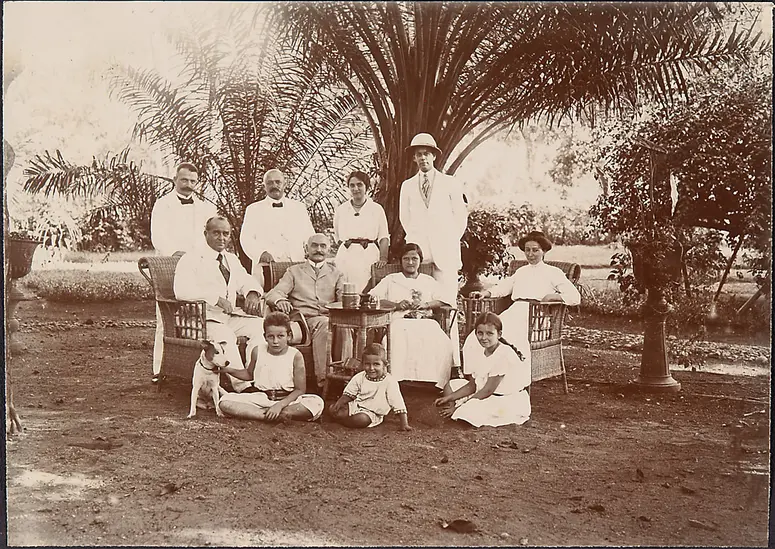
Johann Schild with his guests; some of them are probably musicians from the group Neumann Boom Johann Schild ca. 1900