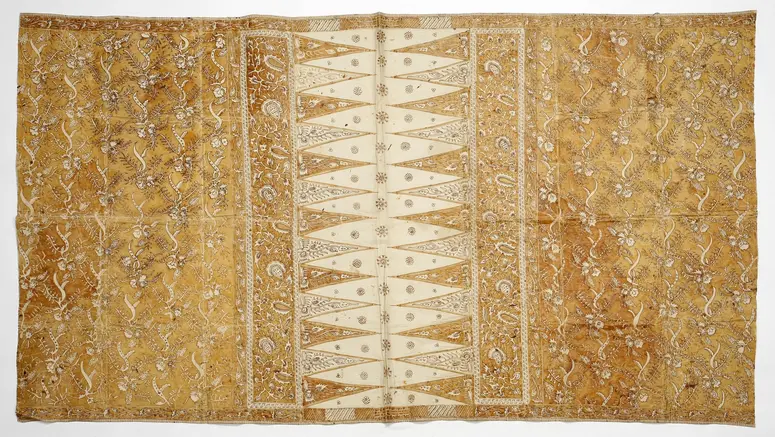
Cloth, Batik
Kain Panjang
ca. 1950 | Sri Tjahjani Kuhnt-Saptodewo
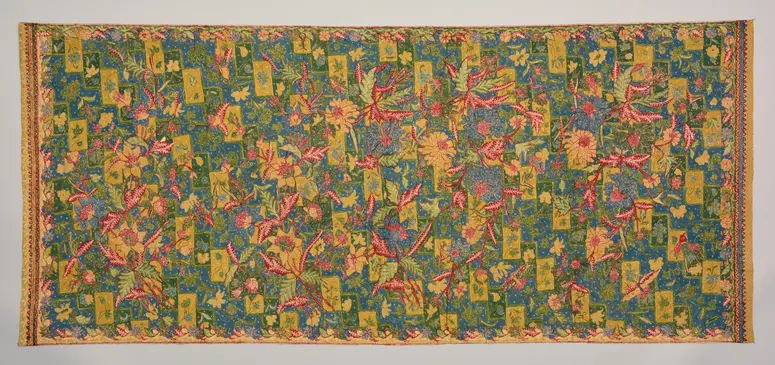
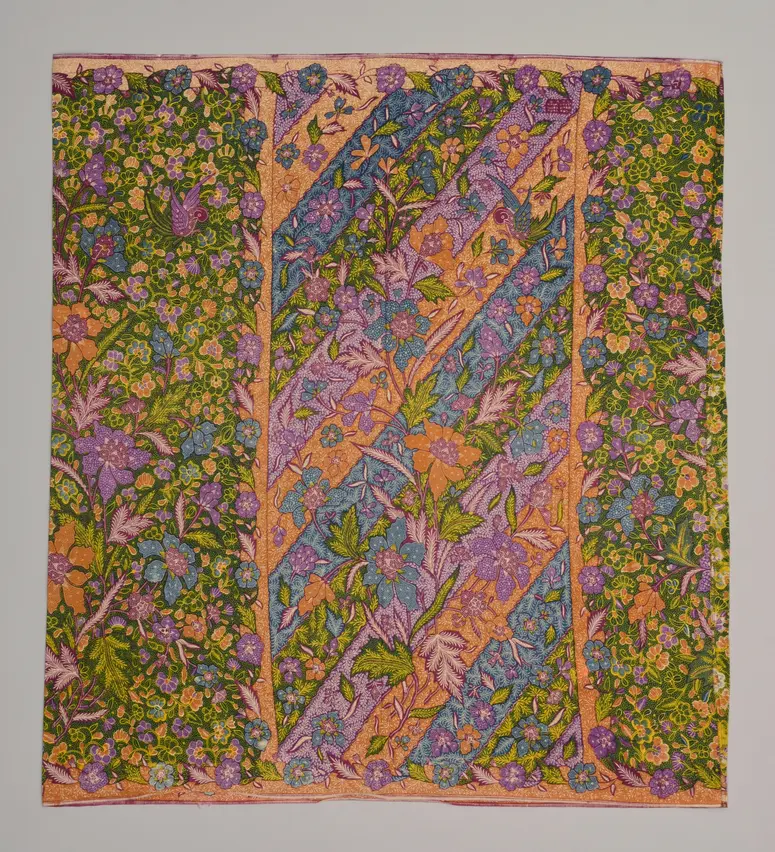
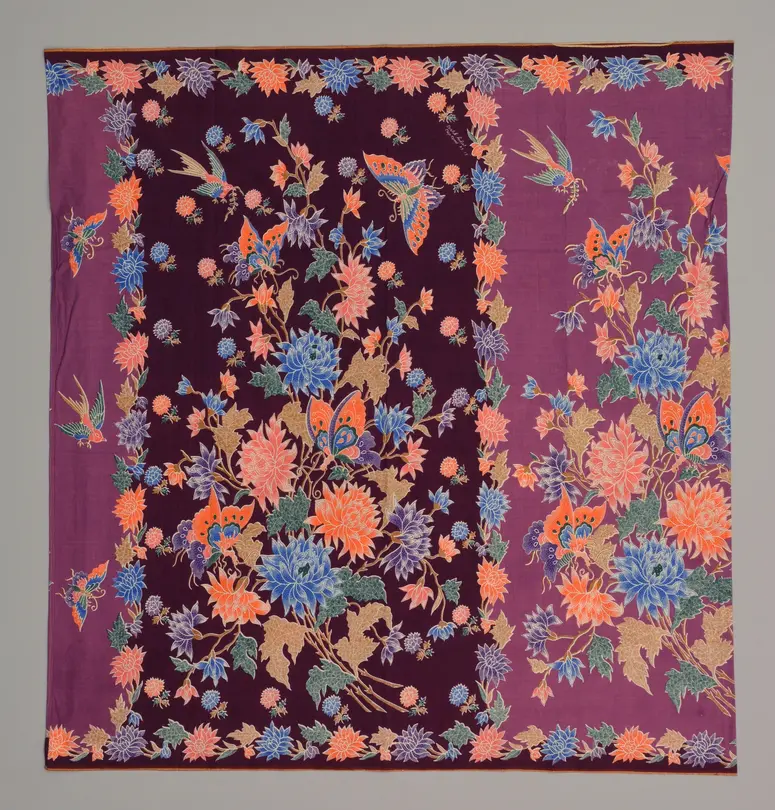
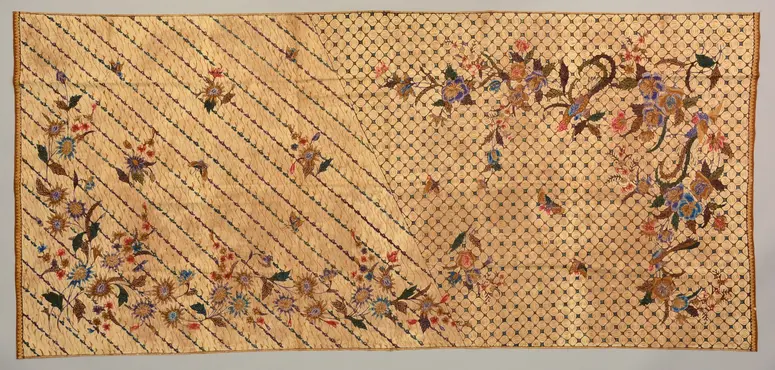
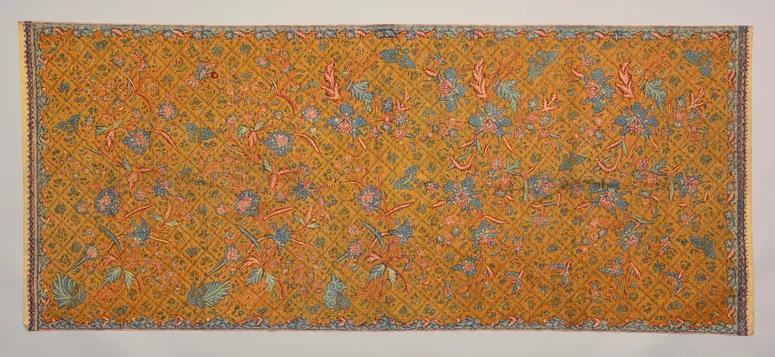
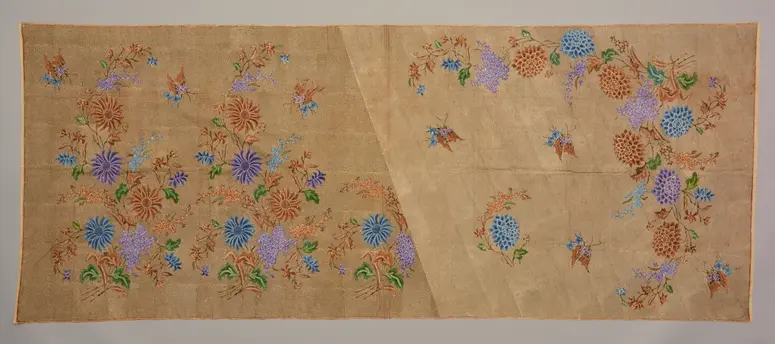
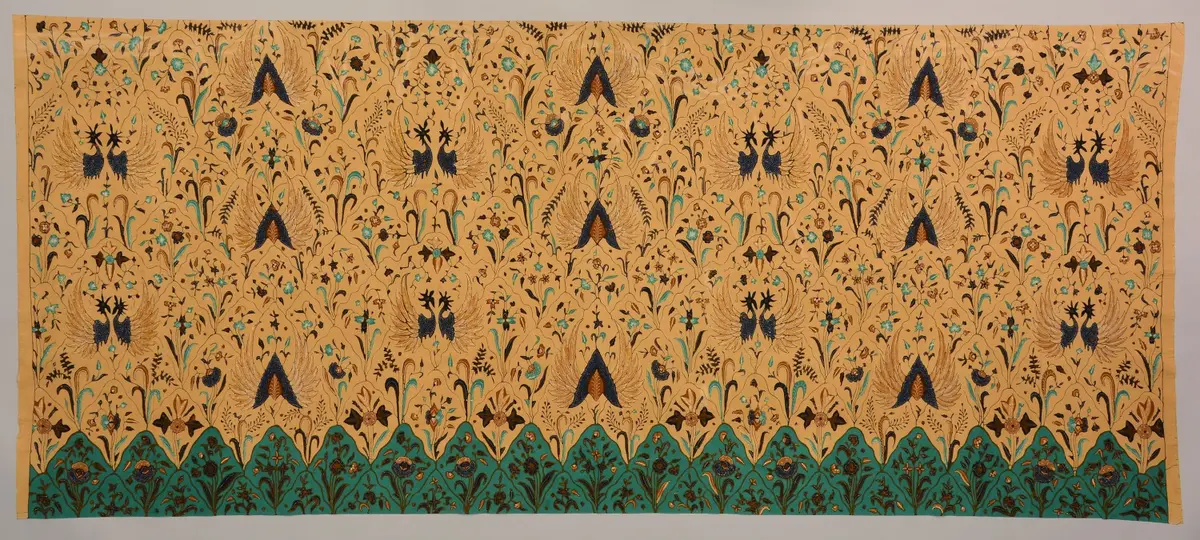
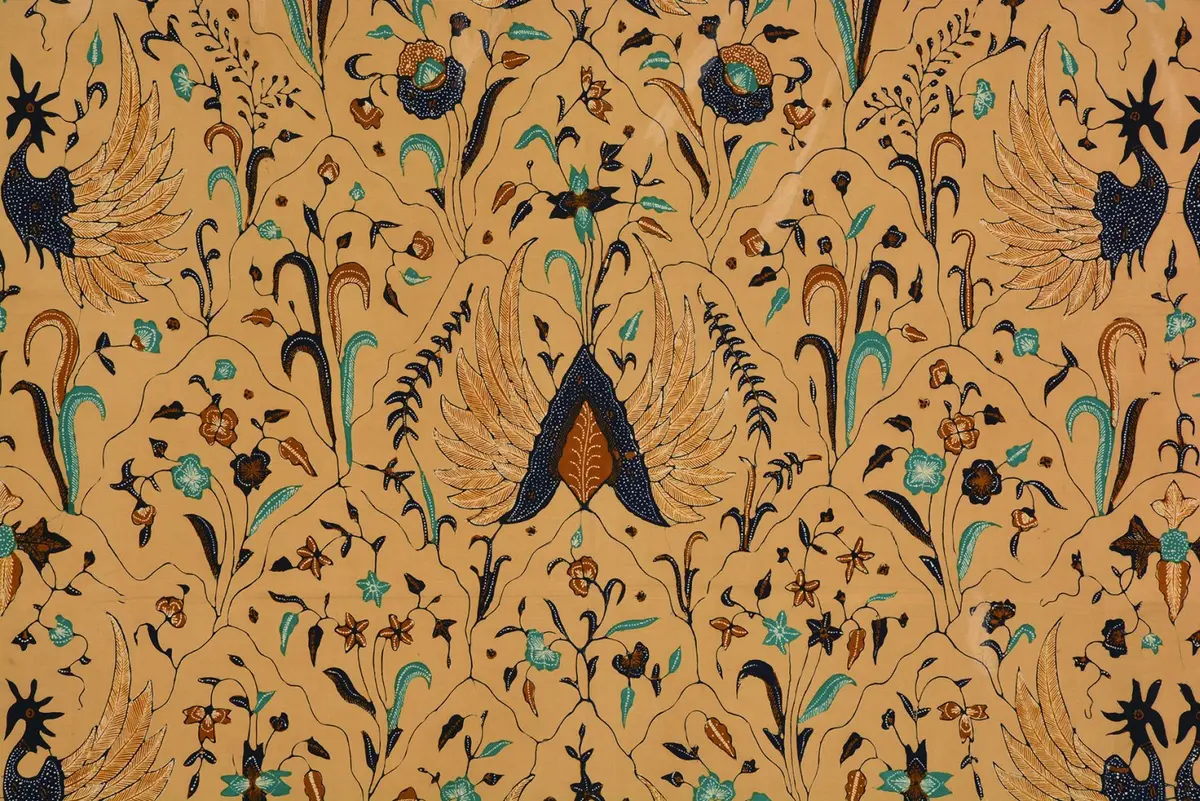
Klassisches Motiv wadasan (typisch für Batik Cirebon, in Form von Felsen, bzw. Steine-Berg).
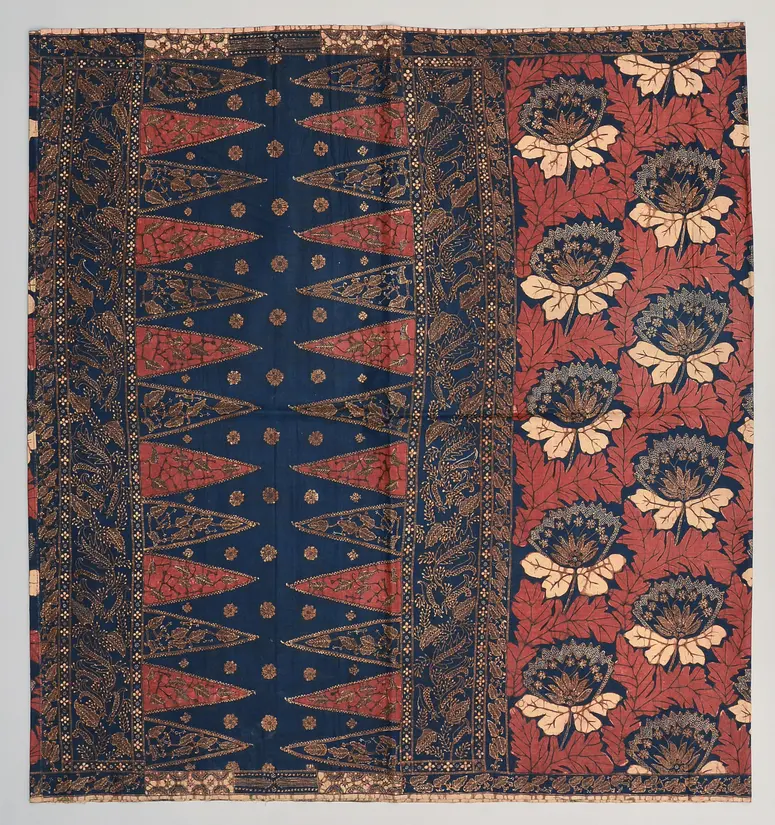
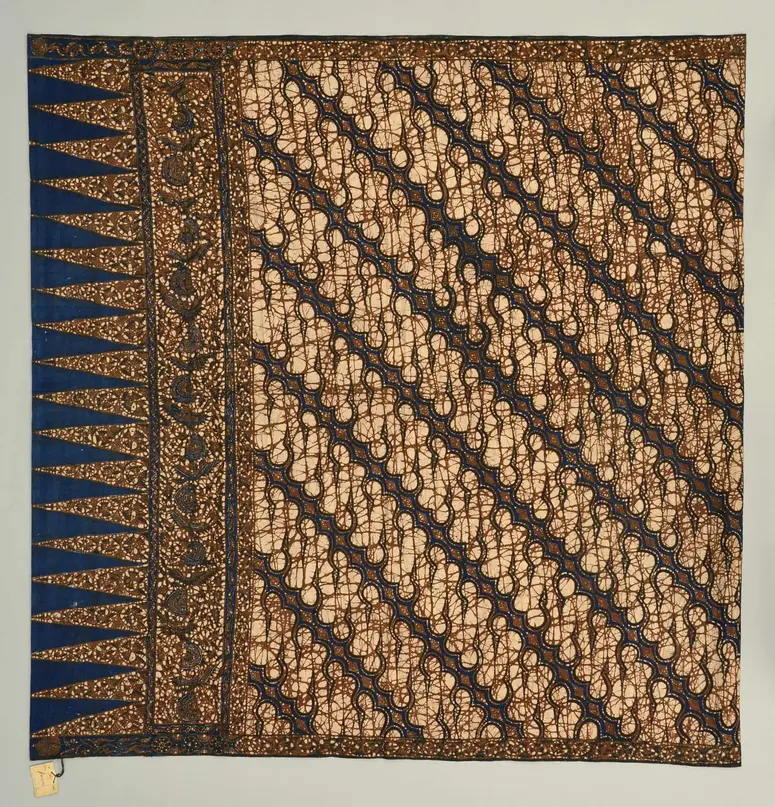
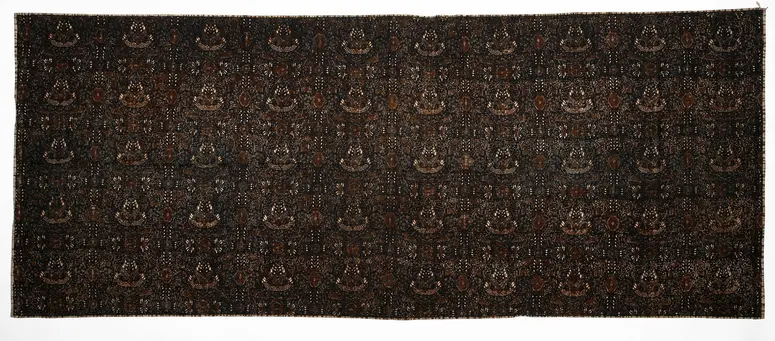
Dieses Batiktuch ist ursprünglich von Cirebon, in West Java und stellt auf hellbraunem Hintergrund mit floralem Motiven in türkis, braun und dunkelblau Vogelpaare (jalak murai) und Flügelmotiv (lar) dar. Jalak Murai, Taman Terate (Lotus Garten) und Lar sind sakrale Motive.
Das florale Motiv symbolisiert einen sakralen Garten (taman terate), wo die Könige meditieren. Das Lar-Motiv deutet auf den Garuda-Vogel hin, der die Oberwelt symbolisiert. Das gesamte Motiv ist wie eine Anleitung für Menschen um die materielle Welt zu verlassen und zur spirituellen Welt zu gehen.
Collection:
Sri Tjahjani Kuhnt-Saptodewo (Kuratorin für Insulares Südostasien im Weltmuseum Wien (2005 bis 2017))
Time:
ca. 1950
Entry Date:
2007
Object Name
Cloth, Batik
Culture
Peranakan / Cirebon, Java
Material/technology:
Cotton, synthetic colours, hand batik
Copyright
Weltmuseum Wien
Collection area
Insular Southeast Asia
Invs.
186145