Cloth for trousers
Serwal
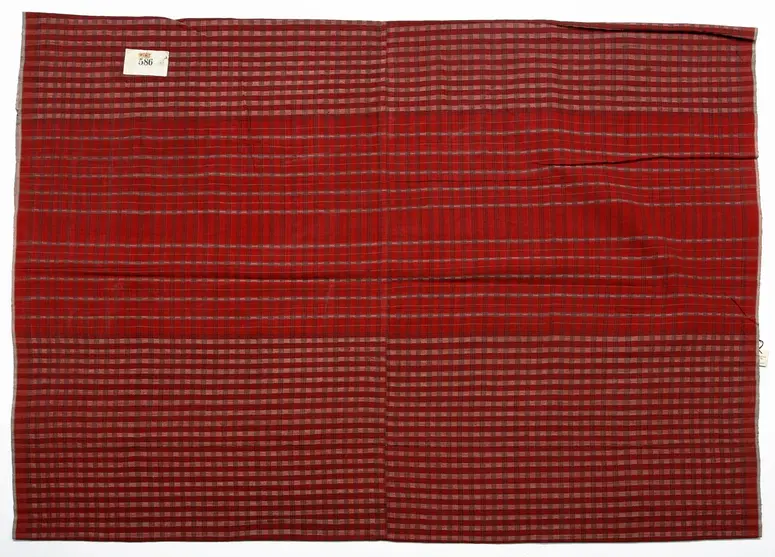
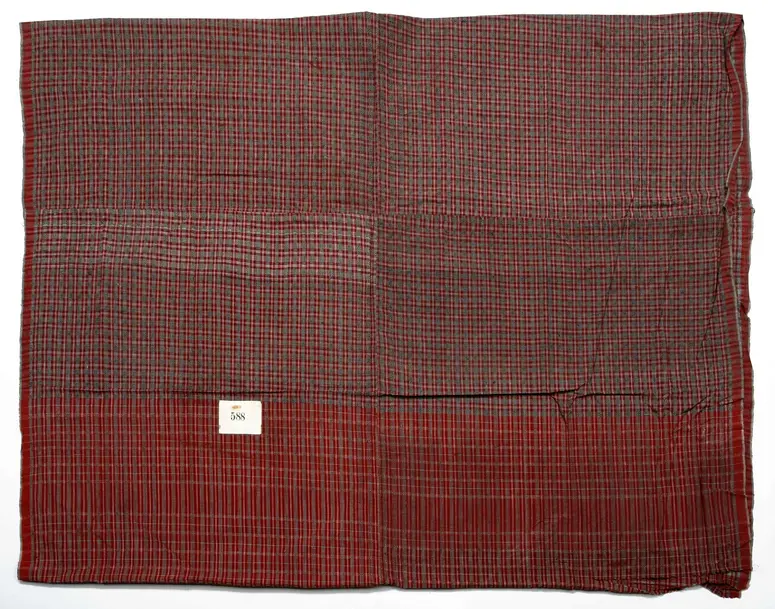
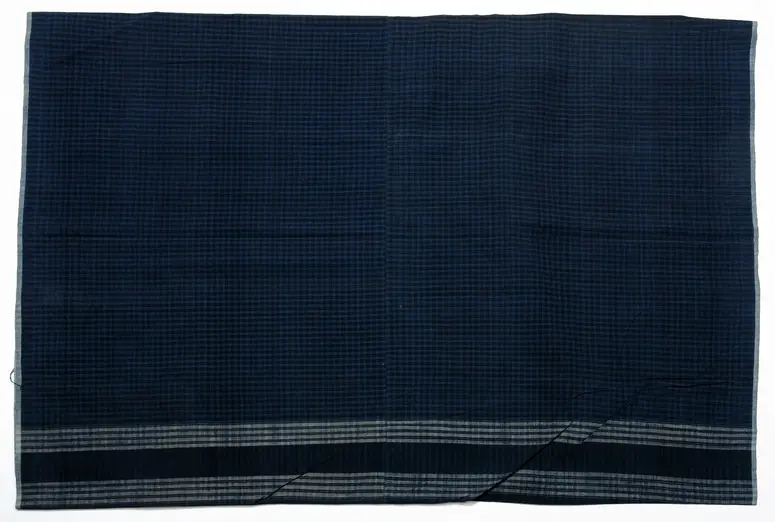
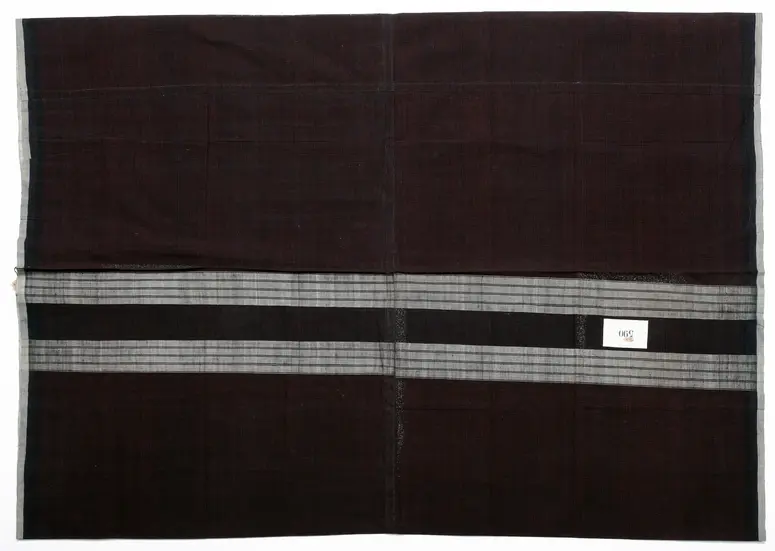
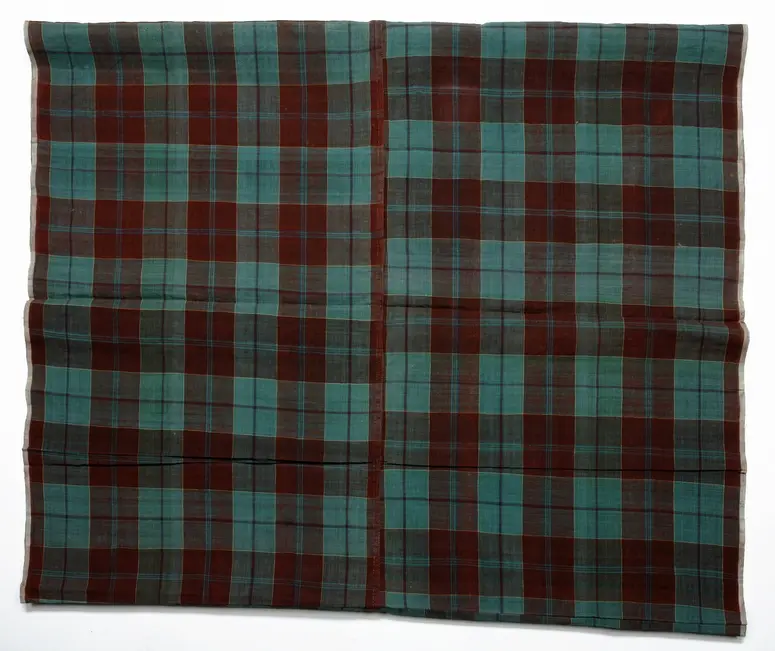
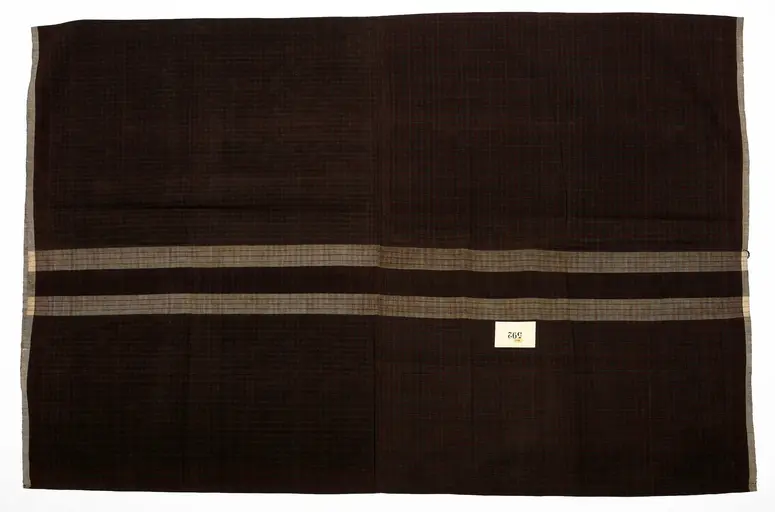
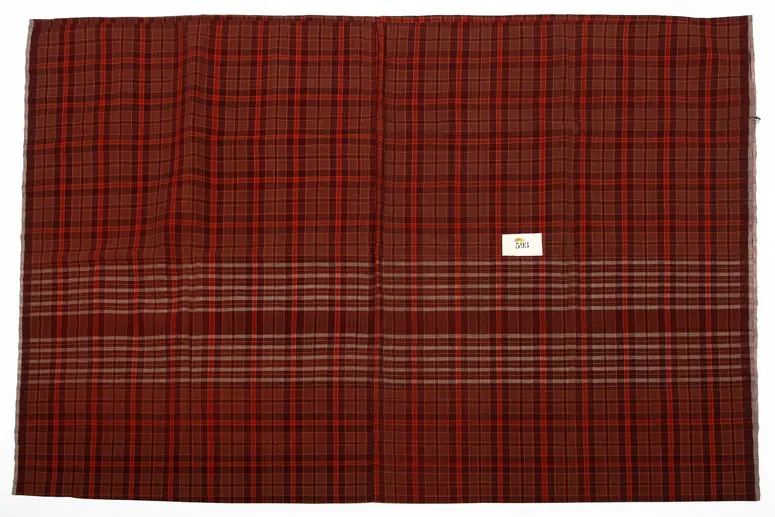
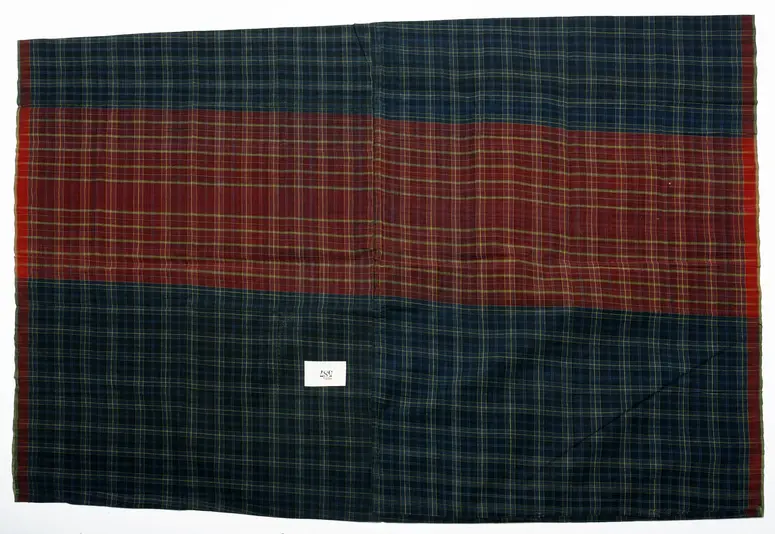
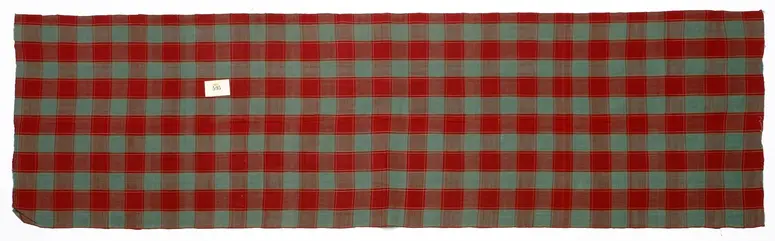
Note: The following text is taken from a 19th-century collection catalog and, in its language and perspective, partially reflects colonial thought patterns. We present the text in its original version to make the collection's history transparent and promote a critical examination of the colonial legacy. Certain terms and formulations may be perceived as problematic today. A 2009 research project concluded that most descriptions are factually correct and still usable; only a few details were found to be inaccurate or incorrect. The results of this project were published in the following collection catalog: khm-wmw-tm-library.on.worldcat.org/oclc/1457155265"595 - 600. Trousers - "Serwal"These numbers consist of only trouser material, not finished trousers. Cloth as it is made in great amount by the women and brought to market and to be found in all of West Java. These are the very peculiar, screaming large-plaid patterns, predominately of green, red and yellow. There are a huge number of patterns and here too, as with the sarongs described above, almost every piece is differently marked. The fabric itself is heavy and durable. The trousers of the Sundanese are short knee pants, as they are found on all of Java under the sarong, also worn by the Javanese. The Sundanese usually have their sarongs wrapped around their body like a belt so that they are only clothed with the short trousers for daily life, their upper body remains naked."Translation of: Czurda, F. A. J. (1883). Catalog mit Erklärungen der Etnografischen Privatsammlung des Dr. F. A. J. Czurda in Postelberg (Böhmen). (p. 150). Wien, Wilhelm Braumüller
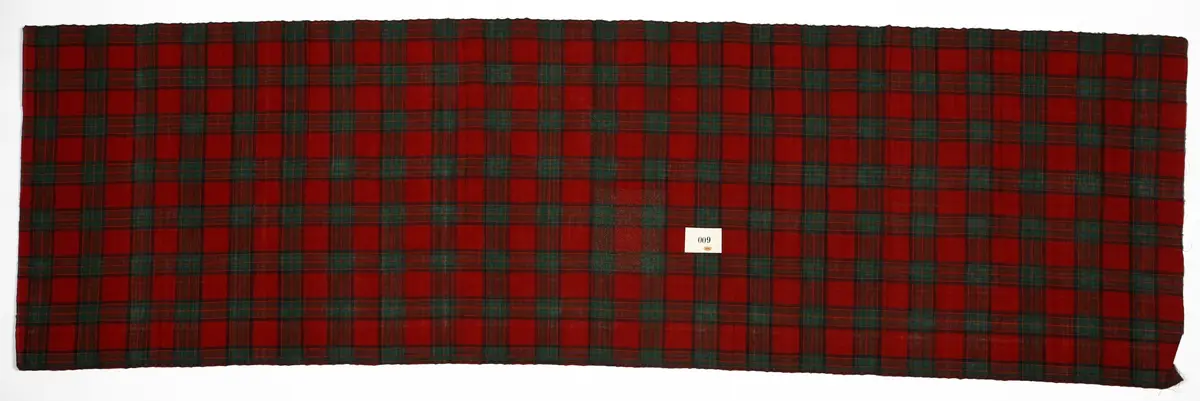
Note: The following text is taken from a 19th-century collection catalog and, in its language and perspective, partially reflects colonial thought patterns. We present the text in its original version to make the collection's history transparent and promote a critical examination of the colonial legacy. Certain terms and formulations may be perceived as problematic today. A 2009 research project concluded that most descriptions are factually correct and still usable; only a few details were found to be inaccurate or incorrect. The results of this project were published in the following collection catalog: khm-wmw-tm-library.on.worldcat.org/oclc/1457155265"595 - 600. Trousers - "Serwal"These numbers consist of only trouser material, not finished trousers. Cloth as it is made in great amount by the women and brought to market and to be found in all of West Java. These are the very peculiar, screaming large-plaid patterns, predominately of green, red and yellow. There are a huge number of patterns and here too, as with the sarongs described above, almost every piece is differently marked. The fabric itself is heavy and durable. The trousers of the Sundanese are short knee pants, as they are found on all of Java under the sarong, also worn by the Javanese. The Sundanese usually have their sarongs wrapped around their body like a belt so that they are only clothed with the short trousers for daily life, their upper body remains naked."Translation of: Czurda, F. A. J. (1883). Catalog mit Erklärungen der Etnografischen Privatsammlung des Dr. F. A. J. Czurda in Postelberg (Böhmen). (p. 150). Wien, Wilhelm Braumüller
Collector:
František A. J. Czurda (1844 Pisek - 1886 Cirebon) DNB
Entry Date:
1883
Object Name
Cloth for trousers
Culture
West-Java
Material/technology:
vegetable fibre, plain weave
Copyright
Weltmuseum Wien
Collection area
Insular Southeast Asia
Invs.
18027