Houshold altar
19. Jahrhundert | Hans Leder
Household altars are placed on a chest in the sacred area of the yurt alongside other ritual objects. Their compactness is adapted to nomadic life; lamas carry them on their backs as travelling altars and put them back in the temple room when they return.In the wooden frame, representations of various gods made of clay, so-called tsah tsha, are inlaid in niches. Their arrangement from top to bottom reflects the hierarchically organised Buddhist pantheon. At the top is the historical Buddha Shakyamuni, while the level below shows various bodhisattvas in peaceful and wrathful appearances. In the bottom row, with the exception of the figure on the right-hand edge, protective deities can be seen. The largest tsha tsha in the centre shows the future Buddha Maitreya in his heavenly palace at the top, with divine apparitions of this age and an altar with offerings below.These small clay figurines of gods and saints are produced cheaply in large numbers. For the poorer population, they serve as a direct substitute for expensive bronzes, from which they do not differ significantly in terms of their effectiveness and function. They are kept as devotional objects at home or in temples, and pilgrims leave them as offerings at shrines and holy places.

Household altars are placed on a chest in the sacred area of the yurt alongside other ritual objects. Their compactness is adapted to nomadic life; lamas carry them on their backs as travelling altars and put them back in the temple room when they return.In the wooden frame, representations of various gods made of clay, so-called tsah tsha, are inlaid in niches. Their arrangement from top to bottom reflects the hierarchically organised Buddhist pantheon. At the top is the historical Buddha Shakyamuni, while the level below shows various bodhisattvas in peaceful and wrathful appearances. In the bottom row, with the exception of the figure on the right-hand edge, protective deities can be seen. The largest tsha tsha in the centre shows the future Buddha Maitreya in his heavenly palace at the top, with divine apparitions of this age and an altar with offerings below.These small clay figurines of gods and saints are produced cheaply in large numbers. For the poorer population, they serve as a direct substitute for expensive bronzes, from which they do not differ significantly in terms of their effectiveness and function. They are kept as devotional objects at home or in temples, and pilgrims leave them as offerings at shrines and holy places.
Collection:
Hans Leder DNB
Time:
19. Jahrhundert
Object Name
Hausaltar
Culture
Mongolei
Material/technology:
Holz, Ton, Textilien, Papier, Metall, Farbe
Copyright
Weltmuseum Wien
Collection area
South Asia, Southeast Asia, Himalayas
Geography
Zentralasien/Mongolei
Invs.
74942
Browse more Similar items you might be interested in
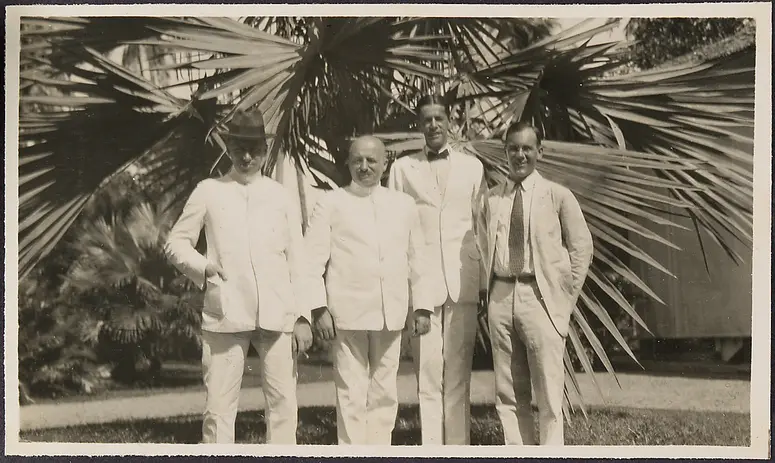
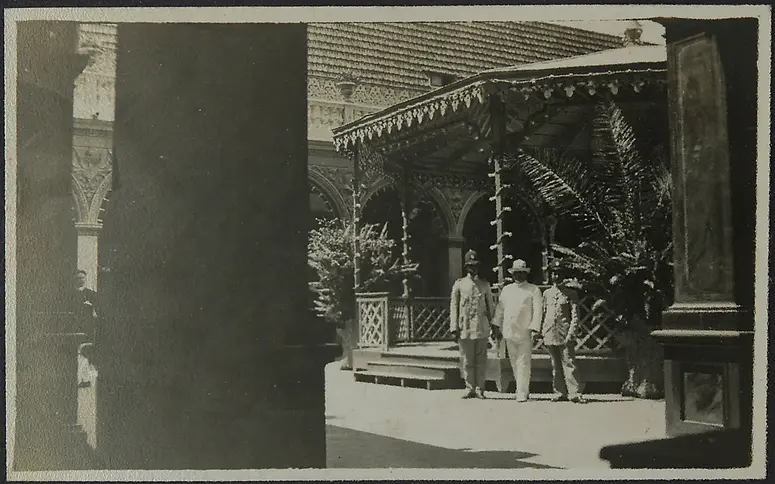
Consul Johann Schild with two civil servants in front of a house Johann Schild ca. 1900
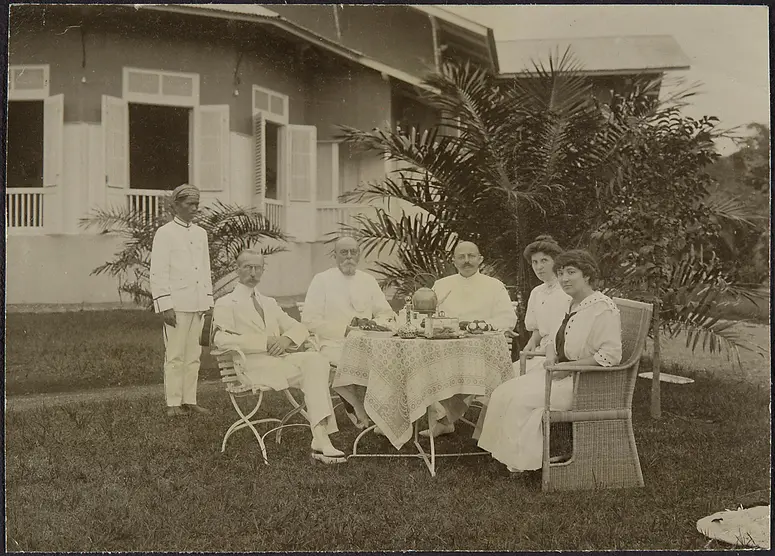
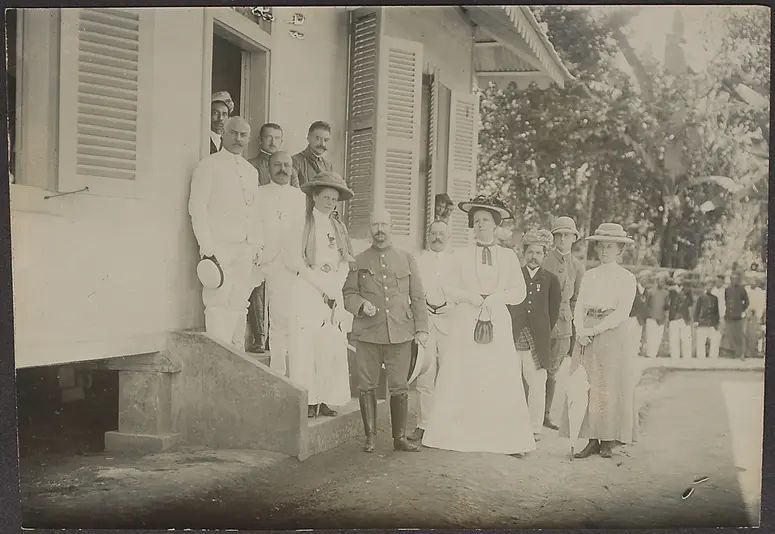
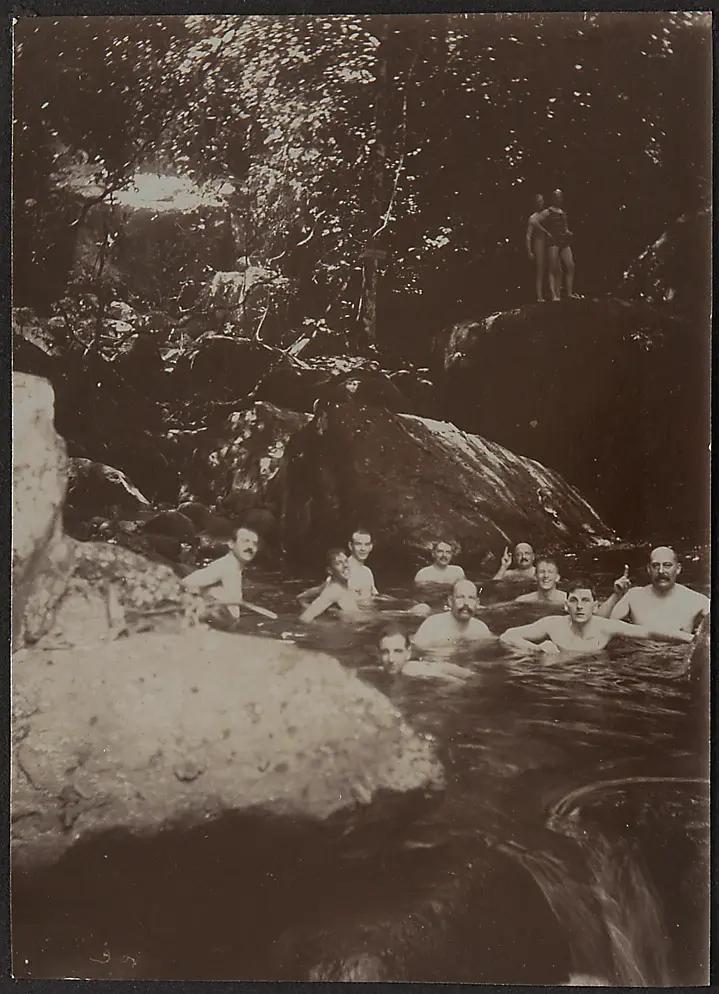
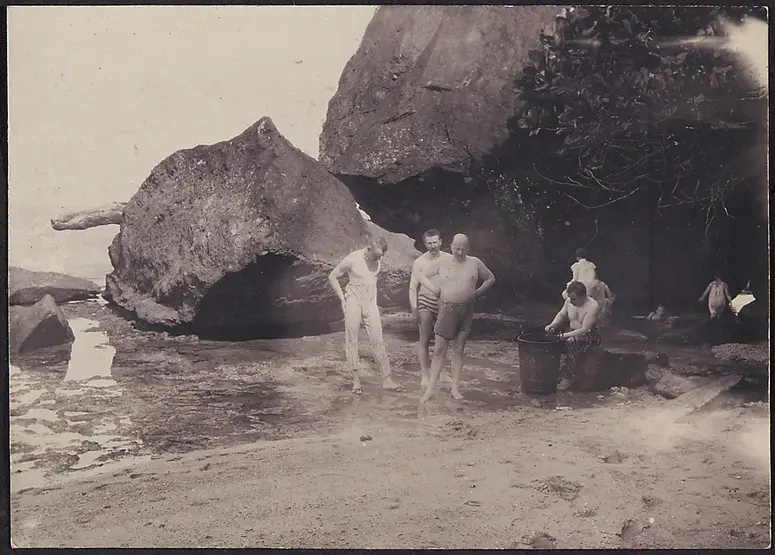
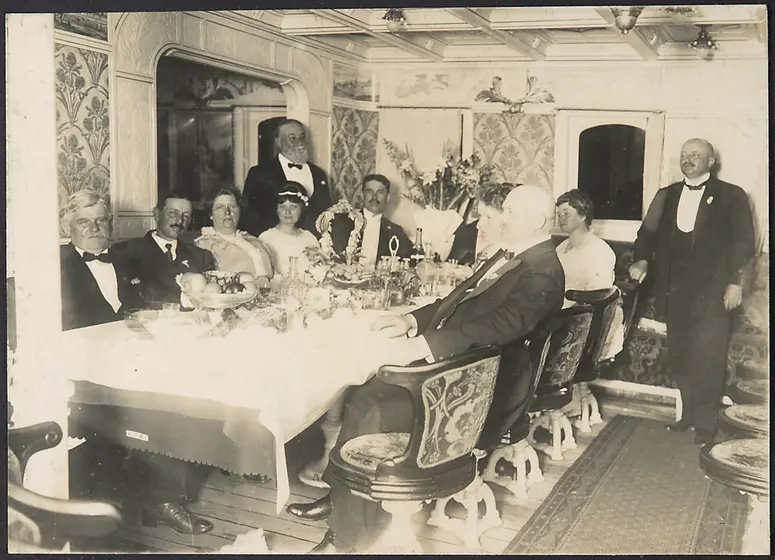
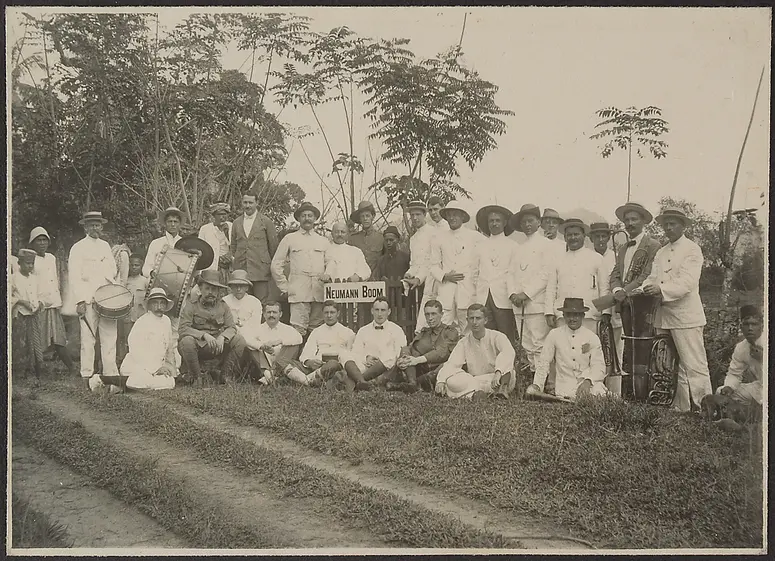
Johann Schild with his guests; some of them are probably musicians from the group Neumann Boom Johann Schild ca. 1900