Kembe
late 1970s | Barbara Plankensteiner
These three-quarter trousers (kembe) are part of a two-piece suit with a wide sleeveless shirt (dansiki) made of the same material that is still predominantly worn by Yoruba men today. In the late 1970s, traditional narrow strip fabrics experienced a boom in Nigeria. Lurex threads imported from Japan and a variety of colour combinations provided modern interpretations of locally produced aso oké fabrics. Patterned holes (elaya) were also increasingly used. The glitter effect of the lurex yarn was given the descriptive name shain shain.
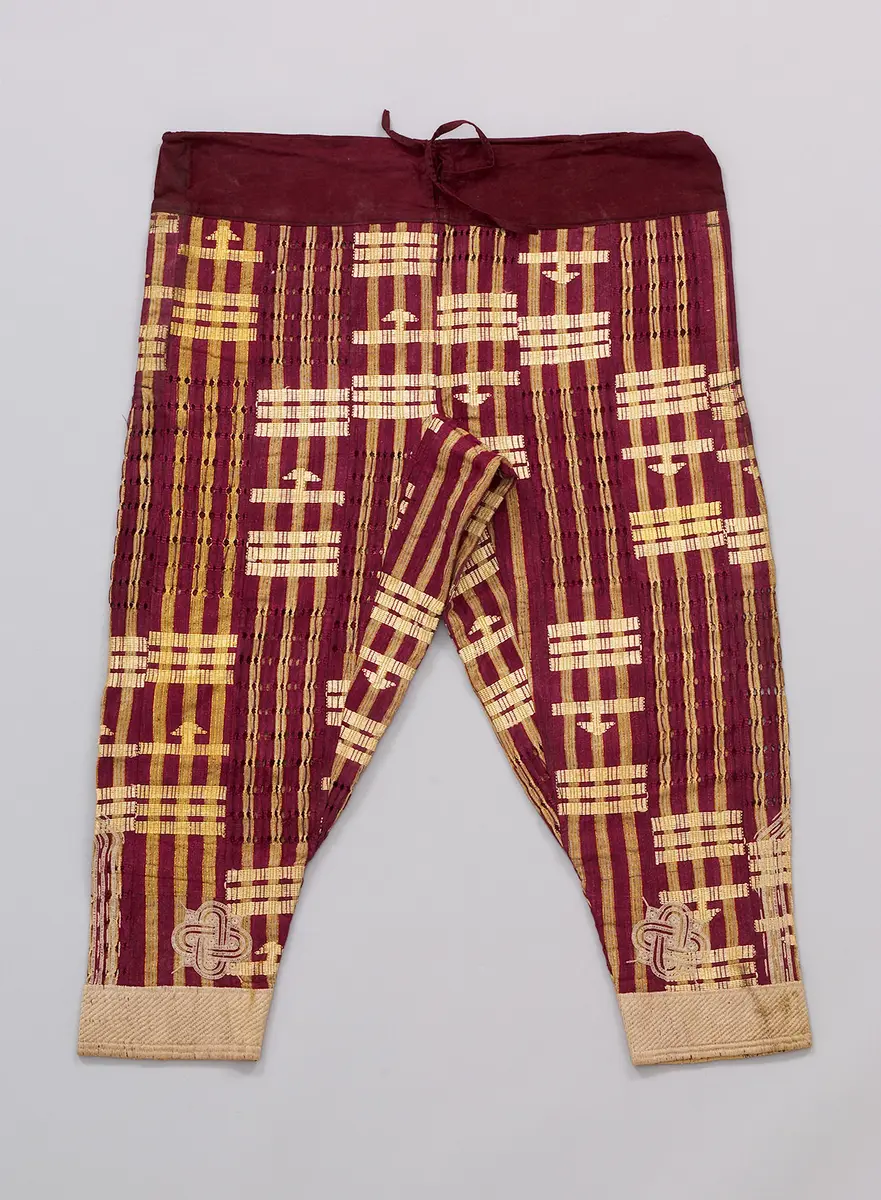
These three-quarter trousers (kembe) are part of a two-piece suit with a wide sleeveless shirt (dansiki) made of the same material that is still predominantly worn by Yoruba men today. In the late 1970s, traditional narrow strip fabrics experienced a boom in Nigeria. Lurex threads imported from Japan and a variety of colour combinations provided modern interpretations of locally produced aso oké fabrics. Patterned holes (elaya) were also increasingly used. The glitter effect of the lurex yarn was given the descriptive name shain shain.
Collector:
Barbara Plankensteiner DNB
Time:
late 1970s
Entry Date:
2009
Object Name
Trousers Kembe
Culture
Yoruba
Material/technology:
Cotton cloth, plain weave, cotton and lurex yarn
Copyright
Weltmuseum Wien
Collection area
Sub-Saharan Africa
Invs.
188522_b
Browse more Similar items you might be interested in




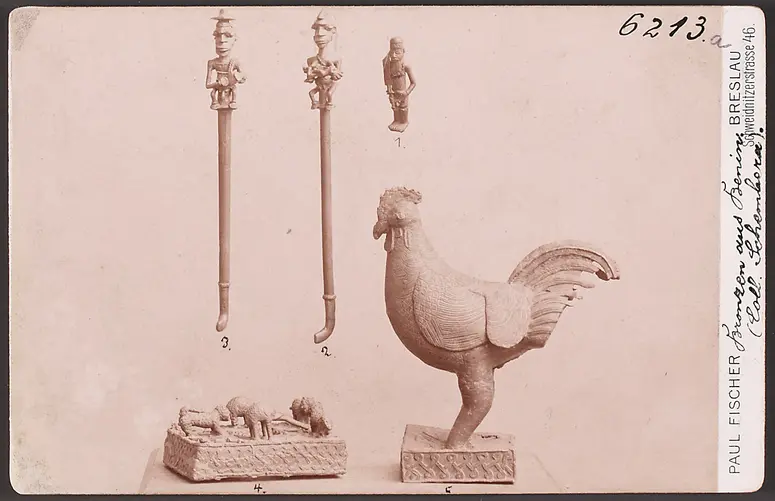
The Benin collection of Curt Schembera from Wroclaw offered for sale Paul Fischer, Breslau vor 1901