Krishna and Radha
19. Jahrhundert | Franz Ferdinand von Österreich-Este
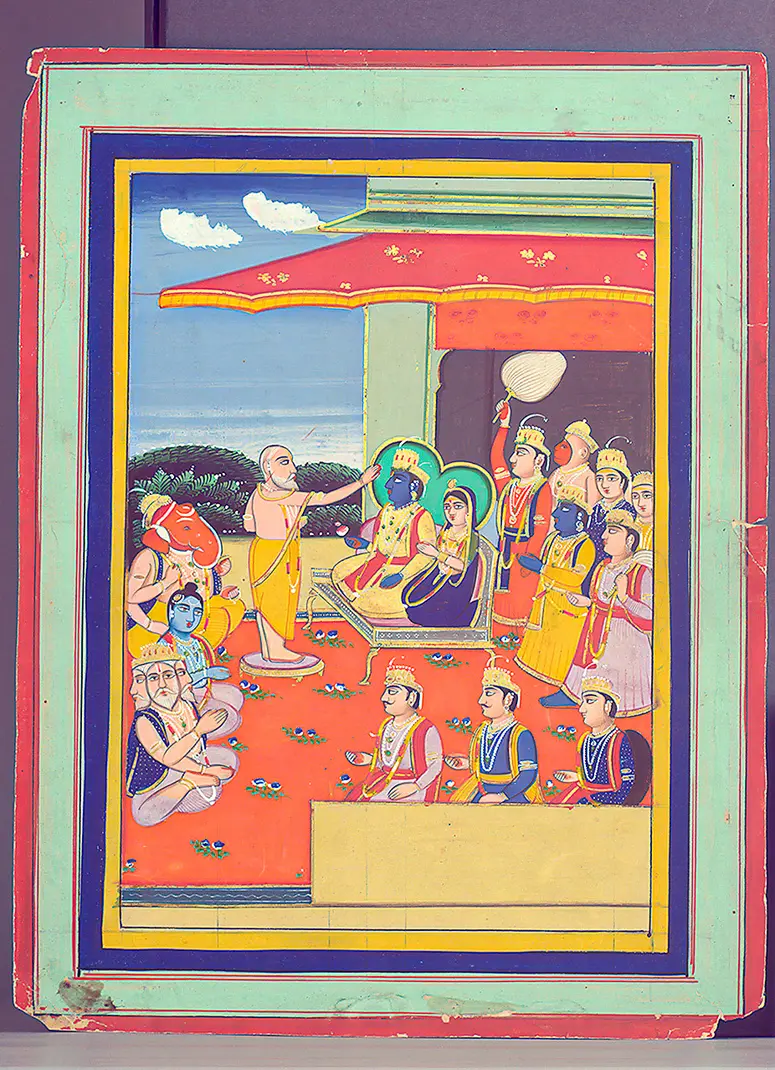
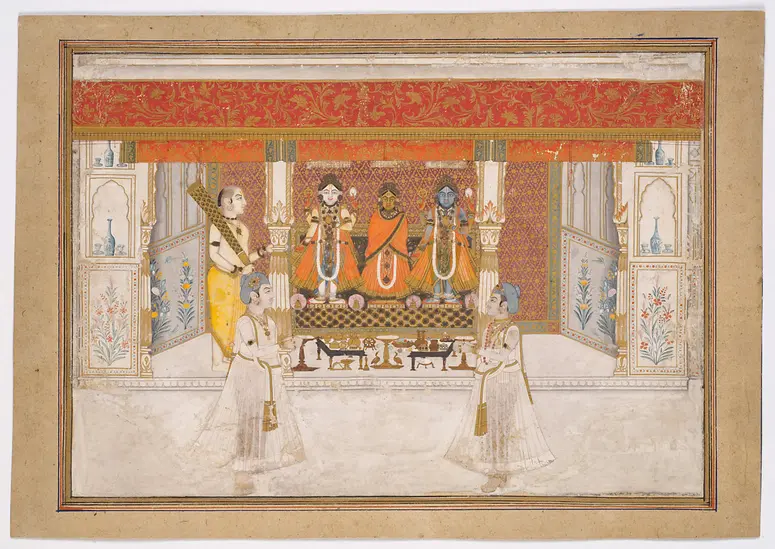
Krishna and Radha are sitting on the terrace of his palace under a canopy. Musicians with their instruments have taken their seats in front of them and a group of girls are standing behind them. A fence made of openwork white marble separates the untamed nature with its wildly growing trees and bushes from the well-ordered scenery and thus seems to contain the unbridled desire of the lovers that characterizes many of her depictions. Only a few plants, probably tamed in pots, have found their way close to the couple, pointing to the potential originality of their love, which they can apparently only live out as cowherds. The women behind the couple also have nothing in common with the passionate love capers of the shepherd girls (gopis) with whom the god plays his love game in many pictorial representations or in Bhakti literature. The boundary of socially appropriate behavior physically depicted in white marble determines their correct conduct. Only a subtle allusion to the couple's lived-out erotic love found its way into the center of the composition. Both hold white blossoms of the Kadamba tree in their hands, in whose shade they so often find their lustful fulfillment.
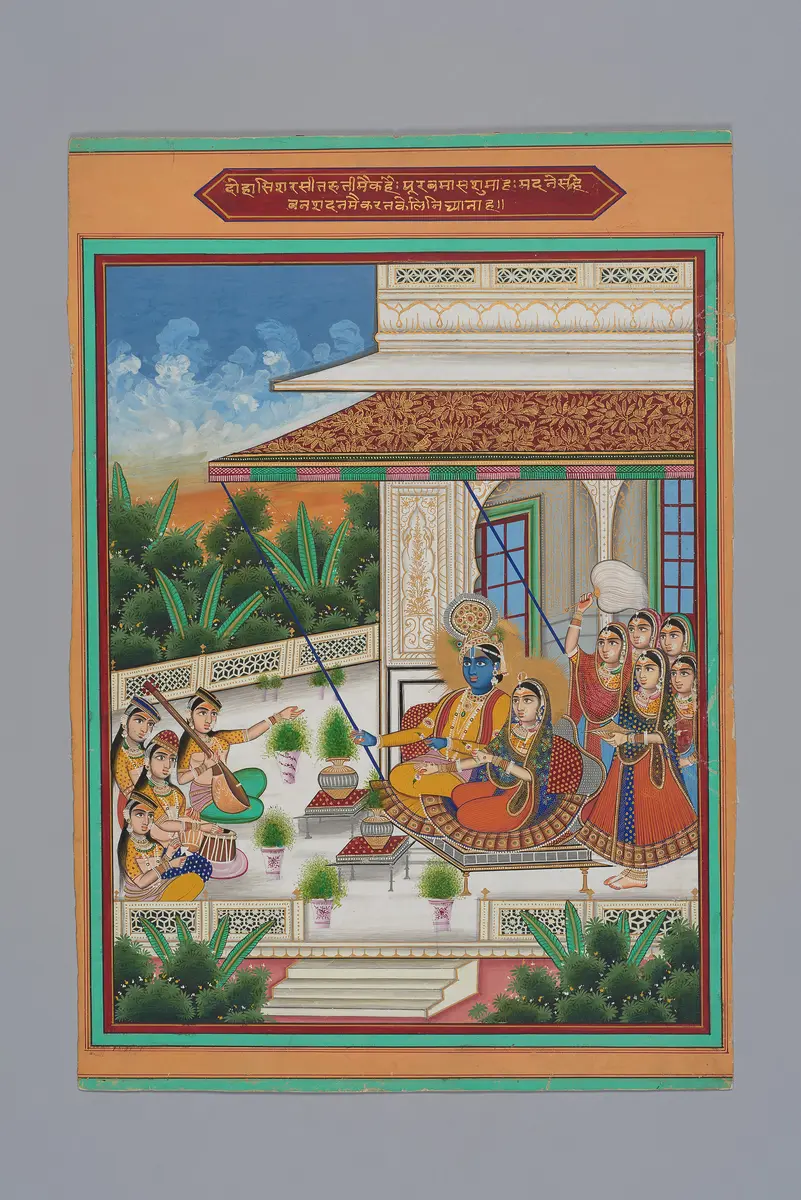
Krishna and Radha are sitting on the terrace of his palace under a canopy. Musicians with their instruments have taken their seats in front of them and a group of girls are standing behind them. A fence made of openwork white marble separates the untamed nature with its wildly growing trees and bushes from the well-ordered scenery and thus seems to contain the unbridled desire of the lovers that characterizes many of her depictions. Only a few plants, probably tamed in pots, have found their way close to the couple, pointing to the potential originality of their love, which they can apparently only live out as cowherds. The women behind the couple also have nothing in common with the passionate love capers of the shepherd girls (gopis) with whom the god plays his love game in many pictorial representations or in Bhakti literature. The boundary of socially appropriate behavior physically depicted in white marble determines their correct conduct. Only a subtle allusion to the couple's lived-out erotic love found its way into the center of the composition. Both hold white blossoms of the Kadamba tree in their hands, in whose shade they so often find their lustful fulfillment.
Collection:
Franz Ferdinand von Österreich-Este (1863 Graz - 1914 Sarajevo) DNB
Time:
19. Jahrhundert
Object Name
Krishna und Radha
Culture
Indien
Material/technology:
Miniaturmalerei: Papier, Karton; Farbmittel (Gouache), Versilberung (Zinn, Schlagmetall), Vergoldung
Copyright
Weltmuseum Wien
Collection area
South Asia, Southeast Asia, Himalayas
Geography
Südasien/Subkontinent/Indien
Invs.
102397
Browse more Similar items you might be interested in


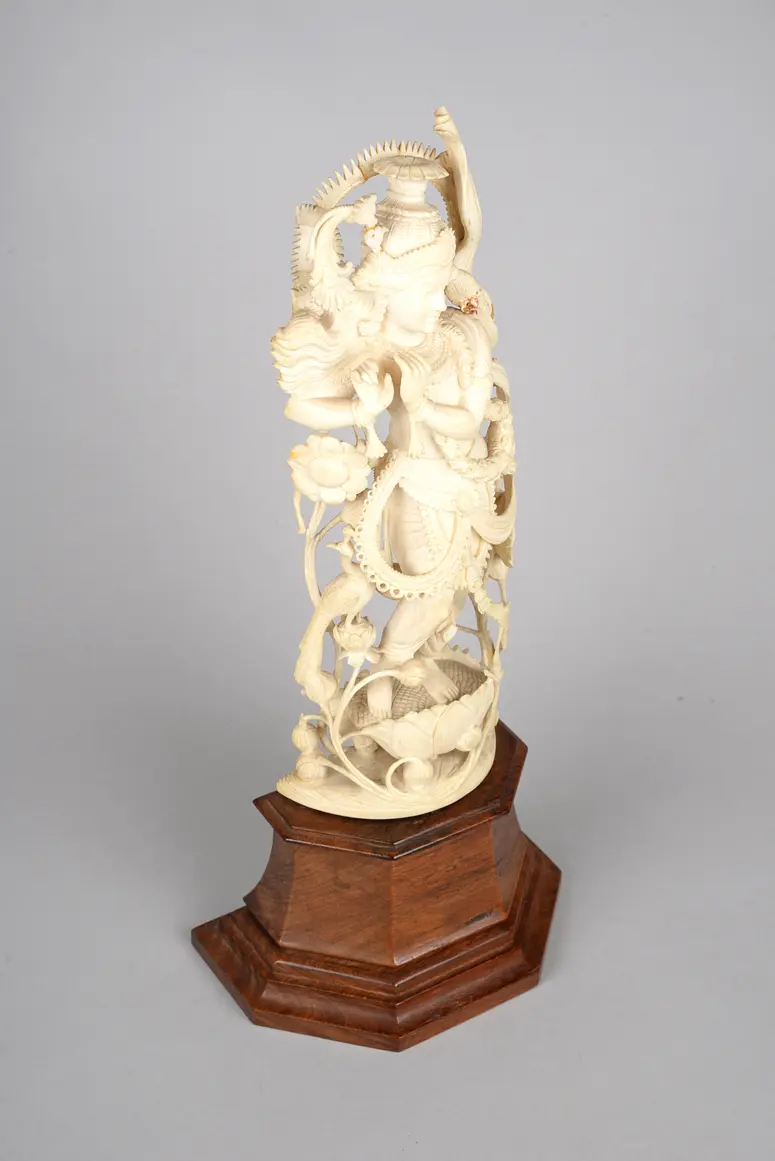
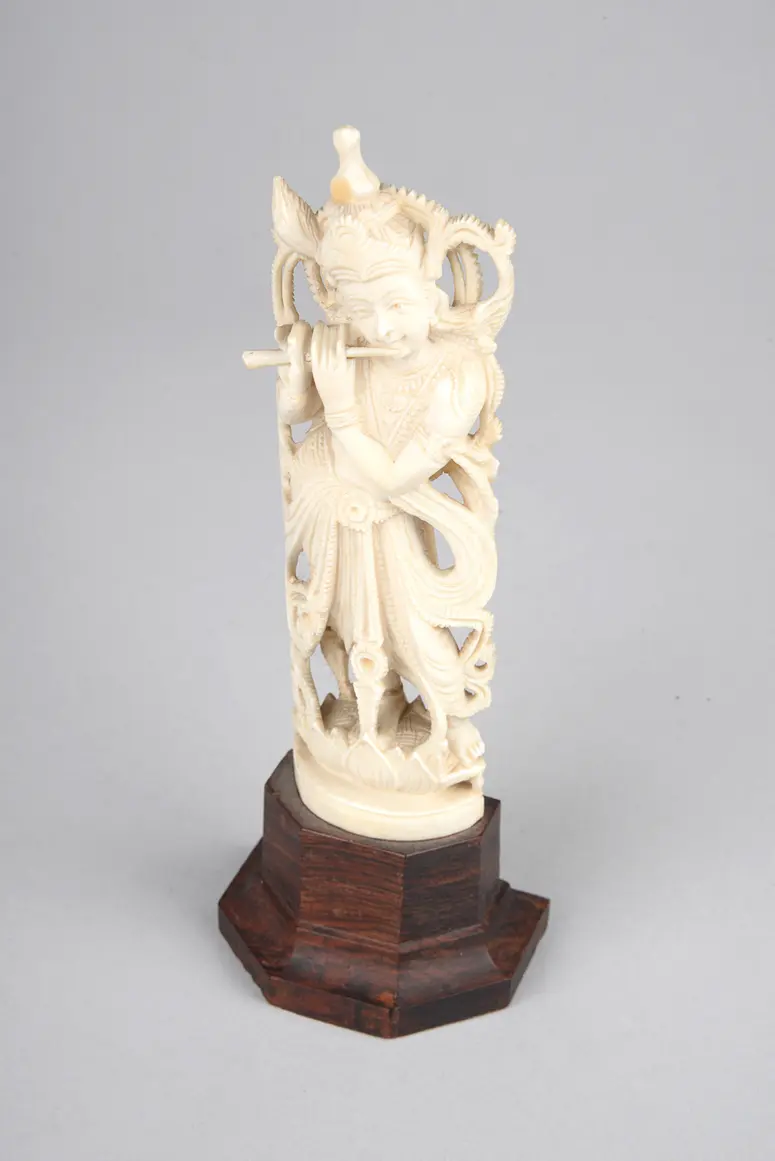
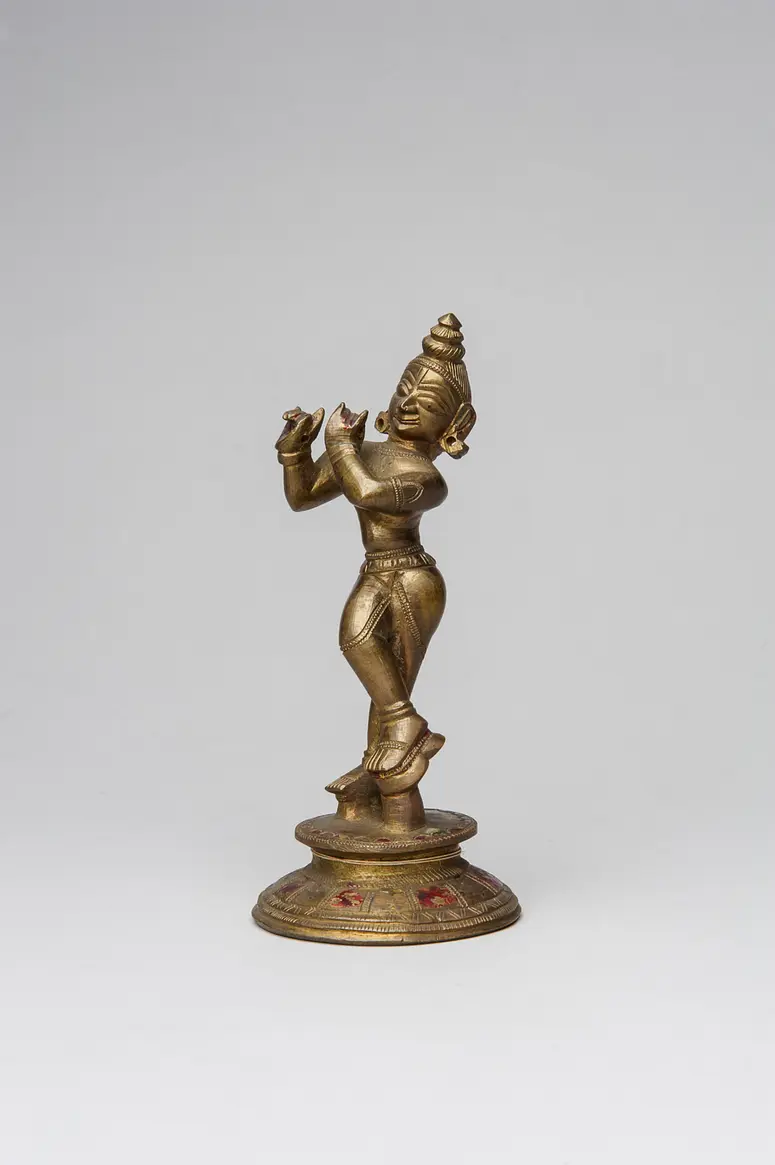
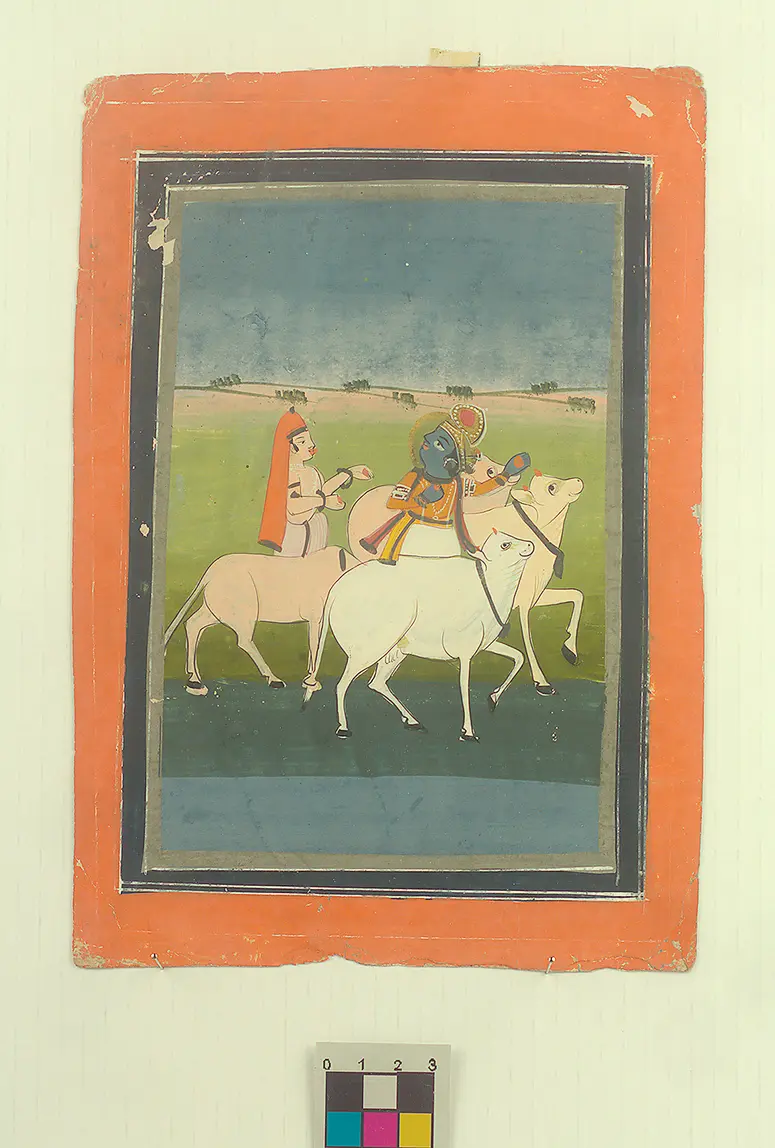
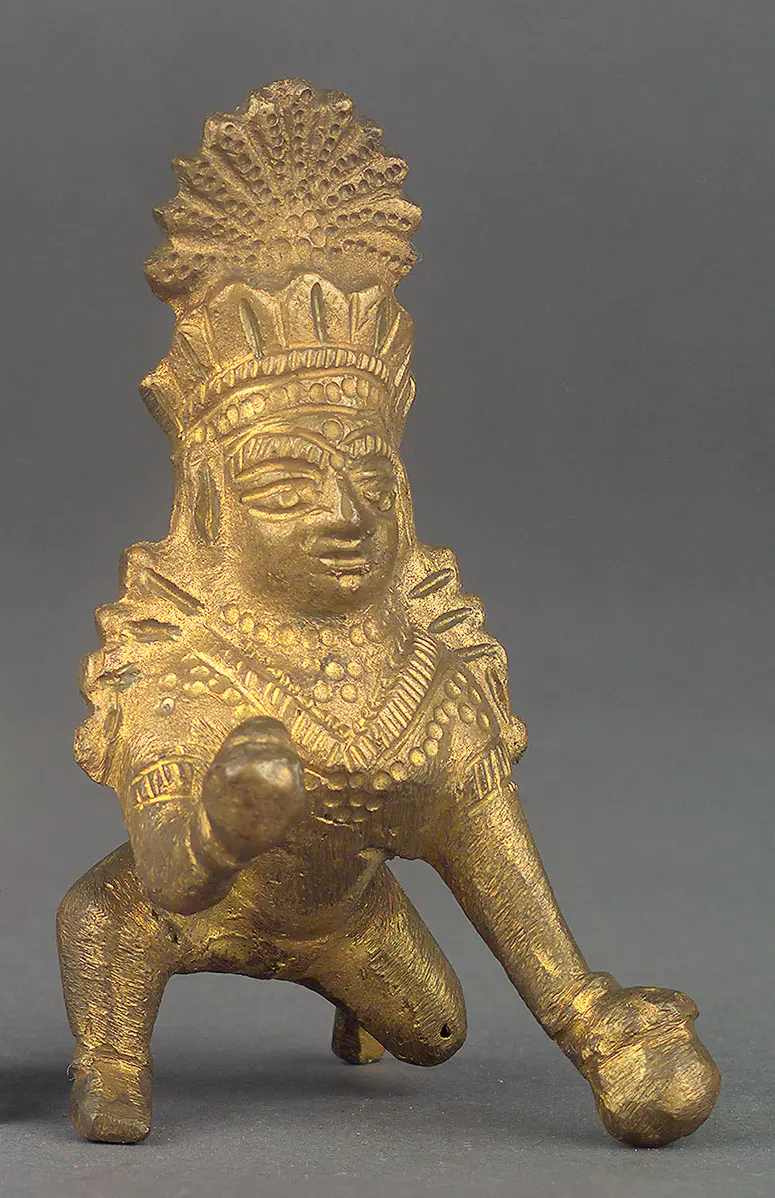
Krishna Franz Ferdinand von Österreich-Este 1893 or earlier
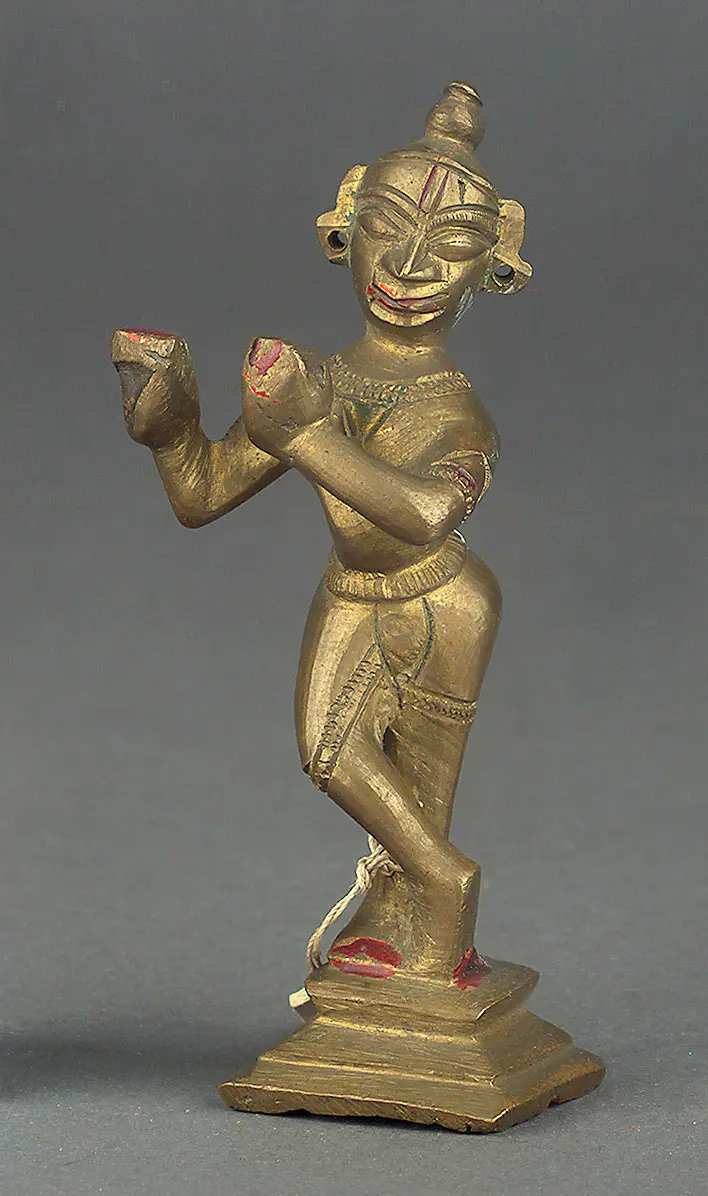
Krishna Franz Ferdinand von Österreich-Este 1893 or earlier