Krishna als Hirte
um 1900 | Franz Ferdinand von Österreich-Este
The flute-playing Krishna appears among humans as the eighth incarnation of Vishnu, who watches over the earth as the God of Preservation. The tenth book of the Bhagavata Purana (approx. 9th-13th century CE), which is divided into twelve books and roughly translates as "The Old Book of God", tells of the childhood and youth of the god, the time of his life that he spent as a cowherd in the small village of Vraja. At the center of many episodes is his power of seduction, with which he bewitches cowherds (gopis). The lush forest in the background indicates that the god has left the moral norms of the village behind him.Here we see him in the midst of his herd of cows and next to his brother Balarama with villagers who are happy to see him in the flesh. The fact that all this takes place in the forest also indicates that devotion to God is not bound to the temple. Even simple country dwellers in the forests can find salvation in loving devotion to God (bhakti) - a fundamental statement in the rigid caste system of Hinduism.
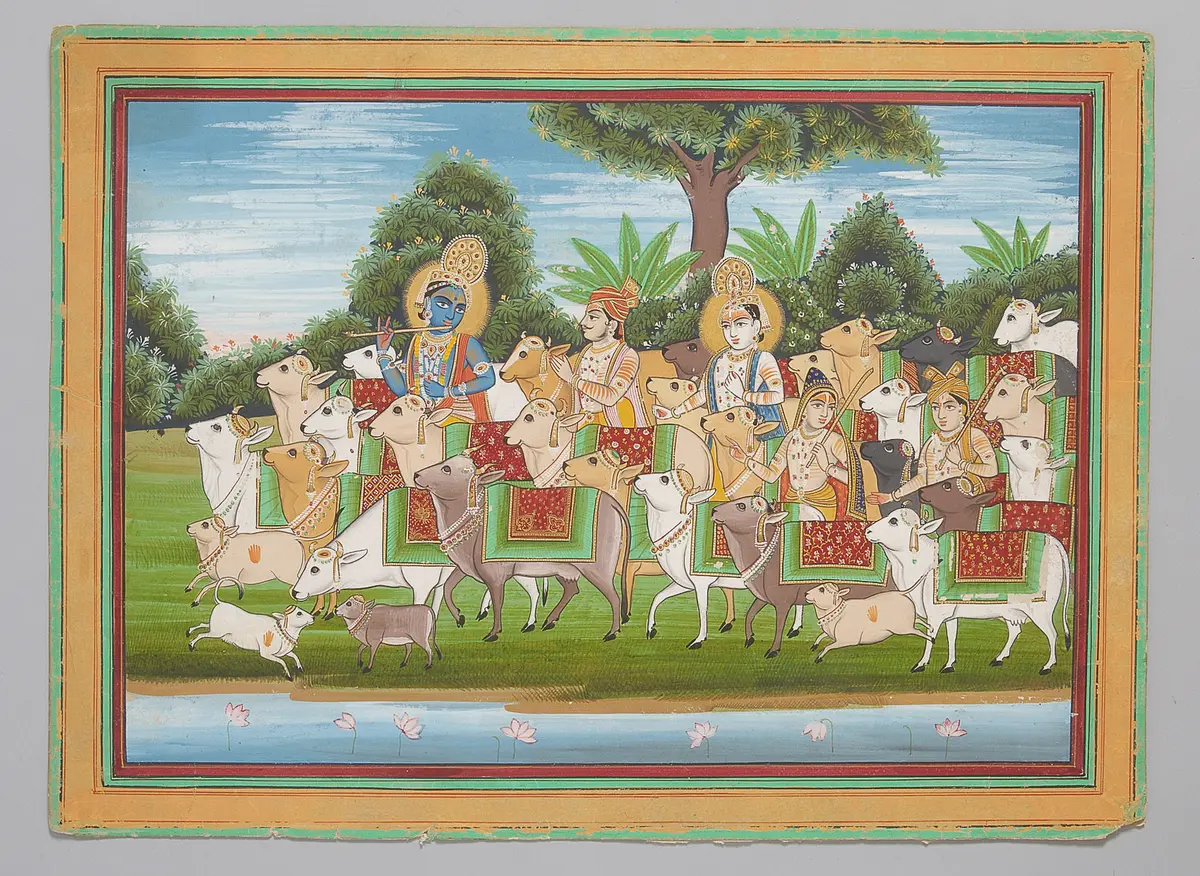
The flute-playing Krishna appears among humans as the eighth incarnation of Vishnu, who watches over the earth as the God of Preservation. The tenth book of the Bhagavata Purana (approx. 9th-13th century CE), which is divided into twelve books and roughly translates as "The Old Book of God", tells of the childhood and youth of the god, the time of his life that he spent as a cowherd in the small village of Vraja. At the center of many episodes is his power of seduction, with which he bewitches cowherds (gopis). The lush forest in the background indicates that the god has left the moral norms of the village behind him.Here we see him in the midst of his herd of cows and next to his brother Balarama with villagers who are happy to see him in the flesh. The fact that all this takes place in the forest also indicates that devotion to God is not bound to the temple. Even simple country dwellers in the forests can find salvation in loving devotion to God (bhakti) - a fundamental statement in the rigid caste system of Hinduism.
Collection:
Franz Ferdinand von Österreich-Este (1863 Graz - 1914 Sarajevo) DNB
Time:
um 1900
Culture
Indien
Material/technology:
Miniaturmalerei: Papier, Karton; Farbmittel, Vergoldung
Copyright
Weltmuseum Wien
Collection area
South Asia, Southeast Asia, Himalayas
Geography
Südasien/Subkontinent/Indien
Invs.
102395
Browse more Similar items you might be interested in
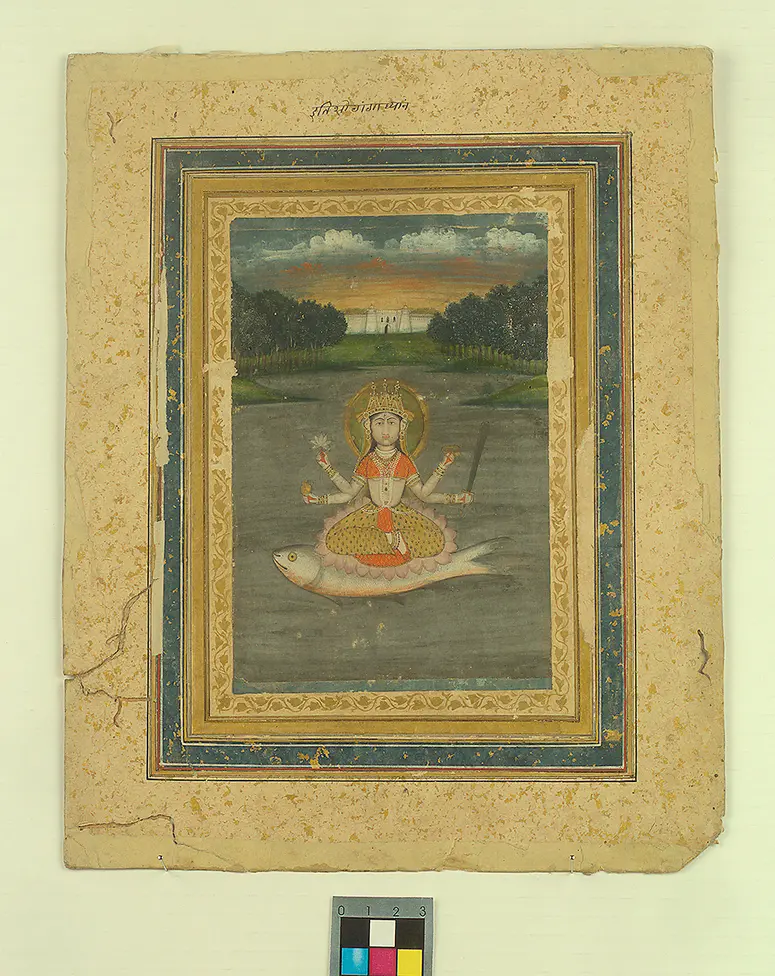
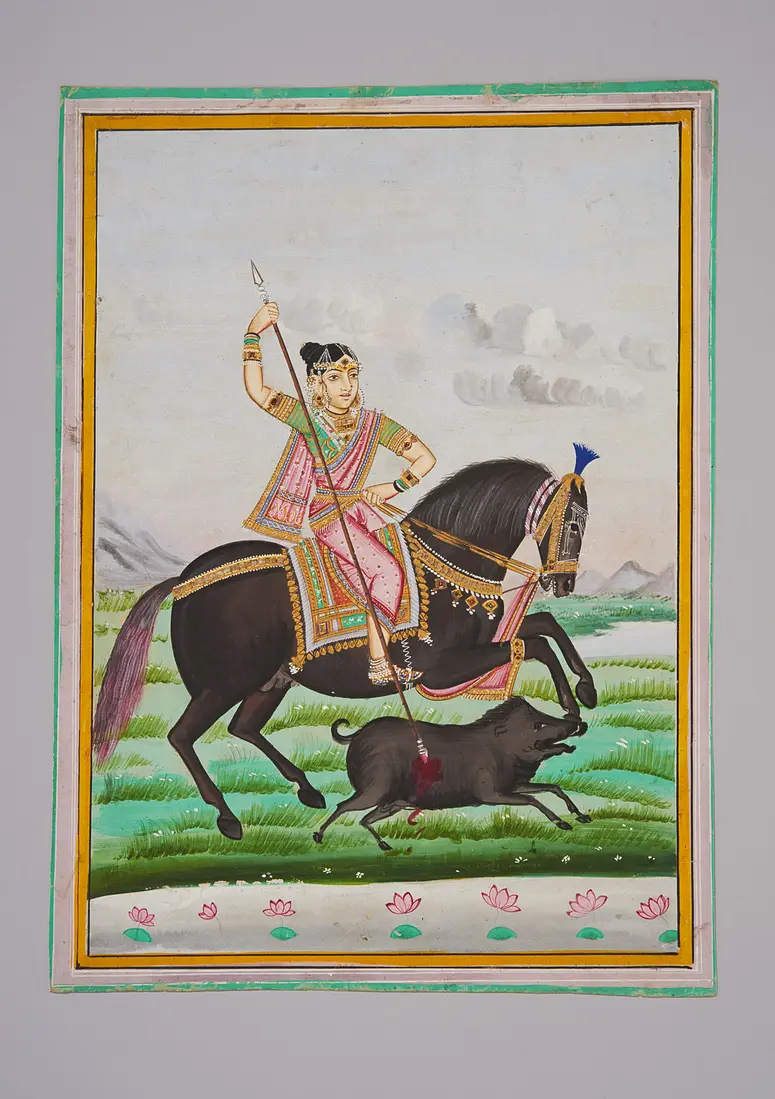

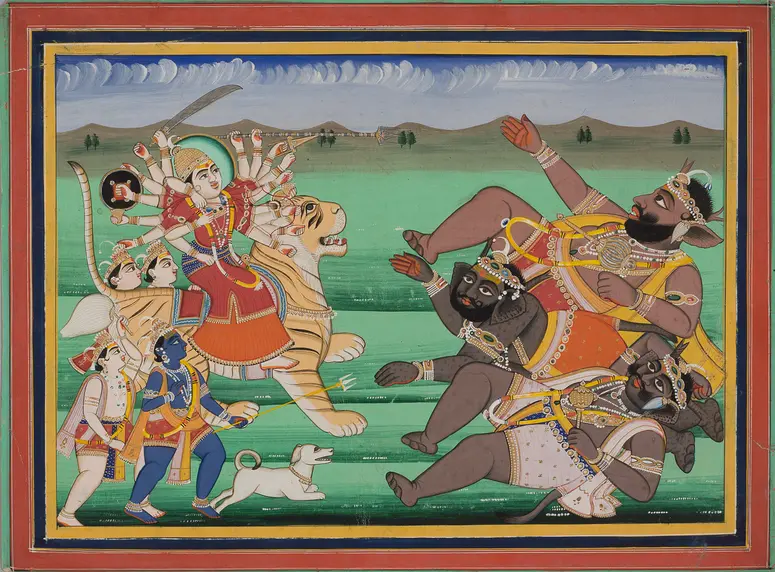
Devi Franz Ferdinand von Österreich-Este 1893 or earlier





Plate Franz Ferdinand von Österreich-Este 1893 or earlier