Miniature painting
1. Hälfte 19. Jh. | Franz Ferdinand von Österreich-Este
The lover holds a flower in both hands, just as two women in a pavilion seem to be waiting for him. Who is the beloved? The servant holding a pillar and gazing longingly in his direction, or the lady of the house, who is obviously addressing a stern word to her? We do not know.This group of three finds its counterpart in the three trees in the background with their intertwining branches. Only two shine in lush green while the third leads an existence in their shade. The relationship between two lovers also finds a counterpart in the metaphorical depiction of nature in the two white birds in the treetops. They lean towards each other and almost touch each other with their beaks. It is also the trees that break the strict geometry of the picture. Their natural form counteracts the straight lines of the building as well as the tamed nature of the garden. Even the people's clothing is executed in straight lines and conceals any hint of the body. Only the trees seem to transcend the strict rules of society and are allowed to express the true nature of love. The peacock on the eaves also hints at this - after all, it is a symbol of Krishna, who elevated love above all conventions of social behavior in the forests of Vraja.
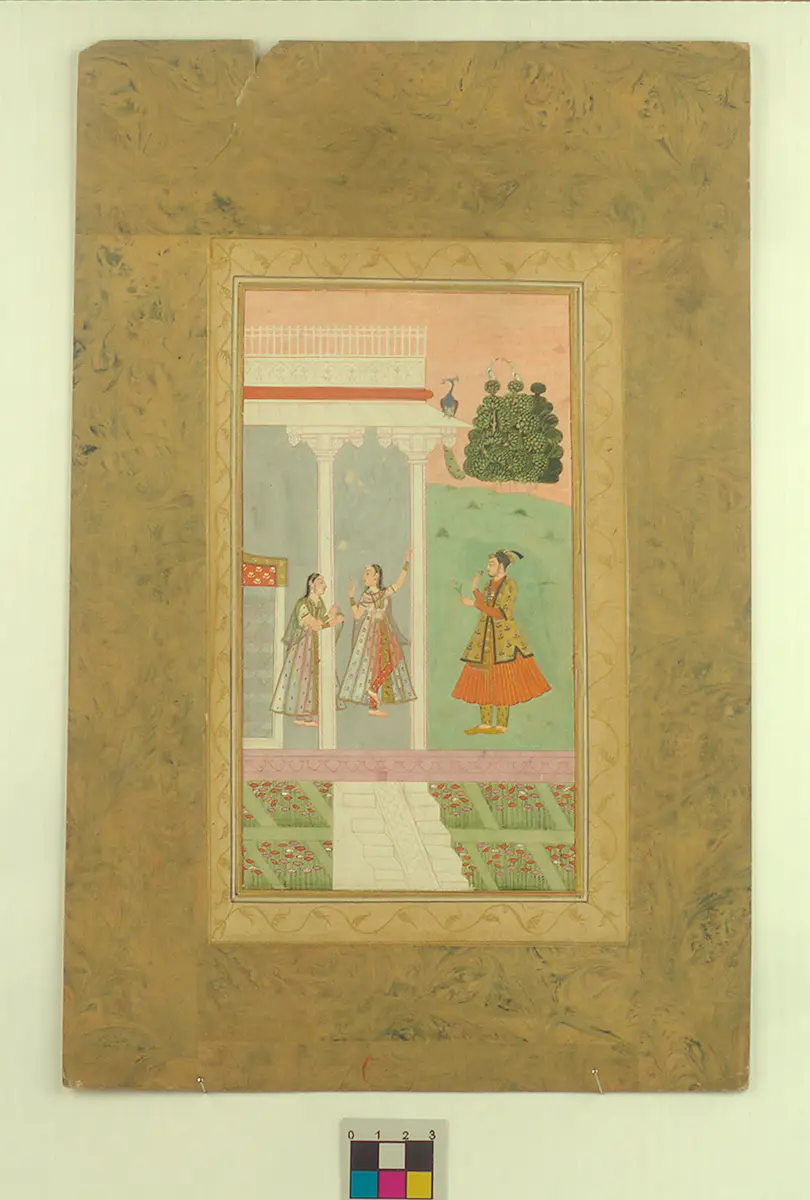
The lover holds a flower in both hands, just as two women in a pavilion seem to be waiting for him. Who is the beloved? The servant holding a pillar and gazing longingly in his direction, or the lady of the house, who is obviously addressing a stern word to her? We do not know.This group of three finds its counterpart in the three trees in the background with their intertwining branches. Only two shine in lush green while the third leads an existence in their shade. The relationship between two lovers also finds a counterpart in the metaphorical depiction of nature in the two white birds in the treetops. They lean towards each other and almost touch each other with their beaks. It is also the trees that break the strict geometry of the picture. Their natural form counteracts the straight lines of the building as well as the tamed nature of the garden. Even the people's clothing is executed in straight lines and conceals any hint of the body. Only the trees seem to transcend the strict rules of society and are allowed to express the true nature of love. The peacock on the eaves also hints at this - after all, it is a symbol of Krishna, who elevated love above all conventions of social behavior in the forests of Vraja.
Collection:
Franz Ferdinand von Österreich-Este (1863 Graz - 1914 Sarajevo) DNB
Time:
1. Hälfte 19. Jh.
Object Name
Warten auf den Geliebten
Culture
Indien
Material/technology:
Karton; Miniaturmalerei
Copyright
Weltmuseum Wien
Collection area
South Asia, Southeast Asia, Himalayas
Geography
Südasien/Subkontinent/Indien
Invs.
102390
Browse more Similar items you might be interested in
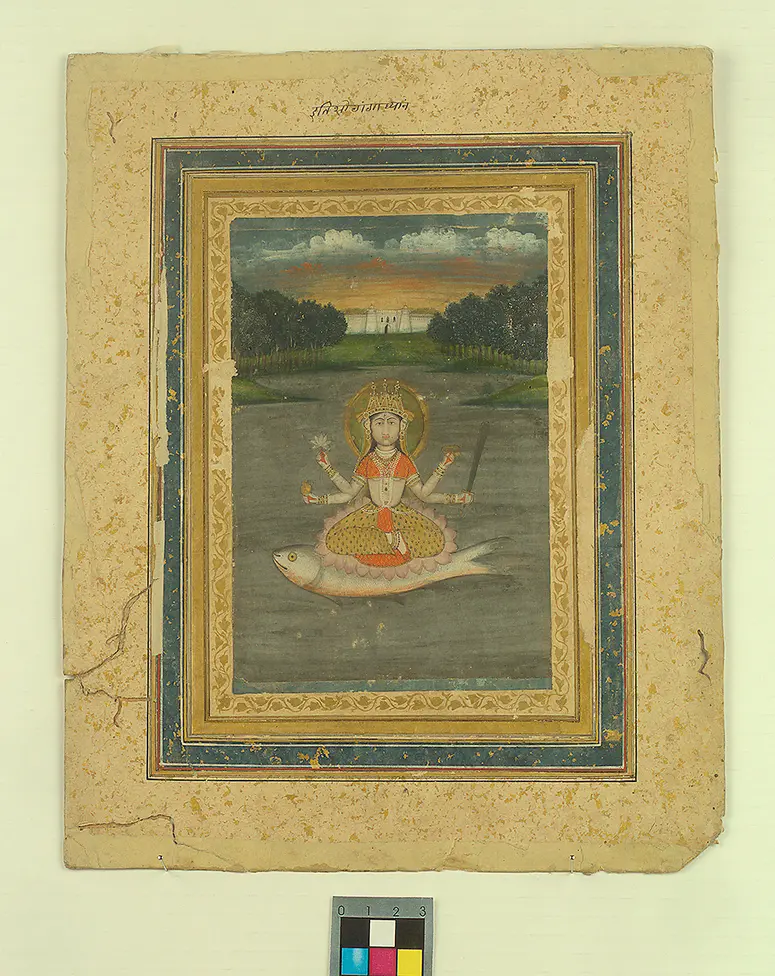

Devi Franz Ferdinand von Österreich-Este 1893 or earlier