Lid
Lenge
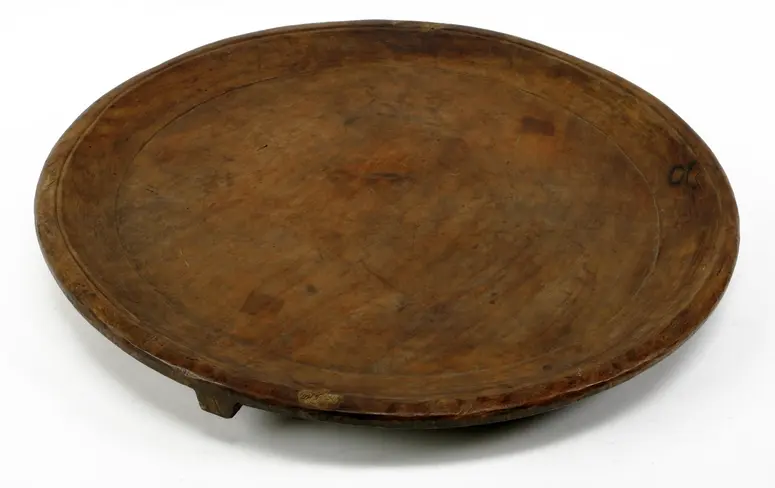
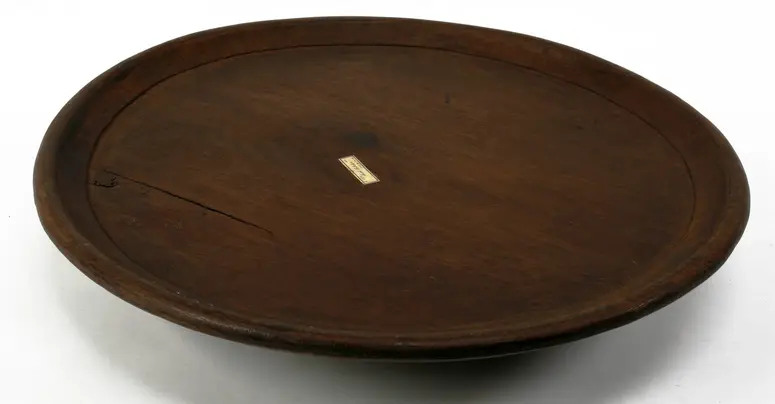
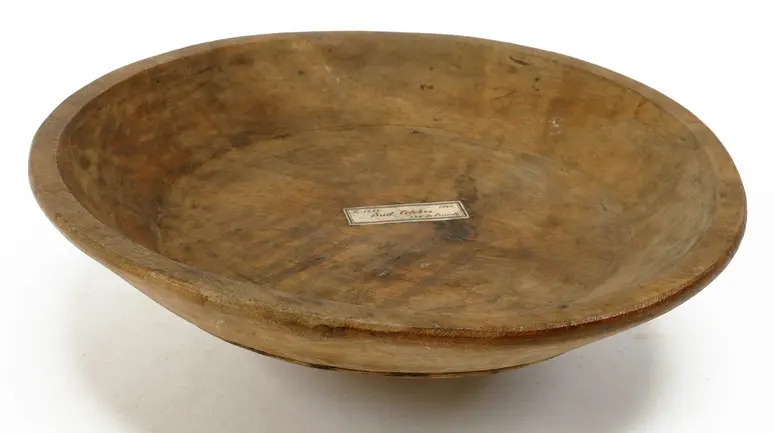
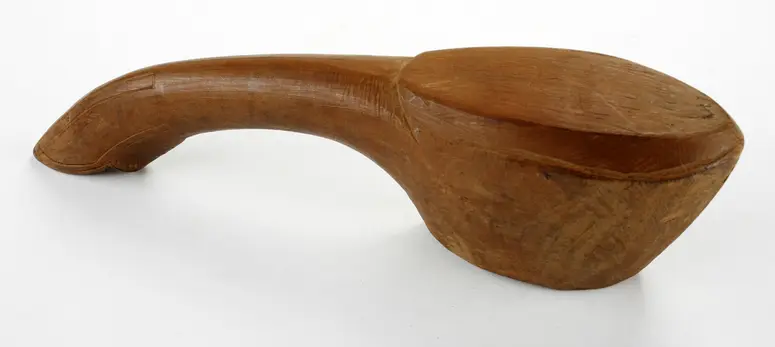
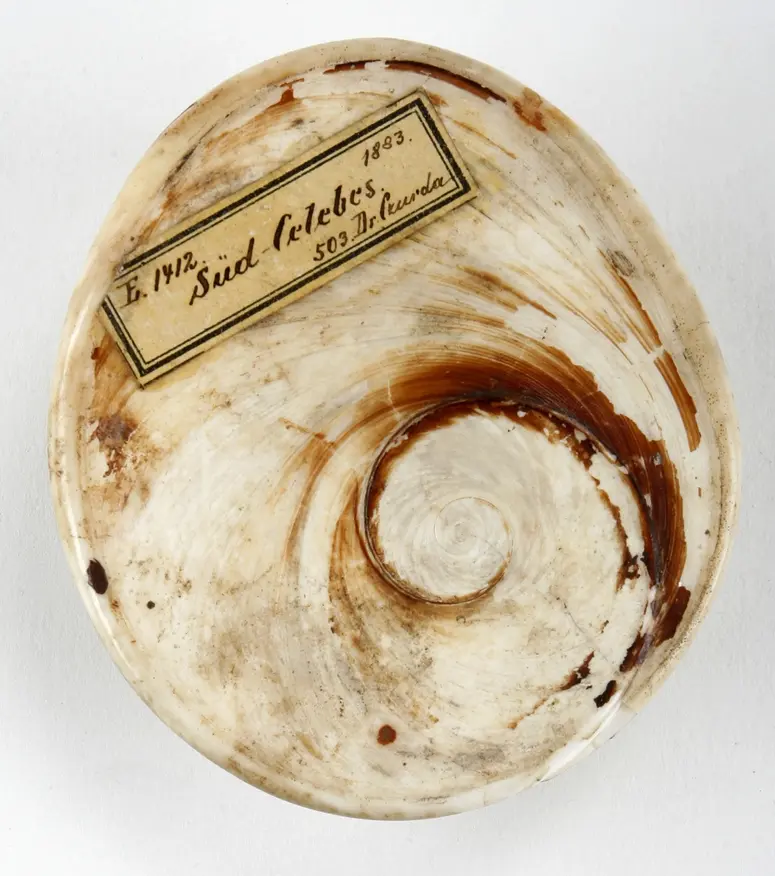
Note: The following text is taken from a 19th-century collection catalog and, in its language and perspective, partially reflects colonial thought patterns. We present the text in its original version to make the collection's history transparent and promote a critical examination of the colonial legacy. Certain terms and formulations may be perceived as problematic today. A 2009 research project concluded that most descriptions are factually correct and still usable; only a few details were found to be inaccurate or incorrect. The results of this project were published in the following collection catalog: khm-wmw-tm-library.on.worldcat.org/oclc/1457155265"186. Lid - "Lenga". A pot lid, different from the form of a European lid, a kind of bowl, which has in its concavity a knob to be gripped. This lid form is actually the native form and the previous one is copied from the European form.The pottery industry is widely spread in South Celebes and as can be seen by the previous numbers, it is well developed. Not only is pottery made for their own consumption, but these articles are also exported to other islands of the archipelago. The Buginese potters also understand how to copy all sorts of European equipment, yes even the finest ornaments, flower vases, columns, garden fences and decorative pieces for roofs. They understand how to fire very long-lived European tiles. But the most attention must be given to the often man-high water containers holding many buckets. One must admire the great skill with which the natives on their potters' wheels manage and master the great mass of clay and make such graceful shapes of this."Translation of: Czurda, F. A. J. (1883). Catalog mit Erklärungen der Etnografischen Privatsammlung des Dr. F. A. J. Czurda in Postelberg (Böhmen). (p. 44-45). Wien, Wilhelm Braumüller
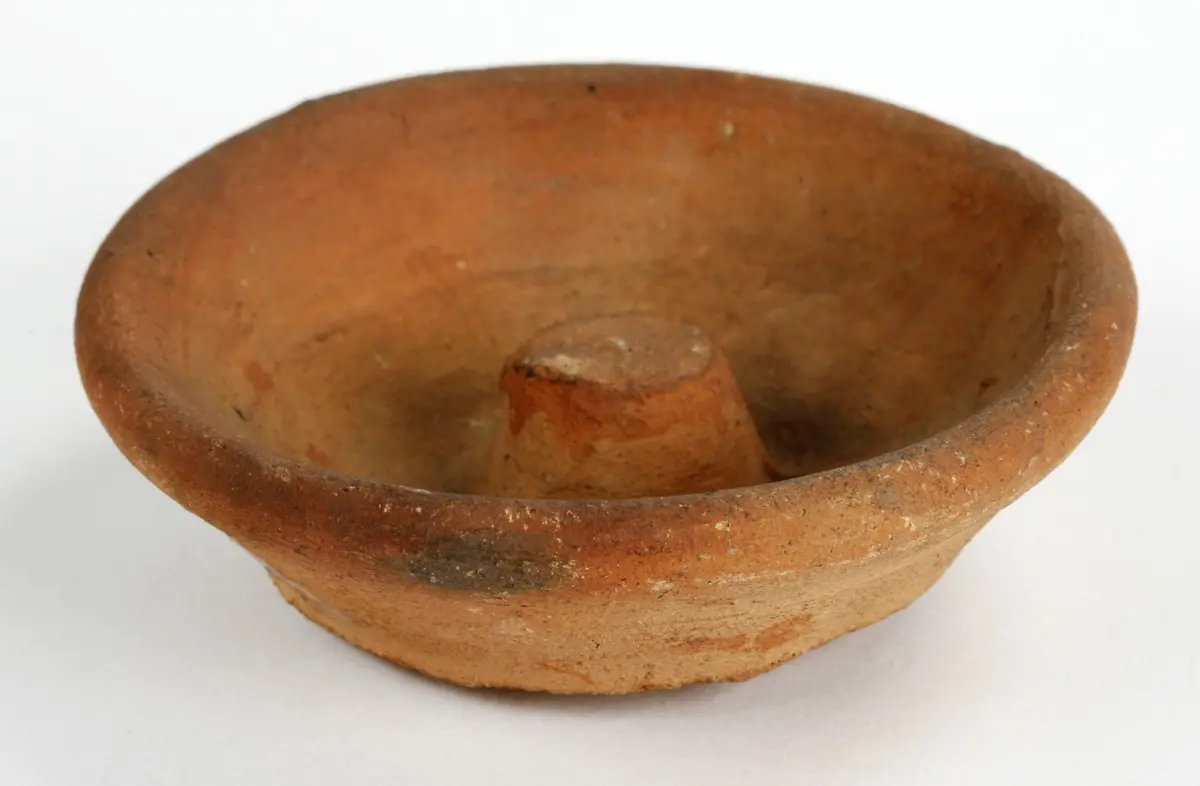
Note: The following text is taken from a 19th-century collection catalog and, in its language and perspective, partially reflects colonial thought patterns. We present the text in its original version to make the collection's history transparent and promote a critical examination of the colonial legacy. Certain terms and formulations may be perceived as problematic today. A 2009 research project concluded that most descriptions are factually correct and still usable; only a few details were found to be inaccurate or incorrect. The results of this project were published in the following collection catalog: khm-wmw-tm-library.on.worldcat.org/oclc/1457155265"186. Lid - "Lenga". A pot lid, different from the form of a European lid, a kind of bowl, which has in its concavity a knob to be gripped. This lid form is actually the native form and the previous one is copied from the European form.The pottery industry is widely spread in South Celebes and as can be seen by the previous numbers, it is well developed. Not only is pottery made for their own consumption, but these articles are also exported to other islands of the archipelago. The Buginese potters also understand how to copy all sorts of European equipment, yes even the finest ornaments, flower vases, columns, garden fences and decorative pieces for roofs. They understand how to fire very long-lived European tiles. But the most attention must be given to the often man-high water containers holding many buckets. One must admire the great skill with which the natives on their potters' wheels manage and master the great mass of clay and make such graceful shapes of this."Translation of: Czurda, F. A. J. (1883). Catalog mit Erklärungen der Etnografischen Privatsammlung des Dr. F. A. J. Czurda in Postelberg (Böhmen). (p. 44-45). Wien, Wilhelm Braumüller
Collector:
František A. J. Czurda (1844 Pisek - 1886 Cirebon) DNB
Entry Date:
1883
Object Name
Lid
Culture
Süd-Sulawesi, Jeneponto
Material/technology:
Clay; fired
Copyright
Weltmuseum Wien
Collection area
Insular Southeast Asia
Invs.
17437