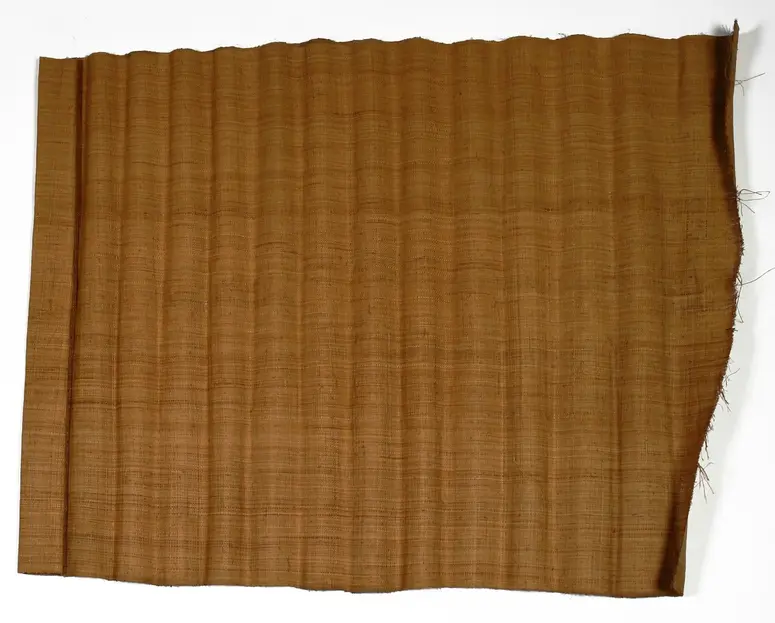
Sarong
Lipa
Vor 1880 | František A. J. Czurda
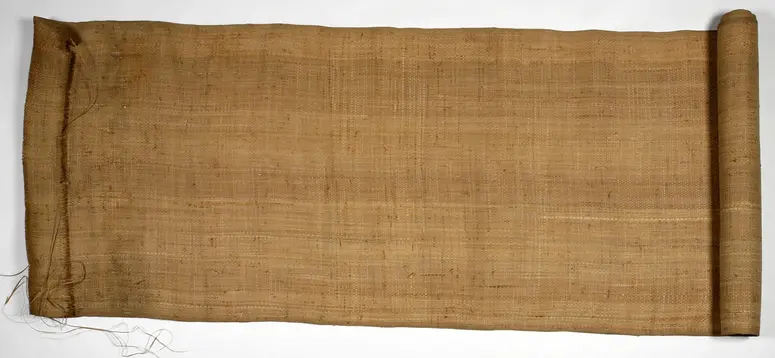
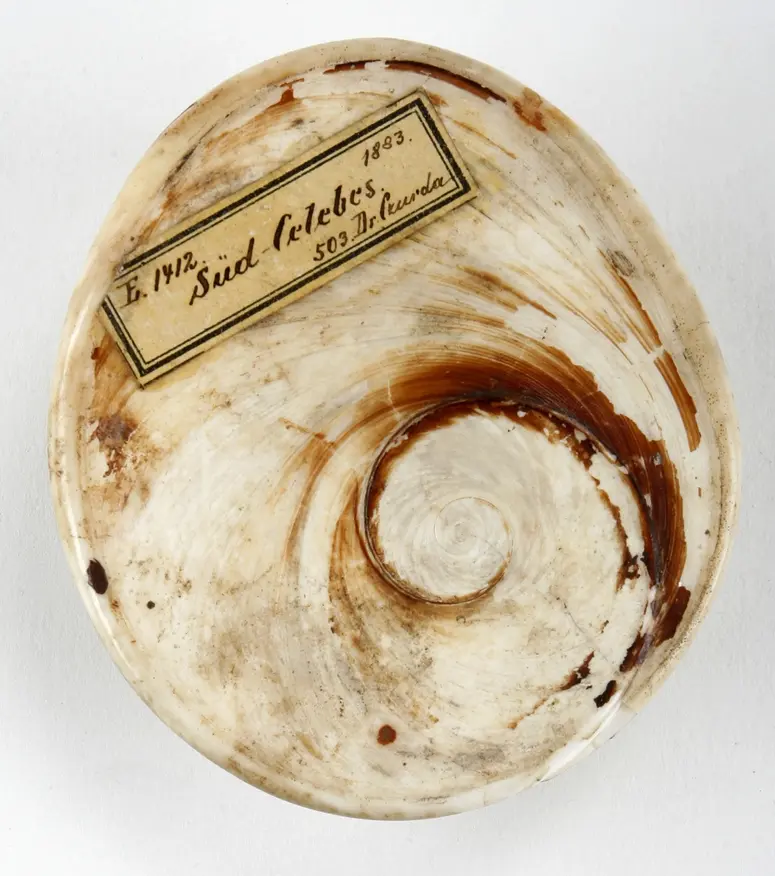
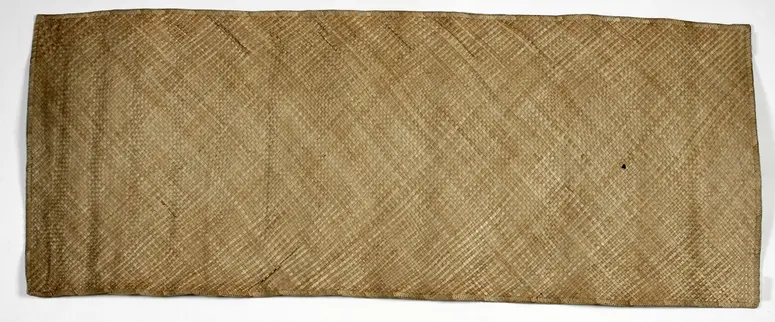
Note: The following text is taken from a 19th-century collection catalog and, in its language and perspective, partially reflects colonial thought patterns. We present the text in its original version to make the collection's history transparent and promote a critical examination of the colonial legacy. Certain terms and formulations may be perceived as problematic today. A 2009 research project concluded that most descriptions are factually correct and still usable; only a few details were found to be inaccurate or incorrect. The results of this project were published in the following collection catalog: khm-wmw-tm-library.on.worldcat.org/oclc/1457155265"554 - 555. Skirts - "Lipa"Two large sarongs of smooth, simple fabric, one blue and white striped with a white chequered "head", the other red and white striped with a white chequered "head". Both are exceptional because they have been made extremely stiff and on the outer surface they are mirror-smooth. Such stiff sarongs are worn by both men and women and only for special occasions, they are thus, the festive clothing. They form very peculiar puffed out clothes in which the native moves very slowly, stiffly and elegantly. The clothes are stiffened with a plant slime; the cloth is painted on the outer side and then allowed to dry. Smoothing takes place with a smooth, round shell which is rubbed on the cloth that has been painted with the slime; this is done for a very long time, often it takes days and can only be carried out at all thanks to the indescribable patience of the natives who make such a complex procedure possible at all."Translation of: Czurda, F. A. J. (1883). Catalog mit Erklärungen der Etnografischen Privatsammlung des Dr. F. A. J. Czurda in Postelberg (Böhmen). (p. 144). Wien, Wilhelm Braumüller
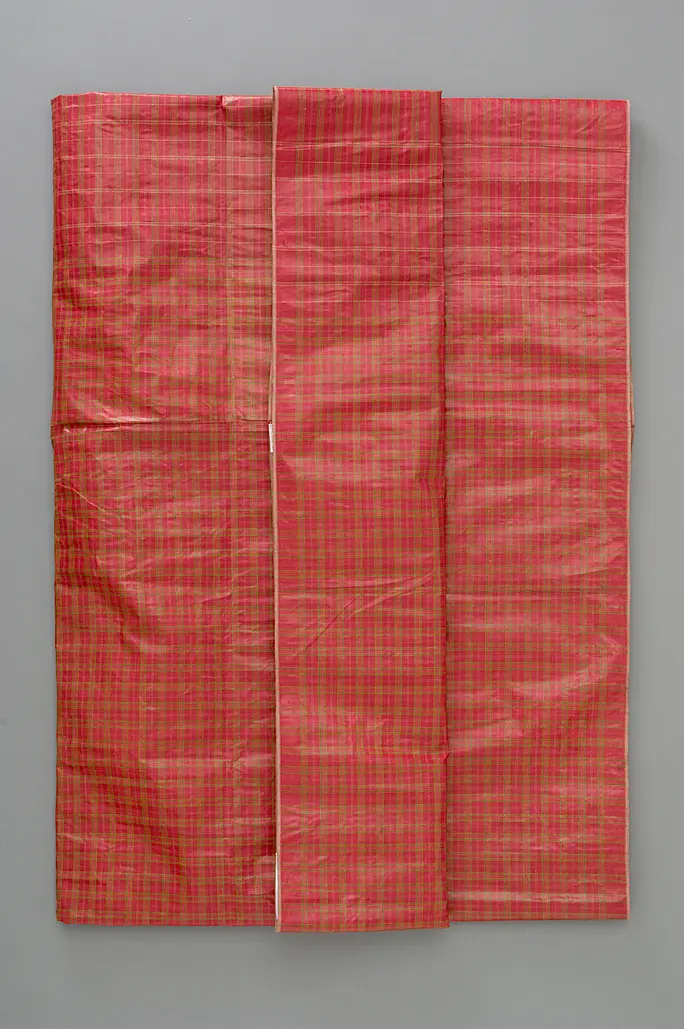
Note: The following text is taken from a 19th-century collection catalog and, in its language and perspective, partially reflects colonial thought patterns. We present the text in its original version to make the collection's history transparent and promote a critical examination of the colonial legacy. Certain terms and formulations may be perceived as problematic today. A 2009 research project concluded that most descriptions are factually correct and still usable; only a few details were found to be inaccurate or incorrect. The results of this project were published in the following collection catalog: khm-wmw-tm-library.on.worldcat.org/oclc/1457155265"554 - 555. Skirts - "Lipa"Two large sarongs of smooth, simple fabric, one blue and white striped with a white chequered "head", the other red and white striped with a white chequered "head". Both are exceptional because they have been made extremely stiff and on the outer surface they are mirror-smooth. Such stiff sarongs are worn by both men and women and only for special occasions, they are thus, the festive clothing. They form very peculiar puffed out clothes in which the native moves very slowly, stiffly and elegantly. The clothes are stiffened with a plant slime; the cloth is painted on the outer side and then allowed to dry. Smoothing takes place with a smooth, round shell which is rubbed on the cloth that has been painted with the slime; this is done for a very long time, often it takes days and can only be carried out at all thanks to the indescribable patience of the natives who make such a complex procedure possible at all."Translation of: Czurda, F. A. J. (1883). Catalog mit Erklärungen der Etnografischen Privatsammlung des Dr. F. A. J. Czurda in Postelberg (Böhmen). (p. 144). Wien, Wilhelm Braumüller
Collector:
František A. J. Czurda (1844 Pisek - 1886 Cirebon) DNB
Time:
Vor 1880
Entry Date:
1883
Object Name
Sarong
Culture
Süd-Sulawesi, Mallasoro, Bugis
Material/technology:
Cotton; plain weave, hand seam, chintzed
Copyright
Weltmuseum Wien
Collection area
Insular Southeast Asia
Invs.
17783